
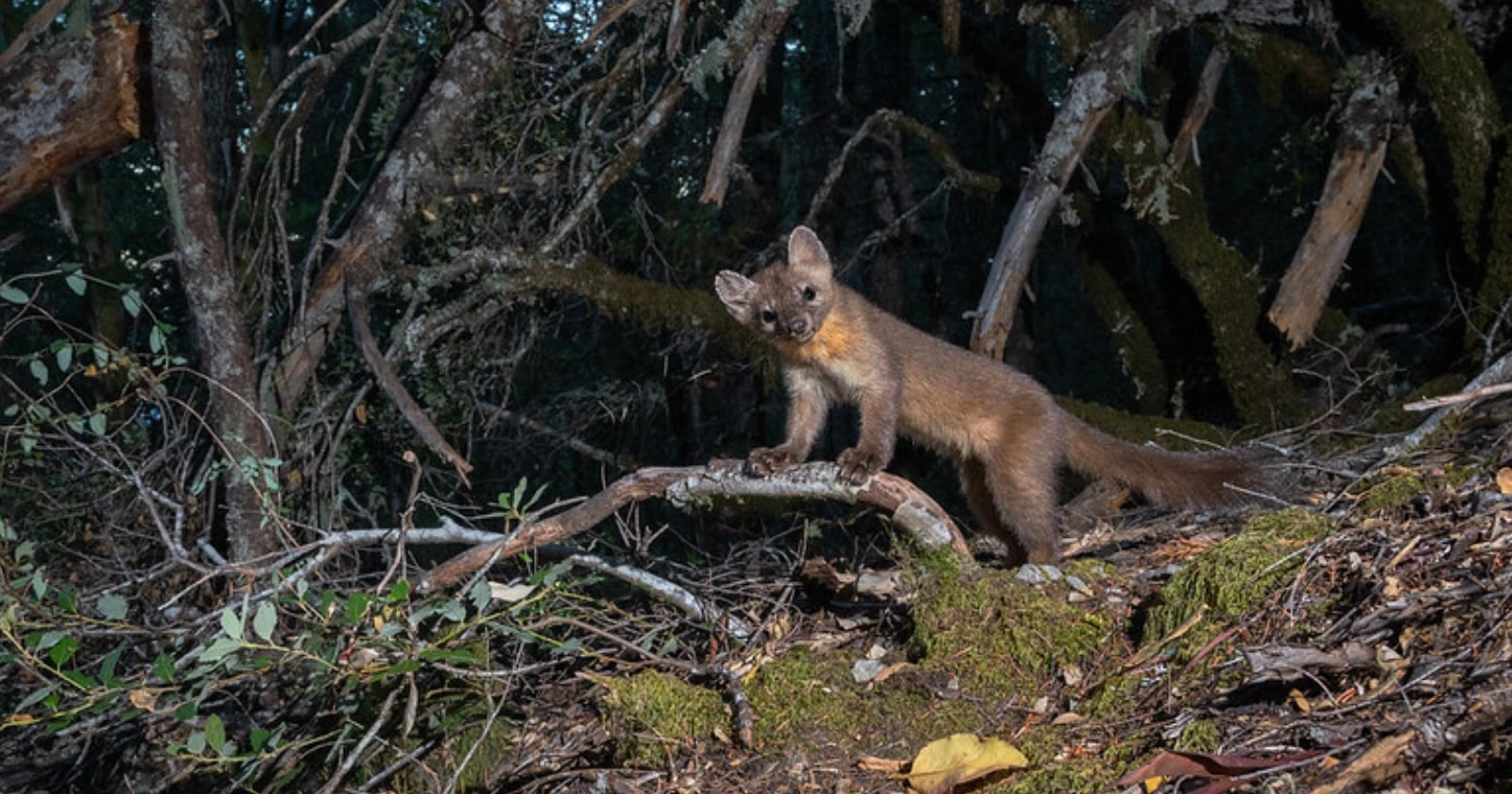
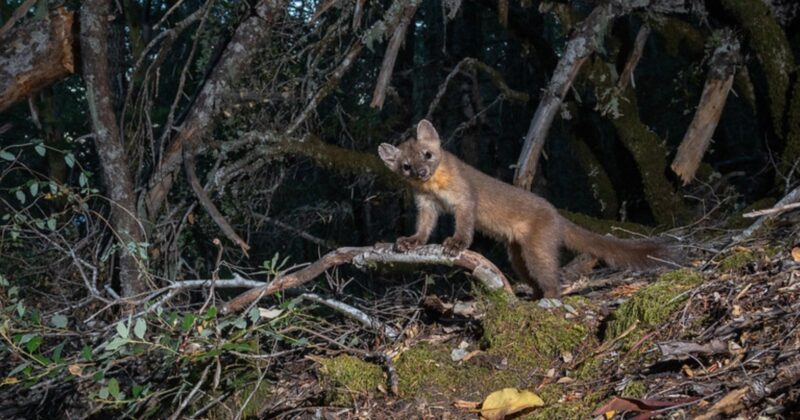
 A Coastal Marten | Ben Wymer, A Woods Walk Photography.
Scientists used 135 remote cameras to document the return of coastal martens in California — a species previously thought to be extinct.
The coastal marten, also called the Humboldt marten, once ranged from northern Oregon to northern California. However, in the 20th century, trapping for their brown and russet fur, along with widespread logging, pushed the species to the brink of extinction. Their population and range shrank dramatically, and for a time, it seemed as though the coastal marten had vanished completely in California.
The species was nearly considered extinct until a United States Forest Service biologist discovered a small population in the coastal forests of northern California in 1996. According to BBC Wildlife Magazine, it is estimated that roughly 500 coastal martens remain, occupying just five percent of their historic range.
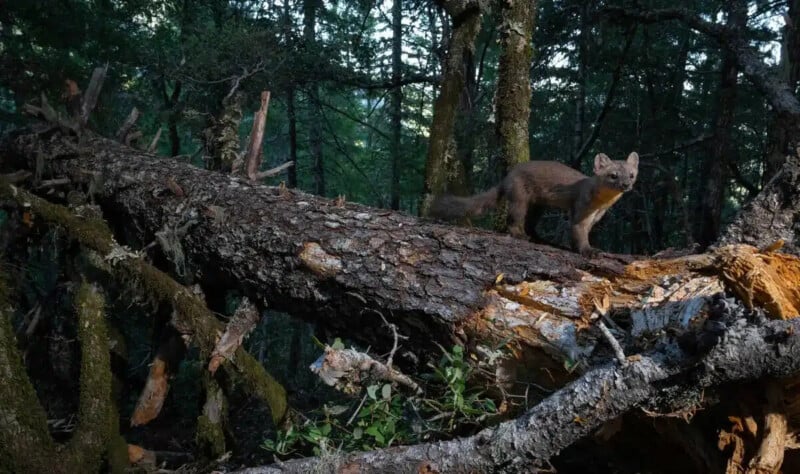 A coastal marten pauses on a Douglas fir | Oregon State University
In 2022, scientists from Oregon State University’s Institute for Natural Resources led a three-month study to learn more about the martens’ population and habitat. The researchers used 135 remote cameras as well as hair snares (tape and wire devices that safely collect hair for DNA analysis) to monitor a 150-square-mile area east of Klamath, northern California.
In a paper published in Global Ecology and Conservation in December, the researchers revealed that 20 of the camera traps captured 86 photographs of coastal martens. Using the images collected from the remote cameras, along with the hair samples, researchers estimate that the martens exist at a density of roughly one animal per three square kilometres. Coastal martens were found across the study area. They were most numerous at high elevations along forested ridgetops with lingering snow, and at lower elevations in coastal forests with ravines and rivers. Oregon State researchers plan to use this data from the remote cameras to guide future conservation efforts.
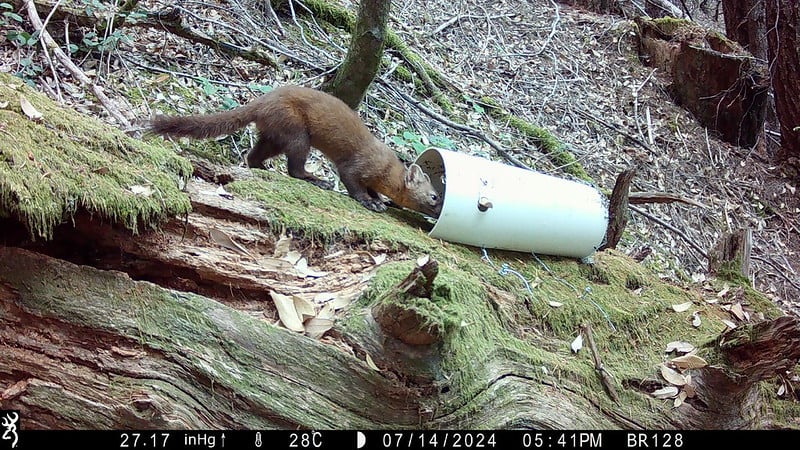 Remote camera footage shows a marten with a hair snare | Oregon State University
“There’s a lot we don’t know about this species, including information as basic as what forests coastal martens still occupy, how many martens there are, and whether these populations are increasing,” says Sean Matthews of Oregon State University. He describes them as “among the most adorable animals that call our Pacific Northwest forests home.”
Coastal martens are related to weasels, otters, mink, and wolverines. These rare mammals are smaller than an average house cat, with adult males measuring 20 to 24 inches long and weighing 1.5 to three pounds. According to Oregon Wild, coastal martens are voracious, opportunistic eaters and will prey on anything from deer mice and voles to larger prey like rabbits and birds. They may also eat berries and other foods if prey animals are not readily available.