
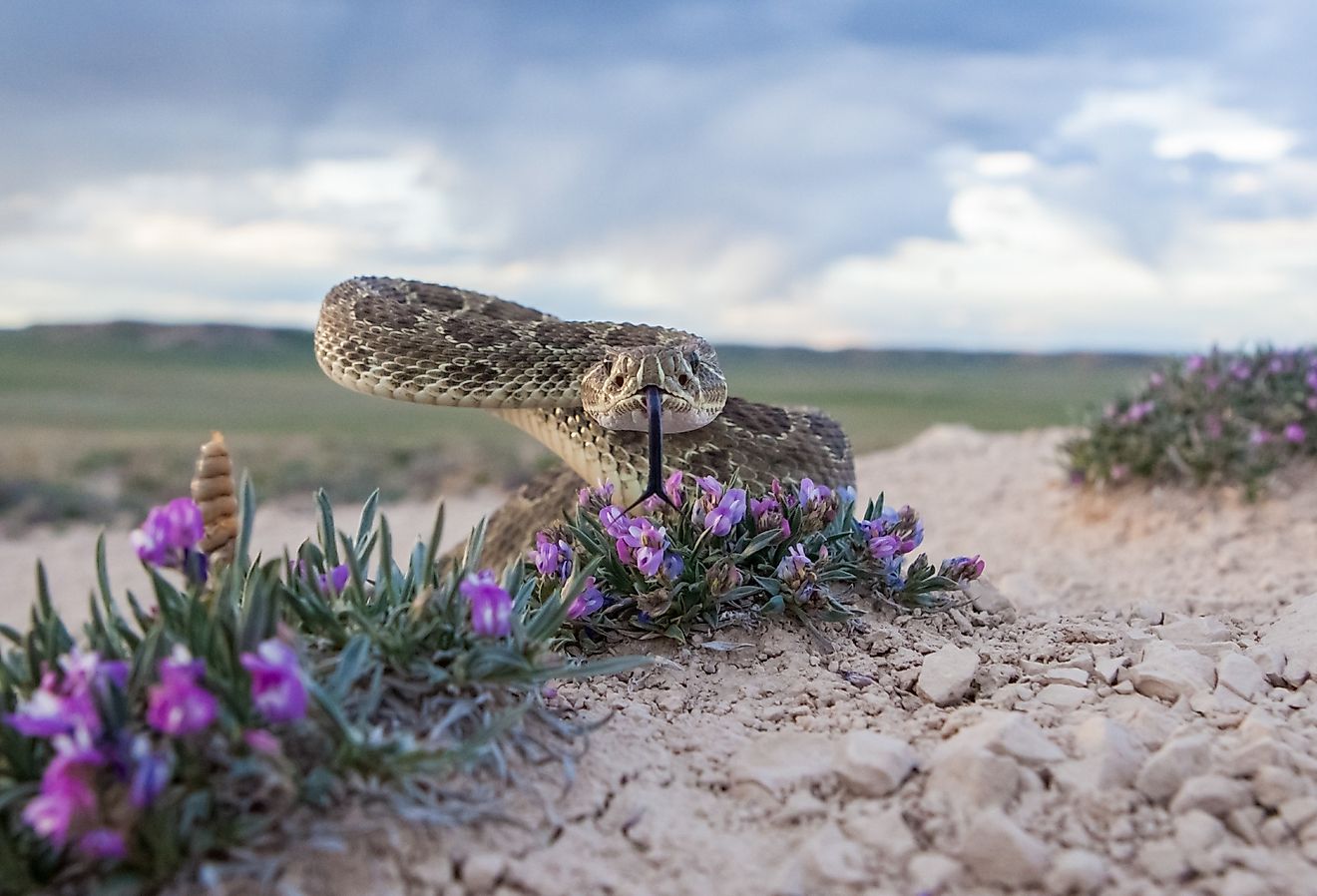
Nebraska is home to 29 species of snakes, including three types of rattlesnakes. The state’s geography shifts from the Sandhills in the west to river basins in the east, creating several ideal ecological zones for these reptiles. The Prairie Rattlesnake hunts in the western shortgrass plains, utilizing open rock and arid soil. Timber Rattlesnakes inhabit the hardwood forests along the Missouri River, while the Western Massasauga relies on the wet meadows of the southeast. These predators play a vital role in controlling rodent populations across the plains. Staying on clear paths and scanning the ground ahead minimizes the risk of a close encounter. Lace up sturdy footwear and maintain a respectful distance in these rattlesnake hot spots where these vipers thrive.
Scotts Bluff National Monument
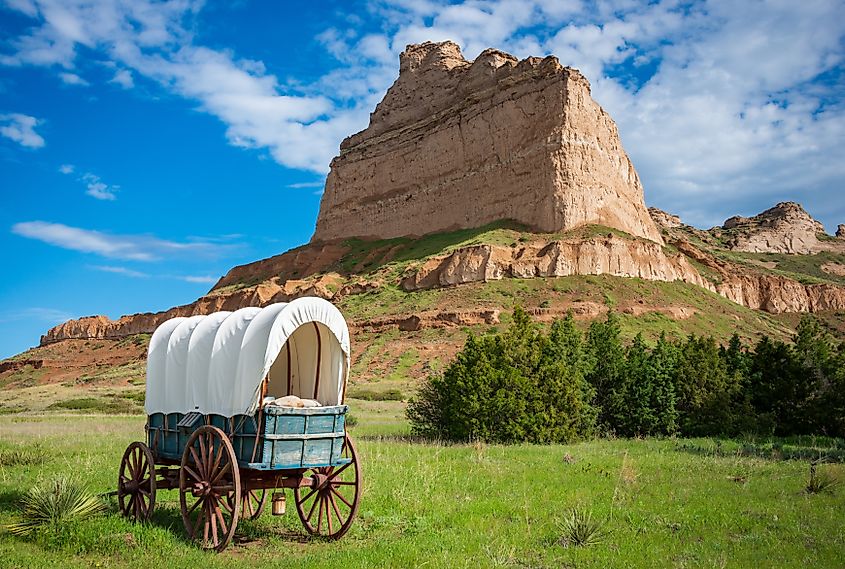 Scotts Bluff National Monument in Nebraska.
The massive bluff formations of the Nebraska Panhandle act as a thermal magnet for the Prairie Rattlesnake. This reptile remains the only venomous species within the monument boundaries, utilizing the 3,000 acres of mixed-grass prairie for hunting. The paved asphalt of the Saddle Rock Trail frequently draws the cold-blooded animals out of the shadows, where they lie across the path to absorb solar heat. Visitors also report sightings near Scott’s Spring or the main Visitor Center, where the animals hunt ground squirrels in the maintained grass. The bluffs contain deep crevices that serve as shelter, while the surrounding lowlands support the prairie dog colonies that sustain the predator population.
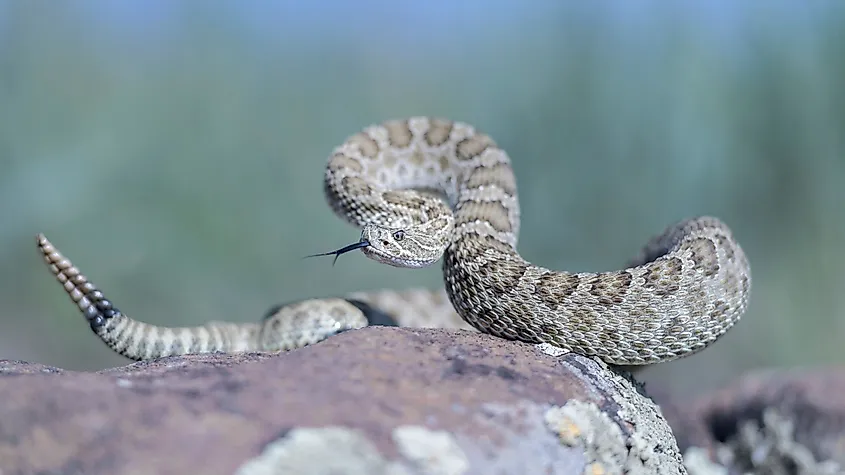 A gorgeous prairie rattlesnake on a rock.
While Oregon Trail emigrants historically documented intense fear of snakebites, disease proved far more lethal during the pioneer era. Modern interactions require vigilance rather than panic. In August 2025, a four-year-old visitor suffered a bite near the covered wagon display, highlighting the need for awareness even in high-traffic zones.
Lake McConaughy
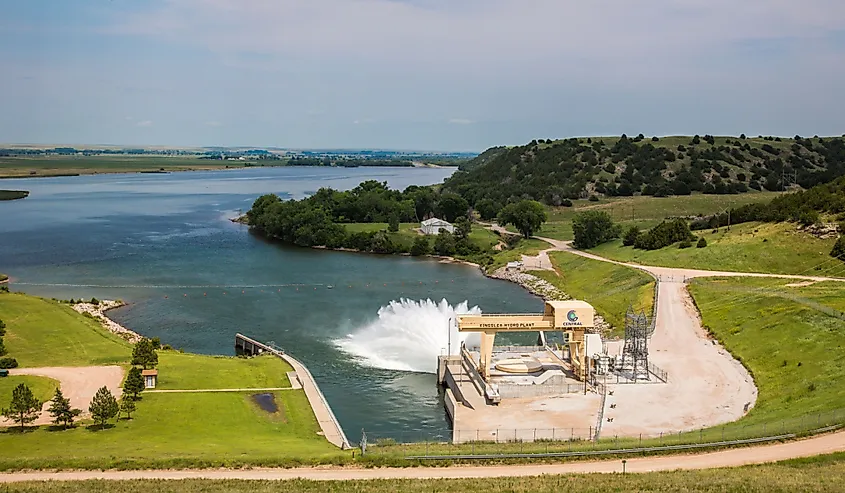 Lake McConaughy on the north Platte River near Ogallala, Nebraska. Image credit Bob Pool via Shutterstock
The massive engineering of the Kingsley Dam created a sanctuary for the Prairie Rattlesnake. Completed in 1941 as a New Deal hydraulic fill project, the dam’s face is reinforced with millions of concrete blocks and “rip-rap” stone. This artificial geology mimics the natural crevices snakes need for hibernation, creating a high-density zone of dens directly adjacent to the water. In years of drought, the reptiles migrate from the surrounding bluffs down to the 100 miles of shoreline to seek hydration, increasing the frequency of encounters near the recreational beaches.
Engineers closed the gates on Kingsley Dam in 1941. As the water rose to consume the town of Lemoyne, it drove the valley’s rattlesnakes upward. The displaced vipers settled into the granite riprap of the dam’s face. Today, the Nebraska Game and Parks Commission enforces strict regulations to manage this intersection of wildlife and tourism. Lake McConaughy also strictly enforces a 6-foot leash rule for all pets.
Samuel R. McKelvie National Forest
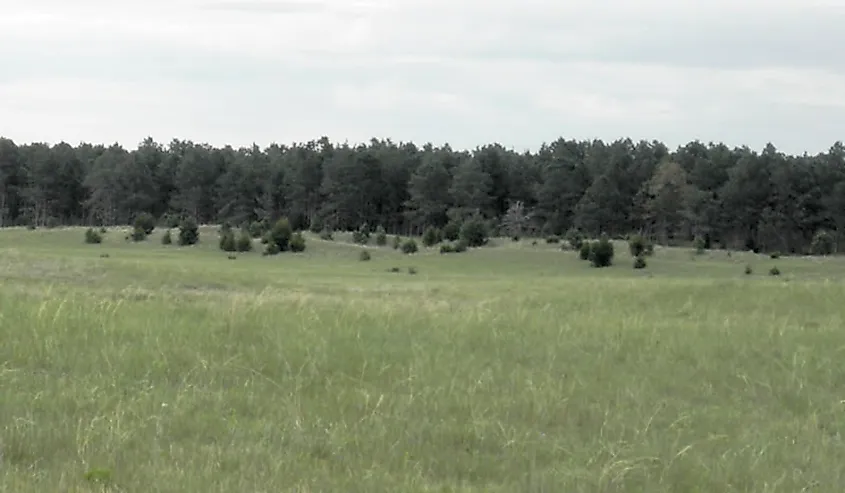 Typical Sandhills scene with planted ponderosa pine forest at McKelvie National Forest, Nebraska.
This forest spans 116,000 acres of the Nebraska Sandhills south of Nenzel. Vegetated sand dunes and hand-planted pine groves cover the landscape. The habitat supports the Prairie Rattlesnake. Adults measure 35 to 45 inches. They display dark oval blotches on a greenish-gray body. These vipers hunt ground squirrels near prairie dog towns and rocky outcrops. Hikers frequently find them sunning on the open trails.
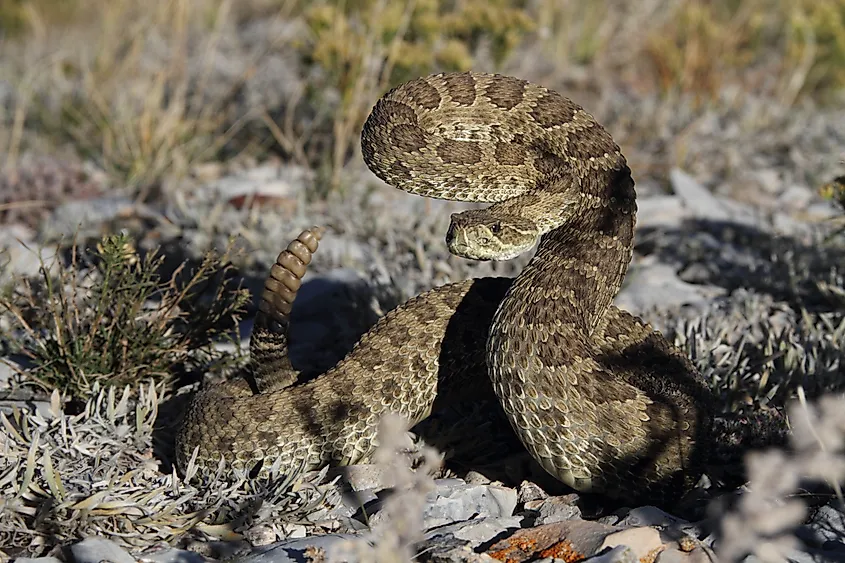 Prairie rattlesnake ready to strike.
The snake uses a triangular head and heat-sensitive pits to track prey. A rattle at the tail tip serves as a warning signal. However, visitors cannot rely on sound. Newborn snakes carry a silent button. Adults sometimes lose their rattles to predators or accidents. Visual awareness remains the most effective safety tool. Keeping a distance protects both hikers and reptiles.
Burchard State Wildlife Management Area
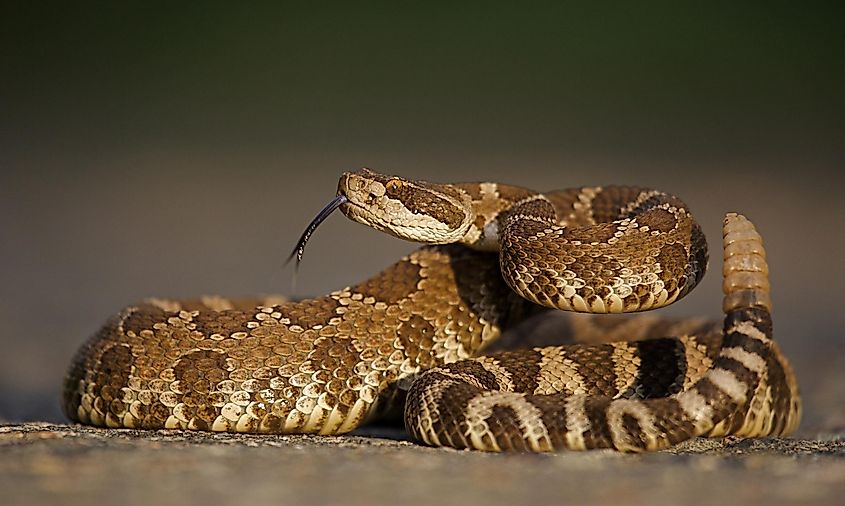 Western rattlesnake.
Native tallgrass prairie surrounds Burchard Lake in Pawnee County, creating a specialized habitat for the Western Massasauga. This swamp rattler is Nebraska’s smallest viper, typically ranging from 18 to 30 inches in length. The species depends on the subterranean architecture of crayfish burrows for hibernation. The lake’s high-quality watershed supports a robust crayfish population, providing the critical winter refuge these snakes require for survival.
Large, rounded dark blotches run down the center of the snake’s gray or light brown back. Sightings occur most frequently in the moist draws below the dam or near the water’s edge, where vegetation grows dense. Hikers should remain vigilant in these tallgrass zones. The Massasauga relies heavily on camouflage, and its small stature makes it difficult to detect against the soil.
Nebraska’s diverse geography creates ecological zones, each supporting the local rattlesnake population. The pattern begins in the arid west at Scotts Bluff National Monument, where Prairie Rattlesnakes sun themselves on the hot asphalt trails. Lake McConaughy extends this range, drawing vipers to the rocky crevices of the Kingsley Dam to hunt rodents. The terrain shifts significantly in the Sandhills at Samuel R. McKelvie National Forest, where the reptiles rely on the camouflage of hand-planted pine plantations. Finally, Burchard State Wildlife Management Area preserves the wet tallgrass prairie that the small, elusive Western Massasauga needs to survive. Staying on the established path and maintaining situational awareness allows visitors to safely observe the state’s rattlesnake hot spots.
Fadi Kouzaiha January 31 2026 in Places