KAILUA-KONA, Hawaii (Island News) — Just after first light Monday morning, calm waters off Honokohau Harbor, set the scene for what would become a remarkable story of survival along the Kona coast.
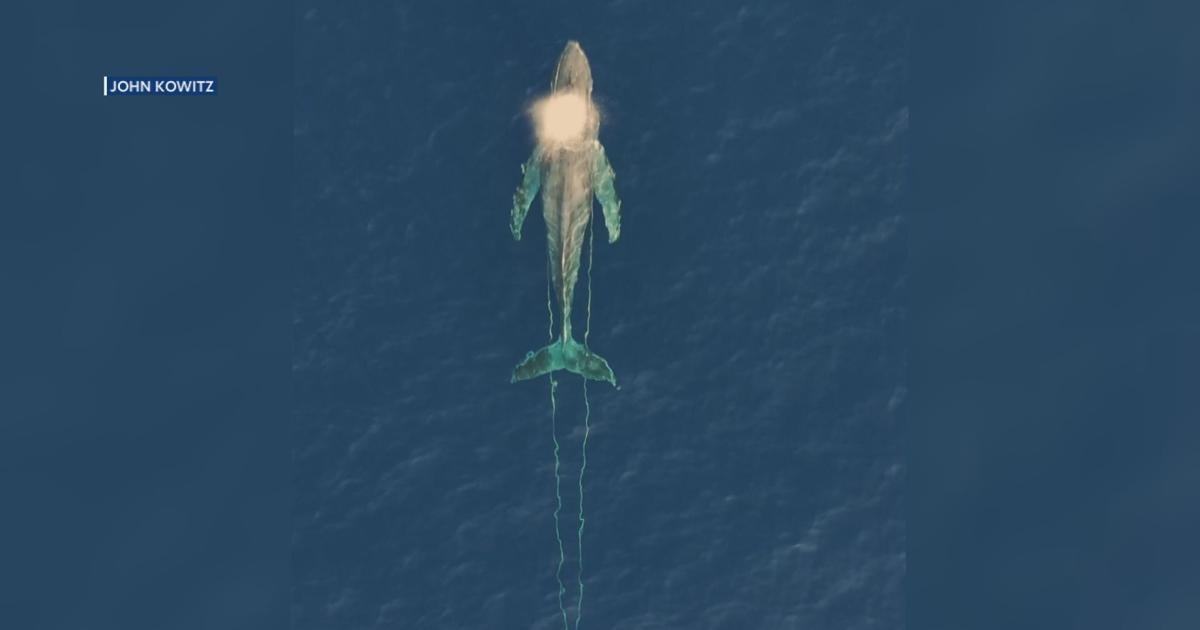
A wildlife tour operator heading offshore spotted two humpback whales near the harbor entrance. At first glance, everything appeared normal. But once a drone went up to capture footage from above, the situation quickly took a troubling turn.
“As soon as he had the drone overhead, the air perspective showed a whale heavily entangled in rope,” said Dylan Currier, owner and captain of SeeThroughSea, a Kona-based ecotourism company. Thick line could be seen embedded near the whale’s head, wrapped through its mouth and trailing far behind its body, something nearly impossible to detect from the surface.
Currier, who is trained in marine mammal disentanglement response, immediately contacted the statewide whale entanglement hotline managed by NOAA and the Hawaiian Islands Humpback Whale National Marine Sanctuary.
A humpback whale entangled in hundreds of feet of line was rescued off the Kona coast this week, thanks to quick thinking and teamwork. Dylan Currier, owner and captain at See Through Sea, said a passenger used a drone to spot the whale entangled in rope near HonoKohau Harbor early Monday.
Working under a federal permit, his crew spent the next several hours tracking the animal and documenting the entanglement using drone footage, topside photography and underwater video, critical information needed for rescue teams to plan a safe response.
Trained responders from Captain Zodiac Kona and the Hawaii Whale Entanglement Response Network were mobilized. Chief Operating Officer and co-owner Colin Cornforth said the footage made it clear just how serious the situation was.
“We knew within moments that we were dealing with a very critical situation, very large gauge gear,” Cornforth said. “The animal proved to be very compromised.”
Responders assembled quickly, deploying multiple vessels and coordinating with specialists from neighboring islands. Over the course of nearly nine hours on the water, teams carefully worked alongside the whale, removing approximately 320 feet of rope, chain and hooks. Cuts were strategically made near the whale’s mouth to reduce drag and allow the animal to eventually shake free the remaining line on its own.
Despite the technical skill required, both men say what stood out most was the human response, starting with the passengers who made the discovery and chose to stay.
“My guests paid good money to go on a trip to look for a variety of different wildlife, and that was completely derailed to spend half the trip staying with an entangled mammal that needed help,” Currier said. “And they were happy to do so.”
Cornforth echoed that sentiment, emphasizing the importance of public involvement when it comes to protecting marine life.
“Calling it in, standing by, observing and giving us every bit of information we could possibly need, it couldn’t have gone better,” he said.
While the entanglement itself was caused by human-made debris, both responders say this rescue is a reminder that people can also be part of the solution.
“I think that there’s still a lot of kindness in this world,” Currier said, “and that we can make a difference for the animals that we run into out there.”
By the end of the day, the whale was left swimming freely, giving responders confidence it has a strong chance to recover and continue its migration.
Officials urge anyone who spots an entangled whale, dolphin or other marine mammal in Hawaiian waters to keep a safe distance, avoid any attempt to intervene, and immediately call the NOAA entanglement hotline at 888-256-9840. Observing and reporting could make the difference between life and death.