
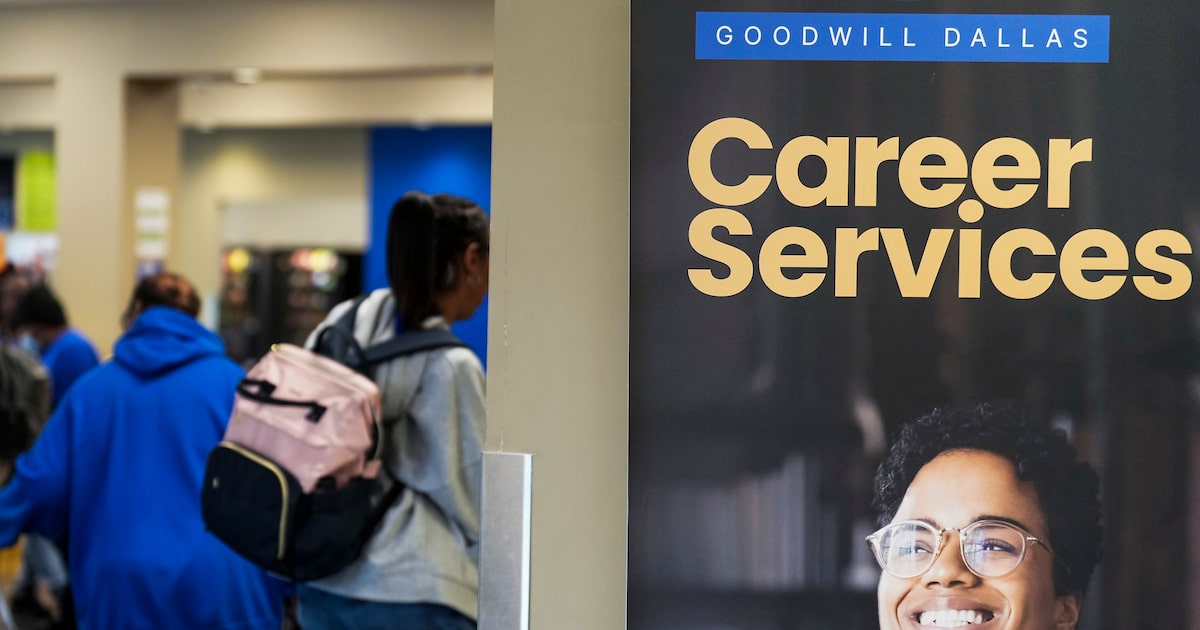
Goodwill Industries of Dallas and Workforce Dallas are launching a 20-week certified medical assistant training program to employ adults largely left out of traditional education and career pipelines.
The Certified Clinical Medical Assistant program, funded by Goodwill Dallas and Workforce Dallas and delivered with TWU Ventures and Skilltrade, begins Feb. 23 at Goodwill’s Westmoreland Road campus in West Dallas. The training runs in a hybrid format that combines weekly online coursework with in-person clinical labs and an externship.
The goal of the program is to move graduates straight into full-time roles with local hospitals and health systems. Participants complete one unit of coursework per week, estimated at 12 to 15 hours, and attend hands-on labs every other Thursday from 8 a.m. to noon at Goodwill’s facility at 3020 North Westmoreland Road.
Texas faces a deepening health care workforce shortage that workforce advocates say is threatening access to care statewide. The problem is compounded by Texas’ nation-leading uninsured rate and by stark local disparities. Health advocates and researchers say residents in southern Dallas have significantly lower life expectancies and higher rates of chronic disease than people in other parts of the city.
The Education Lab
Related
Workforce Dallas, a city of Dallas initiative in partnership with Goodwill Dallas that provides free job training, career placement and support services to adults, notes that the working age population between 35 and 64 makes up more than a third of Dallas residents and is less educated than younger adults.
Research shows that among these workers, Black and Hispanic residents are significantly less educated than white residents and are concentrated in lower wage jobs. A 2021 report commissioned by Dallas Mayor Eric Johnson cites the United Way of Metropolitan Dallas’ definition of a “good job” as one paying more than $32,232 a year.
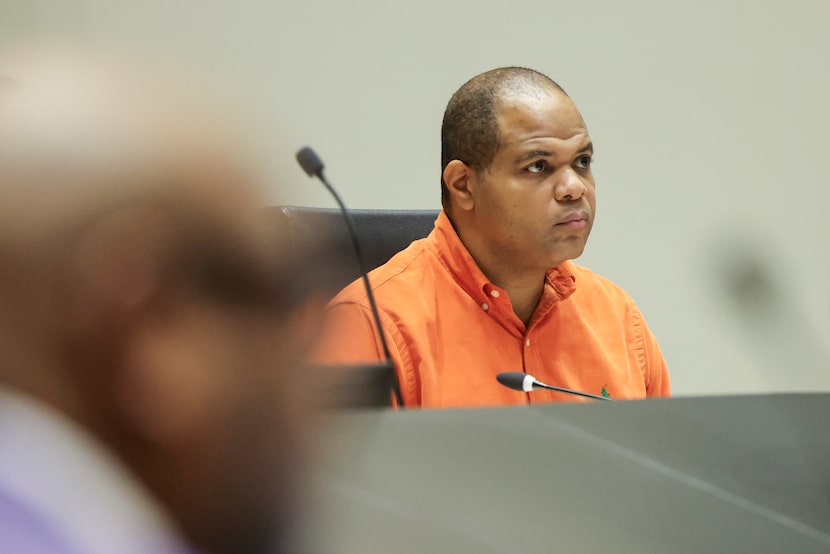
Dallas mayor Eric Johnson listens during a meeting where a resolution is on the agenda to give Fair Park First a development agreement for a community park, on Wednesday, Jan. 28, 2026, at Dallas City Hall.
Shafkat Anowar / Staff Photographer
Only about 40% of jobs in Dallas clear that bar, according to Workforce Dallas. The remaining 60% fall below that level. Those higher‑paying “good jobs” heavily skew toward more educated workers, leaving Black and Hispanic adults disproportionately locked out of higher earnings, workforce advocates say.
By comparison, Dallas County’s living wage ranges from about $47,964 to $64,000 a year, depending on household size, according to the MIT Living Wage Calculator.
In response, Workforce Dallas and Goodwill are targeting training in logistics, health care, hospitality and information technology services, aiming to improve residents’ quality of life by moving them into jobs where employers are increasing hiring.
That matters, because Workforce Dallas points to studies showing that education and training not only boost wages but can reduce mortality and substance abuse, lower incarceration rates and disrupt patterns of generational poverty.
“When Mayor Johnson appointed me workforce czar, he was squarely focused on the forgotten workforce,” said Lynn McBee. “There’s a lot of stuff going on in K through 12, and a lot of stuff in opportunity youth, which is 18 to 24, but there’s not a lot with this adult worker.”
Dallas’ new program is designed to prepare students to sit for the national Certified Clinical Medical Assistant exam and includes externship placement and job placement assistance. Training is free to participants, with financial assistance available, and graduates receive career services and employment support through Goodwill Dallas Career Services.
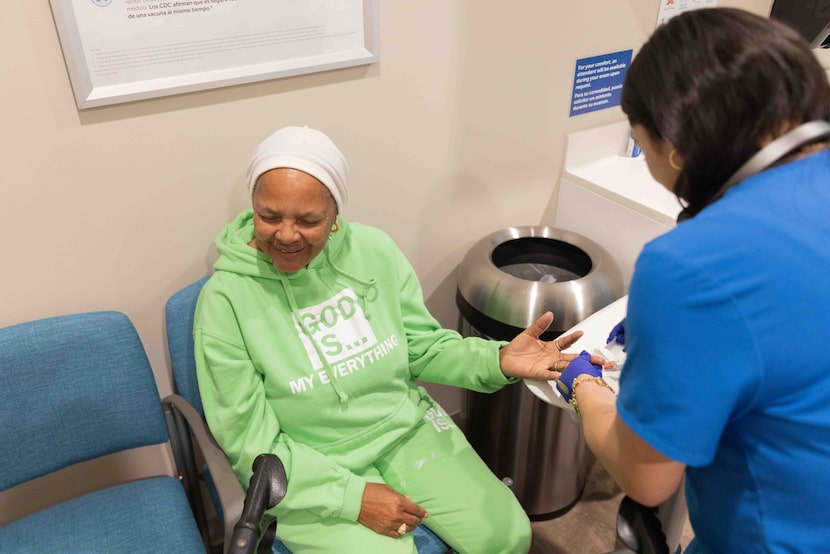
(From left) Wirries Konadu closes her eyes as medical assistant Jennifer Yeh prepares to prick her finger for an A1C test during her appointment at CenterWell Dallas, a clinic that specializes in senior care, in Dallas on Thursday, Jan. 16, 2025.
Juan Figueroa / Staff Photographer
Medical assistants in the Dallas-Fort Worth-Arlington region earned a median wage of about $19.31 an hour in May 2024, according to federal labor data, the most recent available. In Dallas County, the median wage was slightly higher, at about $20.20 an hour, according to an analysis of the same data released Friday morning by the Texas Workforce Commission.
The medical training is the second of four industry specific tracks that Goodwill Dallas and Workforce Dallas are building together. Logistics, anchored in forklift and logistics training with Dallas College, is already underway. The partners hope to add hospitality and IT services next, and are exploring construction-related trades as well.
Interest in the program has been strong. A flyer promoting the training went out to a database of roughly 3,500 job seekers connected to Workforce Dallas, and McBee said the outreach has already drawn more than 600 inquiries.
The first cohort will be small, about 12 to 15 participants, and Goodwill and Workforce Dallas are screening applicants now to make sure the training is a good match for each person, with the goal of setting up the students and employers for success.
The health care track is designed to feed talent into a range of frontline roles across North Texas health systems, including phlebotomy, medical records, environmental services and nurse aide positions. McBee said the program’s long term ambition is to become a source of credentialed, work-ready adults for hospitals and clinics to call on to fill persistent staffing gaps.
Workforce Dallas and Goodwill are already in conversations with systems such as Medical City Healthcare, Texas Health Resources, and Baylor Scott & White Health about hiring graduates, McBee said. She also mentioned Parkland Health and Methodist Dallas Medical Center, adding that those employers played important roles in earlier efforts, including training phlebotomists.
McBee argued that focusing on adults is advantageous for employers.
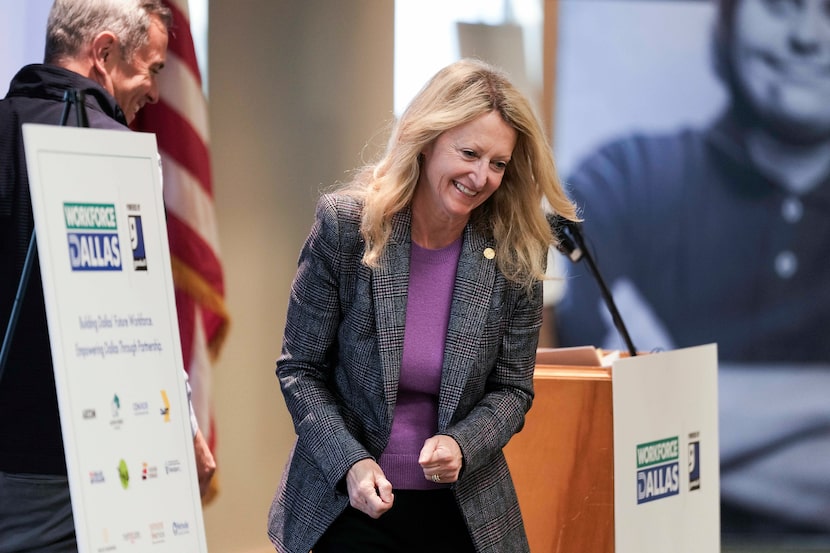
Lynn McBee, workforce development czar for the city of Dallas, trades the podium with Tim Heis, Goodwill Industries of Dallas president and CEO, during an event on the city’s workforce readiness program on Thursday, Oct. 23, 2025, in Dallas.
Smiley N. Pool / Staff Photographer
“You’ve got to provide, maybe for your family or maybe your care, whatever it is,” she said, “and so I think you’re going to get a more mature working adult, a more mature individual, that is going to come ready to work.”
Lauren Holloway, Goodwill Dallas’ vice president of mission and advancement, said the training prioritizes applicants who are 25 and older, but the program is open to anyone 18 and up.
For McBee, the next critical milestone is employer buy-in. The training partners have shown they can prepare motivated adults for these roles. The long-term impact will depend on how many health care employers commit to hiring from the program.
But McBee believes that early adopters could help change hiring practices across the region.
“We can get good people, but we’ve got to have employers that are like, ‘we want to hire your talent,’” she said. “We need to make sure that we are training up and giving adults and people that have grown up here these opportunities.”
This reporting is part of the Future of North Texas, a community-funded journalism initiative supported by the Commit Partnership, Communities Foundation of Texas, The Dallas Foundation, the Dallas Mavericks, the Dallas Regional Chamber, Deedie Rose, Lisa and Charles Siegel, the McCune-Losinger Family Fund, The Meadows Foundation, the Perot Foundation, the United Way of Metropolitan Dallas and the University of Texas at Dallas. The News retains full editorial control of this coverage.