
TORONTO — As the profile of Canada’s automotive sector shifts dramatically, a new report is pushing the federal government to reward automotive companies that are committed to the country.
The report from the Trillium Network for Advanced Manufacturing notes that the last decade has seen U.S. automakers significantly shrink their Canadian footprint, while Japanese companies have kept production and employment steady.
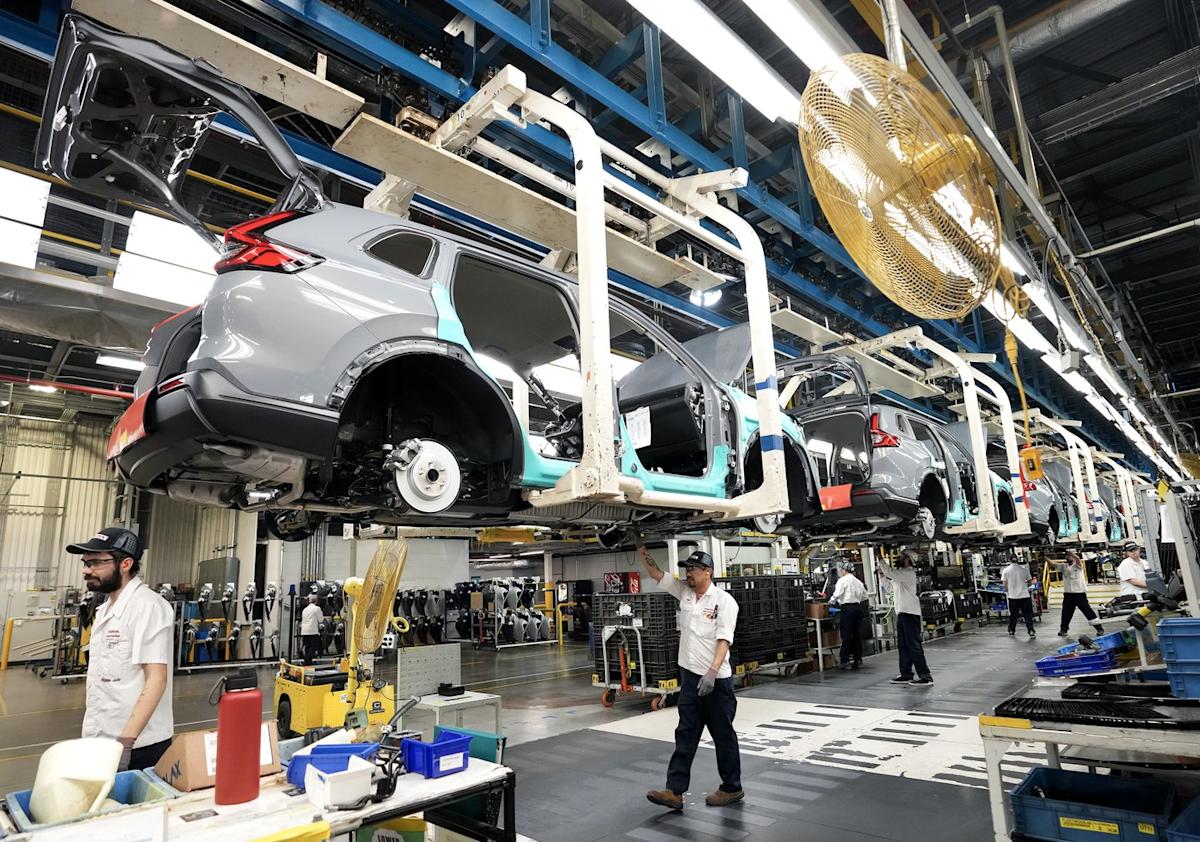
The diverging trends mean Toyota and Honda accounted for about 60 per cent of assembly plant employment in Canada at the end of 2024, up from roughly 40 per cent in 2015. The two Japanese automakers also produced 77 per cent of the vehicles assembled in Canada in 2025, up from 44 per cent a decade ago.
While some of the change is from factors like Ford working to retool its Oakville, Ont., assembly plant, the Detroit-based automaker also pushed back EV production slated there for 2025 by two years, only to change plans again and is now working to start production of gasoline-powered pickup trucks later this year.
U.S.-based automakers have made numerous changes to production in recent years, including some big decisions since U.S. President Donald Trump reversed efforts to increase EV adoption and raised tariffs on imports.
General Motors ended production at its plant in Ingersoll, Ont., last year that was producing its BrightDrop EV delivery van, while last week it cut the third shift at its Oshawa, Ont., plant that produces pickup trucks.
Stellantis moved production slated for its Brampton, Ont., plant to the U.S., leaving the future of the plant uncertain, though it also added a third shift at its Windsor, Ont., plant.
While U.S. automakers have reduced finished vehicle production in Canada, the statistics don’t reflect the wider footprint of the three companies, said Brian Kingston, chief executive of the Canadian Vehicle Manufacturers’ Association that represents Ford, Stellantis and GM.
Kingston said the companies also operate engine plants, research and development facilities and a battery plant that all combined make them still the largest employers among automakers.
“Of course, you absolutely need production, and production is what ultimately anchors your ecosystem, but if you look at what the (Detroit Three) have done in Canada around their production, it’s a far more extensive footprint than what you would see near a Honda or Toyota plant.”
Trillium, however, says the frequent idling and underuse of U.S. plants have also pushed down productivity in the sector and often led to prolonged layoffs, while Japan-based automakers are leading the way on productivity.
With Ottawa set to release its automotive strategy this month, the group says it should reward and incentivize companies that have consistently invested and grown their Canadian footprint, and encourage the use of Canadian-made production technologies in plants.
It says the government should leverage Canada’s buying of about 1.9 million vehicles last year to secure more automotive investment.
The total vehicles bought far outpace the 1.2 million vehicles produced last year, a significant drop from the 2.3 million vehicles produced in 2016, the Trillium report noted.
The federal government is already pushing more automakers to produce vehicles in Canada.
Last week, the government announced a memorandum of understanding with the Republic of Korea with the intention of advancing a Korean automotive footprint in Canada.
It noted that in 2024, 12 per cent of vehicles sold in Canada, or about 228,000 vehicles, were made by South Korean automakers.
The federal government has also reached a deal with China that will see 49,000 electric vehicles coming into Canada at a low tariff rate, with the expectation that Chinese companies also invest in Canada.
The Trillium Network says it welcomes the forthcoming automotive strategy and hopes that it reflects the realities of the industry as they are, not as they once were.
This report by The Canadian Press was first published Feb. 2, 2026.
Ian Bickis, The Canadian Press