
Back in 2021, Winter Storm Uri resulted in more than 240 deaths in Texas as freezing temperatures shut down gas power plants and pushed the state’s independent electricity grid to the brink of collapse.
It was an example of a worst-case wintertime scenario for the power sector — and of how fossil fuel resources, often touted for their reliability, can falter when they’re needed most.
So when the massive Winter Storm Fern was bearing down on more than half of the U.S. last week, including Texas and much of the Southeast, onlookers braced for a repeat. And while the grid was indeed pushed to its limit, it weathered the storm.
In Texas, efforts to winterize power plants following Uri paid off, and the state avoided forced shutoffs this time around. Texas also has added a tremendous amount of wind, solar, and battery storage over the past few years, helping its grid keep pace amid the blistering cold. It’s true that Fern wasn’t as intense of a storm as Uri, but University of Texas energy professor Michael Webber told KXAN that the current grid likely would’ve avoided much of 2021’s devastation.
In New England, which was hammered with snow and intense cold, the power grid was stable but dirtier than usual: It had to rely heavily on oil, a reserve fuel that is especially polluting.
One big reason? Canadian hydropower, usually a key source, was hard to come by as that nation dealt with its own cold spell, and gas was in short supply, too, as New England homes burned more of it for heating. For what it’s worth, Vineyard Wind — the nearly complete offshore wind farm that just this week defeated a Trump administration stop-work order — provided a notable boost to the grid even in its partially finished state.
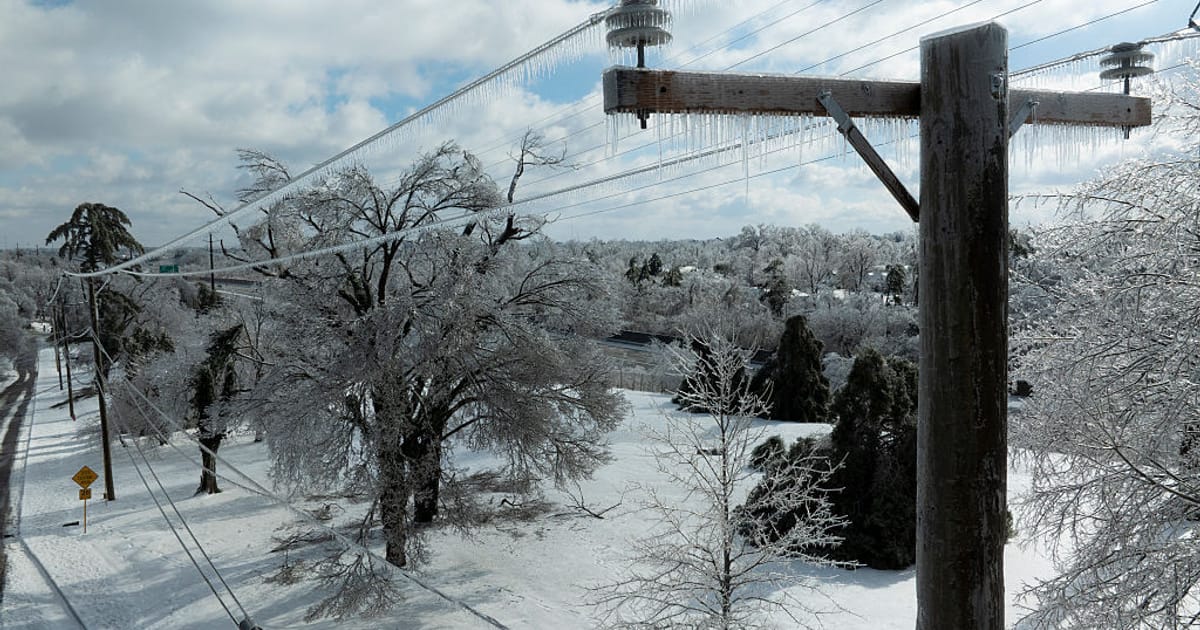
But it wasn’t all good news. More than one million people lost power during the storm, particularly in the Southeast, and thousands are still in the dark as of this morning. Power plant shutoffs aren’t to blame, but rather challenges with the grid itself are, including toppled utility poles, iced-over substations, and downed transmission lines.
PJM Interconnection — the nation’s largest grid operator, which spans the mid-Atlantic — suffered the most intense impact. Data analyzed by think tank Energy Innovation suggests that frozen pipelines and other infrastructure curbed fossil-fueled power plants’ output by tens of gigawatts in the region.
This reduced power generation luckily didn’t force PJM to institute rolling blackouts. But it did, as Energy Innovation put it, underscore a clear point: It’s not viable to rely on fossil fuels alone to get through intense winter weather — and the Trump administration’s efforts to block solar and wind while propping up fossil fuels could prove dangerous if taken to their extreme.
More big energy stories
Outside the U.S., offshore wind sails ahead
As the Trump administration turns its back on offshore wind, the rest of the world is going full speed ahead. Ten European countries formed a coalition this week to build out 100 GW of offshore wind power, Alexander C. Kaufman reports. It’s all part of an effort to turn the North Sea into“the world’s largest clean energy reservoir,” German Chancellor Friedrich Merz said.
The announcement follows China’s insistence last week that it will continue to build its offshore wind dominance, even after a dig from Trump.