
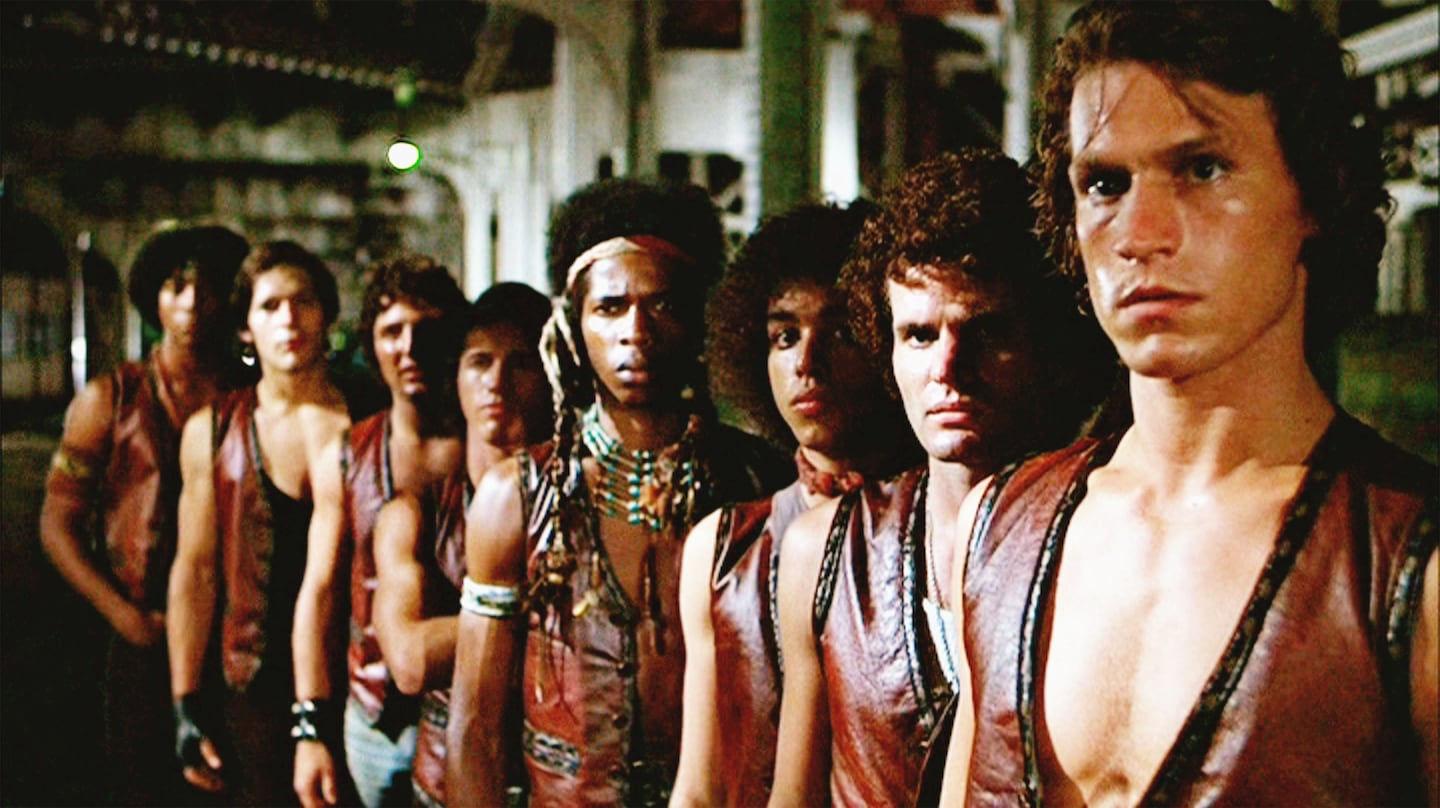
You see, last week I read an article in this very paper about coach Mike Vrabel and his players repeatedly referring to “The Warriors,” specifically actor David Patrick Kelly’s immortal taunt: “Warriors! Come out to play!” That line is quite often the only thing people know about the movie, and it wasn’t even in the script. Kelly improvised it on the spot for his character, Luther, an enemy of the titular gang, and created something iconic in the process. People chant it all the time, especially if they have a few beer bottles hanging around that they can clink together with their fingers, as Kelly does in the film.
Get Starting Point
A guide through the most important stories of the morning, delivered Monday through Friday.
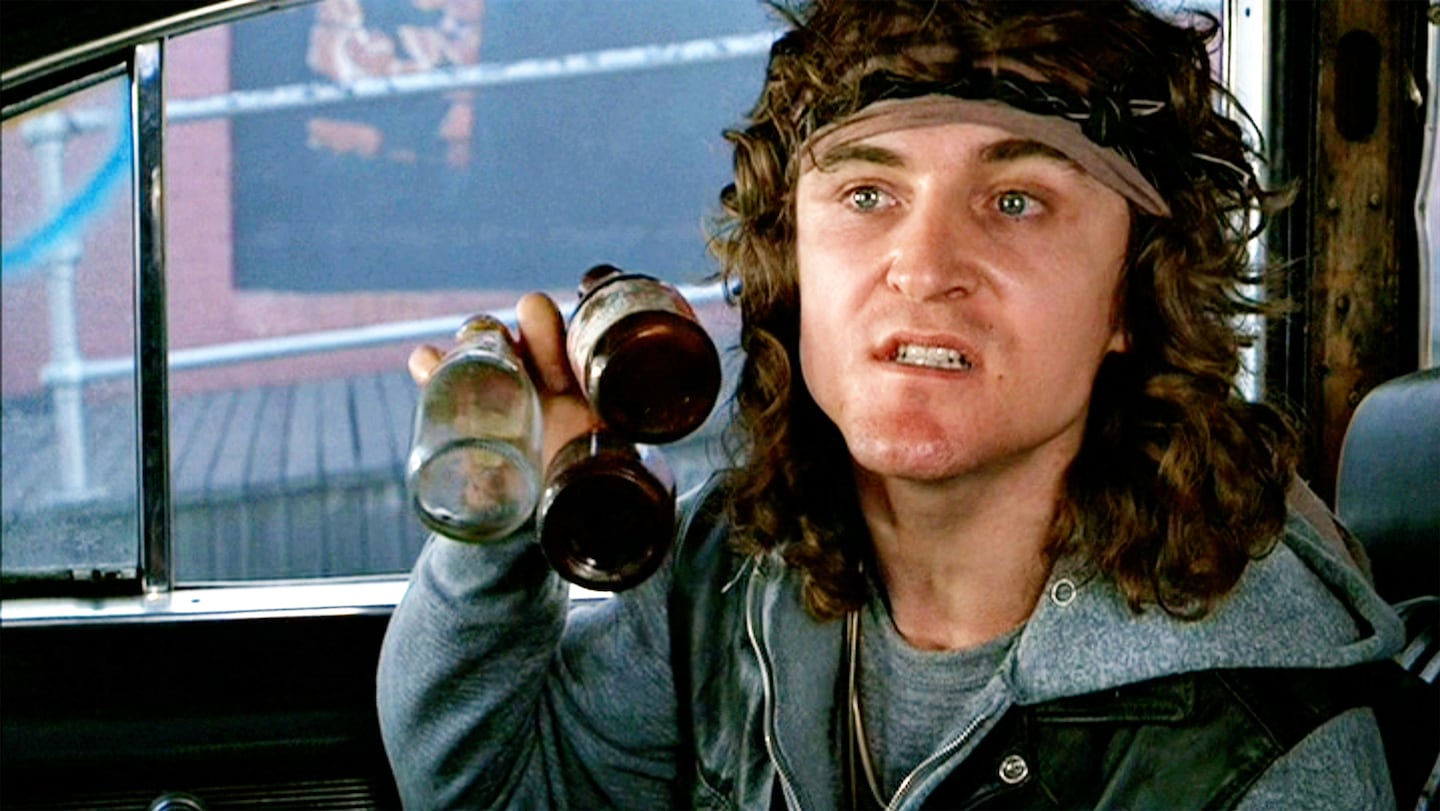 David Patrick Kelly as Luther in “The Warriors.” CBS via Getty Images
I am confused by all of this. I mean, if the Yankees started chanting dialogue from your buddy Ben Affleck’s movie, “The Town,” I’d disown them for invoking a movie as closely associated with Boston as that one is. That’s how much of a New York movie “The Warriors” is. But far be it for me to question the reasoning behind a team’s rallying cry. After all, it got the Patriots to the Super Bowl.
What I found far more flabbergasting was Vrabel’s comment that nobody knew what he was talking about when he first referenced “The Warriors.” “I had to actually show the movie,” he said. His comment reminded me that the reason I know all about the movie is because I saw it opening weekend at the Loews Jersey in my hometown of Jersey City. Which means I am far older than every player on the Patriots. I’m also older than Mike Vrabel.
But I digress. The best I can do here is give a primer on “The Warriors” for those of you who first heard about the film from your hometown heroes. It’s a favorite film of mine, and one of only two movies I’ve attended dressed as one of its characters (the other is “The Rocky Horror Picture Show”).
The plot of “The Warriors” is simple. At a summit designed to form an alliance between all the gangs of New York, the leader of the Gramercy Riffs gang, Cyrus, is shot and killed by Luther, who runs the Rogues gang. Luther frames the Warriors for the truce-breaking crime, leading the Riffs to put out a contract on the Warriors.
As a result, every rival gang wants to off them. Led by their War Chief, Swan (Michael Beck), the Warriors must make their way from the Bronx to their safe home turf of Coney Island. Throughout their journey, they violently face off with several other gangs. There’s a memorable death in the subway; much of this film takes place on the rapidly deteriorating 1970s era MTA. And the film’s lone female main character, Mercy (“Too Close for Comfort”’s Deborah Van Valkenburgh), turns out to be more complexly drawn than expected.
Yurick’s far more serious book was influenced by Greek tragedy. Hill keeps that angle, but everything else about “The Warriors” is extremely stylized, from its dystopian look to its unforgettable, graffiti-sprayed poster title logo. One version of the posters, which contained only the logo, was specifically designed to look like real graffiti on the MTA subway station walls. There was certainly enough of the real thing back in 1979.
Hill has written, produced, and directed movies as varied as “Alien,” the Depression-era boxing drama “Hard Times,” and the violent cop buddy comedy “48 Hrs.” But I’ve always said Hill’s movies, regardless of genre, were westerns under the skin. This one has a twisted nod to “High Noon.” Nobody believes the Warriors are innocent, so no help in defeating their rivals is forthcoming. Making matters worse, there’s an omniscient Greek god of sorts, a radio DJ whose lips occasionally fill the screen to taunt our heroes and tell rival gangs where they are.
We never see anything besides her blood red lipstick-covered mouth, but that instantly recognizable voice is unmistakable. Those velvety tones belong to the late, great Lynne Thigpen, Morgan Freeman’s antagonist in “Lean on Me” (for us Gen Xers), and the Chief on “Where in the World Is Carmen Sandiego” (for you millennials). Thigpen gives “The Warriors” an icy coolness that overshadows the assorted gangs and their memorable outfits.
Speaking of memorable outfits, one of the gangs who target the Warriors is the Baseball Furies. They control Riverside Park on the West Side of Manhattan. With their painted faces, baseball bats, caps, and pinstripe uniforms that resemble the Yankees’ attire, these guys are my favorite gang. Each set has a specific uniform that’s perfect for cosplaying at fan-filled midnight screenings. The Warriors themselves have buttonless vests that show off their abs.
Eventually, the Warriors make it back to Coney Island, where Luther issues his immortal taunt. At the midnight screening I attended as a Baseball Fury back in 2019, someone brought bottles into the theater and recreated that scene. Surprisingly, everyone let that guy have the floor; I expected the entire theater to say the lines, but he was the only one who did.
Such friendly camaraderie wasn’t present at theaters when “The Warriors” opened 40 years earlier. In fact, several violent incidents and riots occurred at screenings attended by real-life rival gangs in New York City, Los Angeles, and Boston. A major fight broke out at my Jersey City screening on opening weekend. Two of these incidents proved fatal, including one in Dorchester. Two weeks after the film’s opening, State Senator Michael LoPresti Jr. from East Boston requested an investigation into having the film banned in Boston.
A skittish Paramount (the studio that released “The Warriors”) temporarily pulled all marketing from TV and radio, and offered to pay for any vandalism theaters incurred. Security was increased at several theaters as well. Nowadays, a movie would never cause this sort of controversy, but back then, it only added to the street cred of a soon-to-be-cult classic.
Though it received many negative reviews (and a positive one from Pauline Kael, who also referenced “The Blackboard Jungle” in her review), “The Warriors” made money at the box office and had a long shelf life. It inspired a concept musical album co-written by Lin-Manuel Miranda in 2023, as well as video games and comic books. Several remakes were considered, but none were made, because how can you make a better movie than this one? It’s a product of its time, lightning in a bottle that can’t be recreated.
Let’s see if the movie’s mojo still works for the Patriots when they come out to play on the home field of my beloved San Francisco 49ers in Santa Clara on Super Bowl Sunday. Until then, to quote Lynne Thigpen’s DJ, “I guess the only thing I can do is play you a song.”
Odie Henderson is the Boston Globe’s film critic.