
When you go to an urgent care center or the emergency room for help, you might not actually be seen by a doctor: The person examining you is wearing a white coat or scrubs and a stethoscope but could be a physician assistant or PA.
That’s OK if you have a minor ailment; otherwise it could cost you your life.
George Trovato, 39, went to an urgent care center in Wading River, NY, for joint pain. A PA told him to start an exercise routine and sent him home.
Two weeks later he was dead from a heart attack.
His wife is suing, claiming he didn’t know he wasn’t being seen by a doctor, and he didn’t get the diagnostic tests that might have saved his life.
More From Betsy McCaughey
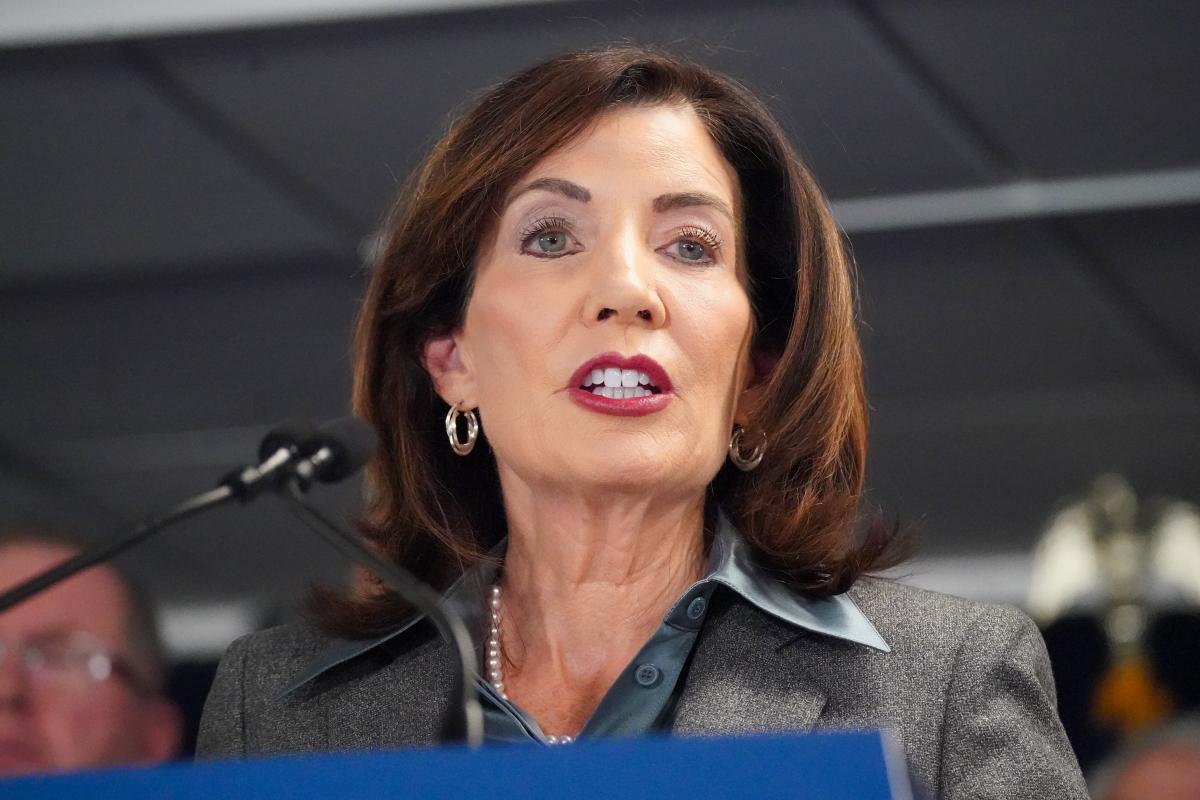
Yet Gov. Kathy Hochul is pushing to allow PAs more freedom to practice without a doctor’s supervision, worsening the danger that already exists.
Right now the law requires PAs to be supervised, though that can mean a review of patients’ charts many hours after the fact.
Supervision requirements went by the wayside during COVID.
Hochul’s proposal would codify letting PAs do almost everything a physician does, including diagnose, without review.
After many tragedies, the British National Health System is doing precisely the opposite: On Jan. 28, the NHS announced it will reduce the use of PAs and bar them from treating undiagnosed patients.
Overreliance on PAs has been a front-page tabloid issue in the United Kingdom ever since a 30-year-old actress, Emily Chesterton, died from a blood clot in her leg that was missed by a PA during two medical visits. She thought she was being seen by a doctor.
The PA incorrectly diagnosed her with a sprained calf and “long COVID” and sent her home.
After she succumbed to a pulmonary embolism, the coroner concluded she should have been sent to a hospital emergency center.
Diagnosis is the danger point.
Becoming a physician requires at least four years of medical school plus a year or more as a resident in training at a hospital.
Get opinions and commentary from our columnists
Subscribe to our daily Post Opinion newsletter!
Thanks for signing up!
It’s the years of study in biology, chemistry and bodily systems that enable a doctor to diagnose the less-common cause of a set of symptoms.
Syracuse University researchers show that “the truncated training period of PAs relative to physicians contributes to a higher average diagnostic error rate.”
They explain that “PAs typically compare favorably to physicians in terms of post diagnostic care” — but you need to be seen by a doctor to analyze your condition first.
It’s a problem, because a quarter of the time American patients are being seen by a non-physician.
They need to be informed of that, and to know when it’s a danger.
PAs came on to the scene in the 1960s in response to the beginning of a doctor shortage that is ongoing.
Large hospital systems and outpatient-care centers began hiring them, because they are cheaper.
They cut the wait time to be seen, and many argued they could reduce overall costs to the health-care system.
But now the evidence shows that using PAs comes with its own cost.
The Syracuse researchers warn of a “lower quality of diagnosis and treatment in the health-care system.”
There’s no question the United States has a physician supply problem. The Association of American Medical Colleges estimates the nation will be short 124,000 doctors by 2036.
The causes are too few incentives to attract young people to the profession, and too few residency programs funded by the government to accommodate medical school graduates.
Both of these problems are fixable.
Becoming a doctor in the US requires from 11 to 16 years of undergraduate and graduate school and hospital training, and students graduate from medical school with on average $200,000 of debt.
That is being remedied.
NYU Grossman School of Medicine made history in 2018 by offering free tuition to all its admitted medical students, thanks to a $200 million bequest from Elaine and Kenneth Langone.
Several other distinguished schools have followed, including Johns Hopkins, Case Western Reserve and Albert Einstein.
Anyone interested in donating to improve health care in the United States should consider supporting medical education. Increasing the supply of educated caregivers is far better than lowering standards.
Medicare funds the residency programs, and the number of slots can be increased by federal lawmakers.
Congress foolishly downsized that number in the 1980s and 1990s on the erroneous belief that more doctors would encourage unnecessary health-care consumption.
In fact, the doctor shortage has led to unwise remedies, such as the overreliance on PAs.
All over the country, governors and legislators are being pressured by the American Academy of Physician Associates, a lobbying group, to blur the distinctions between physicians and PAs.
Hochul should realize that New York is one of the medical capitals of the nation.
Lowering the standard of care will imperil that reputation — and put New Yorkers’ lives at risk.
Betsy McCaughey, a former New York lieutenant governor, is chairman of the Committee to Reduce Infection Deaths