
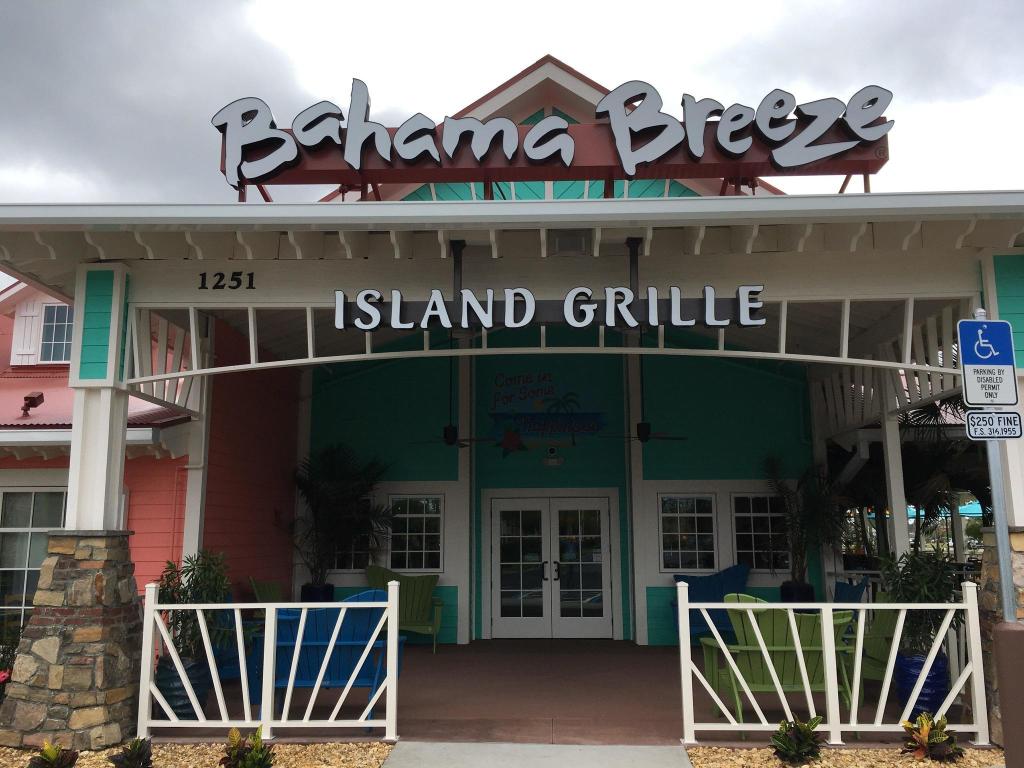
Orlando-based Darden Restaurants announced Tuesday it would be closing all of its remaining Bahama Breeze locations nationwide, ending the brand after 30 years.
Half of the 28 Bahama Breeze locations across the country will be converted into Darden’s other restaurant brands over the next 12 to 18 months and are expected to continue operating until any temporary closures are needed to convert them, the company said. The other 14 will be permanently closed as of April 5.
Darden said it doesn’t expect the closures to have a material impact on its financial results.
“The company believes the conversion locations are great sites that will benefit several of the brands in its portfolio,” Darden said. “Going forward, the primary focus will continue to be on supporting team members, including placing as many as possible in roles within the Darden portfolio.”
The first Bahama Breeze location opened on International Drive in 1996 and was an instant hit.
“This creative Caribbean restaurant proves that mega-corporations can do good food if they want to,” wrote the Orlando Sentinel’s food critic at the time, Scott Joseph.
Industry analysts in 1998 said Bahama Breeze’s Florida locations averaged sales of at least $6 million a year, twice the average at each of Darden’s more established chains, Red Lobster and Olive Garden.
But the brand has recently been in trouble.
Darden closed 15 Bahama Breeze locations across the eastern United States in May, saying that it would allow the brand to focus on its highest performing restaurants and strengthen the its overall performance. But its nine locations in the Orlando metro area had been spared.
John Gordon, a longtime industry analyst based in San Diego, said Bahama Breeze’s fall is in part due to the relatively limited popularity of Caribbean food in the U.S. It was also about balancing real estate costs versus profitably — a major problem for Darden, since the chain is one of the larger brands in its portfolio in terms of square footage per location.
But he said larger industry-wide problems are also to blame, including consumers who make less than $50,000 annually spending less due to inflation. Consumers in their mid-to-late twenties are also not able to financially establish themselves and spend as much as previous generations were able to do at that age.
Gordon said Darden’s priorities right now are taking care of their existing brands and finding new, exciting brands that they can bring on board.
“They know that Olive Garden is growing older,” he said of the Italian chain’s aging customer base. “Some of the customers are transitioning when they get older, they don’t go out to eat as much. … So they know that they have to be investing in other hot up-and-coming concepts.”