
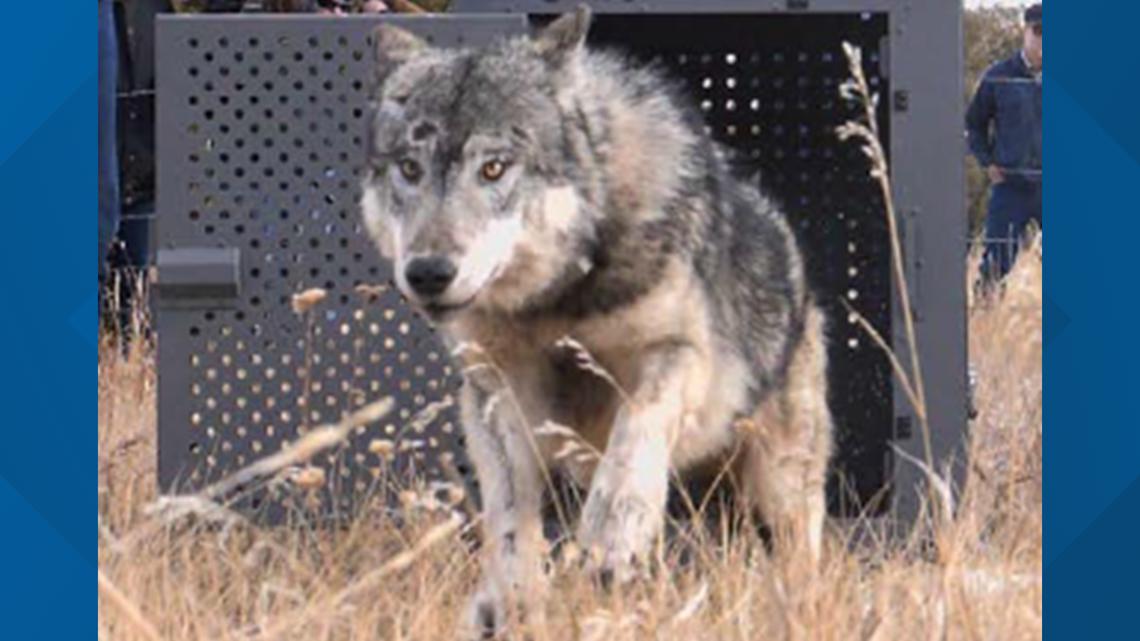
Gray wolf 2305, a three-year-old breeding male in the King Mountain Pack, died on Jan. 28.
ROUTT COUNTY, Colo. — Colorado Parks and Wildlife announced on Tuesday that a gray wolf died during routine collaring operations in Routt County.
Gray wolf 2305, a three-year-old breeding male in the King Mountain Pack, was the one that died on Jan. 28, CPW said.
“All wildlife capture operations come with a risk and while we meticulously prepare and take every precaution to ensure a positive outcome, there is always the possibility, even if small, that the worst happens,” Colorado Parks and Wildlife Acting Director Laura Clellan said. “Our staff and contractors carefully followed CPW Animal Care and Use Committee (ACUC) guidelines during this operation, but when the animal was delivered to CPW staff in the field from the initial capture site, it was unresponsive. Our team initiated resuscitation efforts but determined the animal had died.”
CPW performed a necropsy at its health lab in Fort Collins. Final results and lab tests from the necropsy are still pending and will help determine if there were any underlying conditions that contributed to the death of the gray wolf, CPW said in the media release. An independent third-party veterinary pathologist was in attendance for the necropsy and will confirm all exam results, according to CPW.
“As gray wolves in Colorado are a federally endangered species, the standard protocol for necropsies is that they be performed by the U.S. Fish and Wildlife Service (USFWS). In this case, because this was not a potential law enforcement investigation, CPW received permission from USFWS to perform this necropsy to help expedite the process,” the media release says.
““We are grateful for the U.S. Fish and Wildlife’s support in accelerating this process so it could be communicated to the public in a timely manner,” Clellan said. “While ACUC guidelines do not necessitate a pause in capture operations following one mortality event, CPW has decided to cease capture operations for the time being while we evaluate the circumstances around this mortality.”
In addition to the capture of wolf 2305, the adult female and one pup from the King Mountain Pack were also capture and collared during the operation, CPW said. Summer counts indicated four pups were a part of the pack and all four, including the newly collared pup, were observed during the operation, according to the media release.
“It’s not yet possible to understand the long-term implications to the King Mountain Pack as a result of this mortality,” CPW Wolf Conservation Program Manager Eric Odell said. “We will continue to monitor this pack to evaluate their status and how they are contributing to the establishment of a self-sustaining wolf population in Colorado.”
CPW said the reason they were conducting collaring operations so they could monitor the activity of wolves in Colorado, which includes tracking wolf localizations to “aid with timely deployment on conflict minimization resources.” They also stated that they strive to keep at least two members of each pack collared as it’s outlined in the Colorado Wolf Restoration and Management Plan.
“CPW staff were aware that the collars of the breeding adults of King Mountain Pack had low batteries and therefore wanted to replace them to maintain connectivity with the pack,” the media release says.
The agency also said that operations like this are standard across a number of different species and are an important aspect of successful wildlife management in Colorado.
In addition to the King Mountain Pack, CPW continues to monitor three other confirmed packs and other known wolves in the state.