
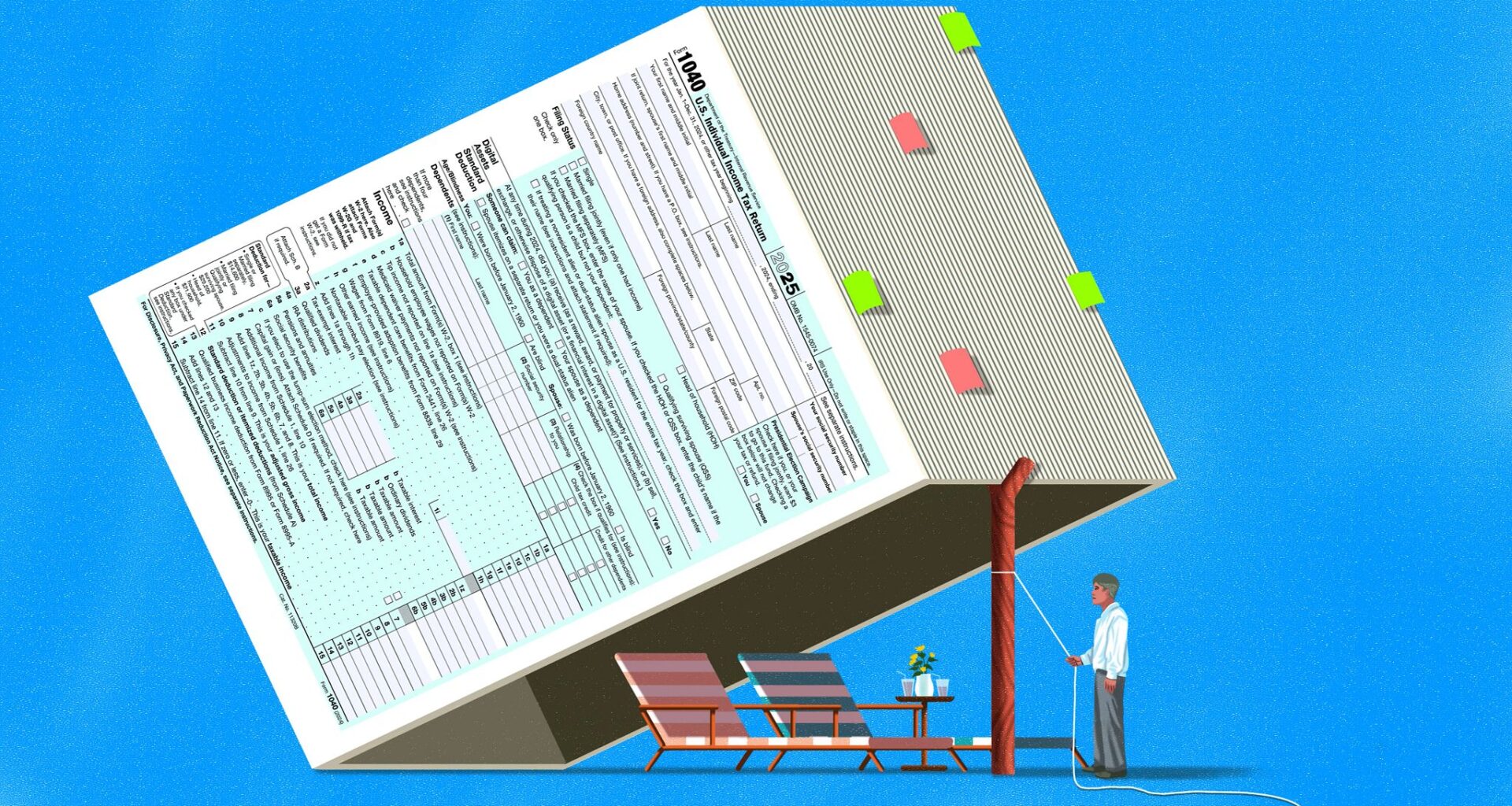
For tax years 2025 through 2029, though, the OBBB temporarily raises the SALT cap to $40,000 for most filers. The limit will increase 1 percent each year through 2029, then drops back to $10,000 in 2030. For the 2025 tax year, the $40,000 cap is reduced by 30 cents for every dollar of MAGI over $500,000 ($250,000 for married people filing separately), to as low as $10,000.
Because of the higher SALT deduction cap, “we are expecting a lot more taxpayers to itemize,” says Brian Schultz, leader of the tax practice at Plante Moran Wealth Management.
7. Not planning for pretax retirement account withdrawals
Traditional 401(k)s and IRAs offer pretax contributions, lowering your current taxable income, but you have to pay income tax on that money when you start making withdrawals. Without a strategy in place, you could be digging deeper into your pocket than you would otherwise have to.
If you have a large nest egg in pretax retirement accounts, “you’re accumulating a tax time bomb,” warns Schultz. Not preparing for the tax implications of required minimum distributions (RMDs) can lead to a surprise tax bill if the amount of your distribution pushes you into a higher tax bracket, and it could trigger Medicare premium surcharges as well.
“That’s where everything kind of comes back to proactive planning,” says Andy Evans, an Edward Jones financial adviser in Houston.
Many financial advisers recommend that clients transfer money from traditional 401(k)s and IRAs to Roth accounts. Because traditional retirement accounts are funded with pretax contributions, withdrawals are taxed at ordinary income rates. But Roth accounts are funded with after-tax dollars, which means two things: Your withdrawals are tax-free, and there are no RMDs. (Future earnings grow tax-free as well.)
“Before the age of required distributions, we can plan ahead through Roth conversion strategies to lower those RMDs,” Evans says.
8. Getting the timing wrong on Roth conversions
Because money you convert from pretax retirement accounts into Roth accounts is taxed at your ordinary income rate in the year that you make the conversion, many financial advisers say the best time to convert them is in lower-income years. If you don’t time the conversion correctly, you could be stuck paying a higher marginal tax rate than the one you’d pay from conducting the conversion in a lower-income year.
Conversely, because every dollar you convert gets added to your taxable income for that calendar year, converting a large amount of money into a Roth account in a single year — rather than spreading it out over several years, as many tax pros recommend — can reduce your eligibility for income-based tax breaks, including some of the new deductions in the OBBB.
“You have to be more careful now,” Schultz says. “For example, if I convert $10,000 of my IRA to a Roth … I also might be phasing out some of my deduction for being a senior.”
Consider speaking with a financial adviser who can help you determine when it makes sense for you to make a Roth conversion.