
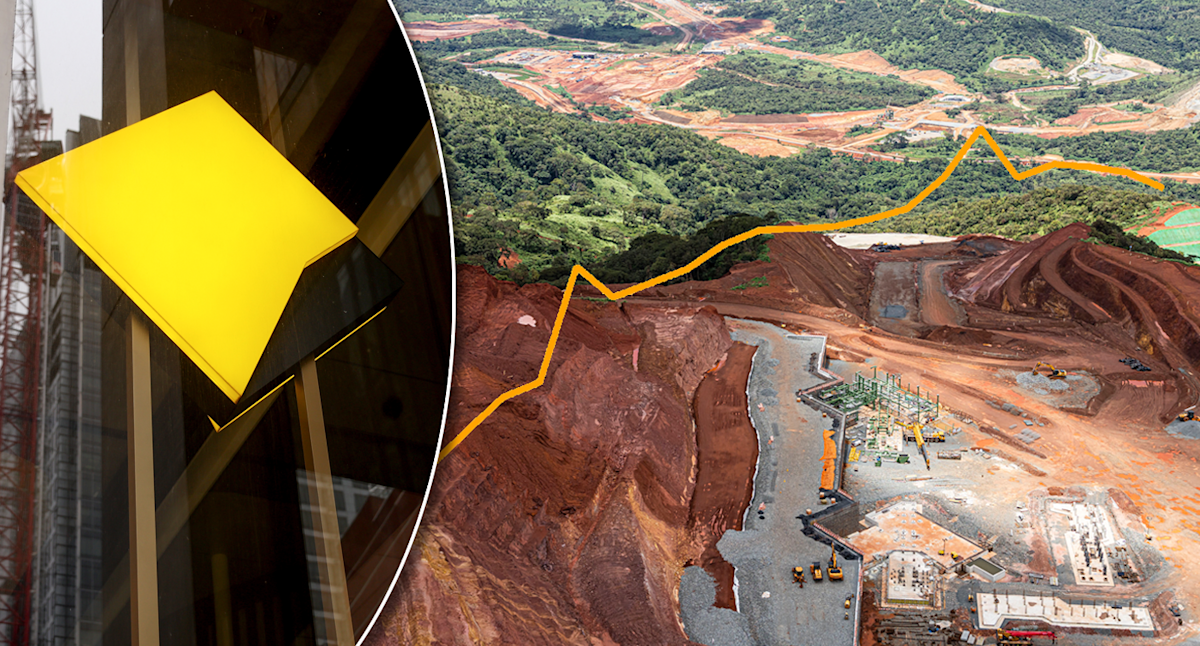
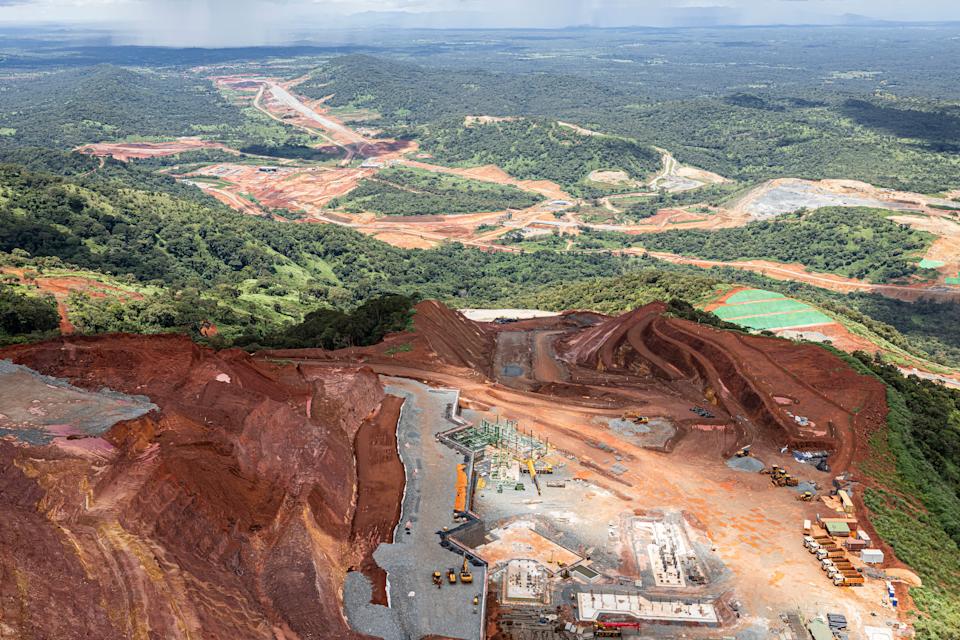
 The Simandou mining project is tapping one of the world’s richest iron ore deposits. (Source: AFP/Getty) · AFP via Getty Images
A few weeks ago, China quietly received its first shipment from a massive mine it hopes will reduce its dependency on the Australian government for a critical resource. Dubbed the ‘Pilbara killer’, the supply from the Simandou mine in Guinea, West Africa, could mark the start of a “decoupling” of the iron ore market which Australia has long dominated.
After a 46 day voyage, a vessel carrying nearly 200,000 metric tons of iron ore from Guinea arrived in Majishan port in East China’s Zhejiang province on January 17, the China Baowu Steel Group, the world’s largest steel producer, said in a statement on Chinese social media.
A second shipment reportedly departed in late December and should be arriving any day now.
In total, the four mining blocks in the West African area – a US $30 billion joint venture with Rio Tinto – aren’t expected to be running at full capacity for a couple more years, but then it’s tipped to produce 120 million tonnes of high-grade iron ore a year.
It’s a scenario that could even blow a $10 billion hole in the Australian budget from a reduction in mining tax royalties if projected price pressures on the iron ore market come to pass.
RELATED
China imports 80 per cent of its iron ore from Australia and Brazil and has been trying to diversify its supply by expanding domestic output and investing in overseas mines.
This week Reuters reported the China Baowu Steel Group has tightened its grip on the mine, increasing its ownership and taking control of two blocks of the mine.
 The Chinese operated mine has begun early production almost 30 years after explorations began in the Simandou mountain range. (Source: AFP/Getty) · AFP via Getty Images
The peak yearly output from the Simandou mine will be the equivalent to 5 per cent of global production in 2024, according to the Commonwealth Bank, which is foreshadowing a potential “decoupling” in the iron ore market as geopolitical tensions between the United States and China reorganise the global economy.
China’s dependence on Australia for the steel making material is an immense strategic vulnerability, the bank’s Senior Geo-economics Analyst Madison Cartwright noted this week. And the White House knows that too.
“With iron ore being a major economic vulnerability for Beijing, it is reasonable to expect the United States might want to lean on Australia to weaponise its iron ore exports at some point,” he wrote in a note published by the bank on Wednesday.
Story Continues
“Given that neither Australia’s relationship with the United States nor China’s threat assessment of the international environment will likely change, China’s mitigation strategies will continue, even in the absence of a conflict. The result will be downward pressure of iron ore prices and restrictions on growth for Australian exporters,” he cautioned.
China’s immense steel production is heavily reliant on Australia’s iron ore input. (Source: Commonwealth Bank)
Cartwright noted the situation continues to be a tricky one for Australia, which is equally reliant on China buying its iron ore, describing the trade as a “mutual vulnerability” for both countries.
“Iron ore exports to China account for 20% of Australia’s exports of all goods. This is larger than Australia’s total export of goods to Japan – its second largest export market – and larger than its total exports of goods to South Korea, India, the United States and Taiwan combined.”
The recent spat between China and Aussie mining giant BHP in which shipments were frozen over an apparent price dispute is a recent example of China’s willingness to resort to “economic coercion” to meddle with the iron ore market, Cartwright said, and “remind the Australian government of its own vulnerability”.
Opposition finance spokesperson James Paterson warned about the high stakes for Australia at the time of the dispute.
“Iron ore is obviously Australia’s largest export and one of the single biggest contributors to the federal budget bottom line,” he said in October.
“Nothing is more important, in fact, for a surplus and deficit in some financial years than the iron ore price, and so if our Chinese partners are using attempted leverage to try and drive down the price and underneath a competitive international market price, then that would be very concerning.”
The price of iron ore can dictate Australia’s budget outcomes. (Source: Commonwealth Bank)
China’s strong-arm tactics continue to be “a signal to Canberra that the iron ore trade is one that China is willing and able to weaponise,” Cartwright said, even though the country can’t wean itself of Australia’s supply in the foreseeable future.
But the trend could make the job of the federal treasurer that much trickier in the years ahead.
“We expect iron ore prices to fall as seaborne supply increases and China’s steel output declines,” the Commonwealth Bank analyst said.
“We expect China’s mitigation strategy to continue and perhaps intensify.”
Underscoring the importance of the sector to the country is the fact that iron ore giant BHP has taken the mantle as the most valuable company on the Australian stock exchange this week.
BHP surged more than 4 per cent yesterday to overtake Commonwealth Bank as Australia’s biggest company. The company’s $266 billion market cap has now surpassed CBA by almost $3.3 billion.
Get the latest Yahoo Finance news – follow us on Facebook, LinkedIn and Instagram.