
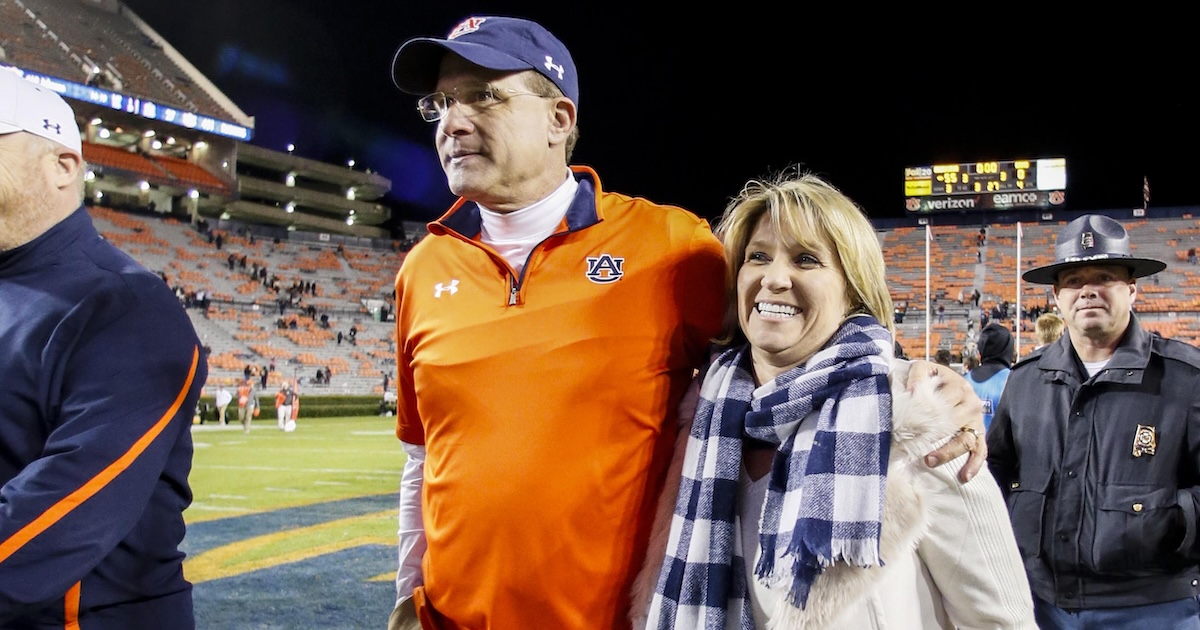
Gus Malzhan will always be proud of his high school coaching roots and his unconventional journey to the college ranks.
At 25, Malzahn got his coaching start in 1991 — as a defensive coordinator, no less — at Hughes High School in the Arkansas Delta, not too far from the Mississippi River. The next year, he was promoted to head coach, and within three years, he had Hughes in the state championship game.
A decade later, he made the enormous jump to the SEC as Arkansas’ offensive coordinator and quarterbacks coach despite having no previous college coaching experience.
On Monday, Malzahn announced his retirement after 35 years in coaching, including this past season at Florida State as the Seminoles’ offensive coordinator. Malzahn owns the distinction of being the game’s only person to win 100-plus games as an FBS head coach in college (105) and 100-plus games as a high school head coach (144).
At the rate Joey McGuire is going at Texas Tech, he could join Malzahn on that list somewhere down the road.
But for now, Malzahn is one of one, and when you peel back the layers of his coaching career, the impact he had on the game during his 11 seasons at Auburn (eight as head coach and three as offensive coordinator) is still being felt around the sport. He helped revolutionize the SEC by daring to bring with him from the high school ranks a warp-speed, no-huddle offense filled with misdirection and option principles that spread defenses out and then pounded them with the running game.
Not only that, but Malzahn was one of the few coaches to beat Nick Saban (at least some) during a time when Saban was devouring the rest of the SEC and college football.
“That was a special time at Auburn, the players and coaches we had. Counting my time as an assistant, in 11 years at Auburn, we won a national championship, two SEC championships and played in three SEC championship games,” Malzahn told On3 this week. “And we were doing things on offense nobody else was really doing back then in the SEC.”
Indeed, the Tigers set the SEC rushing record in 2013, Malzahn’s first season as head coach, with 4,596 yards on their way to an appearance in the national championship game, where they lost 34-31 to Florida State in the final seconds. During four of his first five seasons, Auburn finished in the Top 25 of the final AP poll. And in those first two seasons, Auburn operated at a blistering pace on offense with one of the best athletes in the league, Nick Marshall, carving defenses apart with run-pass option plays from the quarterback position.
“It was a huge advantage when we were the first ones to play that way. Nobody was used to seeing it, and now everybody’s doing some version of it,” Malzahn said.
Malzahn had already established himself as one of the most innovative offensive minds in the SEC before landing the Auburn head job in 2013. Three years prior, he was calling plays for Cam Newton as the Tigers’ offensive coordinator, and they averaged 41.2 points per game and rolled up 3,987 rushing yards that season — the second most in school history — on their way to the 2010 national championship.
The defensive establishment in the SEC was anything but happy with Auburn’s frenetic pace of play. Saban was at the top of that list. Malzahn’s offenses were going so fast that defenses could barely get lined up for the next snap, nor could they substitute. Saban suggested it wasn’t safe for defensive players to play so many plays in a row and famously asked, “Is this what we want football to be?”
Two years later, there was a proposed rule change that would have penalized offenses for snapping the ball with more than 29 seconds remaining on the 40-second play clock, and some coaches pushed to have the college rule changed to the NFL rule (from 3 yards to 1 yard) on how far downfield offensive linemen could block on pass plays. Those early Malzahn offenses had success with “pop passes,” where the quarterback on an option play flipped a pass to a receiver instead of keeping it or pitching to a running back. The best example was Marshall’s 39-yard game-tying touchdown pass to Sammie Coates in Auburn’s 34-28 win over Alabama in the epic “Kick Six” game.
“Everybody was complaining, and then they all started doing the same thing,” Malzahn joked.
Not only did defenses have to adjust, but so did the officials. Malzahn joked that he and then-SEC coordinator of officials Steve Shaw became regular phone pals.
“We had a lot of talks, a whole lotta talks back in the day,” Malzahn said. “It was new for the officials, too, and that was the hardest thing, getting them to put the ball down. They were so used to everybody huddling. It got better, and they got used to it. And then the more everybody started doing it, the officials caught up.”
The irony of all ironies is that Malzahn said Saban called him about the Alabama offensive coordinator job going into Saban’s second season at Alabama in 2008. Malzahn had just finished his first season as Todd Graham’s assistant head coach and co-offensive coordinator at Tulsa, which was putting up monster numbers on offense.
“We had the best offense in the country (averaging 543.9 yards per game), and I remember Julio Jones was waiting to see who the offensive coordinator was going to be,” Malzahn said.
Asked why he didn’t go, Malzahn said, “I don’t know. That’s a great question. I’d just come from Arkansas, which was my first year in college coaching and had only been at Tulsa for a year. I guess I wanted to do my own thing.”
Little did Malzahn know at the time that he’d be going up against Saban’s defenses a year later when Malzahn joined Gene Chizik’s staff at Auburn as offensive coordinator in 2009.
“I just remember thinking, ‘That’s pretty cool. Here I am, an old high school coach, and Nick Saban is calling me about a job,’” Malzahn said, laughing. “But that was one of the things that made my time at Auburn so special, being there when Nick was and going against the best to ever do it as your rival. It was a pretty unique situation, and I loved it. There is no rivalry like that one, and it helped motivate all of us. We had kids who believed and understood the rivalry, too. We always had a chip on our shoulder, and when we played them, we expected to whip them.”
Alabama won back-to-back national championships in 2011 and 2012, but after that 2013 defeat to Auburn, Saban brought in Lane Kiffin to modernize and revitalize Alabama’s offense, which included more tempo, and Saban also made defensive adjustments, trading size for speed at different positions in the front-seven.
“That’s the thing about Nick. He adapted,” Malzahn said. “That’s what always stood out to me about him was that he kept winning at the same level, changing coaches just about every year and changing with the game. All the stuff he complained about, he adapted and ended up doing it just as well as anybody else.”
Malzahn beat Alabama and Saban three times between 2013-19. Saban lost only three other games to SEC opponents during that span. Auburn was on the cusp in 2017 of playing for perhaps another national title after beating Georgia and Alabama in back-to-back games to end the regular season, but lost to Georgia in an SEC championship game rematch.
Georgia went on to face Alabama in the national title game, and the Crimson Tide won their fourth title in seven years. Malzahn still wonders what might have been had star running back Kerryon Johnson not been severely limited in the SEC championship game with shoulder and rib injuries.
“We were close that year,” Malzahn said. “If Kerryon doesn’t get hurt, I think we win the whole thing.”
The tributes to Malzahn from his former coaches and players have poured in the last few days on social media, and several media members who covered him over the years have also chimed in, even though Malzahn was never overly outgoing in press conferences and at times was accused of being paranoid.
One of the qualities, though, that so endeared Malzahn to people, friend and foe alike, was the way he stayed grounded and true to himself in a pressure cooker of a job like Auburn’s, especially with Saban stacking up national championships every other year in the same state.
The Iron Bowl never sleeps, and Malzahn carried with him the advice Pat Dye offered him soon after taking the head job.
“You only have to go through one Iron Bowl to know that it’s different,” Malzahn said. “But I remember the first thing Pat Dye told me after I was hired as head coach was, ‘If you will think about nothing but how you’re going to beat Alabama for 365 days a year, everything else will take care of itself.’
“And the longer I was there, he was 100 percent correct.”
Even though he didn’t always show it, Malzahn was a lot wittier than most people realized. Yes, he was guarded (most coaches are), but he was not above going out and mingling with fans. Just ask the waitresses and patrons at the Waffle House just off campus at Auburn. Malzahn and wife Kristi were regulars after big wins.
His order was always the same: Steak omelet, hash browns scattered, smothered, covered and chunked. He and Kristi would also usually split a waffle.
His players knew he always meant business, even though Malzahn wasn’t one for swear words. You’d get a “dern” or “crap” out of him on the practice field, but it was generally PG-rated.
“That doesn’t mean he can’t light into you,” former Auburn linebacker Kris Frost once said.
Ultimately, Malzahn saw his support erode among the power brokers at Auburn, even after beating Alabama in 2019, and was fired by then-athletic director Allen Greene at the conclusion of the 2020 COVID-19 regular season. Auburn went 6-4 against an All-SEC schedule, but it was the seventh straight season that the Tigers had lost at least four games.
Malzahn, who signed a new seven-year, $49 million contract to stay at Auburn at the end of the 2017 season when Arkansas came after him hard, said he could sense that there was an appetite to move on from him as the 2020 season wound down.
“You could feel it, especially with COVID and being such a weird year that way,” Malzahn said. “We were 6-4, but I thought we were going to have a really good team coming back and Bo (Nix) was going to be a junior. So I was hopeful, but they felt like they had to make a change.”
Malzahn walked away with a $21.4 million buyout, the largest in college football history at the time, and the Tigers haven’t had a winning season since — five straight losing seasons and seven straight Iron Bowl losses. Alex Golesh will be Auburn’s fourth different head coach in the last seven years.
While questions on the Plains may linger about whether the program would have dipped as much if Auburn had shown more patience with Malzahn, he’s not about to join that conversation. In fact, he and Kristi are moving back to Auburn. They never sold their home.
There are fringe benefits too. They have four grandchildren ranging in ages from 7 to 4. Three of them live in Auburn and one in Birmingham.
“We loved Auburn,” Malzahn said. “It was more than just a job for me. It was personal. I think you just have to be there and be part of that community to fully understand it. That’s probably the best way to put it.”
As for what’s next, Malzahn said he has no plans. He may look at something in the ministry or consulting. But Kristi, daughters Kylie and Kenzie and the four grandkids are going to get most of his attention.
During the ups and downs, Malzahn and Kristi have made a remarkable team. She was the team mom at all his coaching stops, always an asset in the recruiting process and undoubtedly his most devoted fan.
“We did it together, this whole journey,” Malzahn said of Kristi, who survived a harrowing health scare in 2022 when Malzahn was the coach at UCF.
She was hospitalized with an infection, and Malzahn said back in 2022 that he was scared to death that he was going to lose her.
“But she’s great now, a true blessing that she made it through healthy,” Malzahn said. “I’m so very thankful as we go through this next chapter of our lives together.”
Malzahn said he will get his football fix by visiting this spring and during the preseason with some of his former coaches who are now running their own programs. SMU’s Rhett Lashlee and Missouri’s Eli Drinkwitz go all the way back with Malzahn to his Springdale High School coaching days. Missouri State’s Casey Woods worked under Malzahn at Auburn when Malzahn was the Tigers’ offensive coordinator. There are also countless friends that have touched Malzahn’s life along the way.
Case in point: ESPN basketball analyst Jimmy Dykes was the athletic director at Shiloh Christian School in Springdale, Arkansas and the one who hired Malzahn in 1996, and from there, it was on to Springdale High School. Malzahn’s 1998 team at Shiloh Christian set a national record with 66 touchdown passes. He won two state championships at Shiloh Christian and another one at Springdale, where he coached five-star quarterback Mitch Mustain, and they both landed at Arkansas that next year in a package deal of sorts with four other highly rated prospects from that Springdale team.
The Hogs made it to the SEC championship game in 2006, but it was a tension-filled season and not the full dose of what Malzahn wanted to do offensively. The “Wild Hog” was born with Darren McFadden taking direct snaps and rushing for a school-record 1,647 yards and finishing second in the Heisman Trophy voting. But head coach Houston Nutt wasn’t sold on the hurry-up aspects of Malzahn’s system, and Malzahn was off to Tulsa at the end of the season.
Malzahn had a chance to join the SEC head coaching fraternity two years earlier than he did, but with Auburn steamrolling toward a perfect season and national championship in 2010, Malzahn turned down a deal worth $3 million annually to be Vanderbilt’s head coach the next season. The Commodores wound up hiring James Franklin. Malzahn won the Broyles Award as college football’s top assistant coach, a season that saw his Auburn offense set single-season school records for points, points per game and total yards.
As Malzahn looks back now, he chuckles at some of the characterizations of him over the years — mad scientist, genius, guru.
Nope, he was just a kid who grew up loving football, not talented enough to play at Arkansas, even though he went there initially as a walk-on and then finished his career at Henderson State.
And when he got the job at Hughes High School, the model for his offense was “The Delaware Wing-T: An Order of Football” book. Malzahn combed through the book word for word.
“That was my foundation,” he said. “I never got a chance to learn under anyone, so it was just me going by trial and error and stealing some stuff from successful Arkansas high school football coaches and the Delaware Wing-T.”
Dykes, who played basketball at Arkansas under Eddie Sutton and also coached under the Hall of Famer, liked what he saw in Malzahn and hired him at Shiloh Christian.
“Jimmy is family. He’s the one that gave me the chance,” Malzahn said. “We put the hurry-up, no-huddle in that second year, and that’s when everything changed. I was on the fast track after that.”
Once at Springdale, Malzahn wrote his own book in 2003, “The Hurry-Up, No-Huddle: An Offensive Philosophy,” and he was in the SEC three years later.
After his one season at Arkansas, and with the freedom to run his entire package, Malzahn went to what was essentially a two-minute offense the entire game during his two seasons at Tulsa.
“Through all of it, there was a lot of learning from my mistakes,” said Malzahn, who was making less than $25,000 a year and living in a trailer when he started coaching at Hughes High School.
Former USA Today college football writer George Schroeder, who’s now a pastor at First Baptist Church in Fairfield, Texas, has known Malzahn since those Hughes High School days. Schroeder was then working for the Arkansas Democrat-Gazette and did an all-access story on Malzahn’s team that made it to the state championship game in 1994. They’ve remained close ever since, and Schroeder authored several behind-the-scenes stories on Malzahn’s teams, including one on the 2013 Auburn team that played for the national title at the Rose Bowl.
When Malzahn was at UCF, Schroeder did a pregame devotion for the team.
“The access was great. The friendship is far greater. And here’s what I appreciate: As Gus & Kristi navigated high-pressure roles, their resolve to follow Christ remained fixed,” Schroeder posted this week on his “X” account.
Like most coaches, Malzahn is never going to say never when it comes to some other coaching opportunity that might come along. But after 35 years in a profession that is absurdly consuming — and gratified with the role he played in some of the best football seasons Auburn has seen in the last two decades — Malzahn is ready to watch from the sideline.
He said Kristi’s health scare helped him see things with a different perspective, but he also wanted to be sure the time was right. And even though Florida State finished 5-7 last season, the Seminoles led the ACC in rushing and were 11th nationally (218.7 yards per game) and finished third in the ACC and 22nd nationally in scoring (33 points per game).
“It was time to step away,” Malzahn said. “Kristi getting sick three years ago changed me. I’ve been thinking about retiring, just being a dad and a granddad, so it’s kind of been a process. Right now, I’m taking a deep breath.
“We’ll see what the Lord has for me next.”