
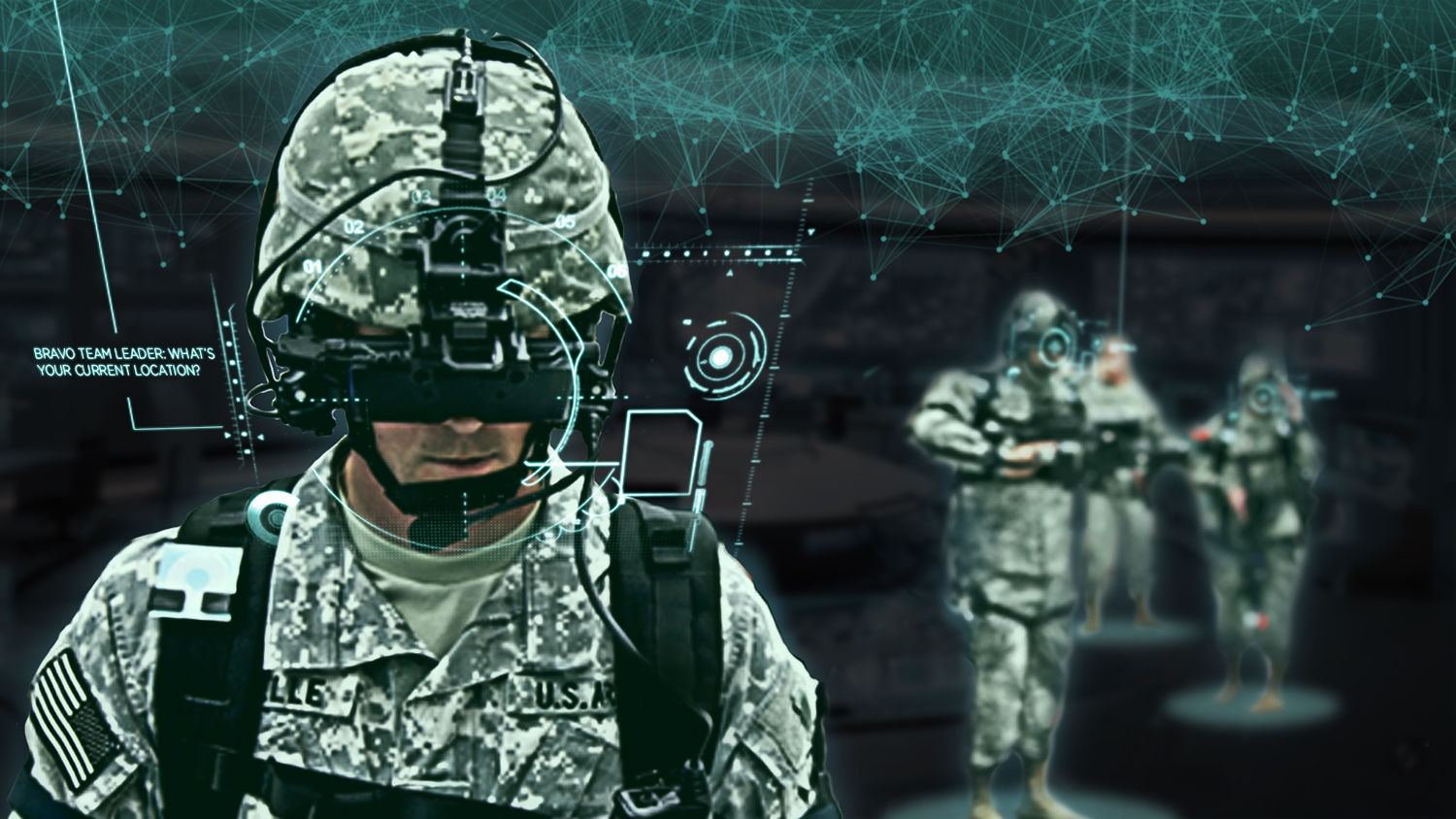
NC State has proposed the launch of a new defense and national security-focused institute to help the university secure more military and national security research and development funding.
Research and academic leaders from across NC State will work through the UNC System over the next year to obtain formal recognition of a defense and security institute as part of the systemwide framework of centers and institutes.
The initial stage, establishing the “Institute in Planning,” was approved by Chancellor Kevin Howell in December, according to a NC State release
“I’m excited to accelerate the important defense and security work that our faculty, students and staff are already doing,” Howell said. “Our university excels at collaboration and career training in this space, and we are eager to leverage our expertise.”
The new institute effort will be headed by Dr. Stephen Lee, who was, until recently, senior scientist at the Army Research Office in Research Triangle Park. The ARO is one of the military’s leading funders of basic research. He will be the interim executive director. He will report to Dr. Jacob Jones, who has been the interim associate vice chancellor for research since August. Jones is the Kobe Steel Distinguished Professor of Materials Science and Engineering.
NC State leads the UNC System in defense research, with projects funded by DoD totaling $49 million in annual expenditures, according to the most recent National Science Foundation Higher Education and Research Development Survey (2024). That represents a 45% increase since 2019.
NC State already has several DoD-related university initiatives, including the Laboratory for Analytic Sciences (LAS), an on-campus partnership with the National Security Agency that focuses on improving data analysis for defense, and the Commercial Leap Ahead for Wideband Semiconductors (CLAWS), a DoD-funded regional hub for innovation in microelectronics.
“NC State already has the expertise and capabilities to deliver strong results in the defense and security space, and these new developments will help us to amplify the focus and connect our expertise to government and industry partners and ensure our efforts are coordinated and strategic,” said Krista Walton, NC State’s vice chancellor for research and innovation.
The move by NC State follows the announcement in January by UNC Charlotte of its launch of its new National Defense and Intelligence Innovation Institute.
These initiatives are aimed at boosting North Carolina’s role in defense-related R&D. The state is home to some of the military’s largest installations, and has the fourth-largest presence of active-duty warfighters at bases like Fort Bragg and Camp Lejeune.
In FY 2023, North Carolina’s public and private universities received $146 million in Department of Defense R&D funding, according to data from the National Science Foundation. Duke received the most of the universities here, $61.6 million. Last March, NC State hired Walton, a Georgia Tech research administrator, to be the vice chancellor for research and innovation. Georgia Tech is one of the top recipients of DOD research funding. Georgia Tech ranked second in FY 2023, with nearly $812 million. It has been deeply focused on military R&D since World War II, through the Georgia Tech Research Institute, the university’s applied research arm.
Going after DoD R&D money is a lot of work. Usually, it requires bringing together researchers from different fields and providing them with the support to build relationships with funders and to evaluate opportunities. The government has very specific research priorities, and to get significant funding, universities have to be aware of them and have researchers interested in them.
NC State has been moving in this direction. NC State in December was among the first 304 companies and universities selected by the Missile Defense Agency as part of the Scalable Homeland Innovative Enterprise Layered Defense (SHIELD) Multiple Award Indefinite Delivery, Indefinite Quantity (IDIQ) contract. This is a major, possibly $151 billion contracting vehicle for the “Golden Dome” missile defense project.
The release noted that as the only university in the state with a Cybersecurity Maturity Model Certification (CMMC) Level 2 certificate, “NC State has the robust technical infrastructure required to conduct DoD-supported defense and security research. Additionally, NC State’s proven track record of business-friendly research and technology licensing agreements will allow private industry partners to quickly pursue pathways to commercial solutions to military demands – and the evolving needs of modern warfighters.”
“NC State is not simply participating in DoD research; it is anchoring North Carolina’s role in the national defense research enterprise,” Walton said. “The university’s scale, growth rate and execution credibility strengthen federal competitiveness for large-scale defense awards; workforce development aligned with national-security priorities; and statewide economic development tied to advanced manufacturing and defense industries.”
“For the UNC System, continued support for NC State’s defense research capacity represents a high-return investment that enhances the system’s national profile and deepens its strategic relevance to the DoD,” Howell added.
