
WASHINGTON (TNND) — The Trump administration is pushing to create a trade system installing price floors for critical minerals in its push to break away from the dependence on China for the key ingredients used in all kinds of goods from consumer technology to military equipment.
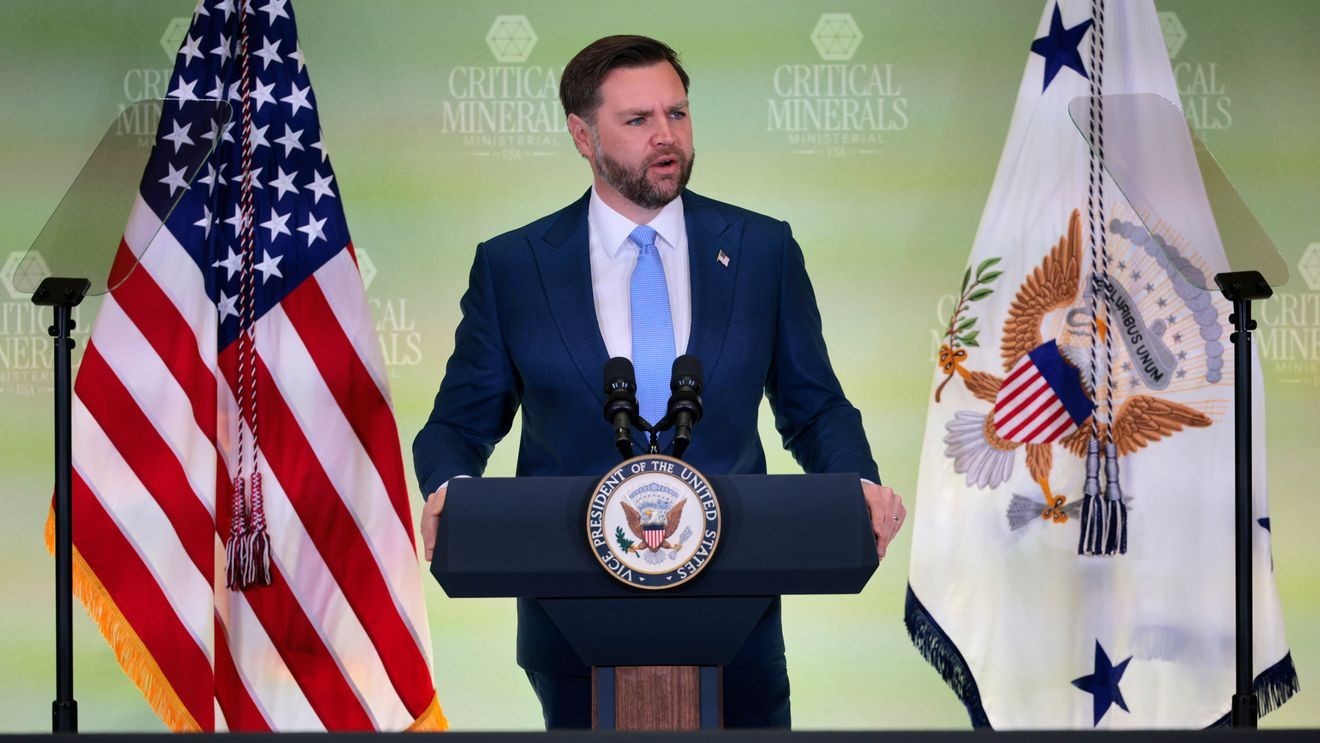
Vice President JD Vance introduced the initiative during a meeting at the State Department on Wednesday focused on critical minerals in a broader strategy to counter China’s dominance of a supply chain with a broad reach.
China accounts for some 70% of the world’s mining for rare earths and controls 90% of the refinement process, giving it massive influence over a crucial piece of global manufacturing. It is also one of the biggest producers of 30 of the 50 minerals that have been designated by the Department of the Interior as being strategically critical, according to U.S. Geological Survey data.
Beijing has already leveraged its control over the supply chain in trade discussions with the U.S. It also has a history of pricing materials at levels that are difficult for other countries to compete with, an issue the price floors initiative aims to break through.
“The Trump administration is proposing a concrete mechanism to return the global critical minerals market to a healthier, more competitive state: a preferential trade zone for critical minerals protected from external disruptions through enforceable price floors,” Vance said.
Installing price floors could give companies assurance on the value of minerals in a capital-intensive industry that is sensitive to price swings in the market that can be heavily influenced by China. It comes with some risks like increasing downstream costs for manufacturers or retaliation and will take time to develop with new mining and refinery projects.
“If the supply is there, then you’d have not just the supply security, but you’d also have at least some dampening of price volatility because both of those can mess up supply chains quite a bit,” said Tim Johnson, professor of the practice in energy and the environment at Duke University. “In the long run, this could make a difference.”
In addition to boosting domestic production of critical minerals and rare earths, the White House has also pushed to make agreements with allies to ensure access to them and diversify the supply chain. Trump has already agreed to deals with Ukraine and Australia to gain access to their supply of the materials and had sought to acquire Greenland in part because of its reserves.
The issues with combatting China don’t stop with getting the material out of the ground, as it also controls up to 90% of global rare earth refining capability that turns raw material into usable inputs for manufacturing. Improving on capacity outside of China will also require years of projects and heavy investment.
The administration is hoping to entice more countries to enter the agreement by offering a guaranteed supply at a set price in the event China imposes more restrictions on its industry.
“For members of the preferential zone, these reference prices will operate as a floor maintained through adjustable tariffs to uphold pricing integrity,” Vance said.
The administration also moved this week to create a national stockpile of critical minerals to insulate manufacturers from sudden shocks in the supply chain, which comes after the trade spat with China last year led to Beijing curbing exports. Trump announced the $12 billion initiative dubbed “Project Vault” that he compared to the national petroleum reserve created to blunt the effects of oil shocks. The Trump administration has also taken financial stakes in rare earths and magnets companies to help them compete with China.
There has been growing concern within the federal government for years about China’s dominance in the global supply chain for critical minerals and the refining process. Those vulnerabilities were exposed in last year’s flare-up with China, when it implemented restrictions on a handful of materials and magnets that are used to make semiconductors, batteries and other products.
The Biden administration also took steps to ramp up the domestic production of critical minerals and other elements, including the use of the Defense Production Act to approve new mining projects to get the materials used in renewable energy projects.
Beijing has since suspended those restrictions but are an ongoing point of contention in trade talks and are at risk of being weaponized in future disputes. There are several issues when it comes to China that will linger into the future like its ambitions to take over Taiwan, objections to export controls on advanced computer chips to power artificial intelligence and tariffs.
Even with renewed focus on securing the domestic supply chain, the U.S. is still well behind China in building out its supply chain to mine and refine critical minerals. Beijing has invested heavily in the industry over the years and implemented export controls to increase its sway over the global marketplace.
“It comes down to shovels in the ground,” Johnson said. “This is a start, but there’s a whole lot more that has to happen, and there’s a lot of opposition once you start digging that will only intensify.”