
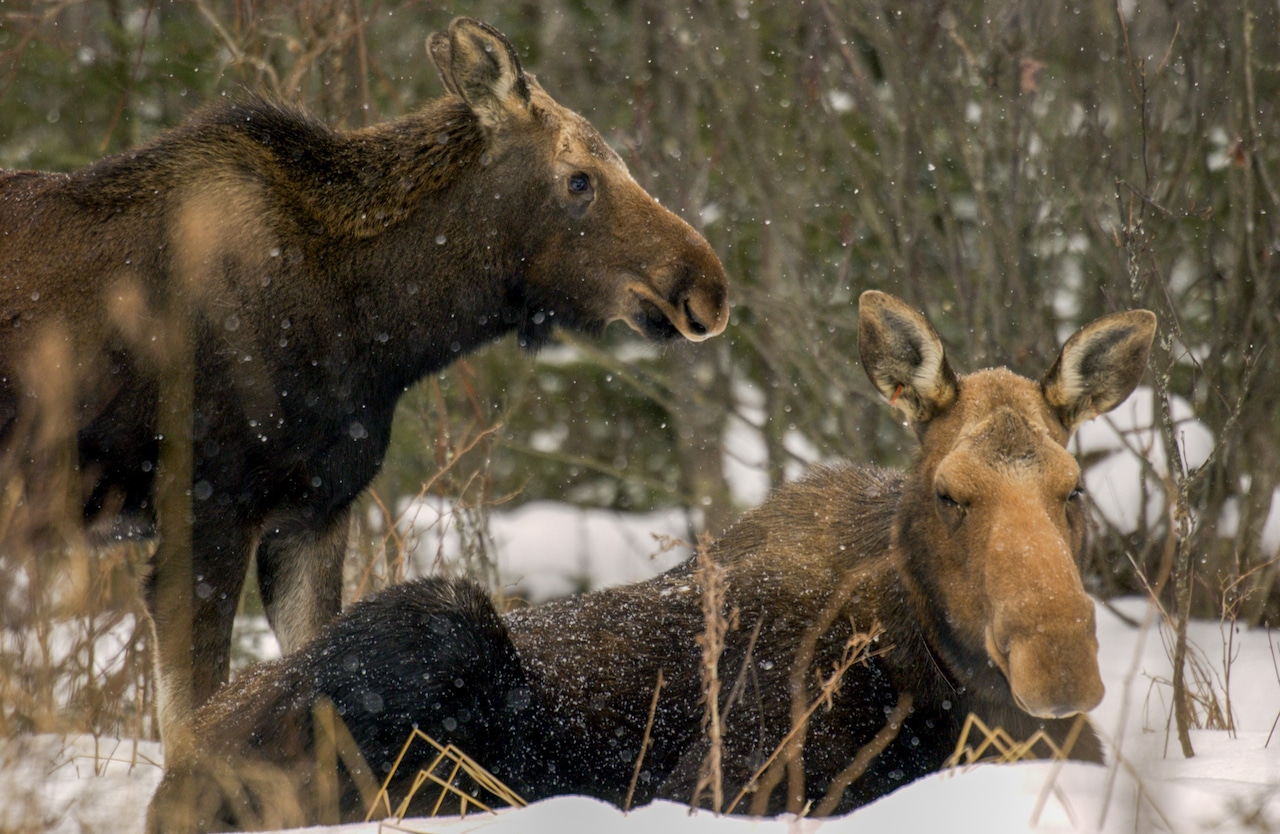
MARQUETTE, Mich. – State, tribal and academic wildlife experts are launching the next phase of a scientific study aimed at understanding why the Upper Peninsula’s moose population has remained stagnant.
“We’re attempting to identify the potential factors that are most likely affecting Michigan’s moose herd, including disease, nutrition, reproduction, predation, vehicle collisions and habitat alteration,” said Tyler Petroelje, a northern Michigan wildlife research specialist with the Michigan Department of Natural Resources, in a released statement.
This month, researchers from the DNR, Keweenaw Bay Indian Community and Northern Michigan University plan to capture and fit GPS tracking collars on up to 43 moose within the herd’s core range in the western Upper Peninsula. The study began last year, when 20 moose were captured and collared.
This year’s captures are scheduled for Feb. 13–21 in the Michigamme Highlands area. Moose are first spotted from aircraft, then ground crews sedate the animals, collect biological samples and attach tracking collars.
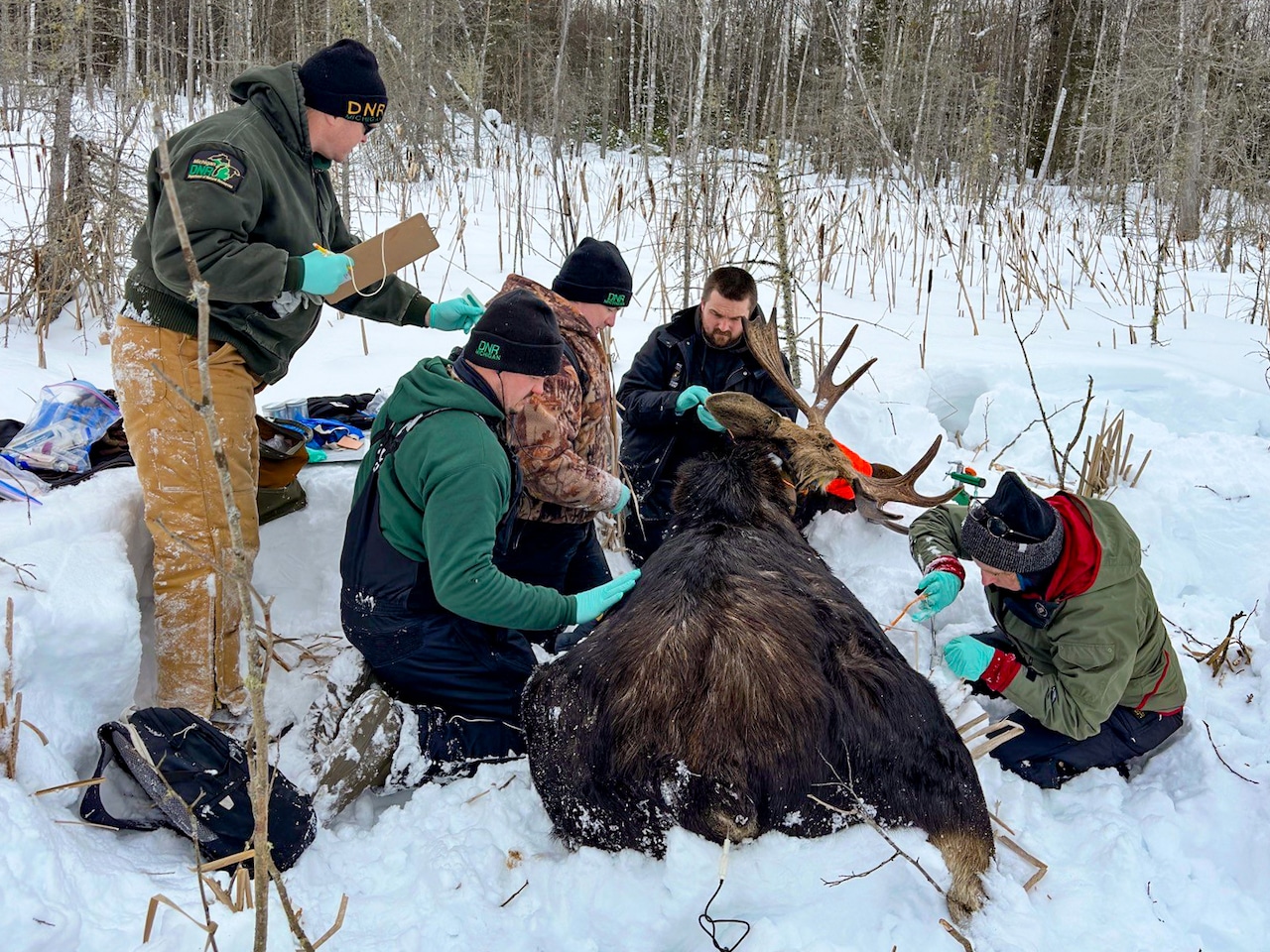 Researchers work to collar a moose in Marquette County during the first collaring project in 2025.Michigan DNR
Petroelje said the research will help scientists better understand the cumulative, or compounding, effects of multiple stressors on moose population growth in Michigan.
Data from the first year of the study showed that 17 of the 20 collared moose were still alive. Of the 10 collared females, eight were pregnant and gave birth to a total of 11 calves. One moose was killed in a vehicle collision, two were killed by predators and one died from unknown trauma.
Researchers expect the expanded dataset from the next round of captures to provide additional insight into why the state’s moose population has not reached 1,000 animals — the goal set when moose were reintroduced to Michigan in the mid-1980s.
Officials estimate the core moose herd at about 300 animals, based on the DNR’s 2025 aerial survey of the species’ range in Marquette, Baraga and Iron counties. That estimate represents a roughly 30% decline from the 426 moose counted in the 2023 survey.
Related: Wolf-Moose study team reaches remote Michigan island during deep freeze
Researchers are working to determine whether the lower estimate reflects an actual population decline, shifts in moose distribution away from historically surveyed areas, or a combination of both.
Known predators of moose in the Upper Peninsula include gray wolves and black bears, which primarily prey on calves and weakened adults.
Vehicle collisions also pose a significant risk. At least 60 moose have been killed by vehicles in Michigan over the past four years, officials said.
Moose are additionally vulnerable to winter ticks. Field crews have documented individual animals carrying as many as 100,000 ticks in a single season. The resulting blood loss, skin irritation and hair loss can be fatal, particularly during harsh winter conditions.
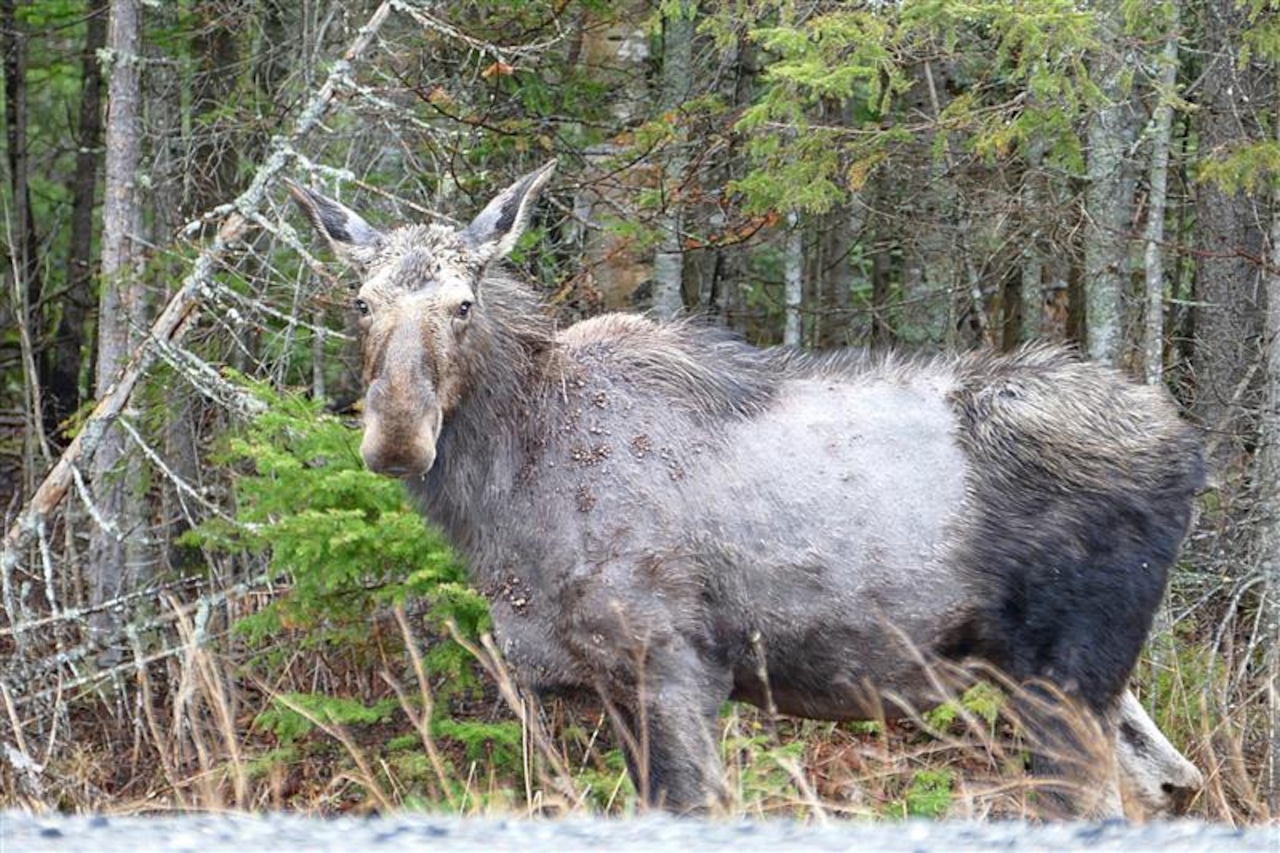 A Michigan moose photographed in 2021 shows significant hair loss and a heavy load of winter ticks. Winter tick infestation can impact moose health and survival.Michigan DNR
The Keweenaw Bay Indian Community received a $684,000 grant from the federal Bureau of Indian Affairs to support the moose study through 2028.
“We hope this effort will lead to a better understanding of what is or is not impacting the long-term sustainability of the Michigan moose population,” said Erin Johnston, KBIC’s wildlife and habitat manager.
Johnston said the collaborative nature of the research strengthens the project by bringing together a range of experiences, knowledge and perspectives.
Diana Lafferty, an associate professor of biology at NMU, said the project is valuable both for advancing wildlife research and for training the next generation of conservation scientists.