
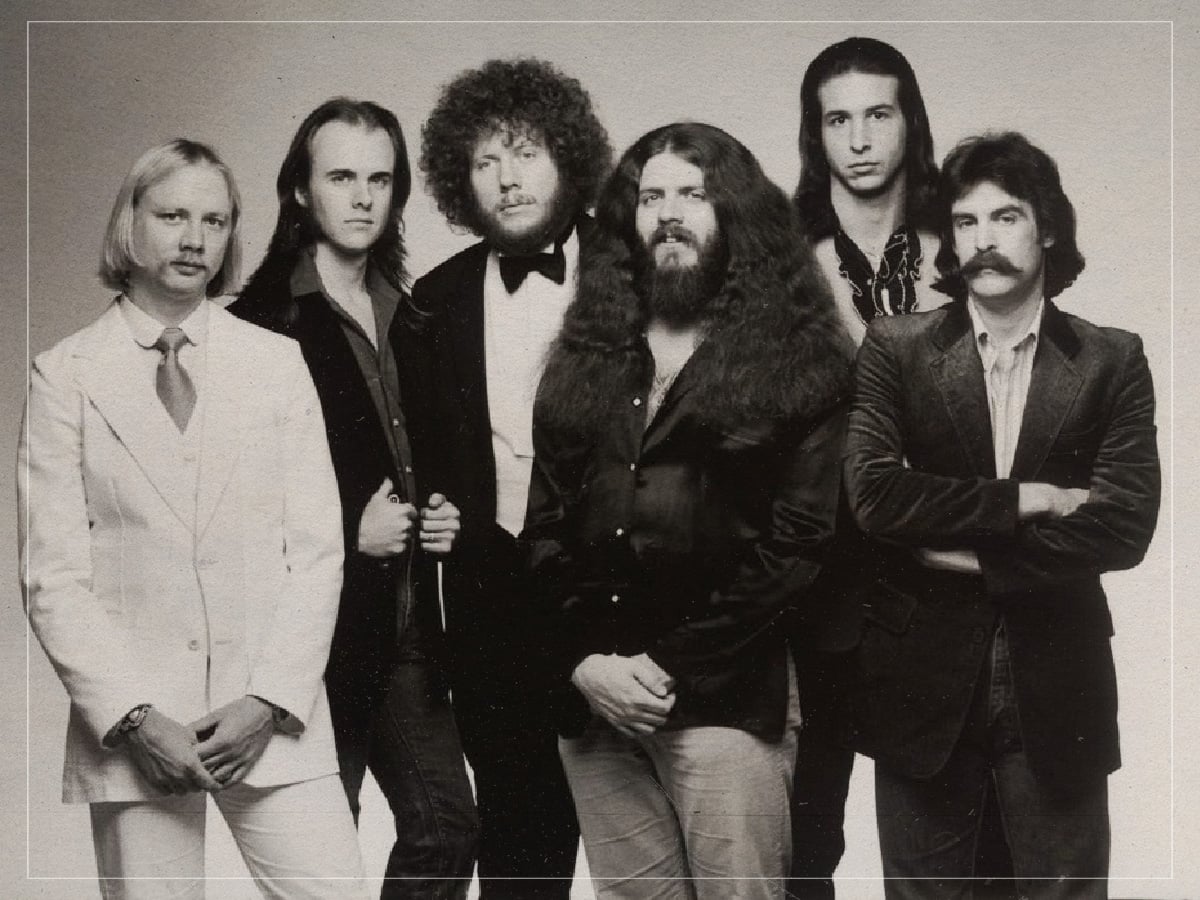
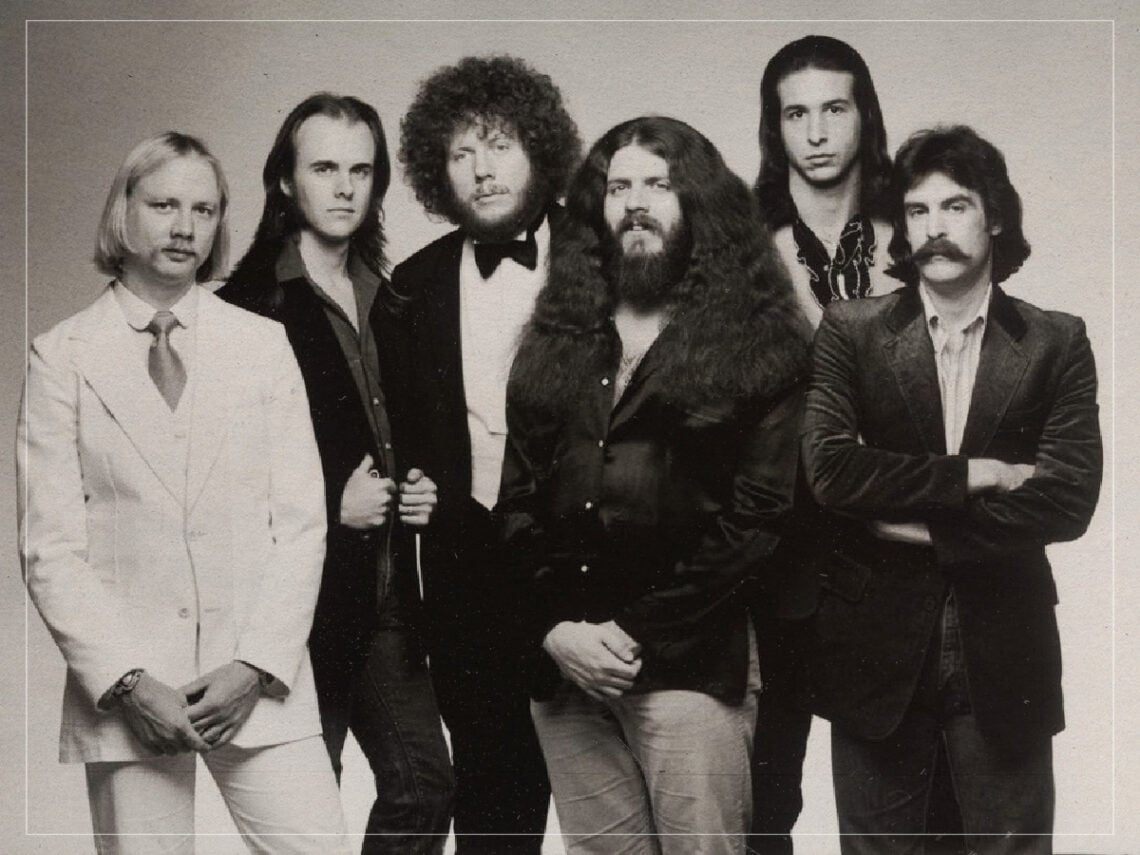
(Credits: Far Out / Kansas)
Fri 6 February 2026 4:00, UK
It takes some level of hutzpah to form a band and name it after the city or state or continent you live in, as if you see yourselves as the official rock ‘n’ roll ambassadors of that jurisdiction.
In the 1970s, though, that was the standard operating procedure, leaving us with a plethora of hard-to-Google groups like Chicago, Boston, Alabama, and, of course, Kansas. Hailing from Topeka, the band called Kansas was essentially a heavy prog rock outfit, but they didn’t necessarily look like one, which was probably advantageous from a marketing perspective.
“We grew up in a place that had absolutely no musical tradition,” guitarist Kerry Livgren said in 1978, “We’re a potpourri of every kind of music we ever heard. We’ve been told we sound like a classical rock band, like Marshall Tucker, Yes, Jethro Tull. Nobody can put their finger on us, except our fans. They always know.” But even Kansas’s fans couldn’t have foreseen what the band’s greatest legacy would prove to be.
In 1976, Kansas had already had their big commercial breakthrough with their fourth album, Leftoverture, which was one of the biggest-selling records of the year in the US, led by the powerhouse single ‘Carry On My Wayward Son’, and while their follow-up effort, 1977’s Point of Know Return, wasn’t really a huge departure from what had come before, the second single, ‘Dust in the Wind’, was an unusually simplistic, acoustic ballad that became an unexpected monster hit on American radio for the next decade or so.
Kerry Livgren wrote the haunting melody and the lyrics, but in typical Midwestern fashion, he couldn’t help but be honest about the way it had all come together. Rather than divine inspiration, ‘Dust in the Wind’ began life as an emotionless bit of phalange callisthenics.
“I was trying to improve my skills as an acoustic guitarist,” Livgren explained in a 2004 radio interview, “I came up with this finger exercise, which was basically ‘Dust in the Wind’… I was sitting in my music room practising, and my wife kept walking by the room, and she’d stick her head in the door, and she’d go, ‘You better do something with that’. And I said, ‘Honey, this is just an exercise, this is not going anywhere, this is just something to improve my skill’.”
Fortunately, Livgren’s better half was persistent, and he finally agreed to try and add some words to the guitar part, borrowing from some Native American poetry and Biblical passages he’d been reading, you know, typical Kansas lyrical fodder.
“So I threw it together and came in the last day of rehearsal,” he continued, “And the guys were all there, and you know, Kansas is this big progressive heavy rocking band, and I walk in with this acoustic guitar and say, ‘My wife says I need to play this for you guys’.” Thus, he sat down to play them the song on his acoustic guitar, thinking it would “kill the song”, but he was met with some unexpected response: “I looked up when I was done, and the guys all just kind of had this blank look on their faces, and they said, ‘Where has that been?’”
Lead singer Steve Walsh, who’d been plotting his exit from the band, stuck around to sing ‘Dust in the Wind’, believing it was a can’t-miss hit, and he was right. The song reached number five on the Billboard, has sold over three million copies in the US, and has worked its way into pop culture over the subsequent 50 years; a perfect needle drop when a movie or TV show needs to strike a serious, mystical tone with a dash of comedic pretension.
Related Topics