
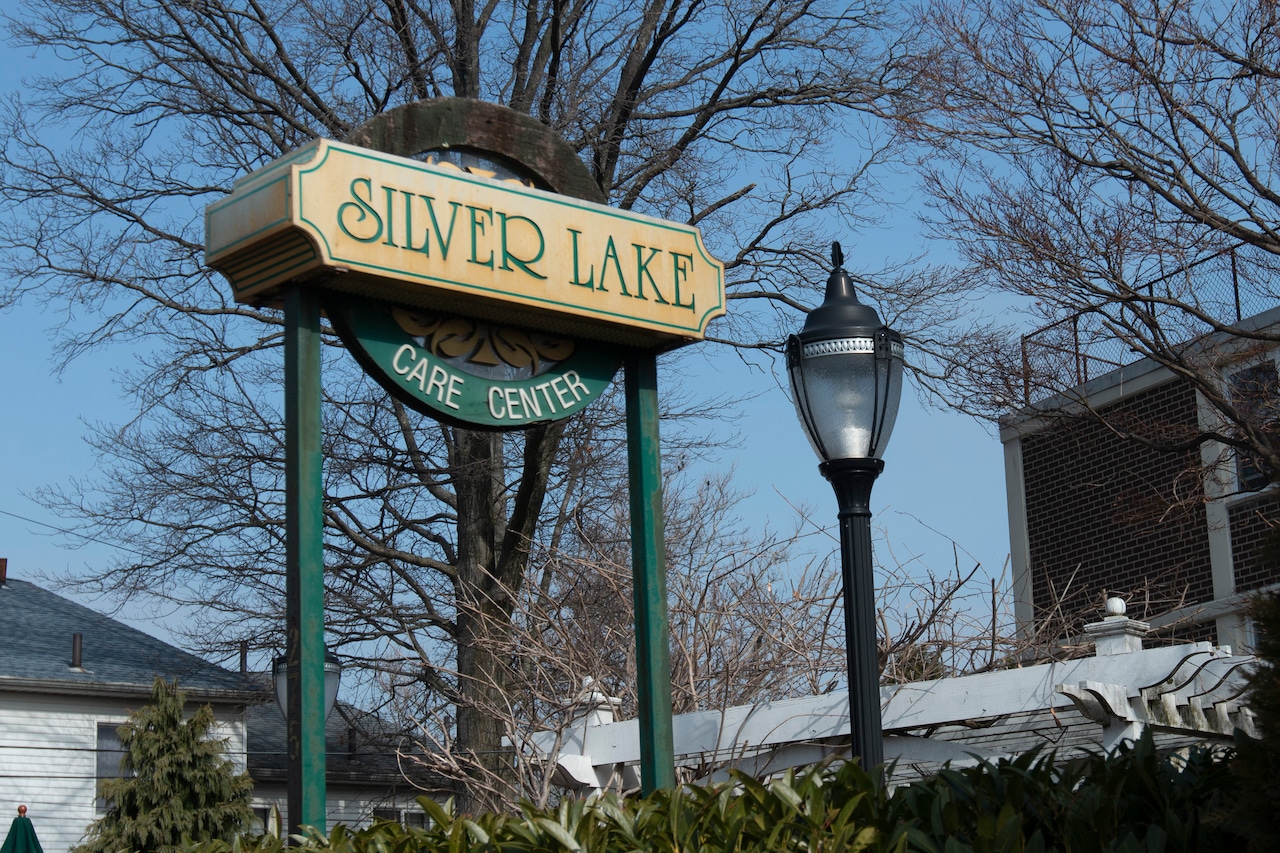
STATEN ISLAND, N.Y. — Leadership at a Staten Island nursing home says it could soon close its doors if state funding doesn’t improve.
Michael Kraus, the administrator at Silver Lake Specialized Care and Rehab Center, said Monday that the state’s low Medicaid reimbursement rates have been the main source of financial distress for the Brighton Heights facility.
A lawsuit the 278-bed nursing home filed in January against the state argues the Health Department should reassess its reimbursement rates, provide an emergency grant to the facility, end a nursing home quality initiative that unfairly penalizes Silver Lake, and decide on another grant program for which the nursing home applied in 2024.
“We’re at the end of the road,” Kraus said. “That’s why we’re bringing a lawsuit. I’ve tried every avenue — gone to the state, appealed to the state.”
Many residents at Silver Lake and other nursing facilities around New York rely on Medicaid to pay for their stays. The nursing facilities provide services, which are then reimbursed by the state, often at lower rates than the actual costs. Silver Lake’s lawsuit describes Medicaid recipients as the facility’s “main source of income.”
Among Staten Island nursing homes listed by the state Health Department last year, Silver Lake had the lowest Medicaid reimbursement rates trailing some of the most generous by hundreds of dollars. Those rates also haven’t seen much of an increase in nearly 20 years.
Silver Lake’s top 2009 Medicaid reimbursement rates were about $211 for a regular unit and $549 for a ventilator unit. In 2025, those top numbers had only increased to $292 for a regular unit and $576 for a ventilator unit. Per the Bureau of Labor Statistics’ inflation calculator, $211 in 2009 dollars would be about $324 today and $549 would be about $843.
Kraus estimated that if the facility charged a patient out-of-pocket for a ventilator unit it would run at a cost of about $750 a day. The lawsuit makes clear that the low reimbursement rates for ventilator residents is the biggest burden for the nursing home. Kraus says Silver Lake’s ventilator unit was the first in the state.
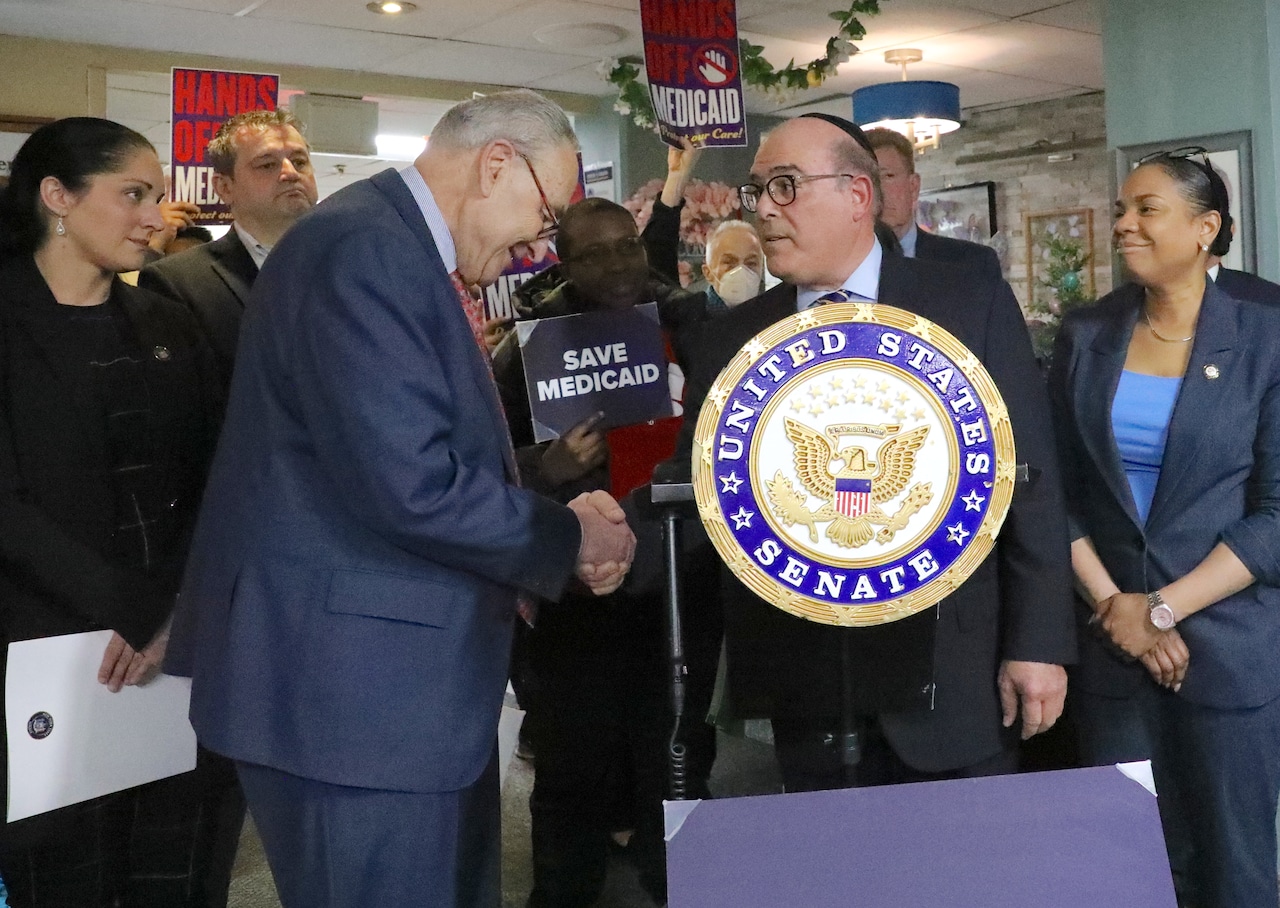 Senator Charles Schumer is greeted by Michael Krause, administrator at Silver Lake Specialized Care Center, as Schumer urgently appeals to House members across New York City to vote “NO” on an upcoming plan by the Trump administration. This plan aims to fast-track significant cuts totaling $880 billion to Medicaid, which could have serious consequences. Monday, March 31, 2025.(Advance/SILive.com|Jan Somma-Hammel)
“We’re getting reimbursed under 35 cents on the dollar,” Kraus said. “There’s the temptation for people to just give up, or facilities to just give up and not provide care, and that is, by the way, that’s why you’re seeing such bad care everywhere, because ultimately, everyone’s losing money.”
Silver Lake also hasn’t been able to access grants from the state for which it should be eligible, including funding it applied for in 2024 and has yet to hear a determination on.
A for-profit organization, Silver Lake says in its lawsuit that it hasn’t been in the black since 2008.
Another issue for which the nursing home seeks relief in its lawsuit is its performance in the state’s Nursing Home Quality Initiative, an annual evaluation of the state’s nursing facilities that can penalize poor performers.
The evaluation, which relies largely on self-reported data, measures a variety of metrics, including vaccination rates for staff and long-term residents, those residents’ health outcomes at the facilities, and several staffing items.
Silver Lake’s placement in the bottom 20% of New York nursing homes in recent years has led to annual penalties of about $100,000, according to the nursing home’s lawsuit.
Kraus largely tied the poor performance to low vaccine rates at Silver Lake, and general attitudes about vaccinations across the borough.
“I know Staten Islanders do not want to take vaccines, so I’m not going to be one to force them,” he said.
Several other Staten Island nursing homes found themselves in the bottom quintile of the 2024 Nursing Home Quality Initiative, the most recent year for which the full list is available. Two Staten Island facilities, Carmel Richmond Healthcare and Rehabilitation Center and Sea View Hospital, Rehabilitation Center and Home made that year’s top 20%.
Silver Lake’s lawsuit asks the court to stop the state from assessing penalties related to the performance metric as they argue it violates their Eighth Amendment rights. The Eighth Amendment protects against the imposition of excessive fines.
The state has yet to respond to the Silver Lake lawsuit in court as of Wednesday, and a Health Department spokesperson declined comment on pending litigation.
The spokesperson pointed to a variety of items passed in recent state budgets aimed at improving nursing home funding, and another $1.5 billion for Medicaid rate investments in Gov. Kathy Hochul’s proposed budget for the upcoming fiscal year.
State Sen. Jessica Scarcella-Spanton and Assemblymember Charles Fall, Democrats in the State Legislature representing districts that include the Silver Lake nursing home, both said they’re aware of the facility’s issues and are working with their colleagues’ on solutions.
“I was recently made aware of the lawsuit filed by Silver Lake Specialized Care Center against the state of New York. I cannot comment on the details of the lawsuit, however I had multiple meetings with Silver Lake leadership about the issues facing the facility, staff, and patients, and know that there are a factor of funding issues that impact their operations,” Scarcella-Spanton said. “In my capacity, I have introduced legislation to create a respiratory therapy demonstration program for residential health care facilities like Silver Lake, which would foster better outcomes for both New Yorkers and facilities such as this one.”
The senator introduced the legislation last year and has secured a single co-sponsor. The bill would allow the state health commissioner to approve 10 New York residential health care facilities, including nursing homes, to operate respiratory therapy units.
“Long-term care providers shouldn’t be pushed into a downward spiral where financial penalties make it harder to hire and retain staff and harder to improve care. New York’s quality incentives need to be paired with reimbursement rates that reflect real costs, especially for facilities serving high-need residents,” Fall said. “I’m closely reviewing the situation involving Silver Lake Specialized Rehabilitation and Care Center, and I’ll continue working with state health officials to improve reimbursement stability, strengthen accountability with real support, and protect residents and families from disruption.”