
The typically mild climate of South Florida has proven to be beneficial for invasive species. Burmese pythons have become an ecological disaster in the Everglades. Nile monitor lizards in Cape Coral are believed to have a population of nearly 1,000 within city limits.But it’s the sprawling urban areas of South Florida’s coasts that have become a prime habitat for green iguanas, making them perhaps the most visible invasive species to the average resident.Though these reptiles do not have many natural predators beyond coyotes and cars, they are all subject to one common and inescapable challenge: historic cold snaps. When temperatures drop to 50 degrees, cold-blooded invasive lizards like iguanas begin to slow down. As the temperature falls through the 40s, they become increasingly lethargic until it cools to the point where they lose the ability to manage their muscles and become cold-stunned. Though iguana experts say most become cold-stunned while underground in their burrows, the ones that get caught out in the cold provide the viral moments that have taken the internet by storm this winter. But research done in recent years after Florida’s last historic cold snap reveals that the temperature at which iguanas become cold-stunned may be lower than what was commonly believed before. “As a scientist, I was fascinated why these lizards can now tolerate a colder temperature than they had recently, prior to this cold snap,” reptile researcher James Stroud of Georgia Tech told Gulf Coast News via Zoom.Stroud has been studying invasive lizards of all sizes with a particular focus on understanding their tolerance for cold temperatures. His work has revolved around studying lizards that survive significant cold snaps and then testing to see how their tolerance changes afterward. “Prior to the cold snap event, all lizards could tolerate temps around 46 to 50 degrees,” Stroud said. “After they experienced colder temps than they had experienced in the previous few winters, they could suddenly tolerate colder temps, down to around 42 Fahrenheit.”A stunning cold-stunning statistic, one might say. While Stroud’s ongoing reptile research will continue looking into the reasons why invasive lizards’ cold-temperature tolerances change, Andrew Durso of Florida Gulf Coast University says iguana intelligence may be able to offer us some clues as to how it’s happening. “They can think, they can reason, they can remember things,” Durso said. “It’s quite likely that the young ones who have never really experienced that before don’t have quite as thought-out of a plan as their elders,” Durso said.Meaning, experience pays off. When Florida does see spells of cooler weather, older iguanas’ ability to know how to manage falling temperatures keeps them from falling out of trees, unlike younger members of the species.”Those are the ones more likely to get caught out in the open and fall out of the trees in that stereotypical Florida way,” Durso said. Iguana hunters like John Johnson of Marco Island-based Down Goes Iguana say invasive reptiles are acutely aware of the weather. Gulf Coast News tagged along with Johnson while he was on his regular route across the island, looking for the invasive species. It did not take long for him to find one sunning itself near the top of a large bush of vibrant flowers. Though Johnson says he has removed more than 2,600 iguanas from the island, an abrupt downward temperature crash could be far more efficient.”Thirty-two degrees. Eight to 10 hours. Dead. All of them are dead,” he said. But seeing temperatures crash to that lethal point for iguanas long enough to make a difference is an event that’s become increasingly rare. According to National Weather Service records, in the winters between 1957 and 1981, during the decades when iguanas entered Florida, the temperature in Fort Myers fell into lethal temperature territory for iguanas on 26 occasions. But between 2002 and this year, it’s a feat that, in the city where iguanas prowl, has only happened three times. The difference is also notable in Tampa to our north. Between 1957 and 1981, temperatures went into lethal territory for the species 98 times. But in more recent decades, as iguanas have spread northward, the number of times temperatures in the city have gone subfreezing has dwindled. From 2002 to this year, the tally is just 16. “That warm temperature is moving north a little bit into the central areas, which is our farm country,” Johnson said. That is something he feels is concerning. Johnson says if iguanas are able to continue moving their territory northward, Florida’s farmers will face consequences. “If a bunch of iguanas go into a blossom-infested farm territory, they can do incredible damage,” he said. It is a new frontier worth watching, as research and interest regarding the invasive species heats up. DOWNLOAD the free Gulf Coast News app for your latest news and alerts on breaking news, weather, sports, entertainment, and more on your phone or tablet. And check out the Very Local Gulf Coast app to stream news, entertainment and original programming on your TV.
MARCO ISLAND, Fla. —
The typically mild climate of South Florida has proven to be beneficial for invasive species.
Burmese pythons have become an ecological disaster in the Everglades.
Nile monitor lizards in Cape Coral are believed to have a population of nearly 1,000 within city limits.
But it’s the sprawling urban areas of South Florida’s coasts that have become a prime habitat for green iguanas, making them perhaps the most visible invasive species to the average resident.
Gulf Coast News
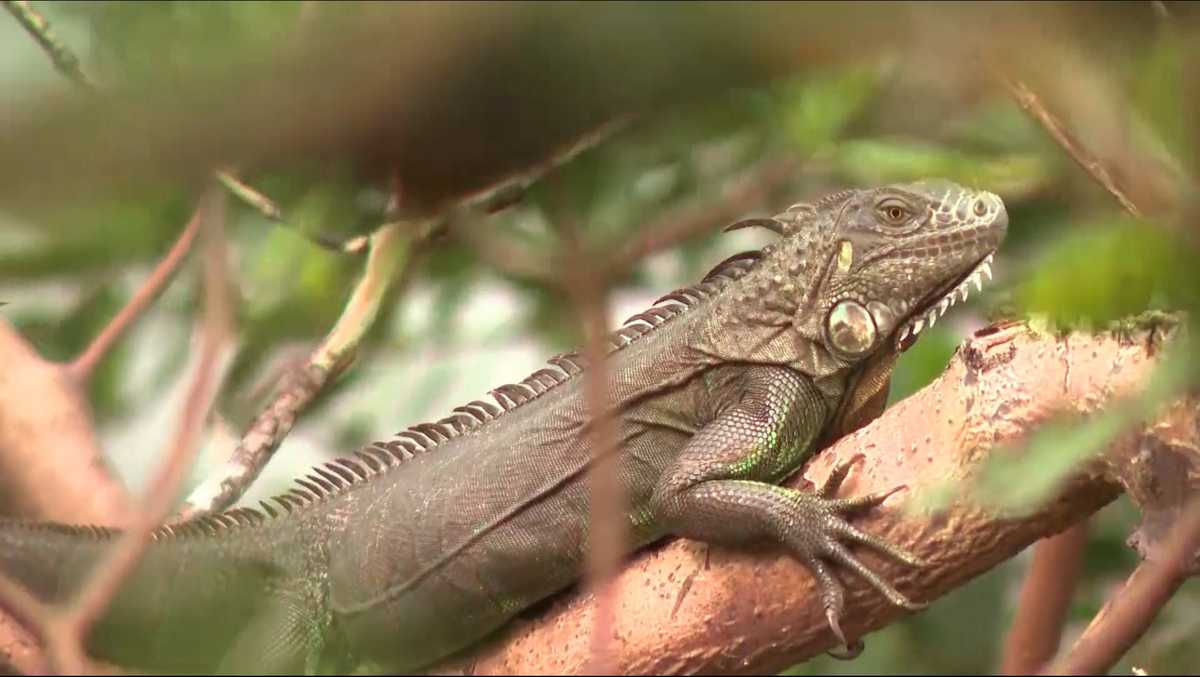
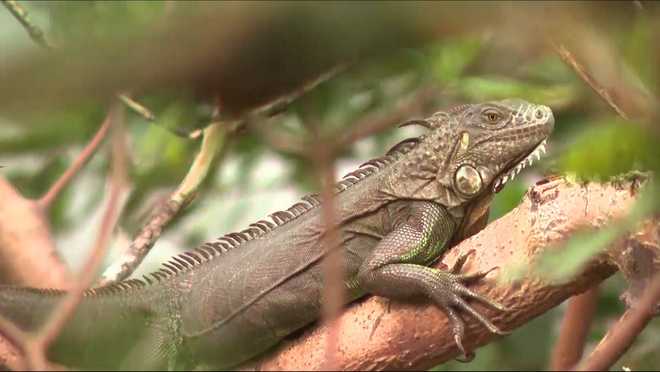
Green iguana
Though these reptiles do not have many natural predators beyond coyotes and cars, they are all subject to one common and inescapable challenge: historic cold snaps.
When temperatures drop to 50 degrees, cold-blooded invasive lizards like iguanas begin to slow down.
As the temperature falls through the 40s, they become increasingly lethargic until it cools to the point where they lose the ability to manage their muscles and become cold-stunned.
Though iguana experts say most become cold-stunned while underground in their burrows, the ones that get caught out in the cold provide the viral moments that have taken the internet by storm this winter.
But research done in recent years after Florida’s last historic cold snap reveals that the temperature at which iguanas become cold-stunned may be lower than what was commonly believed before.
“As a scientist, I was fascinated why these lizards can now tolerate a colder temperature than they had recently, prior to this cold snap,” reptile researcher James Stroud of Georgia Tech told Gulf Coast News via Zoom.

Gulf Coast News
Reptile expert James Stroud
Stroud has been studying invasive lizards of all sizes with a particular focus on understanding their tolerance for cold temperatures. His work has revolved around studying lizards that survive significant cold snaps and then testing to see how their tolerance changes afterward.
“Prior to the cold snap event, all lizards could tolerate temps around 46 to 50 degrees,” Stroud said. “After they experienced colder temps than they had experienced in the previous few winters, they could suddenly tolerate colder temps, down to around 42 Fahrenheit.”
A stunning cold-stunning statistic, one might say.
While Stroud’s ongoing reptile research will continue looking into the reasons why invasive lizards’ cold-temperature tolerances change, Andrew Durso of Florida Gulf Coast University says iguana intelligence may be able to offer us some clues as to how it’s happening.
“They can think, they can reason, they can remember things,” Durso said.

Gulf Coast News
Reptile expert Andrew Durso
“It’s quite likely that the young ones who have never really experienced that before don’t have quite as thought-out of a plan as their elders,” Durso said.
Gulf Coast News
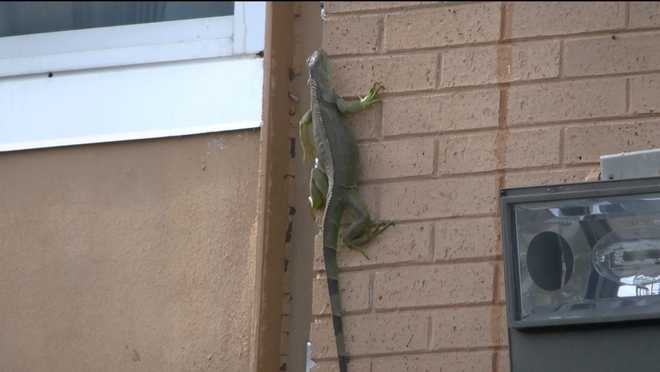
Green iguana
Meaning, experience pays off. When Florida does see spells of cooler weather, older iguanas’ ability to know how to manage falling temperatures keeps them from falling out of trees, unlike younger members of the species.
“Those are the ones more likely to get caught out in the open and fall out of the trees in that stereotypical Florida way,” Durso said.
Iguana hunters like John Johnson of Marco Island-based Down Goes Iguana say invasive reptiles are acutely aware of the weather.
Gulf Coast News
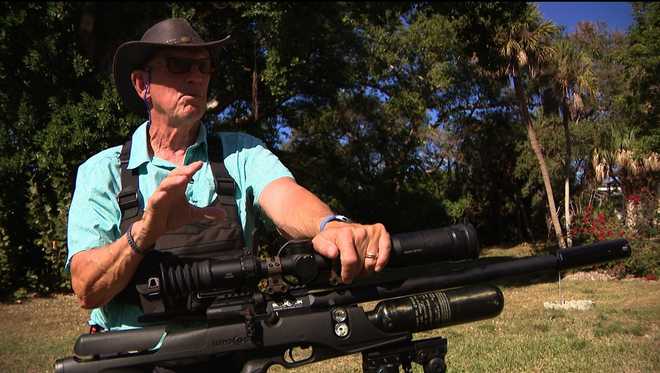
Iguana hunter John Johnson
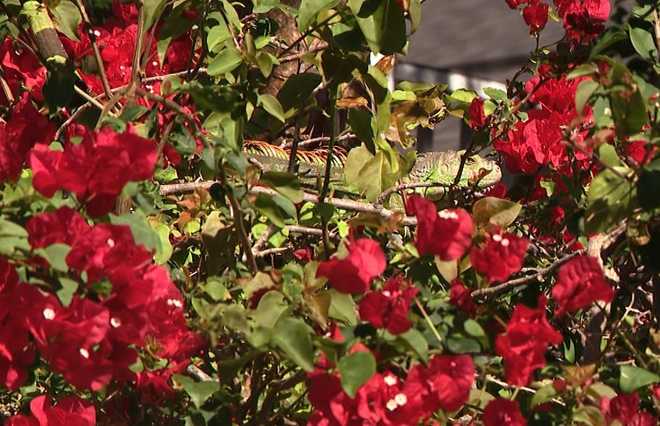
Gulf Coast News tagged along with Johnson while he was on his regular route across the island, looking for the invasive species. It did not take long for him to find one sunning itself near the top of a large bush of vibrant flowers.
Gulf Coast News
Green iguana
Though Johnson says he has removed more than 2,600 iguanas from the island, an abrupt downward temperature crash could be far more efficient.
“Thirty-two degrees. Eight to 10 hours. Dead. All of them are dead,” he said.
But seeing temperatures crash to that lethal point for iguanas long enough to make a difference is an event that’s become increasingly rare.
According to National Weather Service records, in the winters between 1957 and 1981, during the decades when iguanas entered Florida, the temperature in Fort Myers fell into lethal temperature territory for iguanas on 26 occasions.
But between 2002 and this year, it’s a feat that, in the city where iguanas prowl, has only happened three times.
The difference is also notable in Tampa to our north.
Between 1957 and 1981, temperatures went into lethal territory for the species 98 times. But in more recent decades, as iguanas have spread northward, the number of times temperatures in the city have gone subfreezing has dwindled.
From 2002 to this year, the tally is just 16.
“That warm temperature is moving north a little bit into the central areas, which is our farm country,” Johnson said.
That is something he feels is concerning. Johnson says if iguanas are able to continue moving their territory northward, Florida’s farmers will face consequences.
“If a bunch of iguanas go into a blossom-infested farm territory, they can do incredible damage,” he said.
It is a new frontier worth watching, as research and interest regarding the invasive species heats up.
DOWNLOAD the free Gulf Coast News app for your latest news and alerts on breaking news, weather, sports, entertainment, and more on your phone or tablet. And check out the Very Local Gulf Coast app to stream news, entertainment and original programming on your TV.