
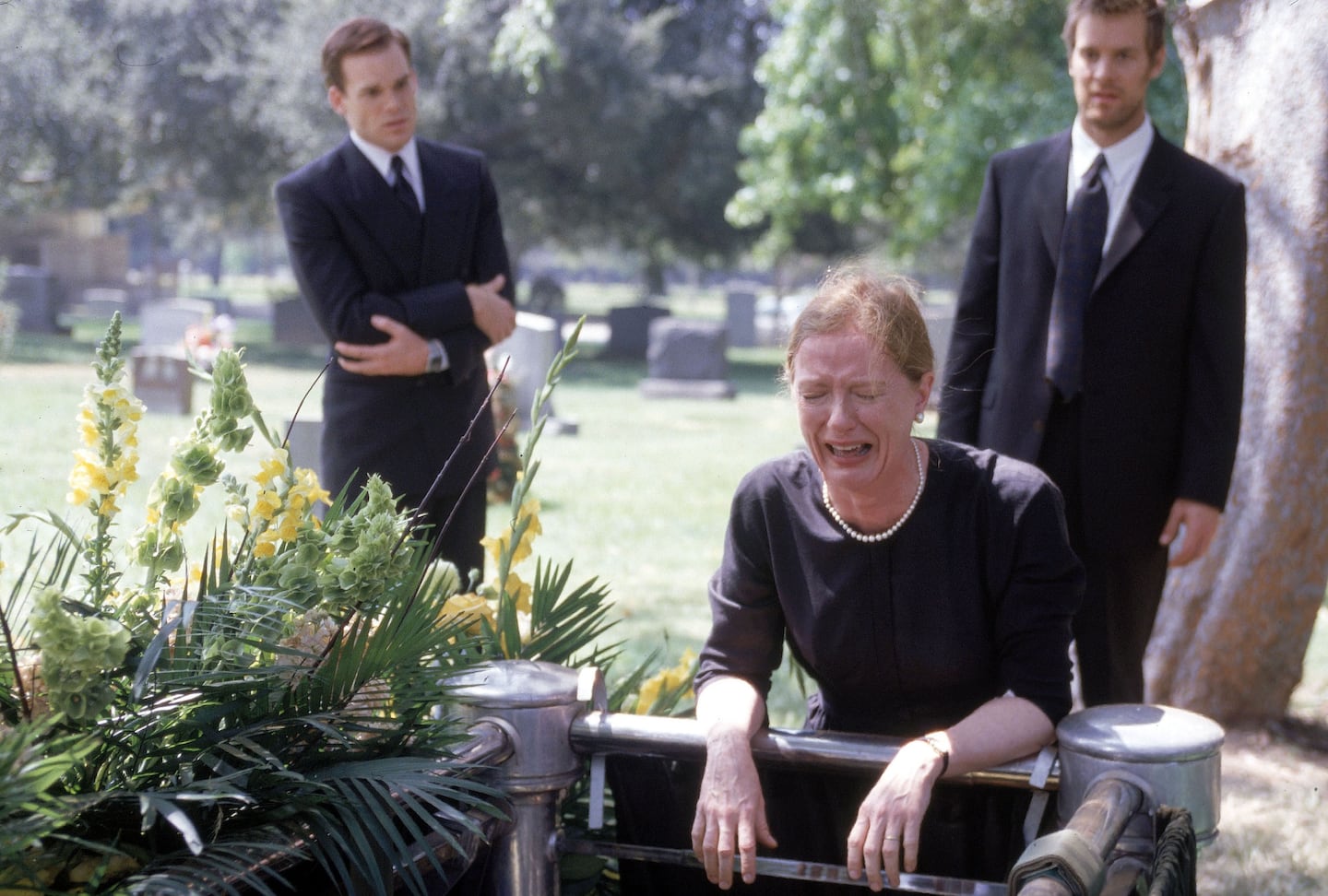
Pilot air date: June 3, 2001, HBO
Stream it on: HBO Max, Prime Video
HBO was feeling its oats at the turn of the millennium. “Sex and the City” was in the middle of its raunchy girl power run. “The Sopranos” was expanding the parameters of what TV drama could do. The brutally surreal prison saga “Oz” was still in full swing.
And then there was the weird little show about death.
“Six Feet Under” created a stir when it premiered in 2001, largely by building a drama around the most inevitable fact of life. The Fisher family is in the business of death, operating a top-notch Los Angeles funeral home. The Fishers all have their secrets, and their scars, but business appears to be booming. Death and taxes, and all that.
Then family patriarch Nathaniel (Richard Jenkins) is killed instantly when a bus plows into his new luxury hearse on Christmas Eve. And suddenly business becomes very personal. Nathaniel’s unfaithful widow, Ruth (Frances Conroy), is wracked with guilt. Youngest son David (Michael C. Hall) is dedicated to the family trade but deeply closeted, and so uptight you expect him to explode. Youngest sibling Claire (Lauren Ambrose) longs for a normal life; she also regrets smoking meth the moment before learning her father has died. Poor timing.
Then there’s the black sheep, oldest son Nate (Peter Krause), the one who got away. Nate was always kind of freaked out about all the death stuff. Returning home for what was planned as a quick holiday trip, he gets sucked into the maelstrom and dysfunction. He also has sex with a stranger (Rachel Griffiths) at the airport, but this is before he learns of his dad’s death.
The architect of all this was Alan Ball, fresh off of winning an Oscar for writing “American Beauty.” “Six Feet Under” gave Ball another perfect platform for skewering American family dynamics, but he clearly had empathy for the Fishers and their colorful conflicts. He generally laughs with them, not at them. And he’s not afraid to take big swings, like having Nathaniel walk in and out of the action like a sort of cackling ghost (which also allows us to enjoy Jenkins in peak form).
“Six Feet Under” was met in the press with a barrage of feature stories about death in pop culture, and it inspired a resurgence of interest in the 1965 movie “The Loved One” (a funeral home satire based on Evelyn Waugh’s novel of the same name). It was a thing, an unlikely part of the zeitgeist. Every episode began with a new death, as if to remind us that no one here gets out alive. Death hits home whether you like it or not, even when it’s your living.
Chris Vognar can be reached at chris.vognar@globe.com. Follow him on Instagram at @chrisvognar and on Bluesky at chrisvognar.bsky.social.