
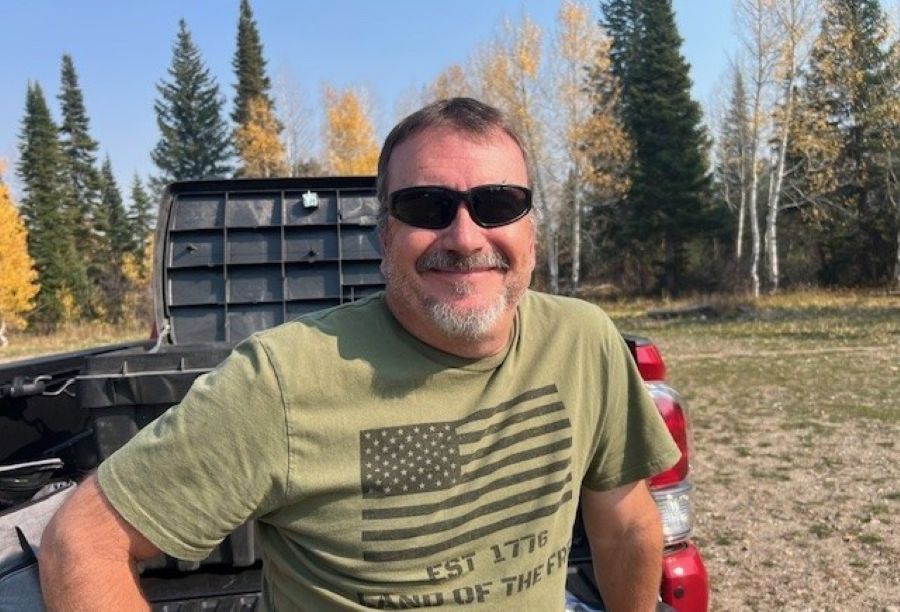
IDAHO FALLS — Dave Hendricks of Idaho Falls spent his entire 35-year career working in the Idaho desert at Idaho National Laboratory. It’s the only place he ever worked.
But that single workplace opened doors he never imagined, including a front-row seat to history-making nuclear and space innovations few people realize INL even played a role in.
Just retired, Hendricks is looking back on a career that helped power spacecraft billions of miles from Earth and advanced nuclear research that continues to shape the future of energy and science.
A graduate of Jerome High School, Hendricks first served four years in the U.S. Navy, where he studied nuclear systems.
That foundation led him to eastern Idaho, where he worked from 1991 to 1995 at what was then Argonne National Laboratory–West, located at the INL site. There, he worked on the Experimental Breeder Reactor-II (EBR-II) — a pioneering nuclear reactor designed to explore advanced fuel and safety concepts.
“I chose Argonne for the opportunity to work on a cutting-edge experimental reactor,” Hendricks said. “Working there was wonderful. It had a very vested and family-like atmosphere right off the bat.”
It didn’t take long for Hendricks to put down roots in east Idaho. He met his wife Tammy, whom he has now been married to for 30 years, and together they raised two children.
From nuclear fuel exams to engineering labs
From 1996 to 2002, Hendricks worked at INL’s Hot Fuel Examination Facility and the Fuel Conditioning Facility — highly secure buildings where scientists study nuclear fuel after it has been used inside a reactor. The work involves remote-controlled equipment and heavily shielded rooms, allowing researchers to safely examine radioactive materials.
From 2002 to 2003, he moved to the engineering lab, gaining broader experience in testing, design and applied research.
In 2005, Battelle Energy Alliance became the contractor responsible for managing INL, starting a new era of national security, energy and space-related work at the site.
A turning point after 9/11
Hendricks said the terrorist attacks of Sept. 11, 2001, marked a turning point for INL. National security concerns prompted a reevaluation of vulnerable sites nationwide, and INL was selected for a major new mission.
“If 9/11 hadn’t happened, we likely wouldn’t have reevaluated our security,” Hendricks said. “Something good came from something terrible.”
That shift led to the relocation of critical space-power work from the former Mound Laboratory in Ohio to Idaho. A new facility was built at INL to support radioisotope thermoelectric generators, or RTGs — long-lasting nuclear “batteries” used to power spacecraft where solar energy isn’t an option.
“RTGs don’t store power like household batteries. Instead, they convert heat from the natural decay of plutonium-238 into electricity, producing steady power for decades,” Hendricks explained.
From 2004 to 2017, Hendricks worked in INL’s space power program. He helped assemble the first RTG used for NASA’s New Horizons spacecraft, which launched in 2006 and flew past Pluto in 2015.
“INL played a critical behind-the-scenes role in designing, testing, and certifying the nuclear power system that keeps New Horizons operating billions of miles from the sun, long after solar panels would have become useless,” Hendricks said.
Hendricks later served as a supervisor on a second RTG assembly, remaining with the space program until 2017.
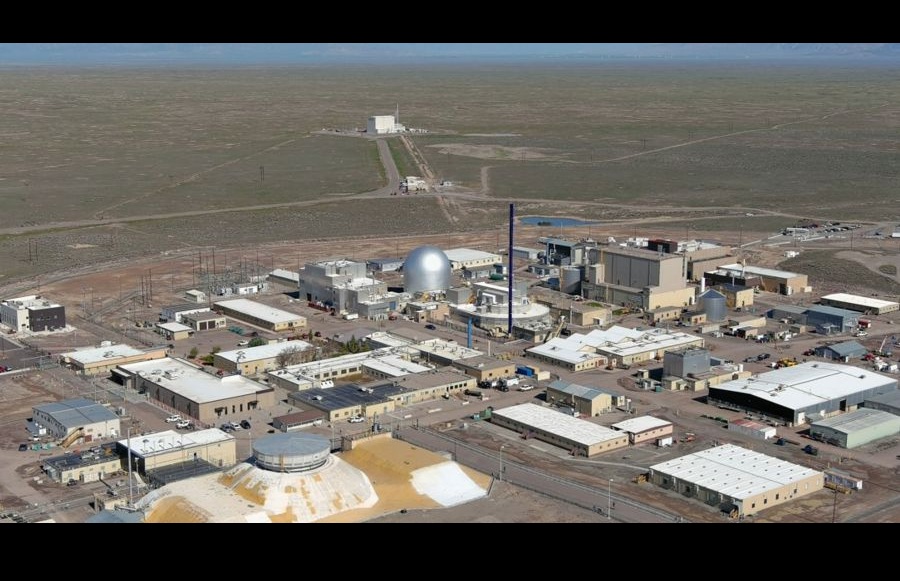 An aerial view of the Idaho Nuclear Laboratory out in the desert of east Idaho, where U.S. Navy veteran Dave Hendricks spent his career. | Courtesy photo Powering Mars rovers
During his career at INL, Hendricks helped assemble batteries and components used in several NASA space missions, including the Curiosity and Perseverance Mars rovers, both of which continue to explore the surface of Mars today.
“Curiosity paved the way, while Perseverance represents the next generation of Mars exploration, including collecting samples for eventual return to Earth,” Hendricks said.
Both rovers rely on nuclear power because Mars’ dust storms, cold temperatures, and distance from the sun make solar energy unreliable. INL engineers tested and certified the power systems that allow the rovers to survive freezing nights, dust-filled skies, and years of continuous exploration.
“It’s been very satisfying knowing what my hands helped assemble and the role it played in our space technology,” Hendricks said. “If we did something wrong, the experiments would be useless. The mission would be dead.”
 NASA’s Curiosity Mars rover operates on the surface of Mars; Idaho Falls engineer Dave Hendricks helped assemble the rover during his career at Idaho National Laboratory. | Courtesy photo Back to nuclear fuel research one last time
From 2018 until his retirement in 2026, Hendricks returned to the Hot Fuel Examination Facility, where he helped develop and research Post-Irradiation Examination, known as PIE.
In simple terms, PIE is like a medical checkup for nuclear fuel. After fuel has been used inside a reactor, scientists carefully examine it to see how it performed — checking for wear, damage or changes — so future reactors can be safer and more efficient.
Reflections on a satisfying career
Hendricks said the most rewarding moments of his career were his work on New Horizons and the two Mars rovers.
“I’m all in on nuclear energy,” he said. “I’m proud to be part of the advances in nuclear technology. It’s the right path forward for worldwide energy, and I hope the enthusiasm for nuclear keeps going.”
He also hopes the public gains a better understanding of the work happening at the INL.
“If you’re not a site worker, or a friend or relative of one, it’s a mystery,” Hendricks said. “The average person doesn’t really know what’s going on out there. It’s taken for granted.”
“With safer reactors, I believe we’re leaving the world in a better, safer place,” he added. “It’s gratifying knowing I played a part in that. It’s been a great career.”
Now, at just 58 years old, Hendricks is looking ahead to retirement, traveling with Tammy in their motor coach, exploring the Oregon coast, and spending more time hunting, fishing, and restoring old cars.
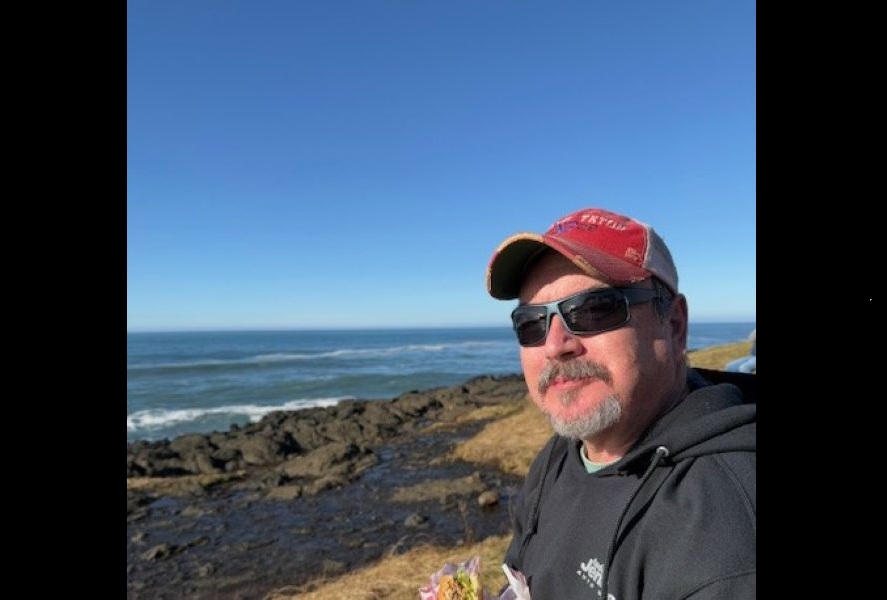 After a 35-year career, Dave Hendricks is looking forward to retirement and spending more time at one of his favorite places — the Oregon Coast. | Courtesy photo
=htmlentities(get_the_title())?>%0D%0A%0D%0A=get_permalink()?>%0D%0A%0D%0A=htmlentities(‘For more stories like this one, be sure to visit https://www.eastidahonews.com/ for all of the latest news, community events and more.’)?>&subject=Check%20out%20this%20story%20from%20EastIdahoNews” class=”fa-stack jDialog”>