
New Delhi : India may adopt a three-pronged calibration while reducing tariffs for American imports, granting immediate zero duty access to non-conflicting sectors, quota and phased duty cuts for sectors that can coexist, and completely excluding highly sensitive items such as dairy, cereals, and genetically modified food items, people in the know said on Friday.
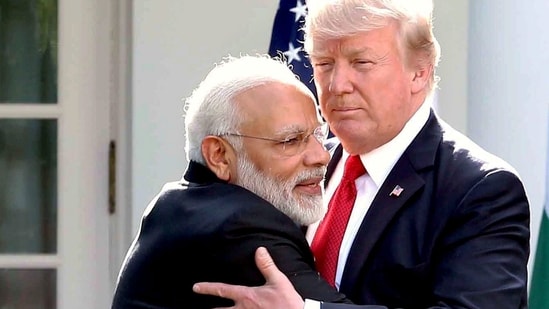
 India may adopt phased, quota-based tariff cuts for US goods, protect sensitive sectors (PTI)
In return, the US may slash tariffs on one-third of $87 billion Indian merchandise exports from 50% to 18% immediately after the two countries finalise a joint statement and an executive order is issued, they said, requesting anonymity.
Most of these items belong to labour-intensive sectors such as textiles, leather goods and marine products, where India does not compete with American producers, but faces stiff competition from Bangladesh, Vietnam, Cambodia and Ecuador.
The joint statement, which will provide details of the deal announced earlier this week, is under preparation and expected to be issued anytime now, latest by early next week, they said.
As the US had imposed 50% additional duty on Indian goods (25% reciprocal duty and 25% punitive tariff for purchasing Russian oil) in August 2025, Washington is expected to announce easing of the tariffs first.
Indian goods may also get duty-free access in the American market as per the deal, and along with existing US regulations such as Potential Tariff Adjustments for Aligned Partners (PTAAP) and already exempted items such as pharmaceuticals, mobile phones, certain minerals and agricultural items.
Such exemptions may cover about 40-45% of $87 billion merchandise India exported to the US in 2024, they said. This will boost Indian agricultural exports to the US as PTAAP includes agricultural products not grown or produced in the US in sufficient quantity.
PTAAP may also cover certain gems and diamonds, machinery and auto components, they said.
Exact details will be clear once the joint statement is made public, they said. While most of the provisions of the trade deal will be implemented after the joint statement, followed by an executive order, the legal text of the agreement is expected to be signed by mid-March, they said. This was also confirmed by Union commerce minister Piyush Goyal a day ago. There might not be much delay in legal scrubbing as texts were ready during the negotiations that went on for almost one year. According to the US Trade Representative’s (USTR) website, the bilateral merchandise trade between the two countries in 2024 was around $128.9 billion. India exported goods worth $87.3 billion to the US that year and its imports of American merchandise stood at $41.5 billion.
According to the people cited above, on agriculture items, India has maintained its standard template, protecting dairy and sensitive farm sectors. A government statement on Thursday quoting agriculture minister Shivraj Singh Chouhan also said the India-US deal “fully safeguards” India’s agricultural interests, particularly farm and dairy sectors. India’s staple grains, fruits, major crops, millets and dairy products remain completely secure and face no threat whatsoever, it added.
He said reduced tariffs will directly benefit India’s rice, spices and textile exports, and that growth in textile exports will help millions of cotton-growing farmers. The minister affirmed that the deal is unequivocally in the interest of Indian farmers and opens up new export avenues, despite the misinformation being spread by the opposition.
The people cited above said that the high duty imposed by the US on steel, aluminum, automobiles and copper under section 232 on grounds of national security, will remain effective as it is general for everybody and involves about $12-13 billion Indian exports, about 15% of $87 billion India exported to the US in 2024.
According to the people mentioned above, India may not be reducing all its tariff lines to zero. Many US goods are expected to come to India at zero duty from day one, such as jams and jelly, juices, tea, yeast, and certain types of exotic beans. India has opened up most of these sectors for its other FTA partners also.
Some items will see duty elimination in phases ranging from 3-10 years, some may see only duty reduction in phases, they said. Quotas could be fixed for moderately competing items such as apple, almonds, pistachio and walnuts. Highly sensitive items such as dairy, meat, poultry, cereal, GM food, soybeans, corn, maize, ethanol could be kept in the exclusion list. Alcohol, bakery items, dog and cat food, and olive oil may see only phased duty reduction.
On the purchase commitment of $500 billion in five years, the people cited above said most of the items are, anyway, imported by India, such as crude oil and gas, aircrafts and their parts, ICT products, high-tech products for data centres. India currently imports such products worth $300 billion annually and such imports are growing by 8-10% annually. It is estimated that demand for such products could jump to $2 trillion in the next five years. Hence, it is a win-win situation, they said.