

Inside the stilled courtroom, an attorney asked a simple question and the mother on the witness stand began to cry.
Where is your daughter right now?
The question came during a hearing this week in Denver District Court in a lawsuit over Children’s Hospital Colorado’s suspension of gender-affirming care for transgender youth, a decision Children’s made in the face of escalating threats from the federal government.
The plaintiffs, including the mother who was testifying, argue that the suspension is a profound betrayal of vulnerable young patients that violates state antidiscrimination law.
“In this case,” attorney Paula Greisen, who represents the plaintiffs, said Thursday, “the victims are coming to the court saying, ‘Please enforce the rule of law and stop the attack on the transgender community.’”
They asked a judge to require Children’s to resume providing gender-affirming care. A decision is expected within the next week.
Children’s, however, argues that doing so could throw the hospital into a buzzsaw of federal punishment, including being kicked out of the Medicaid system, dropped by private insurers and stripped of its accreditation. In the most extreme scenario feared, the entire Children’s Hospital system — all four hospitals and numerous outpatient clinics that treat hundreds of thousands of kids a year — could have to close.
“We would have no source of revenue with which to continue to provide services,” Dr. David Brumbaugh, the hospital’s chief medical officer, testified on Wednesday.
But standing on the other side was the testimony of parents who spoke of the harm their children are already suffering as a result of Children’s suspension of care.
So back to the question: Where is your daughter right now?
A family’s anguish
The mother, testifying in court Wednesday under the pseudonym Denisha Doe for fear of reprisals against her family, had spent the previous half-hour talking about her daughter, known in court as Danielle, also a pseudonym.
She told of how her daughter had shown an affinity for girl toys and items from her earliest years and of how happy her daughter had been when she was allowed to wear girl clothes to school for the first time — “It was like seeing a light shine inside her.”
She spoke of how the family fled their home state of Texas in 2023 after that state’s legislature passed a law banning gender-affirming care for transgender youth and of how the family found a new home and new doctors in Colorado who could provide the medications needed for Danielle’s gender transition. She spoke of what would happen if that treatment could not continue — the irreversible physical changes that would occur if Danielle underwent male puberty — and then she spoke of what happened next.
Danielle, who is 15, spiraled into major depression when she learned her care was suspended, her mother said. She had nightmares about being forcibly de-transitioned. She began to think of suicide, and she wrote a letter to her family that ended with, “If I don’t see you again, I love you.”
And now, her mother said through tears, Danielle was being housed in the inpatient psychiatric unit at Children’s, where a doctor wrote in her chart that one of the best things the hospital could do to support Danielle’s mental health is to provide gender-affirming care.
Children’s had originally prevented Danielle during her hospitalization from receiving the medications she had already been prescribed, her mother said, but relented after the family went to court. Those prescriptions, though, will eventually run out. When they do, Children’s will not write a prescription for a refill while the suspension of gender-affirming care is in place.
“It’s hard as a parent to be told by the same provider that this is the care your child needs, and see firsthand the relief that this care gives your children,” Denisha Doe said outside the courtroom Thursday. “It truly is lifesaving. And then to have that same institution turn their back on you in this way feels like, well, my child’s life is expendable.”
How we got here
Children’s announced that it had paused medical gender-affirming care — that means, basically, prescriptions for puberty-blocking medications or hormone therapies — for youth under 18 last month.
The hospital continues to provide care to those 18 and older, and it also continues to offer support services like mental health counseling to patients of all ages. The hospital does not perform gender-affirming surgeries.
 Children’s Hospital Colorado in Aurora. (Provided by Children’s Hospital)
The suspension came following a series of increasingly threatening moves by President Donald Trump’s administration. These included a subpoena for patient records that Children’s is currently fighting in court.
But more significant for the lawsuit was a declaration that Health Secretary Robert F. Kennedy Jr. issued late last year proclaiming that gender-affirming care — what Kennedy called “sex-rejecting procedures” — is not appropriate medical care.
“Sex-rejecting procedures for children and adolescents are neither safe nor effective as a treatment modality for gender dysphoria, gender incongruence, or other related disorders in minors, and therefore, fail to meet professional recognized standards of health care,” Kennedy wrote.
The declaration also came with a threat: Hospitals or doctors found to violate it could be “excluded” from federal payment systems like Medicare or Medicaid.
Following the declaration, the general counsel for the U.S. Department of Health and Human Services wrote on the social media site X that he had referred Children’s to the agency’s Office of the Inspector General for investigation.
Children’s fears enforcement
Roughly half of Children’s patients are covered by Medicaid, meaning the hospital stands to lose a significant amount of money if it can no longer receive payment from the program. But expulsion would also have broader consequences.
Brumbaugh testified that the hospital’s contracts with private insurance companies would collapse because those contracts require Children’s to declare that it is not excluded from Medicaid. The hospital would also likely lose its accreditation. Any doctors found to also be in violation of Kennedy’s declaration could effectively have their careers ended, Brumbaugh said.
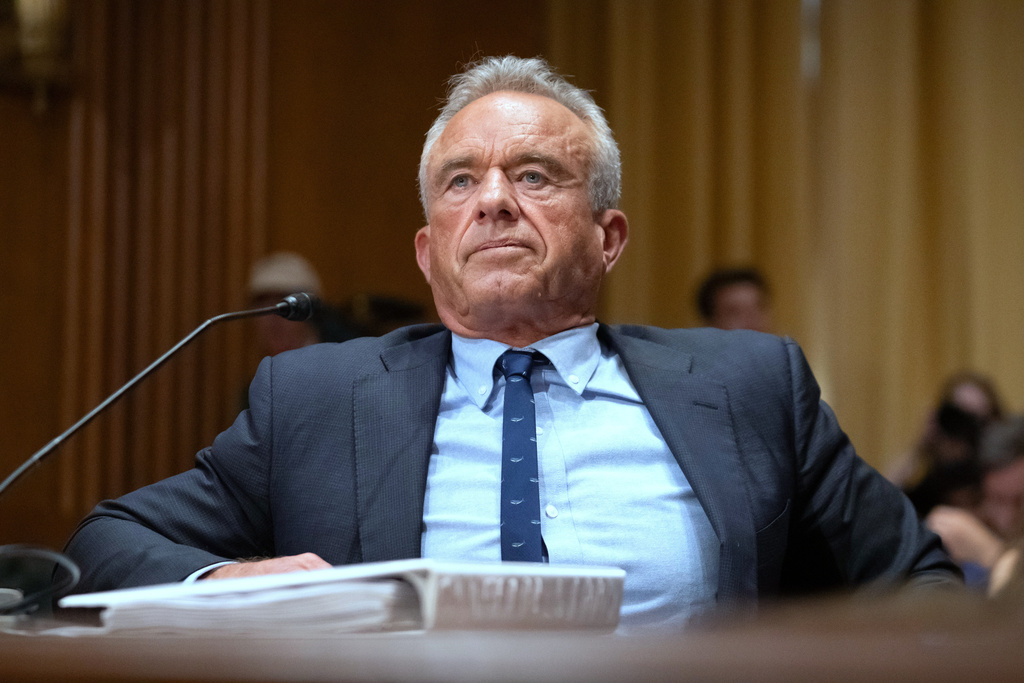 Secretary of Health and Human Services Robert F. Kennedy Jr., appears before the Senate Finance Committee, on Capitol Hill in Washington, Thursday, Sept. 4, 2025. (AP Photo/Mark Schiefelbein)
Colorado is part of a multistate lawsuit seeking to block the declaration, but that case has not yet yielded an order in the states’ favor. The federal government has said it will not enforce the declaration during the case’s early stages. Children’s lawyers argued that doesn’t mean federal authorities won’t eventually punish hospitals for things they do during that period, though.
Brumbaugh testified that Children’s is adamantly opposed to what the federal government is doing. He called the subpoena issued to the hospital “unconscionably large.” He agreed with an assessment that Kennedy’s declaration is “fiction” that is not supported by major medical organizations or the best available evidence.
“The intrusion on medical decision-making has been distressing for all of us,” he said. “We believe whole-heartedly that we have been practicing a national-leading standard of care.”
But he said the hospital judged the threat too great to continue providing gender-affirming care to children. He said he wouldn’t be doing his job if he risked the health care of so many children.
“My hope is that at some point in the future, we will be able to resume a medical gender-affirming model of care,” he said.
Discrimination claim
The families filed their lawsuit in state court because they claim Children’s actions violate the Colorado Anti-Discrimination Act. The law says that hospitals cannot discriminate against someone on the basis of gender.
Children’s, for instance, continues to provide puberty blockers to cisgender children experiencing premature puberty. It continues to provide hormone therapy when medically appropriate — just not to transgender youth for the purposes of gender-affirming care.
To the plaintiffs, that’s discrimination, and they also argue that Children’s could be doing more to stand up to the federal government, both now and in the future if the hospital were to face punishment.
“It feels like they’re turning their back on us and just rolling over and complying with this administration which they don’t need to be doing,” said one mother, known in court by the pseudonym Grace Goe.
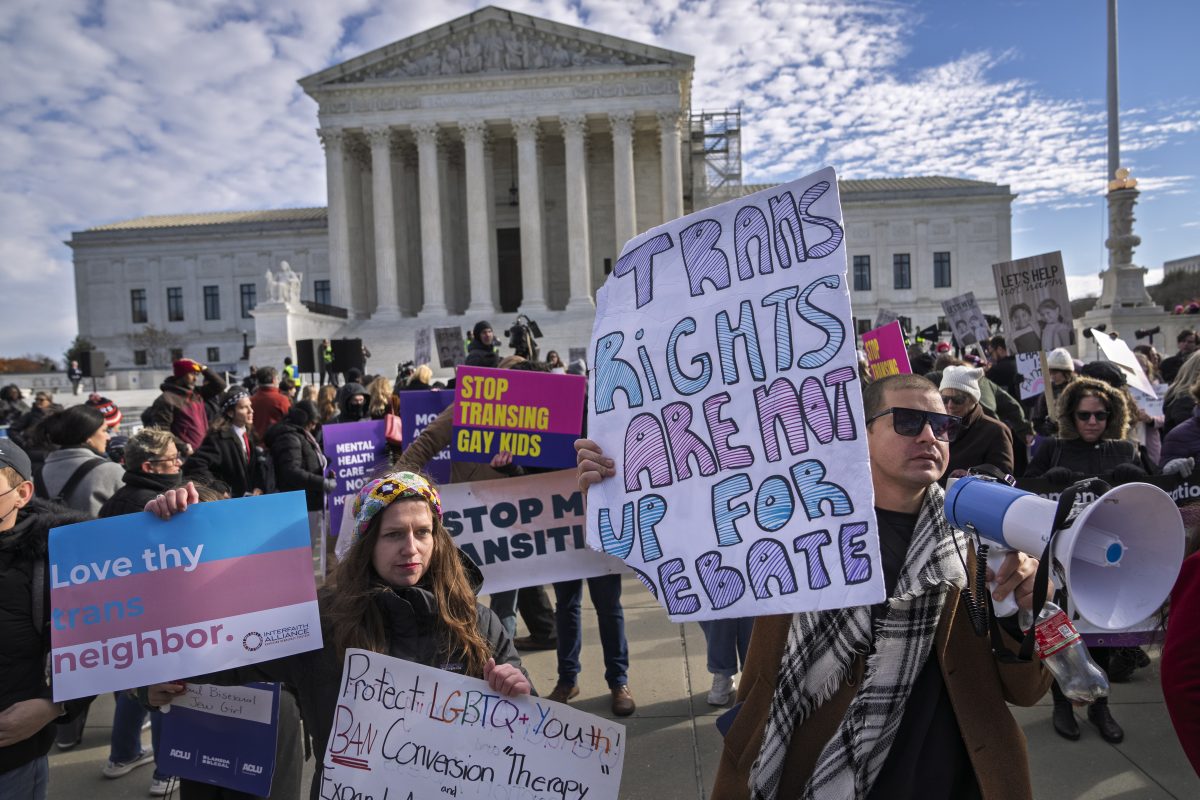 Supporters of transgender rights Sarah Kolick, left, of Cleveland, and Derek Torstenson, of Colorado Springs, right, near the U.S. Supreme Court building, Wednesday, Dec. 4, 2024, in Washington. (AP Photo/Jacquelyn Martin)
But Children’s argues that resuming gender-affirming care for youth is a gamble they shouldn’t be forced to make.
On Wednesday, one mother, known by the pseudonym Becky Boe, testified about the suffering her daughter has gone through as a result of Children’s suspending care, saying, “I’ve tried really hard to make sure she knows that she is like everybody else in that who she is is valid.”
During Children’s Chief Legal Officer Pat O’Rourke’s cross-examination, he turned the focus toward the federal government. He asked Boe about the federal subpoena, which seeks her daughter’s home address, her private medical information, her Social Security number. He asked Boe about federal legislation, passed by the U.S. House last year, that could criminalize parents for seeking gender-affirming care for their children.
“Based on what you’ve seen from the federal government, are you placing any limits on what you think they might do?” he asked.
“No,” she said.
She soon stepped down from the witness stand and back to the watching audience of friends and supporters, where she was wrapped in a hug. And they held on tight.
Type of Story: News
Based on facts, either observed and verified directly by the reporter, or reported and verified from knowledgeable sources.