
The Hawaii Department of Health reports the community outbreak of chickenpox on Kauai has expanded, raising concerns the highly contagious disease will continue to spread.
In addition to the five cases reported last week linked to Kilauea Elementary School, five additional cases were reported this morning from three other schools — Hanalei Elementary, Kaua’i Christian Academy and Island School.
All cases involve children under age 18, according to health officials. Nine were unvaccinated, while one was partially vaccinated with one dose and had milder illness.
Health officials are urging families and schools to take proactive steps to limit the spread of chickenpox on Kauai.
“The chickenpox vaccine is the best protection against getting chickenpox and having severe outcomes of the disease,” the Health Department said in an earlier news release. “Everyone — including children, adolescents and adults — should get two doses of chickenpox vaccine if they have never had chickenpox or were never vaccinated.”
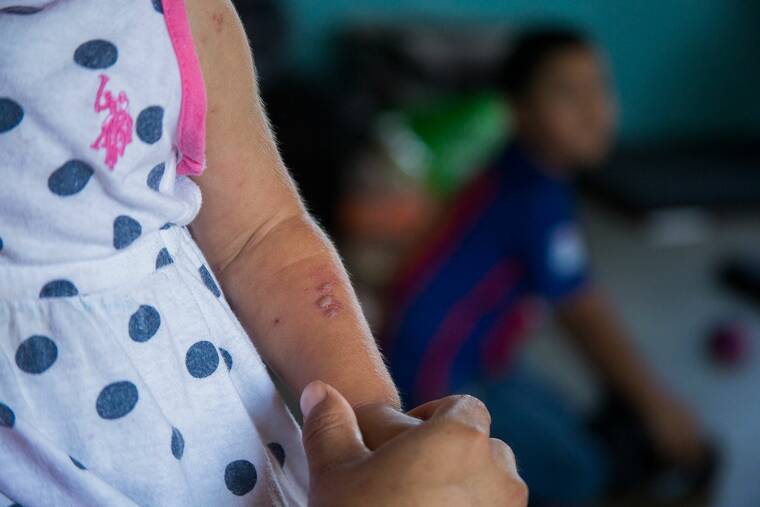
Chickenpox, or varicella, is a contagious disease caused by the varicella zoster virus. Symptoms include an itchy, blister-like rash that turns into scabs after about a week. The rash may appear on the head, back and face first, then spread to the rest of the body, officials said. Other symptoms include fever, tiredness, and loss of appetite.
Don’t miss out on what’s happening!
Stay in touch with breaking news, as it happens, conveniently in your email inbox. It’s FREE!
Since the outbreak began on Jan. 23, DOH’s Disease Investigation Branch has been tracking chickenpox cases, and reached out to affected schools and communities to increase access to the varicella vaccine.
“At this time, the DOH has chosen not to require non-immune, exposed children to stay home from school if they remain well,” said the department in a news release. “The team has weighed the potential risks of new introductions of the disease in the school setting, known spread in other community settings outside of schools, and recognized adverse health effects of excluding children from school for prolonged periods of time.”
Additionally, officials said, it can take up to 21 days for chickenpox symptoms to start after exposure. this means that exposed contacts would potential have to stay home for weeks to months during an outbreak.
Health officials provided the following information regarding the outbreak:
What to know
>> Chickenpox spreads easily through the air when an infected person coughs or sneezes or from contact with their blisters.
>> An infected person can spread the disease from one to two days before the rash appears until all of their rash blisters have formed scabs. It takes about two weeks after exposure to a person with chickenpox to develop symptoms.
>> Classic symptoms of chickenpox include a rash that turns into itchy, fluid-filled blisters that eventually turn into scabs. An infected person may have as many as 500 blisters.
>> Groups at highest risk of severe disease include non-immune adolescents, adults, pregnant women and those with medical conditions that weaken their immune system. Some individuals cannot be vaccinated and may be at risk of severe disease if exposed and are not already immune.
>> To learn more, visit cdc.gov/chickenpox.
DOH recommendations
>> Get the vaccine. Two doses will provide nearly 100% immunity, or significantly reduce severity of symptoms. For children, one dose is usually given at age 12-15 months; the second at age 4-6 years. During an outbreak, an accelerated schedule is recommended for eligible adults and children ages 1 and up. Allow at least a month between the first and second dose.
>> Protect infants. Infants are also at high risk, but not eligible for vaccine until age 1, so household members should check their immune status and get vaccinated if not already immune.
>> Seek medical advice. If you are not protected against chickenpox (no previous infection or vaccination), seek medical advice about the best options for protection.
>> Stay home. If showing any signs of infection (red rash, blisters), isolate at home until all blisters form scabs (usually five to seven days). This will reduce the risk of spreading the disease. One to two days before the rash, symptoms can include fever, loss of appetite, headache, or tiredness. When in doubt, stay home and avoid exposing others.
>> No chickenpox parties. Trying to achieve immunity through deliberate exposure to chickenpox can cause unnecessary suffering by the child, increase the child’s lifetime risk of shingles, and make someone in vulnerable health who gets exposed seriously ill.