
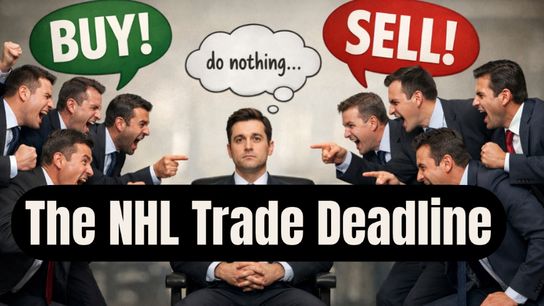
Part 2: Predicting This Year’s Buyers, Sellers, and the Market Shapers
How Teams Really Behave at the NHL Trade Deadline
In Part 1 explained who runs the deadline, Part 2 is about how it actually works.
Every February, the market starts to take shape. Some teams sell early. Some wait to buy late. And some quietly help deals come together without ever being the headline.
The deadline isn’t complete chaos. There’s just stuff you need to filter out to get to the natural tendencies and remember the obvious answer is usually the right answer. But also not to get caught up in logic too much because it’s impossible to imply logic to a situation you don’t understand completely. In other words, you need all the pieces to form a logic train. The only one who has all those pieces are the general managers and coaches.
Understanding all the stuff below, helps me get to 75% of where I need to get to, and also helps me call a GM with a legitimate question. I never call a GM and say, “hey what’s going on or who are you trading?” I only call a GM if I have a legitimate question or if I have information that he might be interested in. So below is what you need to know some of it is obvious of course, but we have a lot of readers here so I’m not sure who knows this or maybe who realizes this but doesn’t actually know it.
The Three Roles Teams Fall Into
Most teams end up in one of three categories:
3) Market Shapers/Helpers
And this isn’t random. It’s driven by:
• Standings
• Roster age
• Organizational direction/Finances
• GM philosophy
By mid-February, most teams already know which lane they’re in — and for some smaller-market teams, revenue plays just as big a role as the standings…
The Financial Factor No One Talks About
There’s another force at work here: money. It’s amazing to me how much this isn’t discussed, but small market teams are often on a really tight budget where their team only makes money if they make the playoffs.. there’s millions of dollars in each playoff game that they get to host at home.
I have a funny story about this. I was talking to one of my favorite team owners and his team swept a series in four games winning the first two at home. The fourth game went into overtime. Later, he said to me, “of course I’m thrilled with the sweep, and it means we’ll get at least two hung games in the second round, but I can’t say that part of me wasn’t hoping for a game five at home.”
Owners will never admit those kind of things usually…I thought this was really honest, and it was partly Tongue In Cheek and partly not probably…
For smaller-market teams, making the playoffs isn’t just about competing. It can mean:
• Extra home gates
• Ticket revenue
• Local buzz
• Sponsorship boosts
So a smaller-market team sitting 4–6 points out in February may choose to buy and chase a berth instead of selling assets.
But if they slip further back, they can flip into sellers fast. The line between buyer and seller isn’t just about standings.
It’s also about economics.
Sellers Set the Market February still belongs to sellers.
Teams outside the playoff picture move first, and that timing gives them leverage. They’re not desperate yet. They can create bidding wars before buyers feel pressure.
• Expiring contracts
• Veteran depth pieces
• Chance of making the playoffs
• Willingness to retain salary
That’s why teams, in the last decade, teams like the Montreal Canadiens, Arizona Coyotes, Chicago Blackhawks, and Anaheim Ducks consistently show up among the most active. Montreal and Anaheim are starting to see years of selling pay off..
Also important to remember that hey’re not just moving players. They’re setting price points for the entire league.
This year’s likely sellers as of now…
These teams are trending toward asset mode.
Buyers Move Less….But Louder
Contenders rarely make the most trades. Instead, they make the most targeted ones. They wait. They evaluate. And then they strike late.
• Firm playoff positioning
• Specific roster needs
• Tight cap space
• Willingness to pay a premium
Teams like the Toronto Maple Leafs, Boston Bruins, Carolina Hurricanes, and Vegas Golden Knights don’t lead in volume. But when they move, it matters. They aren’t trying to win February.
They’re trying to win Cups.
Buyer/Seller Projection (Right Now)
These teams are positioned to reinforce, not rebuild.
The Market Shapers/Helpers: The Role Has Evolved
For years, third teams acted as salary-retention brokers. Do to rule changes they can no longer take on parts of a salary for a player they don’t keep. They can still take on players with large contracts for a price.
Now these teams shape deals by:
• Moving contracts out
• Taking contracts back
• Helping teams clear the way for big ticket players
Hard to predict who they could be year to year..
So besides our likely buyers and sellers, there ar two more categories
Bubble Teams (Deadline Deciders)
A short hot streak makes them buyers. A short slump makes them sellers.
Special Cases (Don’t Always Follow Logic)
Big markets sometimes buy even when logic says sell. Pressure changes behavior.
One highly successful general manager once said to me the following quote:
“The distance from the playoff line determines the price of hope.”
Market shapers connect the deals.
And money quietly influences the middle.
Part 3 shifts the focus from teams to the people making the decisions: definitely my favorite part because it’s when the human factor comes into play…
NHL GMs’ DNA. No two Gms are alike.
So we will look at why some executives always buy, some always wait, and some always seem one move ahead.