

The suspense is mostly gone from Florida’s one-party-dominated Legislature. But not quite.
The Capitol is usually as predictable as a B-movie — “Revenge of the Nerds II” comes to mind — which is why legislative sessions no longer draw crowds of lobbyists. They still watch closely on their smartphones, but they don’t need to show up, because they already know how it ends: the Republicans clobber the Democrats.
So when the unexpected happens, it’s a refreshing sign that the system can still work.
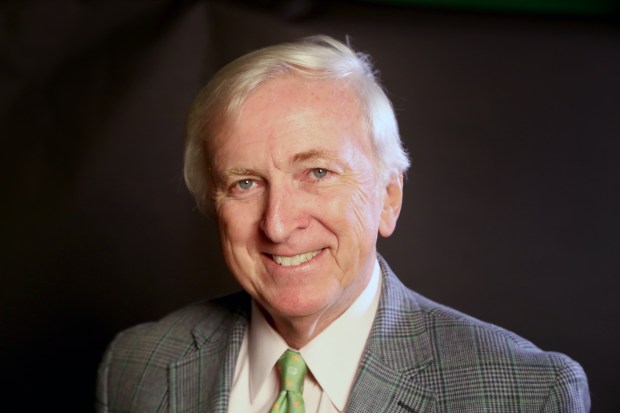
Mike Stocker/Sun Sentinel
Steve Bousquet, South Florida Sun Sentinel columnist.
Broward’s two big public hospital districts appeared to have it “greased” to win passage of a brief and broadly worded bill to let them do any type of joint venture together without having to worry about antitrust laws in a ruthlessly competitive arena, fighting with for-profit hospitals for patients.
The two districts can collect property taxes from Broward residents, and they employ 18 lobbyists in Tallahassee.
They found an influential sponsor in Senator Joe Gruters of Sarasota. Though he is not from Broward, he is a savvy legislator, a long-time ally of President Trump and president of the Republican National Committee.
The bill (SB 1122) is three short paragraphs. In the Senate, there are more than twice as many Republicans as Democrats.
What could possibly go wrong? In this case, just about everything.
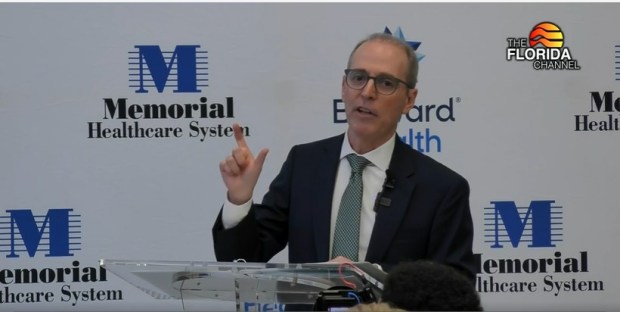
The Florida Channel
Shane Strum, CEO of Broward Health and interim CEO of Memorial Healthcare System.
Under the direction of Shane Strum, interim CEO of South Broward’s Memorial Healthcare System and CEO of Broward Health in the county’s north region, the districts promised better health care access, more consumer choice and shorter waits for appointments. Who could be against that?
The districts seemed so sure of victory, they didn’t bother to cultivate the Broward Democrats who speak for the districts’ patients.
As lobbyists for private HCA Florida Healthcare, with a big presence in Broward, persistently lobbied against the bill, a leading House Democrat, Rep. Kelly Skidmore of Boca Raton, wrote an opinion essay in the Sun Sentinel that described a stealth effort by Strum & Co. to hoodwink the public.
“They should make that case openly in public hearings, welcome community input, and ultimately hold a vote of the taxpayers who fund these institutions. Anything less undermines public trust,” Skidmore wrote.
What Skidmore wrote is exactly what Broward legislators should have been saying six months ago.
But, feeling snubbed, Broward Democrats gradually voiced their frustrations.
One by one, five of them criticized Strum’s strategy in a Sun Sentinel editorial that appeared the day before the first scheduled Senate committee hearing.
In this paper’s opinion, so many questions remain that the Legislature should table the idea for one more year.
“Slow it down,” we urged — and that’s exactly what happened.
On Tuesday, the bill was included on the agenda of the Senate Community Affairs Committee, but as a crowd gathered, Gruters was nowhere to be seen.
The committee chairman announced that the bill was temporarily postponed — “TP’d” in Tallahassee jargon. That is usually a sign of imminent death for a bill, and most legislators prefer to avoid the humiliation of public rejection.
On almost every bill, the sponsor, aided by lobbyists, informally counts heads to make sure the votes are there.
In this case, they obviously weren’t.
“I got a lot of pushback,” Gruters said later. “Sometimes, these bills are too heavy.”
Senators can only tell a colleague “I really need you on this one” so many times.
As the sponsor of 15 other bills, Gruters said there was “no need to waste bandwidth” with the outcome in doubt. He called the bill “a heavy lift.”
Senate committee hearings usually last for two hours, and the antitrust questions alone would have devoured a lot of precious time. Gruters needed just five votes on the eight-person committee, but that apparently was too much.
“They just didn’t have the votes to get it across the finish line,” said a committee member, Sen. Shevrin Jones, D-Miami Gardens.
Jones said he was leaning toward voting yes, but had concerns that antitrust laws protect consumers from price-gouging by health insurers and other abuses.
Another panel member, Sen. Barbara Sharief, D-Miramar, a health care expert, said she would have voted no.
“I felt like we shouldn’t be circumventing any antitrust laws,” Sharief said. “Besides, they (the districts) seem to work just fine together.”
Undaunted, Strum told me in a text message: “We are pressing ahead because our community needs this legislation, and our health systems do, too … The work continues.”
Steve Bousquet is Opinion Editor of the Sun Sentinel and a columnist in Tallahassee and Fort Lauderdale. He has covered the Florida Legislature for more than 30 years. Contact him at sbousquet@sunsentinel.com or at (850) 567-2240.