
Home » Latest Travel News » Breaking: Brazil, Russia, Nigeria, and 72 More Countries Hit by U.S. Immigrant Visa Ban – Find Out How This Affects Your Future in Travel!
Published on
February 8, 2026
By: Paramita Sarkar
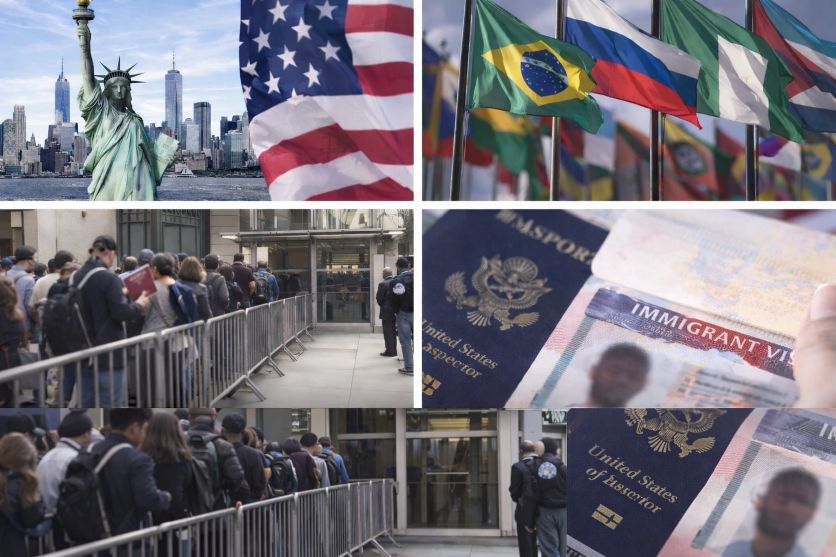
In a groundbreaking move announced by the U.S. Department of State (DOS) on January 14, 2026, the U.S. government imposed an indefinite pause on the issuance of immigrant visas for nationals of 75 countries. This policy, which officially took effect on January 21, 2026, represents a significant shift in U.S. immigration policy, departing from individualized assessments to a categorical suspension for certain nationalities. The DOS cited concerns related to “public charge” inadmissibility, specifically aimed at individuals from countries deemed at high risk of utilizing public benefits.
The 75 countries affected by the pause include nations such as Brazil, Russia, Nigeria, Afghanistan, and Cuba, among others. The suspension has raised concerns regarding the future of immigrants seeking permanent residency in the United States, with many left in limbo as the DOS overhauls its visa processing procedures.
What Happened?
On January 14, 2026, the U.S. Department of State announced an indefinite pause on the issuance of immigrant visas for nationals of 75 countries, which took effect a week later on January 21, 2026. This means that individuals seeking to immigrate to the United States through permanent residency (green card) applications, including family-sponsored and employer-sponsored petitions, will not be issued immigrant visas under this new policy.
The reason cited for this drastic move is a need to reevaluate and revise procedures for determining “public charge” inadmissibility. Nationals from these countries have been identified as “high risk” for utilizing public benefits. As such, the pause allows the Department of State to revise its methodology for assessing financial self-sufficiency among immigrant applicants.
The suspension is a direct response to concerns that individuals from these 75 countries might become dependent on public assistance in the U.S. and the DOS’s desire to address these concerns with a more streamlined and uniform approach.
Where Is This Policy in Effect?
The policy impacts nationals from 75 countries worldwide, primarily targeting developing nations and countries facing economic instability.
Advertisement
Advertisement
A partial list of the affected countries includes:
BrazilRussiaNigeriaAfghanistanBangladeshColombiaCubaIranIraqPakistan
Countries from regions such as the Middle East, Central Asia, Africa, and parts of Eastern Europe are most impacted by this measure. While the suspension applies to immigrant visa applicants, it does not apply to non-immigrant visa categories such as B-1/B-2 (tourist visas), F-1 (student visas), and H-1B (specialty work visas). This means that nationals from these countries can still apply for short-term or temporary visas, though they may face more intense scrutiny regarding their financial self-sufficiency during the application process.
Advertisement
Advertisement
Why Was This Policy Enacted?
The U.S. Department of State’s decision to implement this indefinite pause was driven by concerns over the long-term financial viability of immigrants from the 75 listed countries. The “public charge” rule, which is a long-standing aspect of U.S. immigration law, allows officials to deny entry to individuals who are deemed likely to depend on public assistance programs, such as food stamps or Medicaid, once they arrive in the country.
According to the DOS, individuals from these 75 countries were identified as being at high risk of needing public benefits, leading to this broad-based, categorical suspension of immigrant visa issuance. The pause provides the Department of State with an opportunity to overhaul the criteria and procedures for assessing immigrants’ financial independence, potentially leading to a stricter and more standardized evaluation of applicants in the future.
When Did This Policy Take Effect, and How Is It Being Implemented?
The policy officially went into effect on January 21, 2026. While immigrant visa applications for nationals from the affected countries are still being processed and applicants are permitted to attend consular interviews, these applications will not be approved during the pause. Even if applicants meet the requirements for immigrant status, their visas will not be issued during this period.
The consulates in the affected countries have been instructed to refuse all immigrant visa applications under INA Section 221(g) (administrative processing), which means that applicants will not receive a decision on their visa status until the suspension is lifted.
How Does This Policy Impact Those Affected?
The immediate consequences of this policy are significant, particularly for individuals and families planning to immigrate to the U.S. from these 75 countries. Many applicants may find themselves indefinitely delayed in their pursuit of a green card, as the U.S. government works to revise its public charge methodology.
One key aspect of the policy is that it applies solely to immigrant visas, meaning that applicants for temporary visas, such as student or tourist visas, are not subject to the suspension. However, these applicants may still face increased scrutiny regarding their financial status, as consular officers will likely assess whether these individuals are financially independent enough to avoid becoming a public charge in the U.S.
Key Exceptions and Updates
While the policy is far-reaching, there are notable exceptions:
Dual Nationals: Individuals holding passports from countries not affected by the suspension can apply for immigrant visas using their other nationality to bypass the pause. This provides a potential workaround for applicants who possess dual nationality.Adoption Waiver: On February 3, 2026, the U.S. Department of State issued a waiver for children being adopted by U.S. citizens. This exemption allows the processing of immigrant visas for these children to continue, even if they are from countries on the list, as part of a “National Interest Exception.”Adjustment of Status (USCIS): The suspension only affects consular processing for immigrant visas. As of early February 2026, U.S. Citizenship and Immigration Services (USCIS) has not announced a similar pause for individuals already within the U.S. seeking an Adjustment of Status (Form I-485) to permanent residency.Legal and Practical Implications
The indefinite pause has sparked legal challenges. Immigration advocacy groups, such as the American Immigration Council and the ACLU, have filed lawsuits, arguing that the policy violates the Immigration and Nationality Act (INA), which mandates that immigrant visa applications be adjudicated on an individual basis, rather than based on nationality. These legal challenges will likely result in prolonged court battles, potentially delaying the implementation of the pause or leading to modifications in the policy.
For employers, the suspension poses challenges as well. Multinational companies with plans to relocate employees from affected countries may face significant delays in their ability to bring workers to the U.S. permanently. These employers are advised to review their talent pipelines and explore alternative immigration pathways for affected employees.
Comparison with Other U.S. Immigration Policies
The suspension on immigrant visas for nationals of 75 countries should not be confused with Presidential Proclamation 10998, which came into effect on January 1, 2026. That proclamation targeted 39 countries, primarily focused on national security and vetting concerns. Many countries appear on both lists, further complicating the immigration landscape for these nations.
Conclusion
The indefinite pause on immigrant visa issuance for nationals of 75 countries, implemented by the U.S. Department of State, marks a significant shift in U.S. immigration policy. While the suspension only applies to immigrant visa applications, it has the potential to delay the permanent residency prospects for thousands of individuals. With ongoing legal challenges and a review of public charge guidelines underway, the policy’s future remains uncertain. For now, those affected are advised to stay informed and consult with immigration professionals to navigate the complex and evolving situation.
