
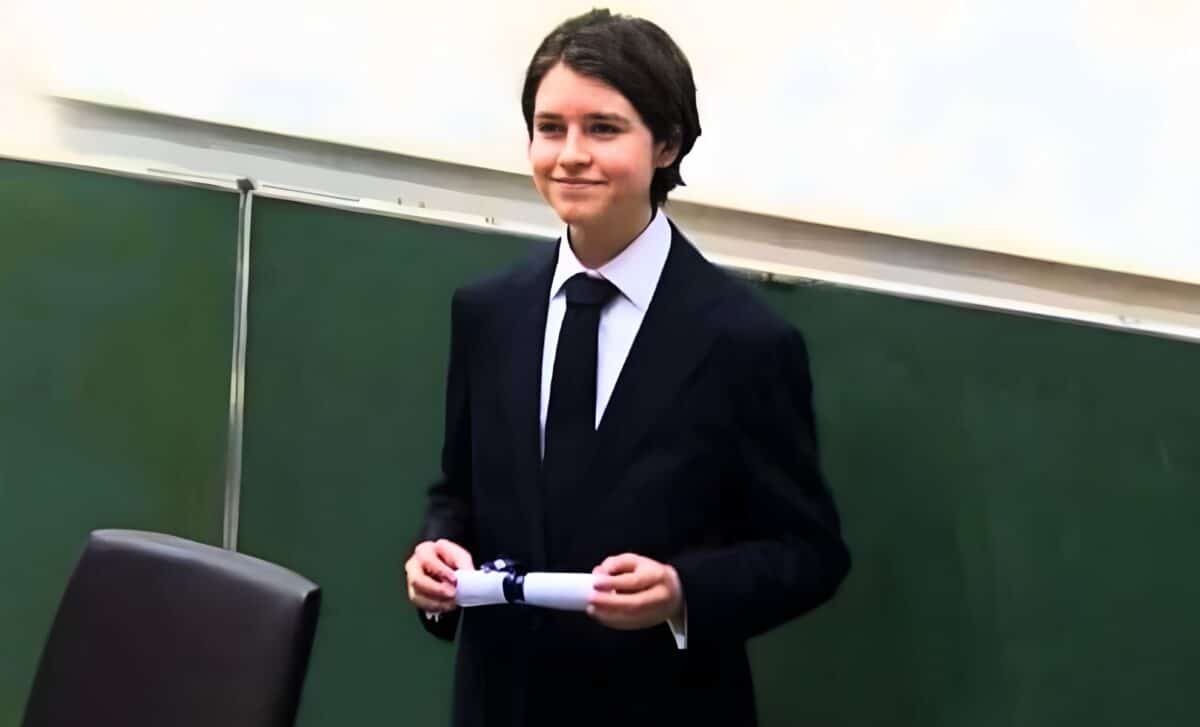
A 15-year-old with verified academic credentials has entered a second PhD program in medical science, focusing on artificial intelligence and biological modeling. This follows the confirmed completion of a first doctoral degree in theoretical physics, finalized at the end of 2025.
Laurent Simons, the Belgian student behind the milestone, is now pursuing a research trajectory that touches on AI in healthcare, longevity science, and human enhancement technologies. The institutional path followed to date reflects formal academic review and conventional degree structures.
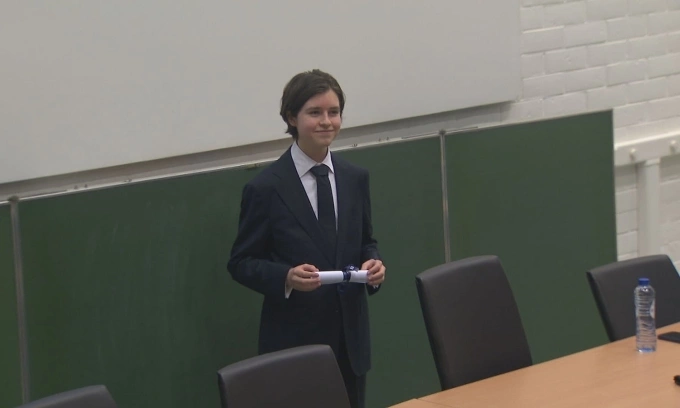 Photo of Laurent Simons. Credit: TV channel VTM
Simons previously drew widespread attention in Europe for his accelerated education, which saw him complete secondary school before age 10. His progress, though exceptional, did not involve honorary titles or alternative credentials.
Peer-Reviewed Physics Research Rooted in Quantum Systems
Simons completed his first PhD at the University of Antwerp, where he defended a thesis titled Bose polarons in superfluids and supersolids. The research explored how impurities behave within Bose–Einstein condensates, a quantum state in which atoms cooled near absolute zero begin to exhibit collective coherence.
The thesis lies within condensed matter physics, a field that underpins emerging applications in quantum computing and many-body systems. His work was completed under formal supervision, and academic documentation confirms that standard requirements were met.
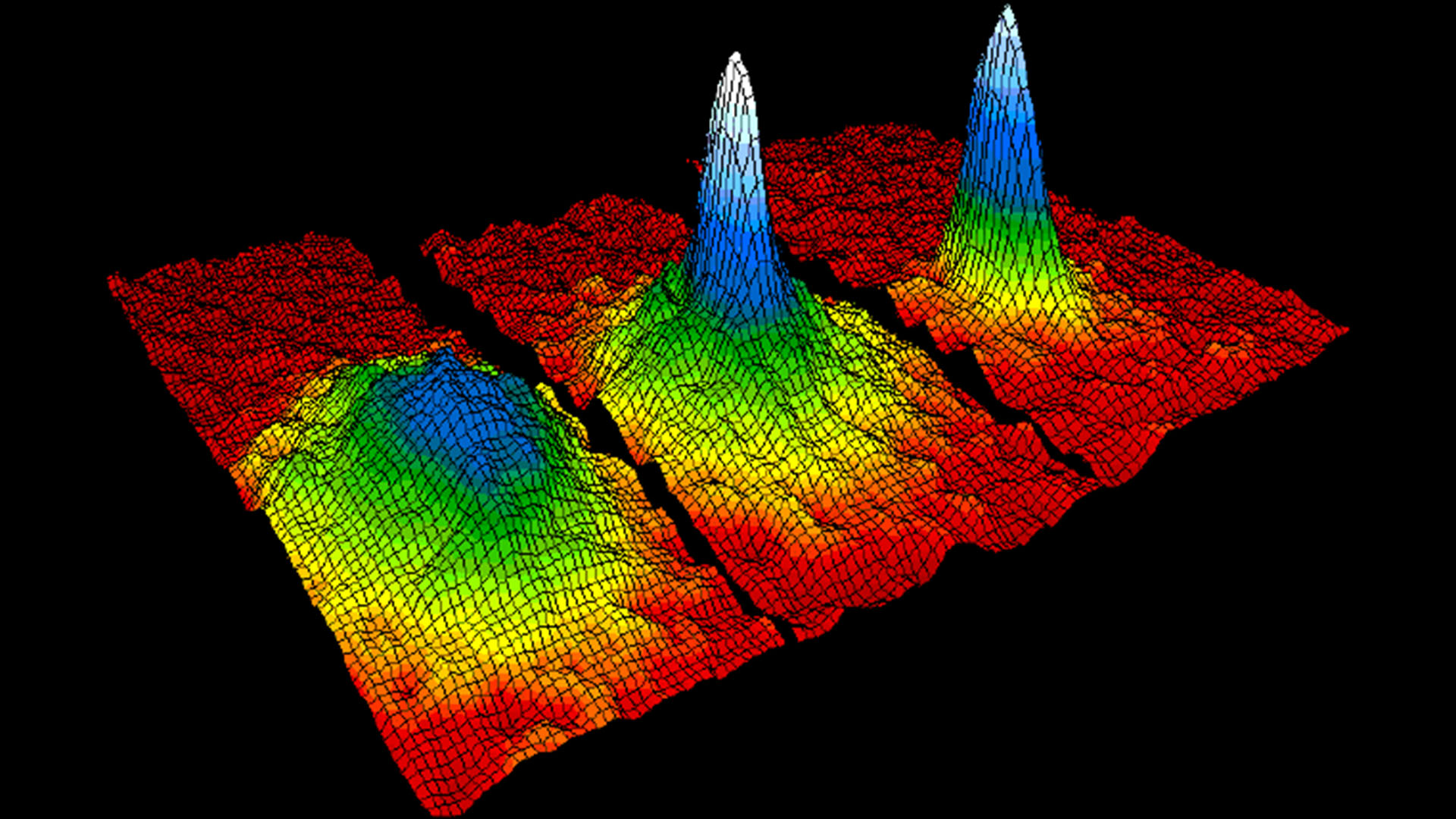 Visualization of Bose–Einstein condensate behavior—Simons’ doctoral research focused on impurity interactions in such quantum states. Credit: NIST/JILA/CU-Boulder
As part of the doctoral track, Simons also conducted research at the Max Planck Institute for Quantum Optics, contributing to studies of quasiparticle interactions in ultracold atomic environments. No special provisions were granted for his age, and all degree milestones were fulfilled through standard academic processes.
Records indicate that Simons earned his undergraduate and master’s degrees at Antwerp within two years. He completed secondary school at eight.
From Subatomic Systems to Cellular Models
In early 2026, following his PhD in physics, Simons relocated to Munich to begin a second doctorate in medical science. The program focuses on the use of artificial intelligence in biological research, particularly in the context of health and aging.
In a televised interview with Belgian broadcaster VTM, Simons stated, “After this, I’ll start working towards my goal: creating superhumans.” He has previously described an ambition to defeat aging, which was also noted in reporting by The Brussels Times.
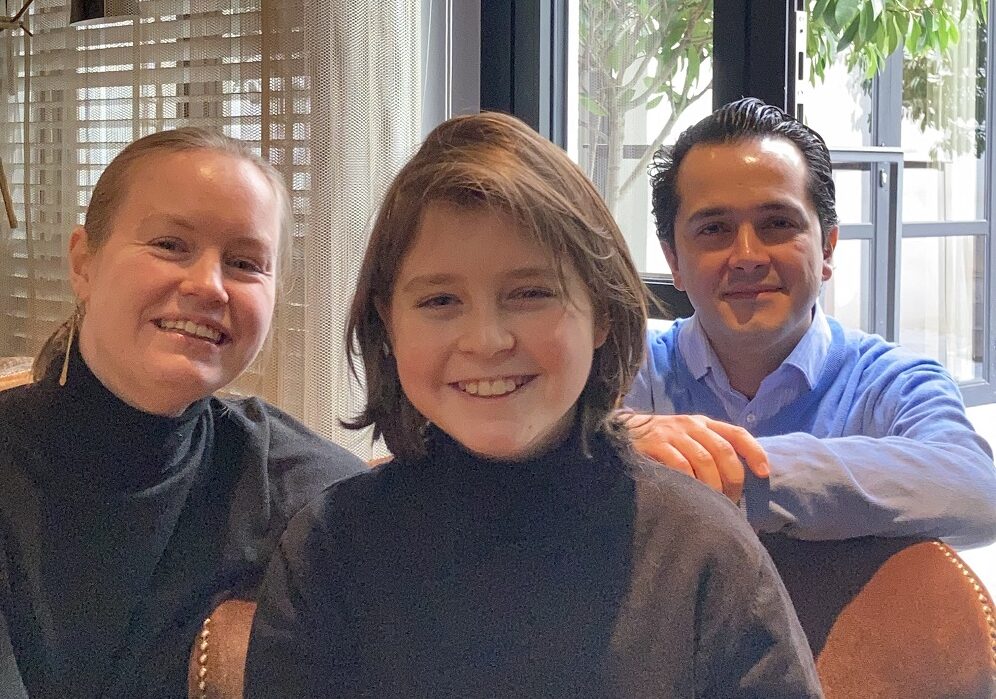 Laurent Simons and his parents. Credit: Justin Stares
No evidence suggests current involvement in clinical trials, laboratory-based biomedical research, or human-subject testing. Publicly available information indicates that the research is early-stage and conceptual, likely centered on computational modeling and AI-driven diagnostic systems.
AI Longevity Tools Draw International Attention
Simons’ second PhD aligns with growing global investment in AI-assisted life extension research. Leading firms such as Calico Life Sciences and Altos Labs are developing interventions for cellular reprogramming, tissue regeneration, and genomic repair, many of which rely on machine learning algorithms to accelerate biological discovery.
Scientific publications including Nature Aging and Cell Reports Medicine continue to feature studies on AI in disease prediction, biomarker detection, and healthspan modeling. These projects increasingly involve interdisciplinary teams from genomics, informatics, and systems biology.
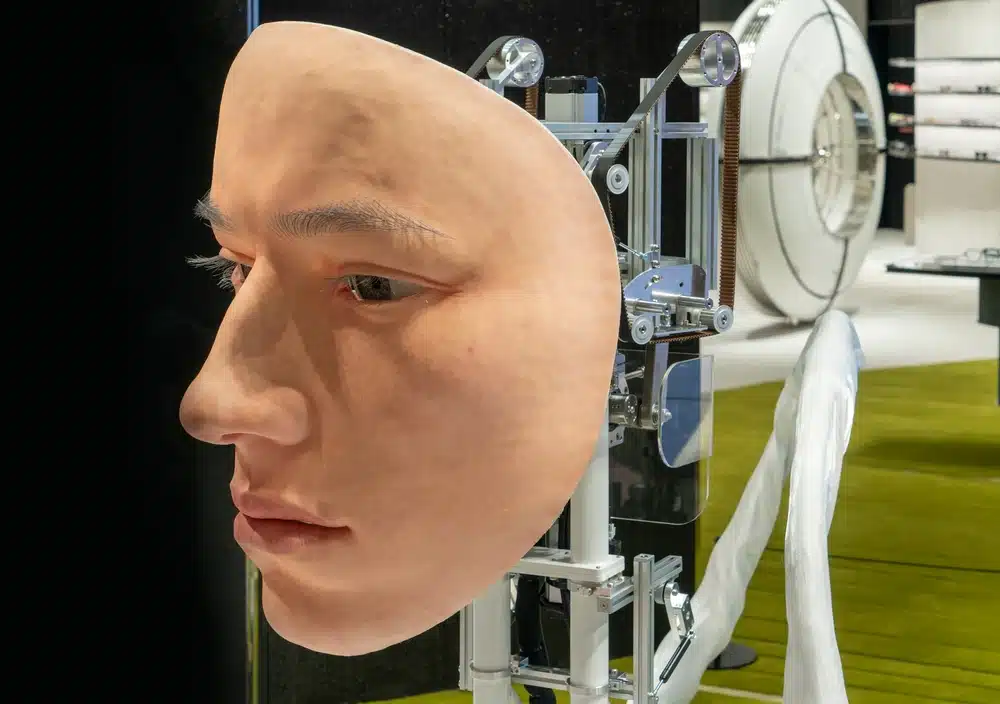 Artificial intelligence is being explored in fields ranging from regenerative medicine to predictive diagnostics. Simons is positioning this as his next research frontier. Credit: Shutterstock
Simons’ academic background is unusual in this context. While researchers in computational biomedicine typically enter from biology or engineering, his path originated in quantum physics, adding a rare cross-domain element to the emerging longevity research ecosystem.
Navigating Ethics in Enhancement Science
The statement about “creating superhumans” places Simons’ research interests adjacent to long-running debates around human enhancement, a field that includes genetic engineering, neural augmentation, and lifespan extension.
As outlined in the Stanford Encyclopedia of Philosophy, enhancement research is typically classified as therapeutic (restoring function), elective (improving baseline performance), or transformational (altering fundamental traits). Simons has not provided a definition of enhancement within his academic work to date.
At this stage, no evidence indicates involvement in enhancement technologies beyond theoretical modeling. There are no reported affiliations with biotech firms, venture funding, or proprietary research initiatives. His current academic work remains within institutional settings.
Institutional Oversight Remains Intact
All of Simons’ confirmed academic activity has occurred within accredited universities under established doctoral structures. No inquiries or concerns have been raised by associated research institutions regarding supervision, content, or ethical direction.
No findings from his second PhD have been published or peer-reviewed to date. The methodology, scope, and data practices of his ongoing research have not yet entered public databases or scholarly record.
Simons’ first PhD, however, remains documented and verifiable, marking a rare instance of institutional progression across disparate scientific disciplines at the doctoral level.