
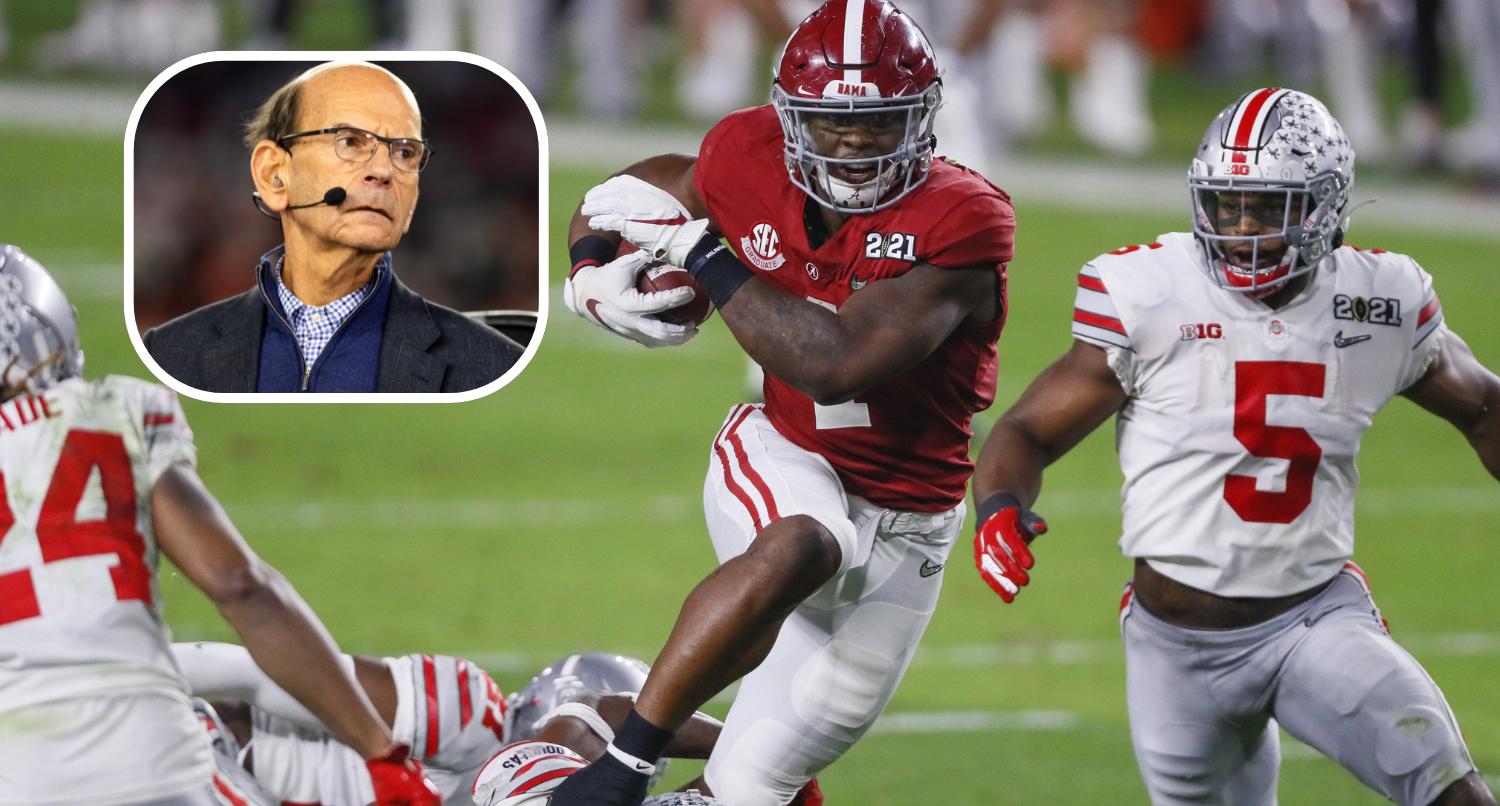
The SEC’s move to nine conference games is about to kill off some of the best non-conference matchups in college football, and Alabama’s home-and-home with Ohio State might be the first casualty.
Paul Finebaum said Saturday on 97.1 The Fan in Columbus that he’s heard from Alabama athletic director Greg Byrne that the Crimson Tide is having second thoughts about the series, scheduled for 2027 in Columbus and 2028 in Tuscaloosa.
“I sincerely doubt the Alabama game is going to happen based on what I’ve heard from Alabama’s AD,” Finebaum said. “He’s got a shaky situation there anyway with a coach that is in trouble. Georgia might do it because they’re a little more in-tune and aligned, but I really don’t think we’re going to go too far and see those games. I know what Ross Bjork has said, and I know what [Chris] Del Conte has said and other ADs have said, but the reality is that the ninth SEC game is going to be very costly for a lot of programs.”
“I sincerely doubt the Alabama game is going to happen based on what I’ve heard from Alabama’s AD. . . Georgia might do it because they’re a little more in-tune.”@finebaum thinks it is unlikely Ohio State will play a home-and-home against Alabama. pic.twitter.com/uzlFQOMuCF
— 97.1 The Fan (@971thefan) February 6, 2026
This isn’t a new development, considering Mark Ingram brought up the exact same scenario back in December on his Triple Option Podcast with Rob Stone and Urban Meyer, saying Alabama was already exploring ways to back out of the Ohio State commitment.
“Alabama has a home and away with Ohio State. Why would you even do that?” Ingram said then. “They’re talking about trying to not do that anymore. I don’t know if it’s going to get done or it’s not, but it’s definitely on the radar to get that off the schedule. What benefit does it do you if you play that game close and they’re going to hold it against you?”
The answer, at least according to the thought process driving these decisions, is none. Texas provided this season’s cautionary tale, reshaping how SEC programs approach non-conference scheduling. The Longhorns opened with Ohio State, played one of the toughest schedules in college football, went 10-3 with losses to the Buckeyes, Florida, and Georgia, and still missed the playoff. Dan Orlovsky and Kirk Herbstreit both predicted after Texas got shut out that it would send a clear message to other SEC programs about the dangers of scheduling elite non-conference opponents.
That’s exactly what happened.
If Alabama backs out of the Ohio State series, it would almost certainly trigger a chain reaction across the conference. Why would any SEC team agree to a challenging home-and-home with a Big Ten powerhouse when they’re already navigating what they believe to be the toughest conference schedule in college football?
Georgia’s series with Ohio State — scheduled for 2030 in Columbus and 2031 in Athens — might have a better chance of surviving since Kirby Smart’s program operates from a position of strength and consistency that Kalen DeBoer’s Alabama doesn’t currently have. But even Finebaum, who mentioned Georgia as a possible exception, didn’t sound particularly confident. The same financial and competitive pressures pushing Alabama toward cancellation will eventually reach Athens, too, even if Smart has more time and job security to navigate them.
Nothing is official yet. Ohio State athletic director Ross Bjork maintains that the games are still on the schedule, and Alabama hasn’t formally canceled the series. But Finebaum’s comments, combined with what Ingram said in December, suggest the momentum is heading in one direction.