
Nvidia has a track record of defying the odds, but has the company’s growth peaked?
The past few years have offered investors a lesson in volatility. Artificial intelligence (AI) was hailed as the biggest technological innovation of a generation, and many investors wanted to get in on the ground floor. This has fueled wild swings in technology stocks, as the Nasdaq Composite has climbed to new heights, fallen into a bear market, and soared back to record heights — all within the past year.
As the de facto standard-bearer of the AI revolution, Nvidia (NVDA +8.01%) has been equally volatile. The stock has surged 780% over the past three years (as of this writing), but is also more than 10% off its peak. The company is scheduled to report results in less than three weeks, and it’s no exaggeration to say Wall Street will be sitting on the edge of its seat, looking for clues about where AI goes from here.
Nvidia has a lot riding on its upcoming financial report, and shareholders are looking for evidence about what the future may hold. The company is scheduled to release its 2026 fourth-quarter financial report after the market close on Feb. 25. Fortunately, data is piling up that helps answer the quintessential investing question: Is Nvidia stock a buy ahead of its crucial financial report? Let’s see what the evidence suggests.
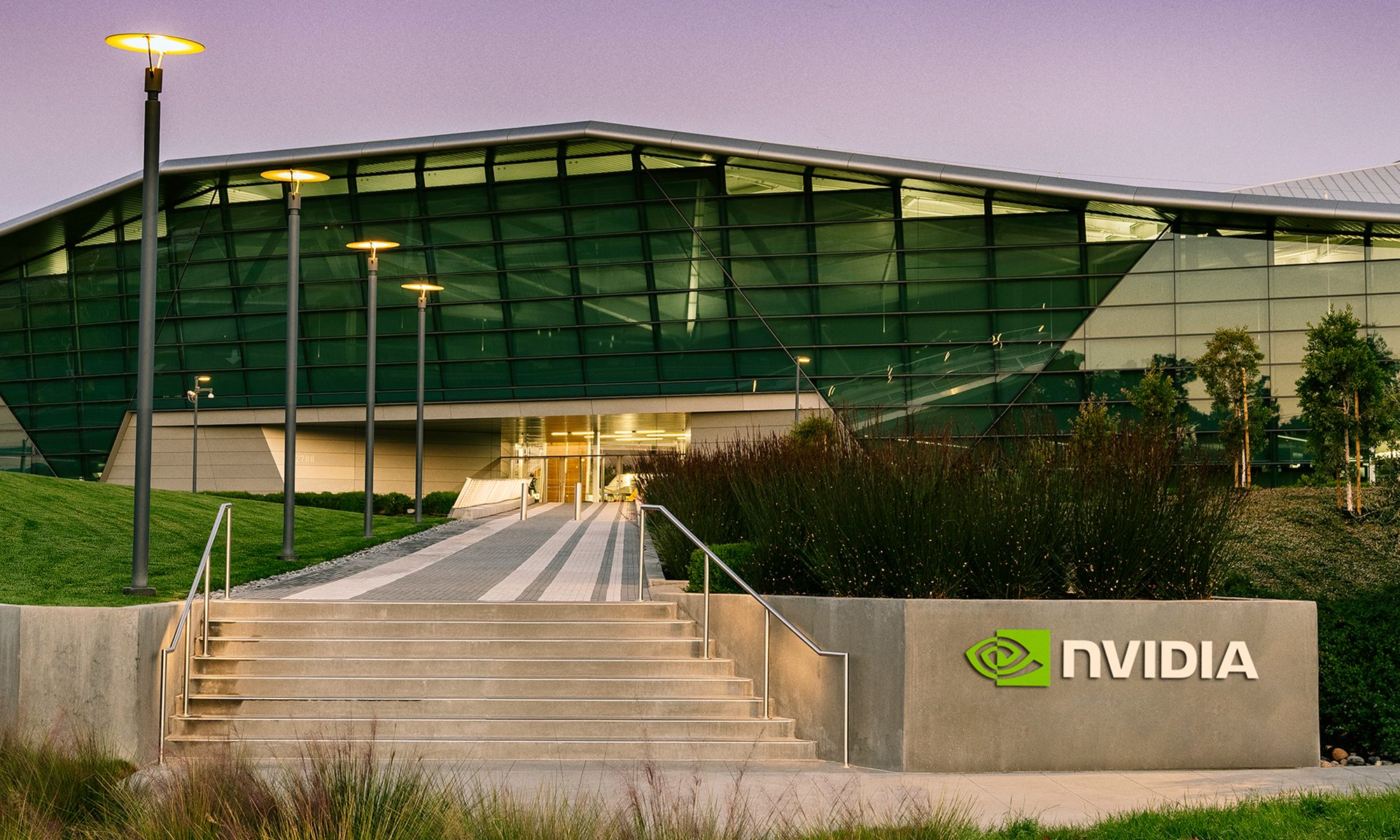
Image source: Nvidia.
I’ve looked at clouds from both sides now
Nvidia’s graphics processing units (GPUs) supply the computational horsepower that underpins advances in AI. However, the sheer magnitude of the data and the computing resources needed limit the most advanced models to a select few companies — nearly all of which are Nvidia customers. Recent quarterly results from some of the biggest provide valuable insight into the state of AI, and the evidence is conclusive.
For its fiscal 2026 second quarter (ended Dec. 31), Microsoft (MSFT +2.00%) continued to invest heavily to support its AI ambitions. The company spent $88.2 billion in 2025 and is on track to exceed that threshold this year. CFO Amy Hood noted that most of the GPUs they’re buying are already “contracted for most of their useful life.” She also noted that “customer demand continues to exceed supply,” which is why Microsoft is accelerating its capex spending.
During its fourth quarter report, Alphabet (GOOGL 2.53%) (GOOG 2.42%) CEO Sundar Pichai said capex spending would be $180 billion at the midpoint of its guidance — double its prior-year spending — with “approximately 60% of that investment in servers and 40% in data centers and networking equipment.” He went on to say that “Revenue from our generative AI models grew nearly 400% year over year,” while admitting “We’ve been supply constrained.” Furthermore, the company’s cloud backlog more than doubled to $240 billion, underscoring sustained demand for AI solutions.
The largest of the “Big Three” cloud providers, Amazon (AMZN 5.49%), turned heads when CEO Andy Jassy announced during the Q4 earnings call that the company would spend a whopping $200 billion on capex in 2026 to support “very high demand.” He went on to say, “We’re monetizing capacity as fast as we can install it.”
Let’s not forget Meta Platforms (META 1.24%). While it isn’t one of the major cloud providers, the company’s various social media platforms attract 3.58 billion daily visitors, giving it a treasure trove of user data. Meta announced its full-year capex outlook of $125 billion at the midpoint of its guidance. Unlike its cloud brethren, the company is using AI to drive higher engagement, which fuels greater advertising revenue. In Q4, ad impressions rose 18%, while the average price per ad rose 6%, suggesting its strategy is paying off.

Today’s Change
(8.01%) $13.77
Current Price
$185.65
Key Data Points
Market Cap
$4.5T
Day’s Range
$174.62 – $187.00
52wk Range
$86.62 – $212.19
Volume
8.9M
Avg Vol
183M
Gross Margin
70.05%
Dividend Yield
0.02%
Why it matters
There’s no question that capex spending is increasing to support the growing demand for AI. It’s also clear that the vast majority of that spending will go toward servers and data centers needed to support AI. Nvidia is the leading supplier of data center GPUs, with a stunning 92% of the market, according to IoT Analytics. As such, the company will likely be the biggest beneficiary of that spending.
Nvidia keeps the data about its biggest customer close to the vest, but Wall Street has done some digging. Analysts with Bloomberg and Barclays Research have parsed the data and shared that Nvidia’s four biggest customers — responsible for 40% of its sales — are:
Microsoft: 15%
Meta Platforms: 13%
Amazon: 6.2%
Alphabet: 5.8%
While those numbers vary from quarter to quarter — and are likely different right now — the inference is indisputable. Nvidia’s biggest customers have left no doubt that they plan to spend heavily on capex, and the chipmaker is well-positioned to capture the lion’s share of that spending.
Mark your calendar
On Feb. 25, Nvidia will report the results of its fiscal 2026 fourth quarter (ended Jan. 26). The company’s outlook is intriguing, guiding for year-over-year revenue growth of 65%, accelerating from 62% in Q3. Given Nvidia’s track record of exceeding its own guidance, I wouldn’t be surprised if the actually results blow past its forecast.
That said, investors looking to game the system and make money over the next three weeks might be disappointed. There’s simply no way to know for sure how Nvidia stock will perform on a given day — even if the company wildly exceeds expectations. Investor psychology, profit-taking, and the general economic outlook can come into play. As such, volatility and uncertainty are part of the cost of admission.
That said, the spending plans of some of the most prominent players in technology suggest the AI boom continues, and the future is bright for Nvidia. This is particularly true for investors planning to hold their shares for years or even decades, rather than weeks or months.
And at just 24 times forward earnings, the stock is attractively priced. No one can say for sure what the stock will do between now and Feb 25. I am confident, however, that investors who buy Nvidia stock now and hold it for three to five years will be pleased they did.