
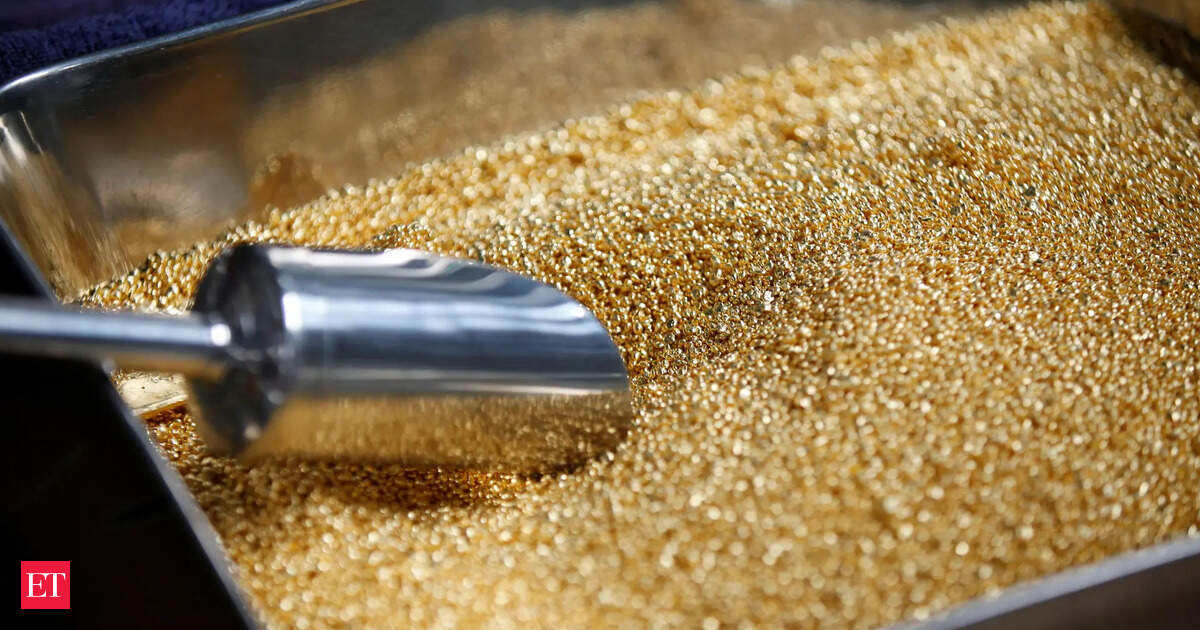
New Delhi, India has granted a quota-based duty concession on only 5 lakh tonnes, which is equivalent to just 1 per cent of the total consumption of dried distillers’ grains (DDGS), under the first phase of the bilateral trade pact, an official said.
The official said that DDGS will supplement domestic feed availability and help meet rising demand without diverting food grains from human consumption.
“Animal feed domestic consumption is 500 lakh tonnes, whereas the quota given to the US is only 5 lakh tonnes, which is equivalent to only 1 per cent of total consumption,” the official said, adding imports of this grain reduce corn and soyabean imports for feed purposes.
Access to DDGS will reduce feed cost volatility, protecting poultry, dairy, aquaculture, and livestock producers and helping contain food inflation.
The grains will also reduce pressure on domestic corn and soybean markets, supporting the availability and affordability of staple food grains.
 Live Events
“India’s feed demand growth is large, structural and long-term. Only 1 per cent quota of DDGS imports is a pragmatic, low-risk measure. It diversifies small quantities of imports to the US, reduces corn and soyabean imports for feed, supports livestock growth, stabilises prices, and aligns with national food security and export objectives,” it added.
India’s demand for animal products is increasing rapidly due to population growth, rising incomes, and urbanisation.This has led to a corresponding increase in demand for animal feed, particularly corn (200 lakh tonnes) and wheat (65 lakh tonnes) soybean meal (62 lakh tonnes), which together account for nearly two-thirds of total feed consumption (500 lakh tonnes).
Domestic feed supply is increasingly constrained by limited arable land and productivity gaps.
Feed demand is projected to grow faster than domestic supply, making imports necessary by the early 2030s under all realistic growth scenarios.
India imported soybean meal (15 lakh ton) in 2021 due to domestic price pressures.
Currently imports more than 6 lakh tonnes of animal feed (key suppliers- Sri Lanka, China, USA, Thailand, Nepal), 6 lakh tonnes of soyabean (key suppliers- Niger, Togo, Benin, Mozambique) and 9 lakh tonnes of corn (key suppliers- Myanmar, Ukraine, Singapore, UAE).