
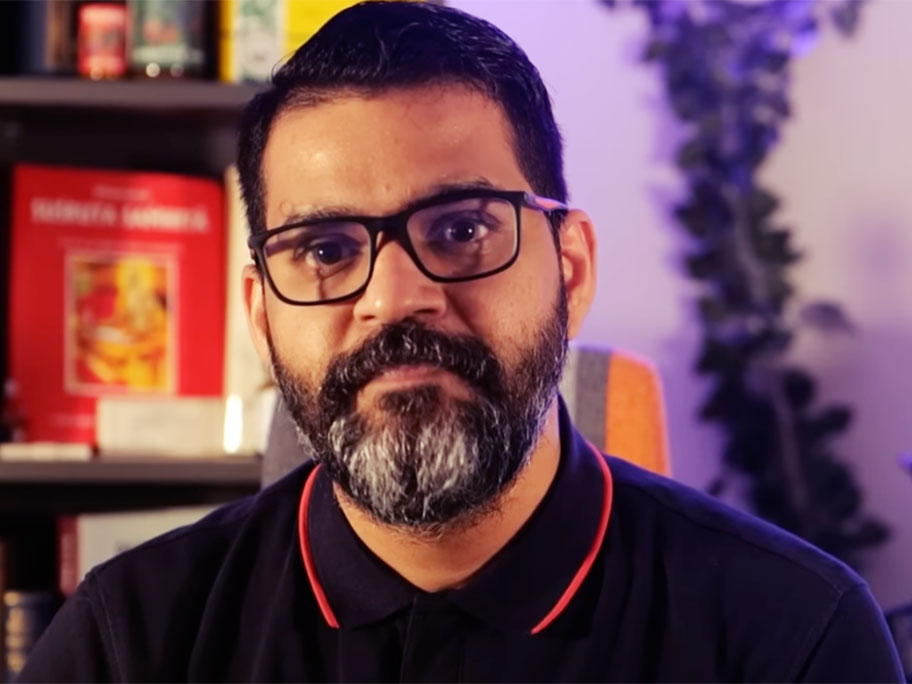
 Dr Cyriac Abby Philips.
There have been court injunctions, police summons, a social media ban (later lifted) and the spectacle of watching his research being retracted by journals fearful of the litigation it might attract.
Over the last 10 years, Dr Cyriac Abby Philips has become the most visible — and most legally vulnerable — critic of alternative medicine in a country where pseudoscience is not merely tolerated but institutionalised.
The hepatologist’s crimes are insisting that science matters, because in India, that insistence has placed him on a collision course with an alternative medicine industry armed with dollars and the necessary political connections.
As you will discover, there are over 300,000 formally registered homeopathic practitioners. They hold government appointments and positions in tertiary hospitals. There’s even homeopathic hospital beds, where patients with metabolic disorders and early and late-stage cancer are managed with homeopathic remedies.
Legally entitled to call themselves doctors, homeopaths also get special protections from anyone willing to say the obvious.
“Calling them ‘quack’ or ‘bogus doctor’ is a legal violation of their constitutional rights and can be considered defamatory,” Dr Philips explains, “even though the practice of homeopathy is pseudoscientific, based on zero evidence for benefits or safety.”
He says he has faced relentless campaigns of harassment and abuse for his crusade.
“My activism has triggered high-stakes legal battles,” he adds, referring to a criminal defamation case and the unjustified attentions of the medical board.
As reported in AusDoc, it is against this backdrop that Dr Philips recently found himself at the centre of the entanglements of the European Journal of Pediatrics with homeopathy research.
The journal had published a study in late 2024 so methodologically incoherent that its conclusions bordered on parody.
It purported to show that homeopathic treatment in the first two years of life was associated with better health outcomes than conventional care.
In the text, it notes that antibiotics were required for 14 sickness episodes in the children in the homeopathic group compared with 141 in the conventional group.
“Integrating homoeopathic treatment with routine conventional infant and child healthcare may offer a safe, effective and inexpensive alternative to antibiotics,” this peer-reviewed study suggested.
According to the authors, the homeopathic group also experienced fewer sick days, cost less to treat, and even demonstrated superior growth outcomes.
The implication was clear, at least in their conclusion: homoeopathy, using conventional medicine as a safety backdrop, is a “safe and cost-effective primary care modality”.
In India at least it made national headlines.
“My initial reaction when I first read this paper was a mix of disbelief and professional outrage,” Dr Philips says. “It was bonkers.”
“They split the children into two groups. One group gets conventional medicine alone and the other group gets homeopathy — but also conventional medicine as ‘rescue’.”
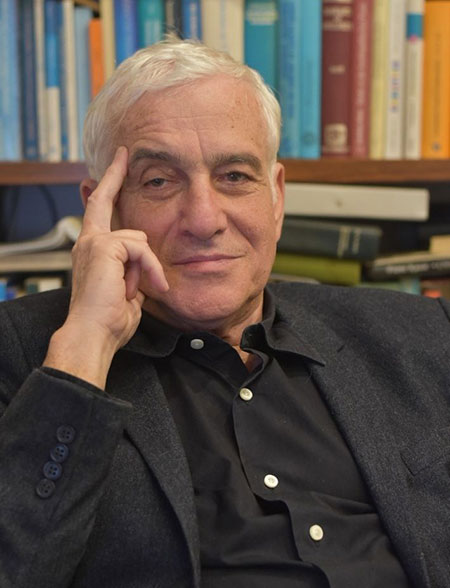 Dr Menachem Oberbaum.
The study was designed, if it was designed for anything, to track the placebo effect given what homeopathy at the level of biology.
But then there was no actual blinding taking place, another flaw.
There was also the problem you encounter when using ‘needed no treatment’ as an outcome measure to document your treatment’s efficacy.
In the homeopathic group for instance, you discover some 25% of the cohort did not get sick at all, although when the numbers were crunched this was attributed to the wonders of homeopathy.
Dr Philips wrote letters to the journal editor, and after more than a year while the investigations took place, the paper was retracted last month.
The authors, co-led by Dr Menachem Oberbaum, a trained doctor and homeopath from the Shaare Zedek Medical Center in Jerusalem, Israel, vigorously defends their study saying the criticism is misinformed.
Yes, children in the homeopathic arm received conventional medical care but only for serious conditions.
“The study was not a conventional drug-versus-drug trial, but a pragmatic attempt to document widely observed real-world homoeopathic practice in India,” they said.
You can read their explanations at the end of this article.
State-sponsored pseudoscience?
What made the study particularly potent to Dr Philips however was not merely its findings, but its provenance.
The paper involved researchers from India’s Central Council for Research in Homoeopathy, which falls under the Ministry of AYUSH.
This powerful government ministry — it’s full title is the Ministry of Ayurveda, Yoga and Naturopathy, Unani, Siddha and Homeopathy — promotes traditional and alternative systems of medicine in India.
Dr Philips says it operates teaching hospitals, runs universities, and actively advocates for the integration of alternative practitioners into mainstream healthcare.
“This is why fighting them is so difficult,” Dr Philips says. “I am not just fighting bad science. I am fighting state-sanctioned propaganda.
“[The government] does not debate the science because they know they will lose.
“Instead, they promote it as a cultural heritage and a cheaper alternative to Western big pharma.”
The hospital beds that should not exist
One of the most striking claims in the retracted journal paper is that India has approximately 7000 homeopathic hospital beds.
Is that true? It sounds alarming. But if so, what exactly happens in a homeopathic hospital bed?
“The bed figure is likely accurate,” Dr Philips says. “The Indian Government funds dedicated homeopathic hospitals and colleges.
“In these beds, patients with serious conditions — from infectious diseases to non-communicable metabolic disorders, early- as well as late-stage cancer, and even severe autism — are often ‘managed’ with homeopathic remedies.”
He claims ‘treatment’ often consists of taking a detailed and often irrelevant history of the patient’s personality and dreams and then prescribing pills, powders or liquids, including highly concentrated alcohol-based mother tinctures.
“I have an ex-homeopathy practitioner who now works in my research department after he quit homeopathy practice a while back.
“He has claimed that homeopathy medical college hospitals would have a higher number of ambulances than actual hospitals because they were mostly there to shuttle patients to real hospitals when they got sicker under homeopathic care.
“The real tragedy is that while the patient occupies ‘homeopathy’ beds, their disease progresses unchecked until it is often too late.”
There is a deep cultural irony in all of this because this modern-day nonsense is a Western import, brought to India during the alleged ‘civilising mission’ of the colonial enterprise.
Homoeopathy itself was first arrived on the Indian subcontinent 200 years ago, a result of German missionaries who began distributing their remedies in Bengal.
But it was not until 1839 when John Honigberger, a Romanian homoeopath and disciple of the father of homoeopathy, Samuel Hahnemann, successfully treated the then ruler of Punjab, Maharaja Ranjit Singh, that it gained the royal patronage that enabled it to take root.
Dr Philips says while the West eventually moved on to evidence-based medicine and discarded homeopathy as quackery, India held it tight.
“It was adopted and nationalised alongside Ayurveda [India’s traditional holistic medicine tradition termed the ‘knowledge of life’], but it means that homeopathy is now falsely protected under the guise of ‘Indian tradition’, despite being a European import.
“It has been turned into a legitimate profession — a career for students to indulge in.”
To be clear about definitions, the Indian version of homeopathy is little different from the European one.
Both are based on scientific voodoo: The alleged law that ‘like cures like’ and the law of infinitesimals, or to put it another way, the law of dilution.
Practitioners believe their remedies balance a rogue vital force in disease conditions and heal the patient from the inside out.
“There is a slightly higher chance of us finding Harry Potter’s Elder Wand than finding homeopathy effective for anything under the sun,” Dr Philips says.
“In India, the practitioners dispense small white sugar globules — or powders or liquid formulations — that have been sprayed or mixed with solutions diluted so many times that not a single molecule of the original substance remains.
“They are literally selling dummy treatments — sometimes pure alcohol.”
To give a sense of the scale of this industry, some 345,000 registered homeopaths are formally licensed to dispense placebos as medical cures.
The harms are real, Dr Philips adds — and not simply because of diagnostic delays.
“Our research has found that many ‘homeopathic’ remedies are adulterated with heavy metals, steroids or industrial solvents to make them ‘work’.
“We frequently see severe drug-induced liver injury in patients taking these ‘safe’ natural medicines.”
He refers to his paper published in Hepatology Communications, which examined patients who developed severe drug-induced liver injury after taking homeopathic remedies.
“All the patients developed jaundice. Over half had underlying chronic liver disease, and 44% died during follow-up.
“Chemical analysis of 15 retrieved formulations revealed concerning findings: even supposedly ‘ultra-diluted’ homeopathic products contained industrial solvents, corticosteroids, antibiotics, sedatives, synthetic opioids, heavy metals — including arsenic — and toxic plant compounds.”
It is worth noting that Dr Philips’ campaign, which began more than a decade ago, was not born of abstract intellectual concern.
It began at the bedside.
“It started in 2016, when I initially joined the liver unit at PVS Memorial Hospital in Kochi as a junior consultant in hepatology,” he says.
“Inside my liver ICU, I kept seeing young people — and sometimes even children — developing liver failure, undergoing transplantation, or dying of acute liver failure.”
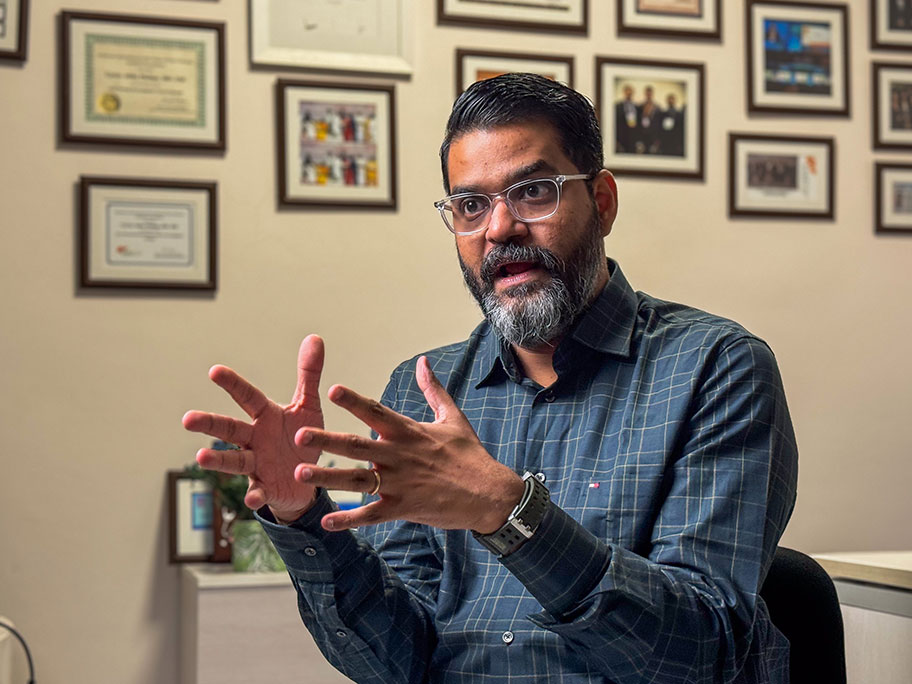 Dr Cyriac Abby Philips. Photo: Getty Images.
The common thread was not alcohol consumption, viral hepatitis or autoimmune disease.
“Their only history was taking ‘natural’ supplements or homeopathic cures for minor issues.”
What disturbed him most was the invisibility of the harm.
“I realised these supposedly safe alternative medicine pills were killing people — and nobody was documenting it.”
He says the Indian Medical Association has voiced opposition to homeopathy, while also reminding doctors of the legal risks of calling out quackery.
But in his view, it is not vocal enough. Dr Philips says he has no option but to speak out.
“Ultimately, in my practice, I couldn’t just treat the liver injury — I had to treat the cause. And the cause was misinformation.
“That is why I took to social media — to educate, to prevent avoidable health harms, to disrupt the lies that were killing my patients.”
He has some 450,000 social media followers, but the cost has been substantial, the pressure relentless, the risks ongoing.
“There was an ex parte court injunction from a major [Ayurvedic] herbal company in late 2023 that led to the temporary suspension of my Twitter (X) account,” he says.
That injunction was later overturned following the involvement of lawyers and a public outcry.
In 2019, he published a paper documenting the death of a patient from acute liver failure due to heavy metals and toxic compounds in a dietary supplement.
That attracted legal threats from the maker Herbalife and the paper was pulled by the journal, only to be reinstated after public criticism by Retraction Watch and the Dutch microbiologist Dr Elisabeth Bik (PhD).
But beyond corporate lawsuits, he says, he has been targeted by state machinery.
Three years ago, he was accused of professional misconduct by the Kerala State Medical Council over an interview in which he described Ayurvedic medicine as ‘pseudoscience’.
The watchdog served Dr Philips notice after the Ministry of AYUSH claimed his comments were defamatory and dividing public opinion.
It took eight months before the charges were dropped.
He says the harassment campaigns he faces from social media cells are mostly the work of Indian right-wing groups that sympathise with Ayurveda and traditional herbalism. It’s part of the new Indian nationalism.
But it is his persistence in the face of all this that explains why he was awarded the Ockham Award for Skeptical Activism last year.
“One of the most important roles of science communicators is to protect the public from dangerous health misinformation,” the citation said.
“That task becomes all the more crucial when that misinformation isn’t just about wasting money and giving false hope, but where there is risk of serious and irreparable harm to the patient.
“Dr Philips has continued that work, even as alternative medicine companies with deep pockets and powerful political connections have tried to silence him.”
He insists silence is a price he is refusing to pay for an easier life.
In a system where a billion-dollar pseudoscience industry is protected by law, government-funded, journal-published, and hospital-based — and where doctors can be punished for calling it what it is — he claims silence is an act of complicity.
Read the full response from the authors of the retracted European Journal of Pediatrics paper: