
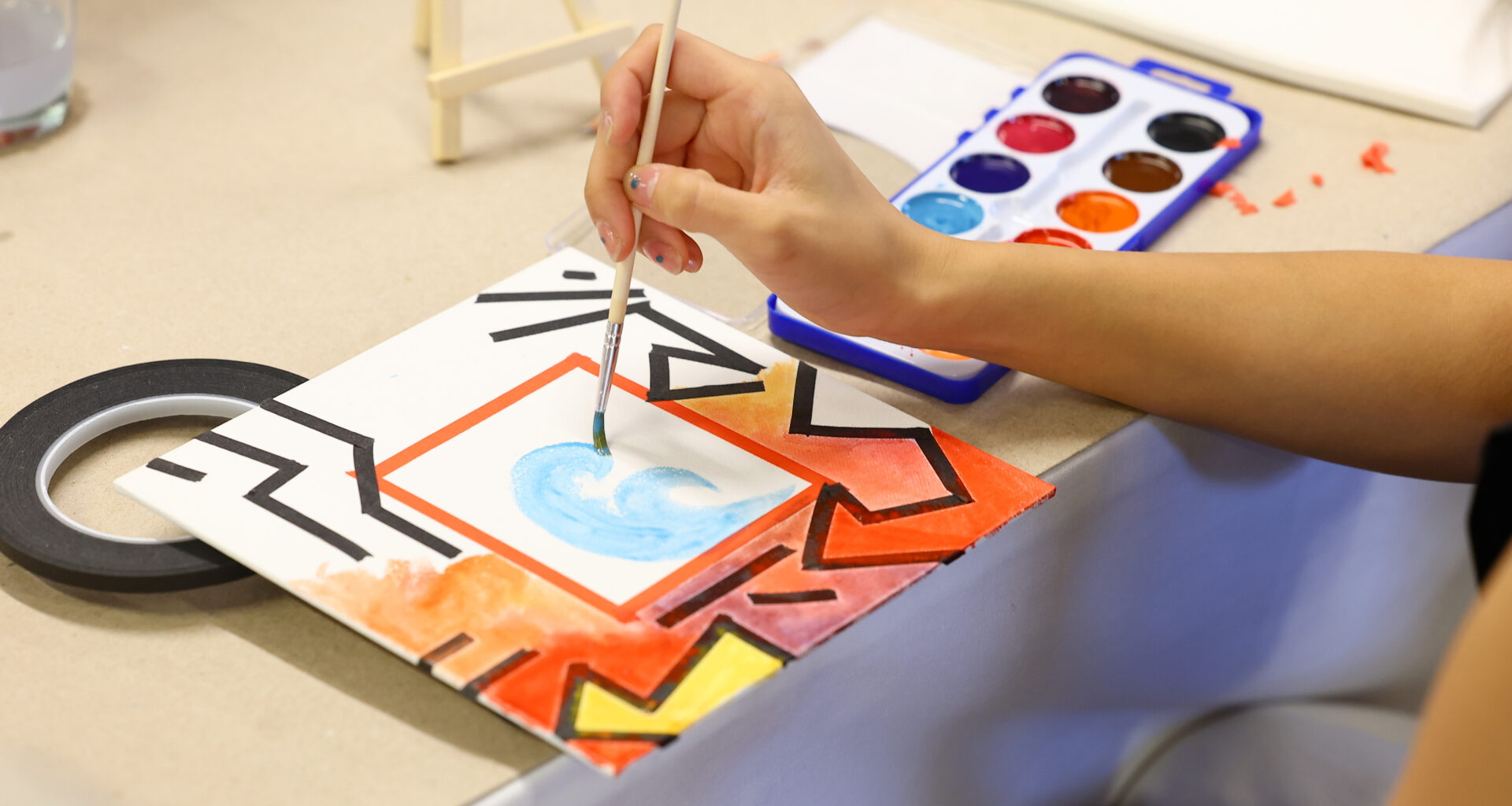
ATLANTA — State School Superintendent Richard Woods announced Georgia would continue its expansion of fine arts instruction across the state, including new high school pathways and a push for increased elementary staffing.
The plan also seeks to add advanced fine arts courses to the HOPE Rigor credit list to benefit students pursuing creative careers.
The Georgia Department of Education said it is implementing these changes to align student interests with the state’s growing creative industries. Woods shared the details last week during the Georgia Music Educators Association annual conference.
Officials said the initiative treats the arts as a core component of a well-rounded education.
[DOWNLOAD: Free WSB-TV News app for alerts as news breaks]
GaDOE is adding a new Fine Arts Advanced Academic Pathway to the state’s existing options.
Woods has requested the Georgia Student Finance Commission include Advanced Placement, International Baccalaureate and upper-level Cambridge fine arts courses on the HOPE Rigor course list.
This move aims to prevent students from being penalized in their scholarship eligibility for pursuing high-level arts instruction such as AP Music Theory, according to the state.
Woods said that these subjects are fundamental to student development.
TRENDING STORIES:
“The fine arts have always mattered immensely to me because of what they do for students as learners and as people,” Woods said in a statement. “As an educator, I’ve seen time and again how the arts help students build confidence, discipline and a deeper connection to their education. When we expand access to fine arts instruction, we’re not adding something extra. We’re strengthening the foundation of a well-rounded education and honoring the talents and interests of every student in Georgia.”
The department is also launching Creative Industries Pathways as part of its Academic Career offerings. These include eight specific programs, with four new fine-arts focused options: teaching as a profession, audio-video technology and film, audio technology for live production and audio technology for post-production.
These pathways are designed to prepare students for jobs currently listed on Georgia’s statewide and regional High Demand Career lists.
Jessica Booth, GaDOE fine arts program manager, highlighted the economic importance of these specialized skills.
“Georgia’s creative industries are thriving and they need students who are skilled adaptable and prepared for careers in these fields,” Booth said. “When we invest in strong fine arts programs, we’re both nurturing creativity and building pathways into fields like film, audio production, design and arts education that are vital to our state’s economy.”
To support education at the foundational level, GaDOE is seeking to adjust the elementary school staffing ratio in the Quality Basic Education formula.
The current ratio provides funding for only one art, music or physical education teacher for every 350 students. This current formula also excludes kindergarten students from the ratio calculation.
Andy Esserwein, president of the Georgia Music Educators Association, expressed support for the state’s direction during the conference.
“GMEA values our continued partnership with the Georgia Department of Education in advancing high-quality fine arts instruction for every student,” Esserwein said. “The initiatives proposed by GaDOE will expand fine arts opportunities that enrich students’ lives and strengthen the creative capacities essential to Georgia’s future workforce.”
This expansion follows a decade of growth for arts programs under Woods, who created the first state-level fine arts role at the agency in 2015.
Since then, the department has invested more than $2 million in grants to help local districts launch and sustain fine arts programs. Other efforts have included Science, Technology, Engineering, Arts and Math school certification and the creation of a Fine Arts Diploma Seal.
[SIGN UP: WSB-TV Daily Headlines Newsletter]
©2026 Cox Media Group