
This story is part of the Southwest Michigan Journalism Collaborative’s coverage of equitable community development. SWMJC is a group of 12 regional organizations dedicated to strengthening local journalism. To learn more, visit swmichjournalism.com.
KALAMAZOO, MI – Since the 2009 Great Recession, Kalamazoo County has held its grounds economically, especially compared to Michigan as a whole.
The county population has grown 4.5% since 2010, in a state with a stagnant population. Its per-capita income ranks in the top 10 among the state’s 83 counties, per the Upjohn Institute of Employment Research. The county unemployment is typically below the state average; in January 2026, it was 4.3% in Kalamazoo County compared to 5% for Michigan.
But the Grand Rapids area has done even better.
Grand Rapids is the fastest-growing metro area in Michigan – Kent County’s population is up 9.2% since 2010 and neighboring Ottawa County ranks No. 1 at 12.3%. Kent County ranks seventh in per-capita income, and its current unemployment rate is 3.9%, one of the lowest in state.
Between 2010 and 2024, median household incomes grew up 67% in Kent County compared to 62% in Kalamazoo County.
So what’s behind that?
“Part of it is scale,” said Tim Bartik, a senior economist with the Upjohn Institute for Employment Research.
One big advantage Grand Rapids has over Kalamazoo is its size, Bartik says. The Grand Rapids metro area is more than 1.1 million people, about four times larger than metro Kalamazoo, as defined by the U.S. Census Bureau.
In terms of economic growth, that larger size has advantages for both employers and people seeking a place to live.
It means a larger labor pool. A larger airport with more flights. It’s easier for people relocating to find a job or move between jobs once they’re settled.
There’s more choice of housing, school districts, restaurants. It’s a bigger dating pool for singles.
“A two-career family coming (to Kalamazoo), can they both get a job here? My organization has faced that over time,” Bartik said. “Grand Rapids has a scale where they can address that more. There’s just generally more going on because it’s a bigger scale.
“What fuels economic development, the way I think about it, is labor and real estate,” Bartik said. “For most companies, one thing they want to know is: How productive are the local workers and how many are available and what wages would I have to pay?”
Indeed, a major reason the Kellogg Co. relocated some of its operations from Battle Creek to Chicago was the difficulty in recruiting top talent to move to Battle Creek, Battle Creek officials were told.
“It’s a whole new world out there,” said Hannah Apps, a Kalamazoo College economics professor and former Kalamazoo vice mayor. “The business landscape has changed significantly.”
Growing metro Kalamazoo
Indeed, state leaders have been saying for years that population growth is key to Michigan’s economic growth – more people generate more economic activity.
The same is true at a local level. But local economies also can “scale up,” in effect, by strengthening economic bonds with adjoining communities.
In fact, that’s the secret to Ottawa County’s growth in recent years, as it’s evolved from a more rural community along Lake Michigan to an affluent bedroom community for Grand Rapids.
Since 1990, its population has grown 63% compared to 19% for Kalamazoo County, as Ottawa County has surpassed Kalamazoo County in size.
Of course, Ottawa has the geographic advantage of being adjacent to Kent County.
But that example offers, perhaps, a template on how to scale up metro Kalamazoo – with the obvious candidate being creating closer economic bonds with Calhoun County, particularly since Battle Creek and downtown Kalamazoo are a mere 23 miles apart.
“There are opportunities there,” Apps said.
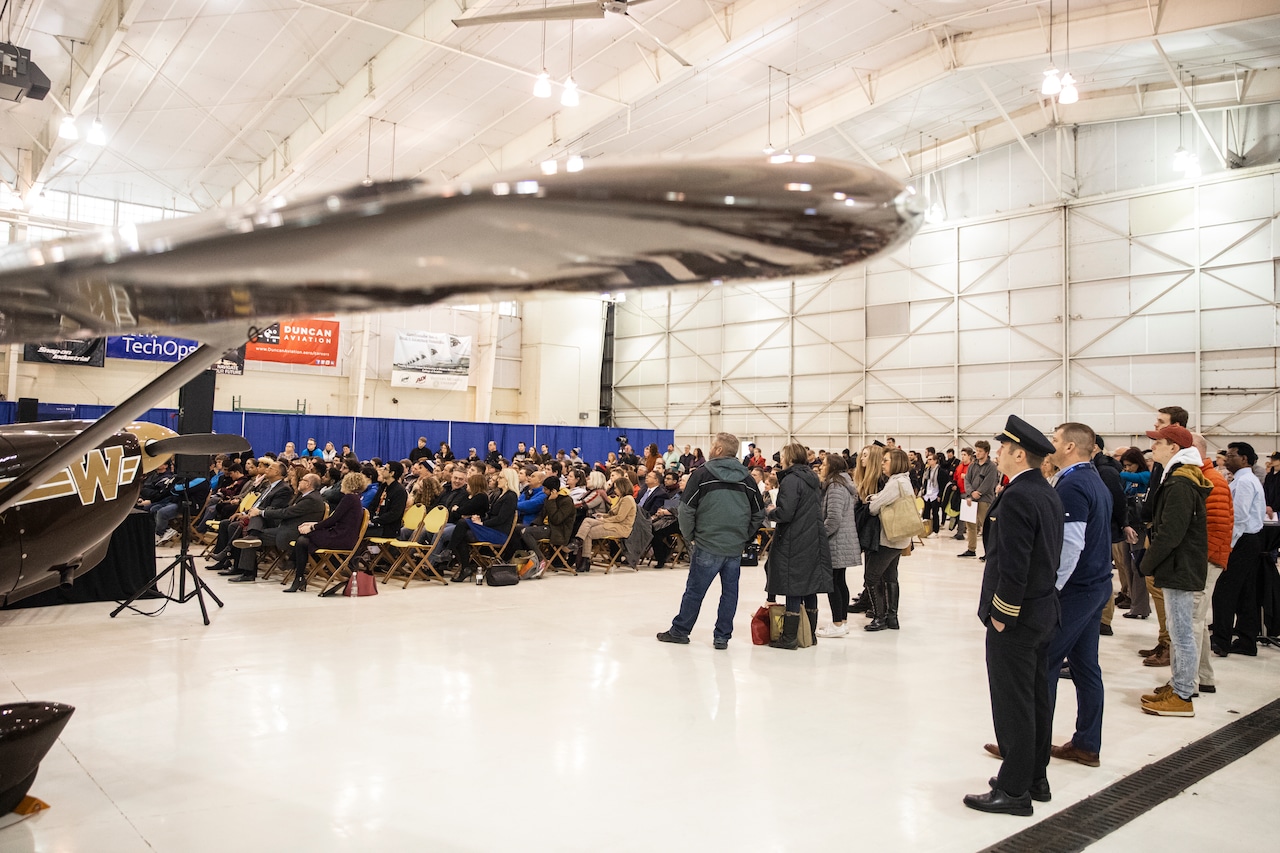
To be sure, there are already some significant economic ties between the two communities They share the Kalamazoo/Battle Creek International Airport and the United Way of South Central Michigan. The two regional hospitals based in Kalamazoo, Bronson and Borgess (now Beacon), both have campuses in Calhoun County. Western Michigan University’s College of Aviation is based at the Battle Creek Executive Airport, which was originally built for Fort Custer and is now owned by the city of Battle Creek.
But Kalamazoo and Battle Creek are also distinct communities, and there’s some history of competitiveness between them.
“I think working collaboratively and regionally is the way to go to create the best economies we can in the 21st century,” said Jim Haadsma, a Battle Creek lawyer and former state representative for the city. “But it is a challenge.”
He recalled in the mid-1990s when Battle Creek got a minor league baseball team and announced their name would be the Battle Creek Golden Kazoos, a nod toward marketing the team to Kalamazoo County residents.
Battle Creek residents were incensed.
“It was huge story in Battle Creek,” Haadsma said. “The locals here were very protective of the Battle Creek’s history of amateur baseball and minor league professional baseball, and they took it as an affront that the Battle Creek team would also adopt Kalamazoo as part of its moniker. So that name was actually dropped and they became the Michigan Battle Cats for their inaugural season in 1995.”
Another memorable tug-of-war involved Western Michigan University in the late 1990s, when then-President Elson Floyd publicly toyed with the idea of moving WMU’s College of Engineering and Applied Sciences to Battle Creek near the new College of Aviation campus.
After furious lobbying by both Kalamazoo and Battle Creek, Floyd opted to build the Parkview campus in Kalamazoo to house the engineering program.
Michelle Miller-Adams, a political scientist with the Upjohn Institute, said such turf wars are not unusual in Michigan. Partially to blame, she said, is the state’s decentralized structure, “which gives lots of protection to small units of government.”
“You move a few miles in any direction, you’re in a different municipality, which works against this idea of creating larger economic units,” she said. “You can easily move to a different school district, a different tax bracket. You can get a different demographic.
“So cities and municipalities have always competed with each other,” she said. “We don’t think about the Battle Creek/Kalamazoo region going together to bring in a big company. We think ‘Ohh, could Battle Creek get it? Could Kalamazoo get it? …. When you’re in the business of bringing to Kalamazoo County, how are you going to start thinking about, ‘Oh, I’m going to bring a business that might go to Calhoun County?’”
Haadsma agreed.
“Unfortunately, economic development is often very parochial, and one city’s economic development arm might be competing with the other cities in a way that doesn’t do either neighboring community well,” he said.
Miller-Adams offered an example: Years ago, there were tentative discussions about building an airport equidistant from Grand Rapids, Battle Creek, Lansing and Kalamazoo, she said, “a place with plenty of cheap land and everybody could get there in 40 minutes, from all those communities.
“But they didn’t do that,” she said. “What happened? The big investments went into the Grand Rapids airport, and that’s essentially our regional airport, but it’s further from us and the benefits accrue to Grand Rapids.”
Looking ahead
One strategy to encourage more regional cooperation would be to make it easier for local governmental units to consolidate.
“The rules around incorporation and annexation (in Michigan) have made that very difficult,” Miller-Adams said. Kalamazoo County “would be a much more viable economic unit” if it had a single local government vs. four cities, four village and 16 townships “all doing their own thing.”
“The uni-gov movement was huge for awhile,” she said. “But culturally, it’s a big jump for us in Michigan.”
State Rep. Julie Rogers, D-Kalamazoo, agrees that Michigan’s governmental structure can make regional cooperation more difficult.
“So you’ve got all these townships and cities and villages, and they all have their different ideas and getting everyone on the same page is no easy task,” she said.
As an example, she pointed to upgrading the U.S. 131 business loop to downtown Kalamazoo to provide entrance and exit ramps from all four directions.
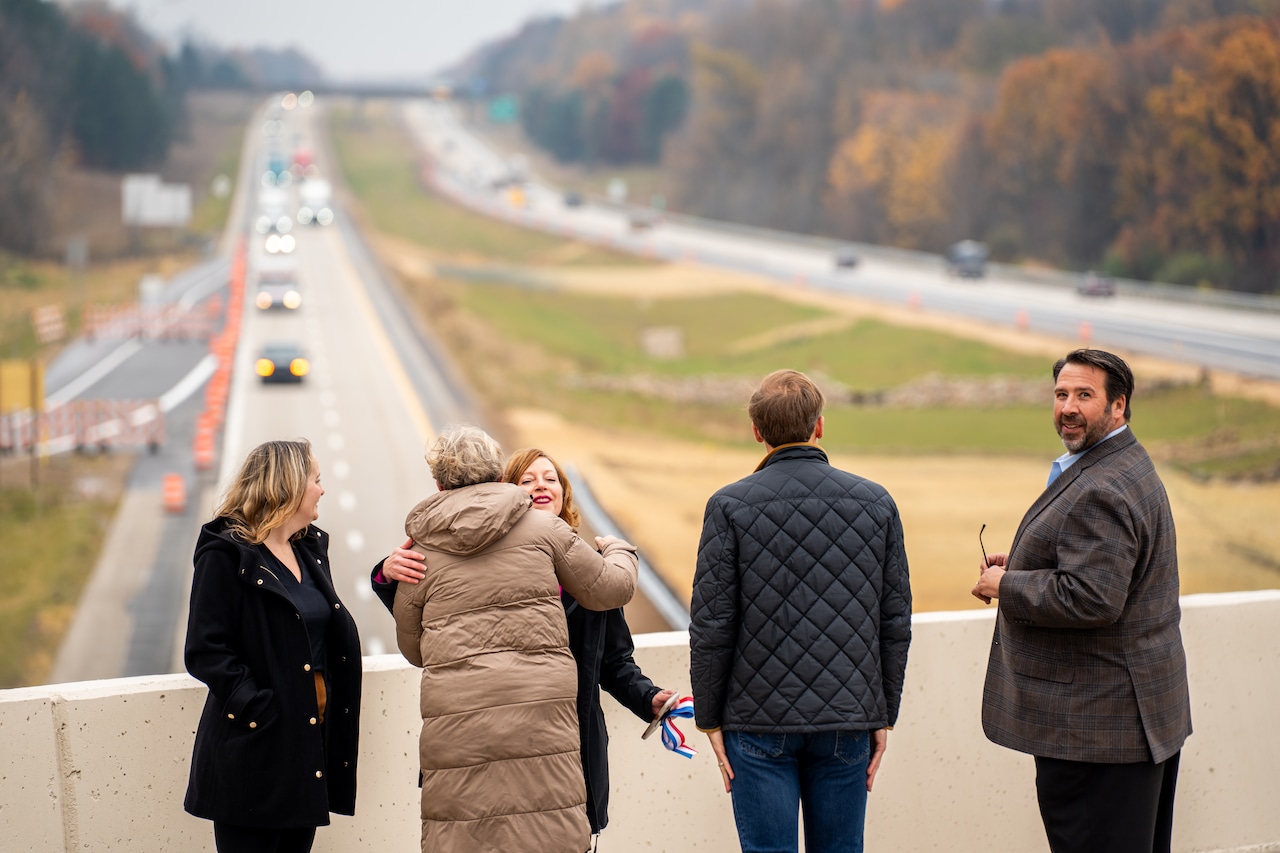 A quarter-century long project was opened to the public on Friday, Nov. 7, 2025, officially creating a U.S 131 interchange with the U.S. 131 Business Route in Kalamazoo County. The $19 million project added new ramps and bridges from northbound U.S. 131 to U.S. 131 BR, and from U.S. 131 BR to southbound U.S. 131. The expanded access will limit commercial traffic in neighborhoods and create economic opportunities on the Northside. (Devin Anderson-Torrez | MLive.com)
“That was 30 years in the making, and the first step was getting everyone to decide on one transportation priority” for local lawmakers to concentrate on, she said.
No question, regional economic cooperation has become more important in a global economy, said Rogers and state Sen. Sean McCann, D-Kalamazoo.
One area where McCann sees great potential for economic growth is at the Battle Creek Executive Airport, which Battle Creek leaders are trying to develop into a premier hub for the burgeoning drone industry.
The long-term vision is to create a center for drone manufacturing, cargo operations, testing and training. That vision involves the WMU College of Aviation, which would benefit WMU as a whole and Kalamazoo County as well, McCann said.
McCann also said Kalamazoo County is likely to benefit from the opening of the Blue Oval battery plant under construction in Calhoun County near Marshall. That plant, being built by Ford Motor Corp., is a expected to employ 1,400 workers.
“I think that’s a real regional win for everyone,” he said.
But there’s also general agreement that there’s more to be done.
“Without question, I think it would foster regional economic growth if the two communities could be more collaborative and work together,” Haadsma said about Kalamazoo and Battle Creek. “I am not lacking for hope that we’ll continue to evolve and be successful at it.”
Rogers said it’s important to local and state policymakers to be intentional in developing those ties and seizing the opportunities.
Joe Sobieralski, head of Battle Creek Unlimited, the economic development agency for Calhoun County, agrees.
“I think there needs to be more synergy between Kalamazoo and Battle Creek,” he said. “We’ve got to think of things differently. …. We’ve got to have the mentality that a rising tide lifts all boats.”
Want more Kalamazoo-area news? Bookmark MLive’s local Kalamazoo news page.