
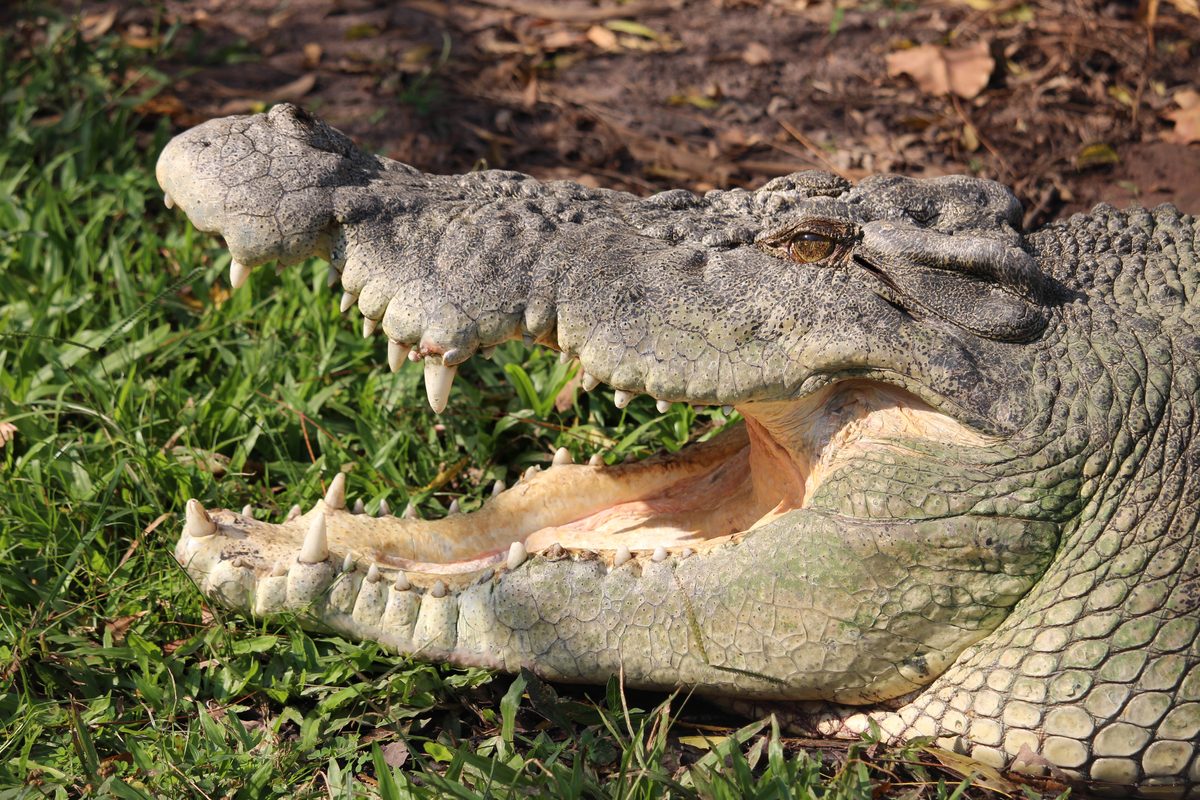
With their huge armoured bodies, impressive bite force and ambush hunting strategy, saltwater crocodiles are a force to be reckoned with, says Melissa Hobson. Victims of these sly reptiles often have no idea there was anything in the water until the moment the croc chooses to pounce.
According to the IUCN’s Crocodile Specialist Group, eight of the 26 crocodilian species – including saltwater crocs – are known to regularly attack people. Negative encounters can be due to the animal trying to hunt, defend itself, its young or its territory, mistaken identity or the croc being attracted by fishing nets or catch.
Large crocodiles can see humans as prey, according to the IUCN, and some seem to have learned to target people in places where they regularly come to the waterfront – for example to swim, bathe or wash their clothes.
This isn’t necessarily because they like the taste of human meat but probably because salties are opportunistic hunters. They have a varied diet which can include small animals – such as insects, fish and birds – to larger prey, including cattle, buffalo and even other saltwater crocodiles. Sometimes, that can include an unlucky human if the croc knows exactly where to lie in wait for someone to come close to the water.
Food conditioning can cause crocs to become a risk to public safety. When people feed the crocs, these wild animals can start to associate humans with food. Over time, they lose their fear of people and might even seek out humans, or become more aggressive, which can increase the chances of an attack. That’s why it’s so important to never feed crocodiles or clean or gut fish near the water.
When an incident occurs, it’s not just the person who can be harmed. Often, the offending croc is put down or taken into captivity. Crocodiles have such a good homing instinct that it’s not possible to relocate them – they can swim hundreds of miles back to their territory.
As with any wild predators, it’s always sensible to be cautious if you’re in salty territory. Don’t trail your arms or legs over the side of the boat, keep well away from the water while camping, use a torch at night, and make sure kids and dogs don’t approach the water’s edge.