

A groundbreaking study from the University of Arizona is challenging the long-standing belief about the order in which the essential building blocks of life, amino acids, first appeared. New findings suggest that the widely accepted model for how these vital compounds emerged could be flawed, forcing scientists to reconsider the very foundation of life’s origins.
For years, researchers have adhered to the idea that life’s first amino acids followed a predictable sequence, with the most abundant ones taking center stage. However, a new paper published in Proceedings of the National Academy of Sciences casts doubt on this theory. According to the study, early models may have misjudged the significance of certain amino acids, potentially leading to an oversimplified view of how life began.
Rewriting the Evolutionary Story of Amino Acids
The study, led by Joanna Masel and Sawsan Wehbi, reveals that the emergence of amino acids might not have followed the orderly pattern we’ve assumed. Using advanced software and data from the National Center for Biotechnology Information, the team traced the evolution of protein domains, structures made up of amino acids that are key to the function of proteins. These protein domains date back to around four billion years ago, to the last universal common ancestor (LUCA) of all life.
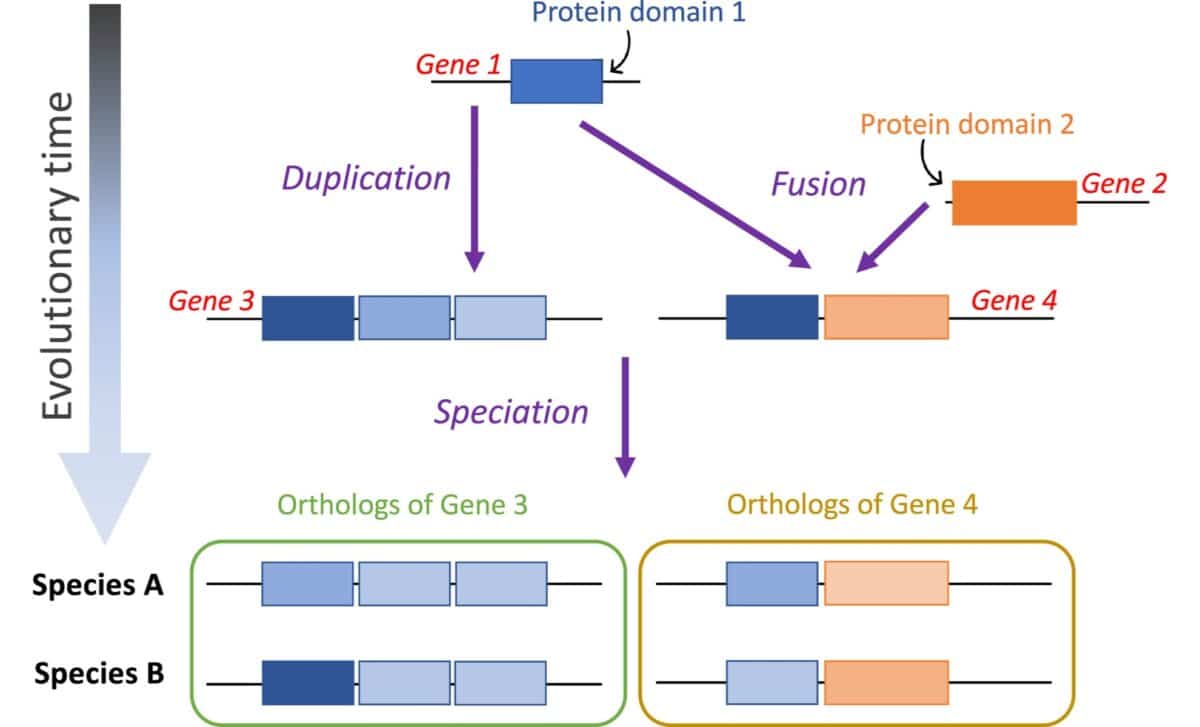 The evolutionary history of a protein domain may date back further in time than that of the whole-gene ortholog that it is part of – © PNAS
The researchers argue that earlier models overemphasize the role of amino acids based on their frequency in early life forms. In this study, they suggest that amino acids may have originated from different parts of the Earth, rather than from a uniform global environment, as previously thought. This challenge to the conventional understanding could reshape how we think about the early stages of life on Earth, reprts Popular Mechanics.
Tryptophan: An Unexpected Twist
One of the most surprising findings in the study centers around tryptophan, the amino acid often blamed for making people feel sleepy after a Thanksgiving dinner. Traditionally, scientists have believed that tryptophan was the last of the 20 essential amino acids to be integrated into life’s genetic code.
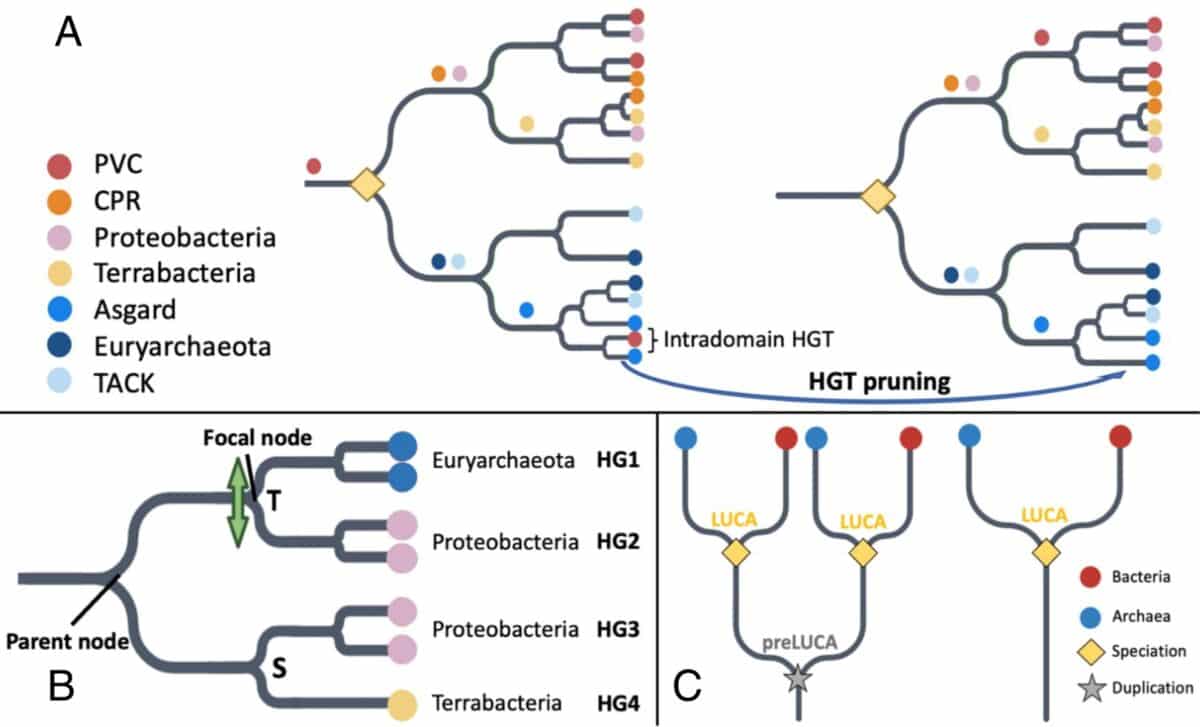 Criteria for (A) LUCA Pfam annotation, (B) identifying HGT to be filtered, and (C) pre-LUCA Pfam annotation – © PNAS
However, the University of Arizona team discovered that tryptophan was actually more common in pre-LUCA organisms than in those that followed LUCA. In fact, they found that tryptophan made up 1.2% of amino acids in pre-LUCA life, compared to just 0.9% in post-LUCA life, a 25% difference that raises new questions about how amino acids evolved.
The team proposes that this discovery could indicate a much more complicated process of genetic evolution than previously thought. They speculate that early genetic codes might have been more diverse, with competing molecular systems driving evolution in different directions. The idea of an ancient, complex genetic code could help explain why certain amino acids, like tryptophan, appeared earlier than expected.
Implications for Life Beyond Earth
These findings don’t just have implications for Earth’s history, they also open up exciting possibilities for the search for life on other planets. According to the researchers, amino acids like tryptophan could have formed in environments far from Earth. Specifically, they suggest that similar amino acids might exist in the water-rock interfaces of Enceladus, one of Saturn’s moons, where a subsurface ocean could harbor the conditions necessary for amino acid formation.
If amino acids could form in such distant locations, it could drastically change how scientists search for life beyond Earth. Understanding the conditions that led to the formation of life on our planet could help identify similar environments elsewhere in the solar system, making the possibility of discovering extraterrestrial life a little less far-fetched.