
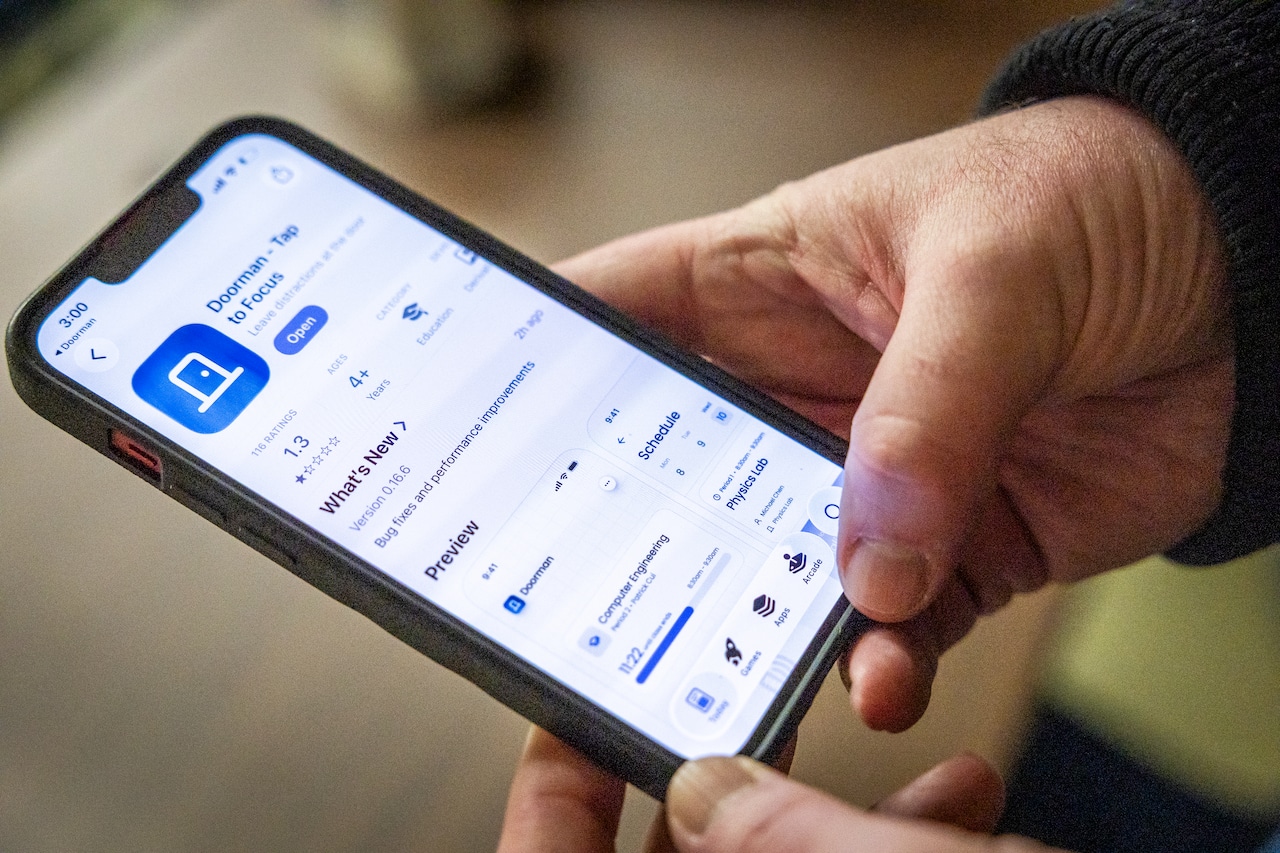
WESTFIELD – The hottest TikTok video? A shoutout on Snapchat? The Instagram post with the funniest meme?
Blocked, blocked and blocked.
A text from mom reminding you – again – to take the garbage out?
Clear as a bell.
That’s how cell phones are going to work during the school day for 1,500 students at Westfield High School starting this week. The administration is rolling out Doorman, a new app created by tech entrepreneurs who want to “help schools operate 10 years ahead, not 10 years behind,” according to their LinkedIn profiles.
Westfield wants to keep kids focused on the classroom, but also prepare them for the workplaces and college classrooms they’ll head off to in a few years, said Superintendent Stefan Czaporowski.
“Cell phones are a reality,” Czaporowski said in an interview Monday as the new technology was being implemented. “I think responsible use has to be our goal. We’d like to make this a teaching opportunity and not something punitive,” he said.
Andrew Joseph, an assistant principal at Westfield High School, said the school is not making students download the app.
“There are plenty of other ways to do this,” he said.
But making students put their phones in a box doesn’t really teach them anything. With Doorman, their phones are still with them, just in a less capable and less addictive state.
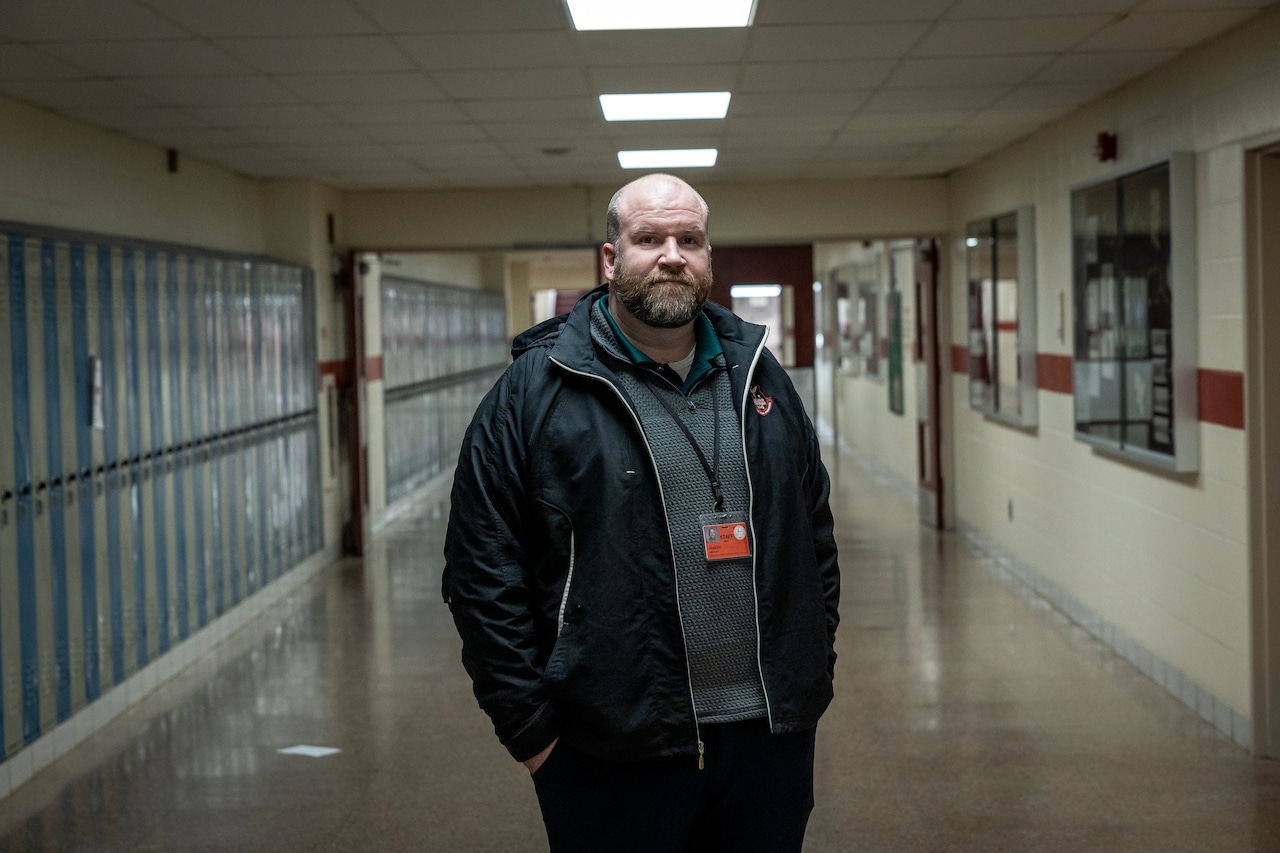 Westfield High School Assistant Principal Andrew Joseph has been in charge of the introduction of the app Doorman. Doorman blocks high-dopamine apps like Tik-Tok and Snapchat while a phone’s owner is in class. (Douglas Hook / The Republican)Douglas Hook
“The kids have to exercise some choice,” Joseph said. “They still have to decide how they are going to handle a situation. Whereas locking their phone in a box robs them of that.”
The communities of West Springfield, Chicopee and elsewhere use Yondr pouches to keep student phones inaccessible during the day.
But Czaporowski said students can thwart the Yondr pouches by putting in an old, unused phone. And Yondr pouches cost $25. The school is paying Doorman $5 a student.
“That’s a significant cost savings,” he said.
Monday was only the second day of the Doorman experiment, said Joseph. So far, 200 students had tapped into the system as of Monday and 13 classrooms are enabled with the technology.
A big job Monday was getting the high school’s scheduling software to communicate with the Doorman app. That’s how the app knows a student is in class and not in a study hall, lunch or another place where full cell phone use would be allowed.
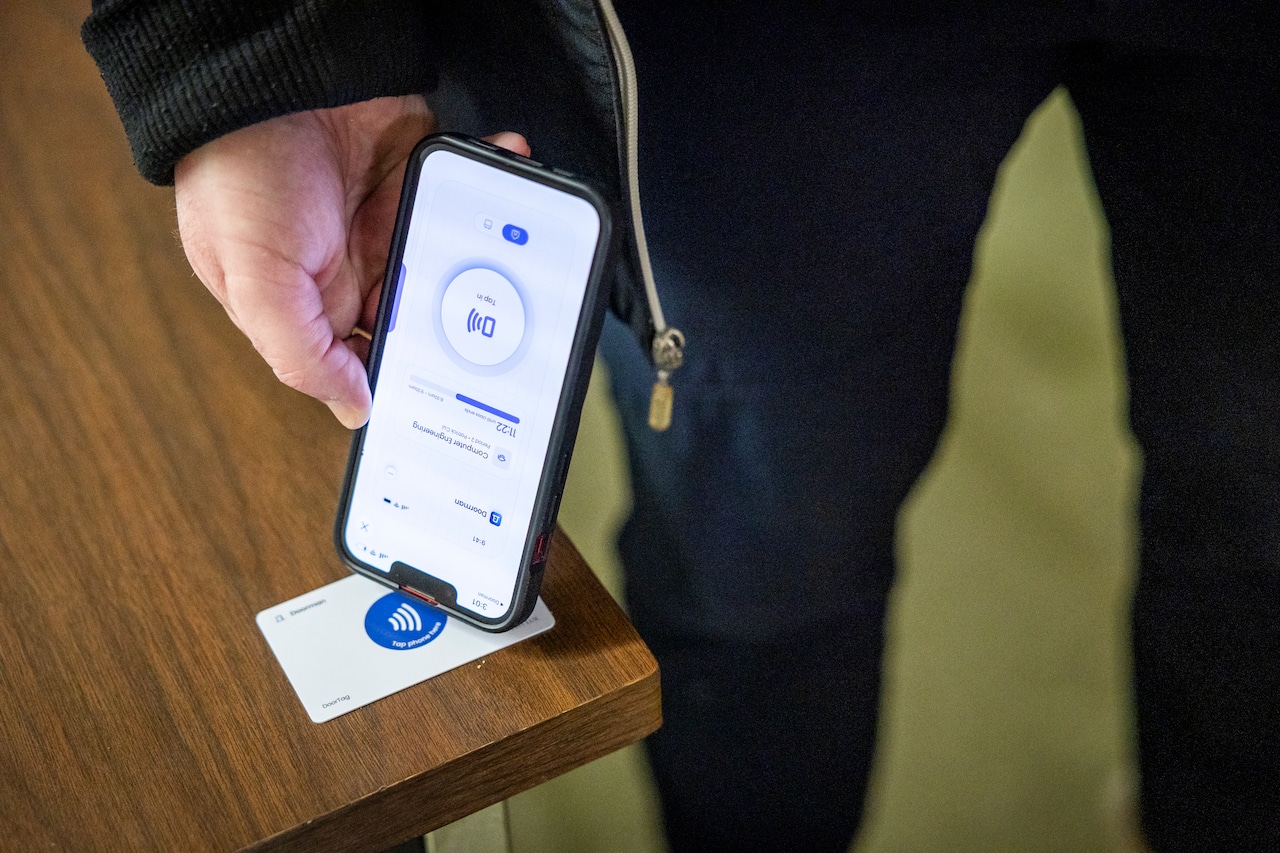 These cards are placed near the entrance of a classroom at Westfield High School for students to scan as they enter. Doorman is an app that will block high-dopamine apps like Tik-Tok and Snapchat while in class. Feb. 2, 2026. (Douglas Hook / The Republican)Douglas Hook
Czaporowski said cutting off all connectivity is impractical. Doing so interferes with some educational programs, like Google Classroom. And some students depend on their phones to help manage medical conditions, for example by checking their blood sugar levels.
On top of that, parents object to total phone blackouts.
“They still want to be able to contact their children during the school day,” Czaporowski said.
Doorman, a New York startup founded last year by a pair of California-trained tech entrepreneurs, offers educators the ability to block what it calls the “high-dopamine” apps such as TikTok, Snapchat and Instagram.
It works by creating a VPN, or virtual private network, said Brian Dutko, Westfield schools’ instructional technology coordinator.
Doorman works through an NFC, or near field communication tag, on the wall of the classroom. Students tap into the system as they enter.
The Doorman blocks web-based applications inside the classroom but not in all school areas, including lunch periods.
“If there is something loaded on the phone, it will work,” Dutko said. “But then if it goes to load something new, it just stops.”
Apple’s iMessage won’t work. But SMS, or the short message service texts that use cellular networks, will go through.
“We tested it out Friday,” he said.
And how are the kids doing?
“I don’t think they are super happy,” Dutko said. “They understand this is a compromise.”
 Westfield High School is piloting an app called Doorman to help students better focus while in class. (Douglas Hook / The Republican)Douglas Hook
Students at Watertown High School are also adjusting to the use of Doorman, said Joel Giacobozzi, the school’s principal.
Watertown was the first high school to use Doorman starting this fall for the 2025-26 school year. Today, there are only about 10 schools with Doorman, Giacobozzi said.
“We were piloting it while they were building it,” Giacobozzi said.
Since starting use of the app, the 750 students at Watertown High are more engaged in the classroom. Not everyone uses it. Some students don’t have phones and others turn them in at the office every morning.
“It’s given us the ability to focus on instruction and not on monitoring cell phone use,” Giacobozzi said. “All we ask for is 56 minutes of attention.”
And they are getting it.
“Kids are talking more in the classroom,” Giacobozzi said. “Kids feel it’s a healthy balance.”