
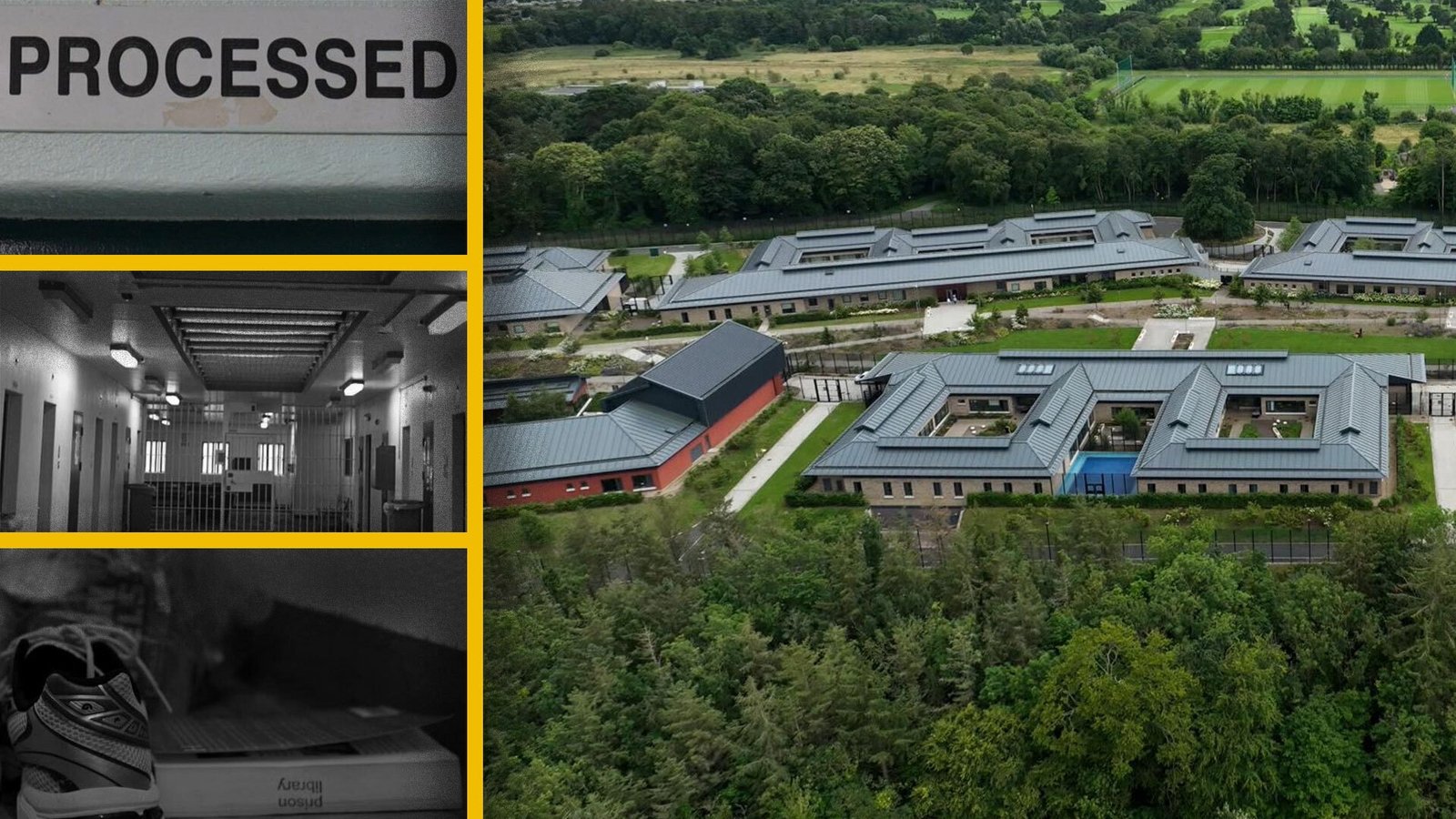
The waiting list for the Central Mental Hospital (CMH) has hit a record level in recent weeks as the crisis in the care for psychiatric patients within the prison system deepens.
Figures released to RTÉ Investigates reveal that the number of acutely mentally ill and actively psychotic people held in prison now far exceeds the medical cells available in these facilities.
The investigation also found that the options available to the already overwhelmed prison system, which has been linked to “life threatening conditions”, deteriorated in January.
At the end of last month 38 people were being held in prison waiting for a place in the Central Mental Hospital, which only opened in late 2022 at a cost of almost a quarter of a billion euro.
As part of a two-part documentary series from RTÉ Investigates, families of those forced to rely on prisons for psychiatric care have come forward to speak out against the conditions they are kept in.
The problem has been exacerbated by a Constitutional challenge to the practice of Therapeutic Bail and prompted the suspension of the procedure altogether.
Therapeutic Bail had become the primary workaround to allow prisoners remanded for minor crimes while suffering from major mental illness to be diverted to an approved hospital for treatment.
The suspension was brought about by a Judicial Review just before Christmas on behalf of one man who was told there was no space for him at the new Central Mental Hospital in Portrane.
And in the six weeks since the hearing the waiting list for the country’s only designated secure hospital has risen by 20%.
This has come as families of acutely mentally patients have come forward to speak out against the lack of hospital care and the increasingly common policy of detaining sick men in prison.
Among those are the families of several psychiatric patients who died in Cloverhill prison over a five-year period and who are demanding answers regarding the circumstances of their care and their deaths.
WATCH: Family of man living with schizophrenia says the system has failed him
Their stories will feature as part of a special two-part documentary series RTÉ Investigates: The Psychiatric Care Scandal which begins tonight.
Constitutional Challenge
The indefinite suspension of therapeutic bail has had an immediate and direct knock-on impact in the court cases of numerous other acutely mentally ill people who are on remand in prison and face criminal charges.
Last month, at Cloverhill District Court, Judge Alan Mitchell was told by members of the HSE in-reach psychiatric team that organising bail for hospital care was no longer an option.
The court heard this was because assistance with therapeutic bail had been withdrawn in response to the Judicial Review proceedings.
During proceedings on three cases that morning, Judge Mitchell said the outcome would escalate the need for dedicated hearings to assess each prisoner’s fitness to plead to charges and put “greater pressure on the system”.
However, if there were legal doubts about the practice he said he would welcome clarity from the High Court.
He told legal teams “I would be encouraging anybody to go and test this in the High Court. The more this gets into the High Court, the more it gets highlighted – the more they see what is going on here.”
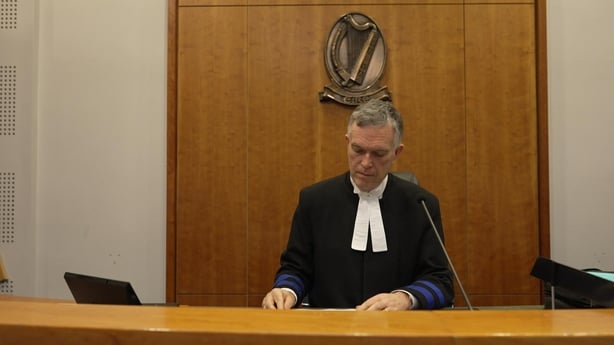
Judge Alan Mitchell
Growing problem
Figures released to RTÉ Investigates have shown the rate of prisoners with acute mental illness in custody has increased dramatically in recent years.
In the country’s dedicated remand centre, Cloverhill Prison, there is a medical landing with capacity for 27 people but in recent months there have been in excess of 55 actively psychotic people held in custody simultaneously.
This is ten times higher than it was ten years ago and this has tripled in the last four years alone.
These patients, in the midst of psychosis, are among an average of more than 706 prisoners that are typically under the care of the National Forensic Mental Health Service’s in-reach psychiatric team in Cloverhill.
In a recent snapshot, the NFMHS was caring for 340 psychiatric patients – a 40% increase in two years – and, on top of this, a further 50 in-mates were waiting for a psychiatric assessment.
Tonight’s documentary will outline the detention conditions for people who have been charged with relatively minor crimes, but are held in prison for mental health reasons.
The in-reach psychiatric team in Cloverhill Prison is led by Professor Conor O’Neill who told the documentary: “Some of the most severe mental illnesses are conditions like schizophrenia and related conditions like disaffected disorder and bipolar disorder.
“These are some of the worst mental health conditions you can have where people can hear and see things that aren’t real. It’s usually voices saying abusive or threatening things.

Professor Conor O’Neill leads the in-reach psychiatric team in Cloverhill Prison
“Some of these people are very severely mentally ill. Some people have brain injuries and dementias and are unable to look after themselves. These are people that should be in hospital, not in prison,” he said.
The volume of prisoners with severe mental illness in chronically overcrowded conditions has contributed to the deteriorating health of individuals and in some cases fatalities within prisons.
In October 2024 another prisoner was killed by his cell mate at the same prison. Immediately afterwards the Chief Inspector of Prisons, Mark Kelly, wrote to the Justice Minister and prison authorities.
In the correspondence, released under the Freedom of Information Act, Mr Kelly criticised the lack of risk assessments that were being carried out before housing prisoners together.
“It remains the case that there is virtually no evidence of individual risk assessments taking place in relation to accommodation placement, particularly immediately after committal. Despite serious incidents of inter-prisoner violence occurring in the prison on a frequent basis, no violence diagnostic tool exists at Cloverhill or elsewhere in the prison estate. In this context, there is also scope to improve the committal interview process.
“As you know, in early October 2024, I wrote to the Minister for Justice raising the concern that shortcomings in this area were contributing to life threatening conditions of detention,” Mr Kelly said.
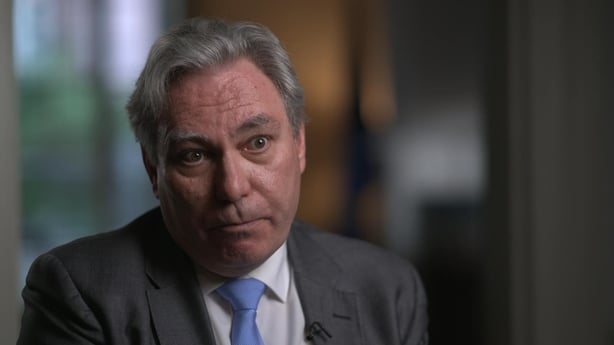
Chief Inspector of Prisons Mark Kelly
Throughout 2025, Cloverhill prison was among the most consistently overcrowded facilities in the country with more than 50 men sleeping on the floor due to a lack of beds.
The number of prisoners in Cloverhill receiving psychiatric care now represents in the region of 14% of the prison’s total population.
The Irish Prison Service said it did not comment on specific cases but that it expressed its “sincere sympathies to the deceased’s family members and friends”.
It said it provided medical units but “demand for this accommodation has increased, reflecting wider pressures on national mental health services”.
Impact of Judicial Review
Until recently there was a temporary option available to a portion of acutely mentally ill people who were not considered a risk to others and unable to properly engage with court proceedings because of their condition.
They could be bailed directly to approved mental health centres.
The practice was known as “therapeutic” or “boomerang” bail. Since its inception in 2006, it has become a commonly used method of allowing psychotic prisoners facing court to access mental health services in a timely fashion.
It was available to prisoners classed as “minor offenders with a major mental illness”. The practice was deployed to allow patients to be stabilised in hospital and return to engage with their court proceedings, if they were able.
This relieved pressure on the only designated centre under the Criminal Justice Act – the Central Mental Hospital (CMH).
In the last quarter of 2025, the number of people in prison waiting for admission to the CMH was consistently above 309 – its highest level since before the closure of the old hospital in Dundrum.
Figures released to Deputy Pádraig Rice, chair of the Oireachtas Health Committee, confirmed that the number of people in prison who are waiting for admission to the CMH rose to 38 at the end of January 2026.
In a statement, the HSE said the Portrane facility, opened in November 2022, “will have capacity to care for 170 patients on campus when fully-operational. The Central Mental Hospital currently provides care and treatment to 111 admitted patients.”
Under the HSE National Service Plan 2025 it said it has plans to open 18 more beds, two of which were opened at the end of last year and the remaining 16 will be opened on a phased basis.
“Individuals identified as requiring the therapeutic security of the CMH are placed on the waiting list for admission, and remain under the care of the prison in-reach team while awaiting admission. If the CMH is not deemed the appropriate level of security, recommendations are made for admission to in-patient treatment facilities with lower levels of therapeutic security,” it said.
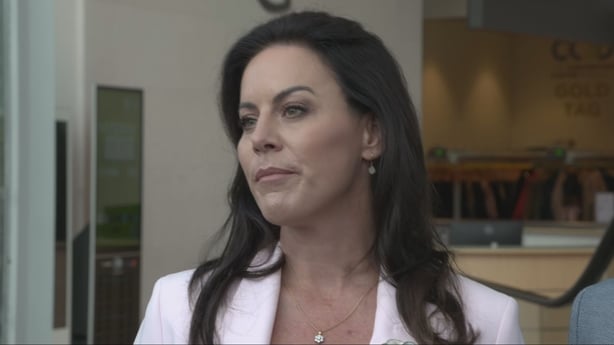
Minister for Health Jennifer Carroll MacNeill
A statement on behalf Health Minister Jennifer Carroll MacNeill said:
“While the Department of Health and the HSE fully appreciates the increasing demands on the prison service, it is important to stress that the NFMHS Campus in Portrane is a specialist tertiary healthcare facility. This facility is approved for the purposes of the Mental Health Act 2001 and the Criminal Law (Insanity) Act 2006 and every effort will continue to be made by the health sector to help address acknowledged waiting list pressures to access the NFMHS overall.
“Minister Carroll MacNeill, Minister [Mary] Butler and officials in the Department of Health will continue to work collaboratively with the Minister for Justice and his department to further improve and develop the provision of specialist psychiatric care for people in prison and to build upon the very good joint progress both sectors have made over recent years,” it said.
The HSE said it remains committed to ensuring that every person receives the right care in the right place at the right time.
However, it acknowledged “the issues that have been raised in relation to HSE mental health services, and regret any impact this may have had on people and their families”.
It said because prisons are neither “Approved Centres” or “Designated Centres” in law, prison in-reach clinicians cannot prescribe or initiate certain medications that require the legal protections.
Judicial Review
Under the Mental Health Act, prisons are not given the status of “approved centres” so anti-psychotic medication cannot be administered without a person’s consent.
The Judicial Review was taken on behalf of a man who cannot be named by court order. He had been diagnosed in prison with suspected schizophrenia and was clinically assessed as needing treatment in an approved centre. This assessment said he did not need the level of secure care that was provided by the Central Mental Hospital.
The court was told there were not beds available at either the CMH or an alternative centre. His legal team argued that his Constitutional and Human Rights were being breached because he was being denied hospital treatment and he was too sick to instruct them and allow them to agree to therapeutic bail.
At a subsequent hearing, the High Court was told the man in question was released from prison and a bed was ultimately found in the Aislin Centre, an approved psychiatric facility. As a result it was unlikely his case would progress.
Therapeutic Bail was introduced as a work-around solution to formal diversion measures. In 2006 the Vision for Change policy document, that has guided mental health reform for successive governments, recommended the reconfiguration of forensic mental health services along with supporting legislation to allow for court diversion schemes.
However, this legislation was never advanced and Therapeutic Bail was developed as a workaround solution for acute patients.
Knock on impact
As a consequence of the challenge, separate District Court proceedings involving other acutely ill patients have heard that the practice of therapeutic bail has been suspended and cannot be used.
Last month, in one of several subsequent cases at Cloverhill District Court, Judge Alan Mitchell said his court dealt with more cases of therapeutic bail than any other. This is due to its association with the remand prison next door.
He said he welcomed the challenge if it clarified the law but in the meantime it had consequences for an already pressurised environment involving psychiatric patients in prison.
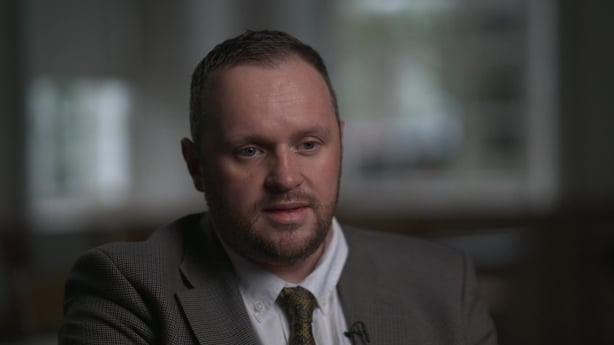
Dr Charles O’Mahony of University of Galway
Dr Charles O’Mahony, of University of Galway’s School of Law, said the practice of keeping psychiatric patients in prison raised significant issues. This is because of legal restrictions that mean they access the same type of healthcare as centres approved by the Mental Health Commission.
“So there’s significant human rights issues at stake here and significant gaps in terms of regulation and oversight. And it’s clear that there is a massive gap between the standards that the Mental Health Commission inspect against and what happens in the prison,” he said.
In a statement, the Irish Prison Service said it fully supports the principle of equivalence of care and works closely with the HSE to continuity of psychiatric treatment. However, it had no jurisdiction over court decision.
“The Irish Prison Service may assist in the transport of the individual to and from an approved centre, in certain circumstances, in accordance with the relevant legislation, warrant or court order specific to the individual case.
“The question of therapeutic bail is a matter for the courts. The Irish Prison Service does not have authority to grant or refuse bail,” it said.
A statement on behalf of Justice Minister Jim O’Callaghan said he was working to ensure “the prison system is equipped to deal with the complex needs of people with mental health difficulties”.
He said the Committee on the Prevention of Torture has helped inform how we “respond to current challenges” and has “acknowledged developments since its last visit”.
RTÉ Investigates: The Psychiatric Care Scandal by reporter Conor Ryan and producer/director Frank Shouldice will broadcast on RTÉ One and RTÉ Player on Monday 9 February and Tuesday 10 February at 9.35pm.