
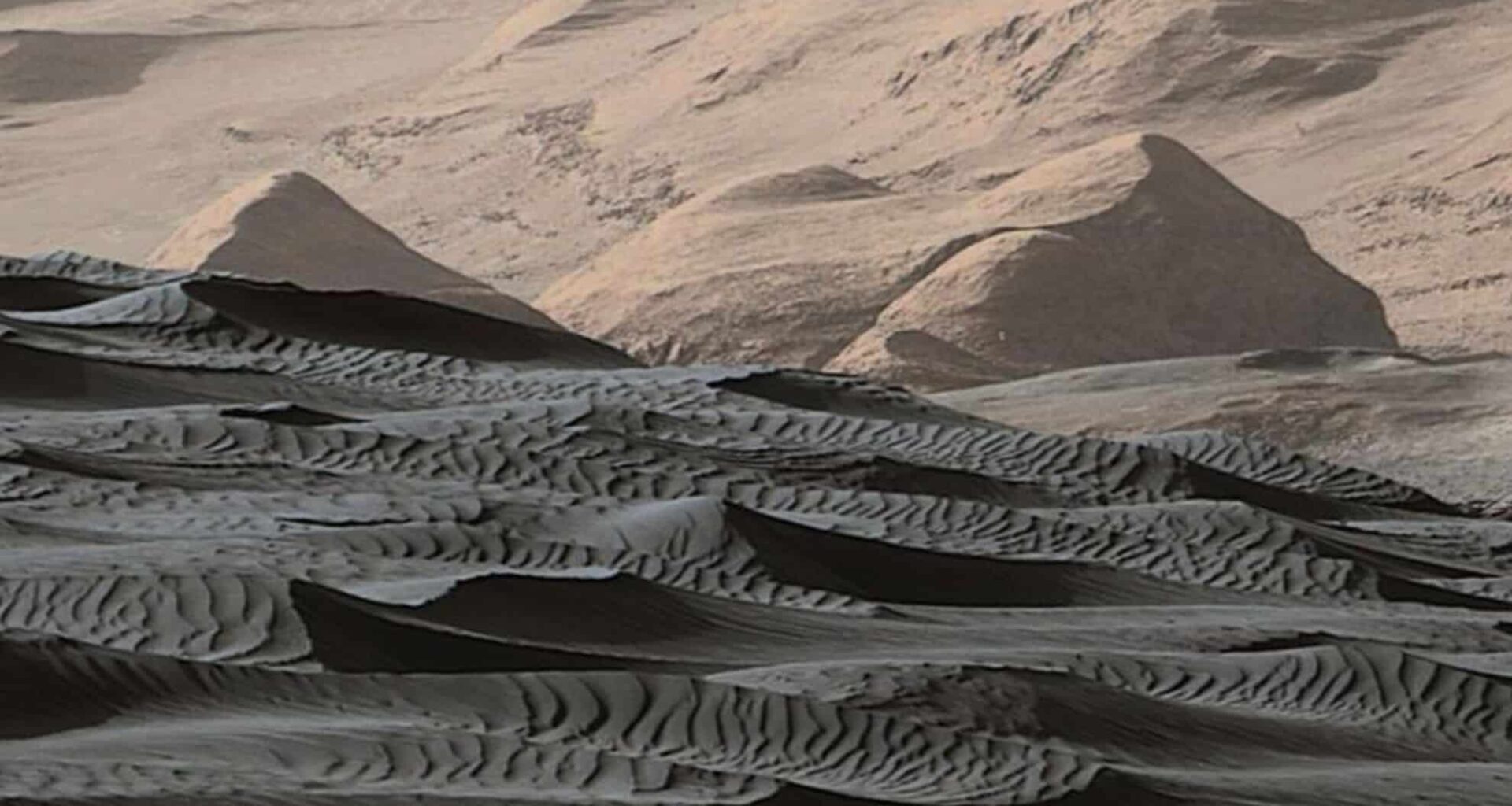
The Algodones Dunes, straddling the borders of California, Arizona, and Mexico, may seem like an unlikely location for Mars research, but this Californian desert is offering scientists a goldmine of data that could significantly enhance our understanding of the Martian landscape. By studying the dunes and sand patterns in this region, scientists, including Lauren Berger from Texas A&M University, are gaining crucial insights into how wind shapes the terrain on both Earth and Mars. In a recent contribution to Space.com’s Expert Voices: Op-Ed & Insights, Berger explains how analyzing Earth’s dunes helps her study the complex and dynamic sands of Mars, where dust storms frequently sweep across its surface. This research could be pivotal for future human missions to Mars, helping scientists understand not only the planet’s wind patterns but also the potential hazards posed by its shifting sands.
Understanding Aeolian Bedforms: Connecting Earth to Mars
Aeolian bedforms are features shaped by the wind, such as sand ripples and dunes, which exist on both Earth and Mars. On our planet, these wind-driven patterns are found in deserts and other arid regions. Mars, with its cold temperatures, low pressure, and dusty atmosphere, also bears similar formations. Lauren Berger‘s research focuses on two main types of aeolian bedforms—sand ripples and dunes—created by wind. By studying these structures both on Earth and Mars, Berger aims to develop a comprehensive understanding of the forces at play that shape these landscapes. On Earth, these features are often shaped by a mix of strong winds and sand size, while on Mars, the thin atmosphere and less intense winds provide a different, yet still fascinating, challenge for planetary scientists.
Mars offers its own unique challenges: its atmosphere is only 1% as thick as Earth’s, and the wind’s ability to move sand is vastly different due to the weaker air pressure. However, the patterns and shapes of dunes and ripples on Mars provide vital information on the planet’s atmosphere and wind behavior. By analyzing similar patterns on Earth, researchers can gain clues about the Martian winds—how fast they blow, how they interact with sand, and how often dust storms might reshape the surface. This comparative study allows scientists to simulate and predict how the same patterns might emerge on Mars, ultimately helping in preparing for long-term human exploration and habitation.
Field Research at the Algodones Dunes: A Closer Look
In the winter of 2022, Lauren Berger and her research team embarked on a field study at the Algodones Dunes in California. The region, known for its vast and dynamic sand fields, provided an ideal location for observing the finer details of coarse-grained sand ripples. Using GPS, drones, and traditional geological tools like trowels and sample bags, Berger and her team meticulously measured the size, height, and spacing of these sand ripples. These ripples, which can range from small to large, form the foundation of aeolian bedforms and are vital for understanding the movement of wind across planetary surfaces.
The team used drones to capture high-resolution aerial images of the dunes, allowing for detailed analysis back in the lab. These images helped reconstruct the landscape, offering a closer look at the individual features that make up the dunes. Berger also noted the crucial role of physical fieldwork in geology, emphasizing that it often involves unexpected challenges, such as the occasional need to dig out a stuck vehicle. Despite these obstacles, the data collected in the desert promises to contribute significantly to the understanding of both terrestrial and Martian sand formations.
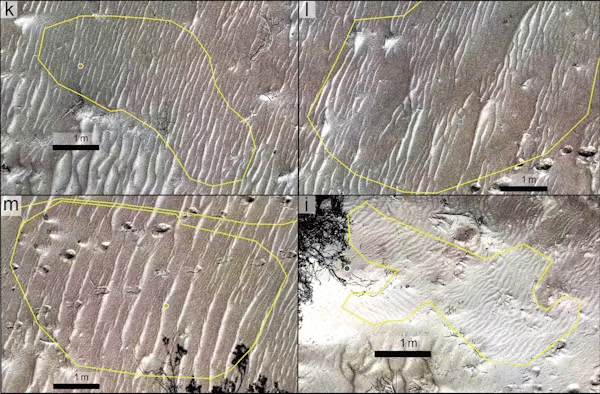 High-resolution drone images of the sand ripples at Algodones. Lauren Berger
The Role of Remote Sensing in Mapping Mars
One of the most exciting aspects of this research is the use of remote sensing technologies to analyze the sand formations. On Mars, where direct access is impossible for most researchers, images from the Mars Reconnaissance Orbiter (MRO) provide invaluable data on the planet’s surface. These images capture dunes and other aeolian bedforms across the Martian landscape, giving scientists a comprehensive view of how the planet’s wind interacts with its sandy surface. By combining this remote data with on-the-ground measurements from Earth, Berger and her team are building a more detailed and accurate database of compound dunes on Mars.
Compound dunes, which feature multiple layers of sand dunes formed at different times, are particularly interesting to scientists. These formations could hold the key to understanding long-term environmental changes on Mars, such as shifts in wind patterns or atmospheric conditions. By using drones to photograph dunes on Earth and comparing them to images from Mars, Berger is contributing to the creation of the first database of compound dunes on the Red Planet, which will be essential for planning future missions.
The Importance of Understanding Mars’ Shifting Sands for Future Missions
Understanding the nature of Mars’ shifting sands is crucial for planning future missions to the planet, especially manned ones. The wind on Mars can be deceptively powerful despite the planet’s thin atmosphere, and dust storms can cause significant disruption. Some of these storms are so large they can cover the entire planet, which poses a serious risk to landing sites, rovers, and potential habitats. For future astronauts, understanding where these dunes form and how they behave will be essential in choosing locations for exploration and construction of bases.
Berger’s work aims to pinpoint the safest areas on Mars, considering how dunes might shift over time or even become hazardous during a dust storm. The data from these studies will assist in creating detailed maps of Martian wind patterns, helping space agencies like NASA avoid regions with the most dangerous sand movements. As human missions to Mars become a reality, understanding the planet’s surface features—particularly its wind-driven landscapes—will be pivotal in ensuring both the safety and success of the mission.