
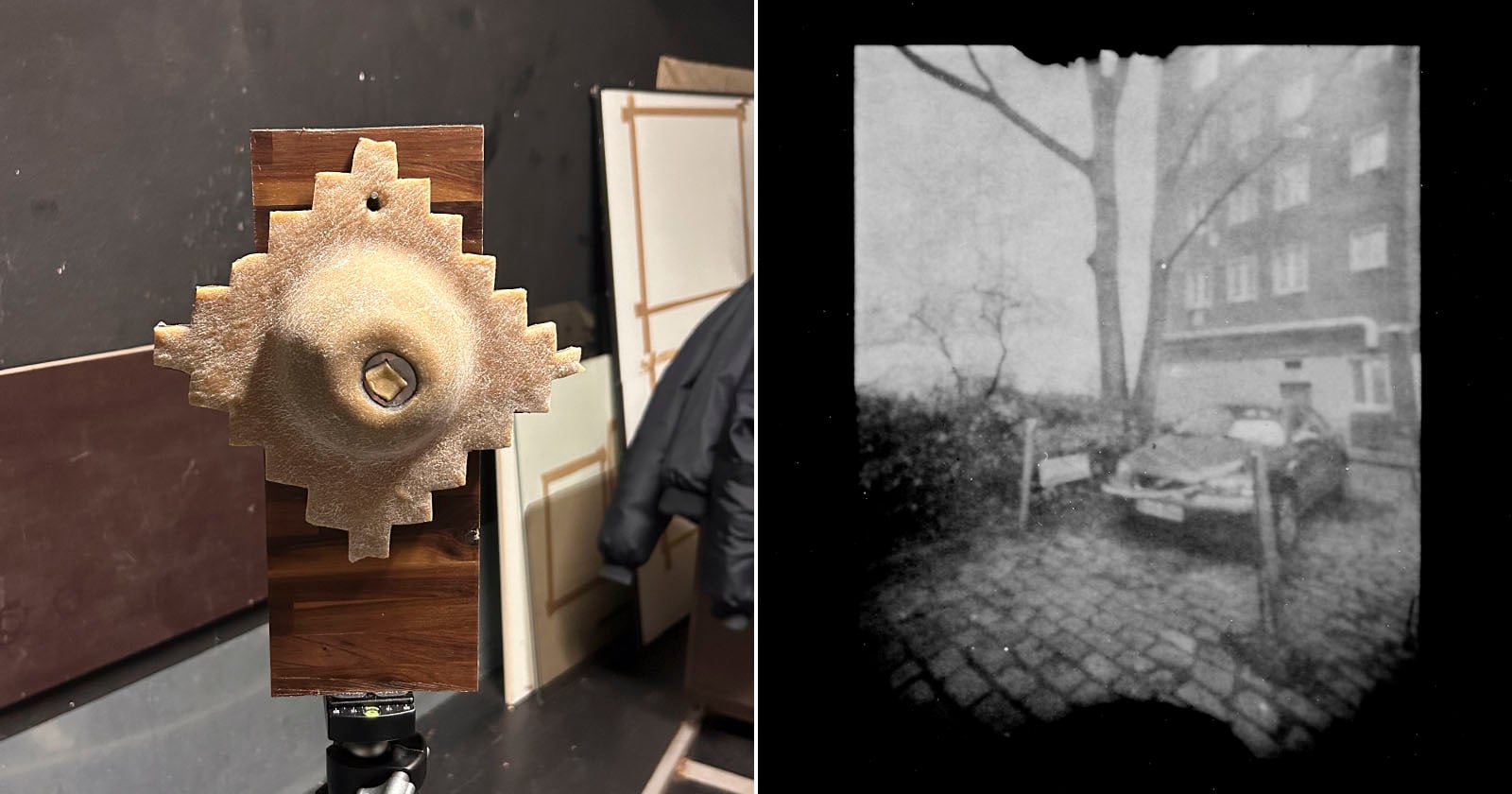
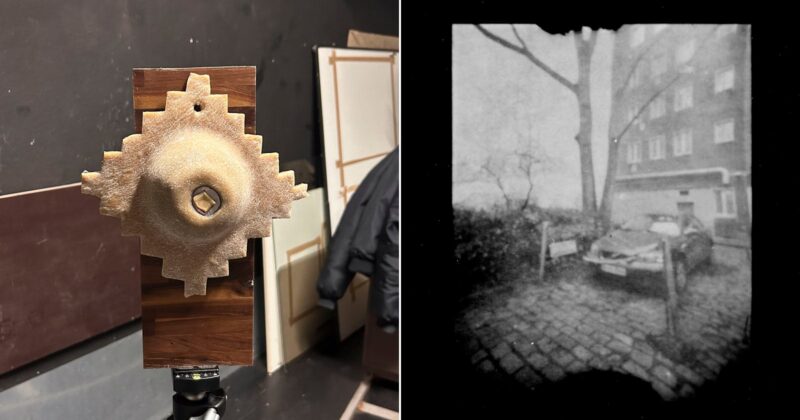
Berlin-based Italian photographer Paride Ambrogi recently combined two of his loves, photography and pasta, in a brilliant, possibly tasty way. Ambrogi made the Ravihole Camera, a working pinhole camera made entirely from fresh pasta dough.
Ambrogi made the Ravihole as part of a workshop on fresh-filled pasta in Hamburg, Germany. Alongside the pasta workshop, Ambrogi and his fellow Italian friends who live in Berlin installed a small exhibition dedicated to pasta culture, where Ambrogi brought the Ravihole to share.
“Some friends and I, all Italian and living in Berlin, were asked to organize an event. The venue, called Studio 45 in Hamburg, is usually an exhibition space,” Ambrogi tells PetaPixel. “Our idea was to combine a fresh pasta workshop with a related exhibition, which we called ‘TUTTAPASTA?’”
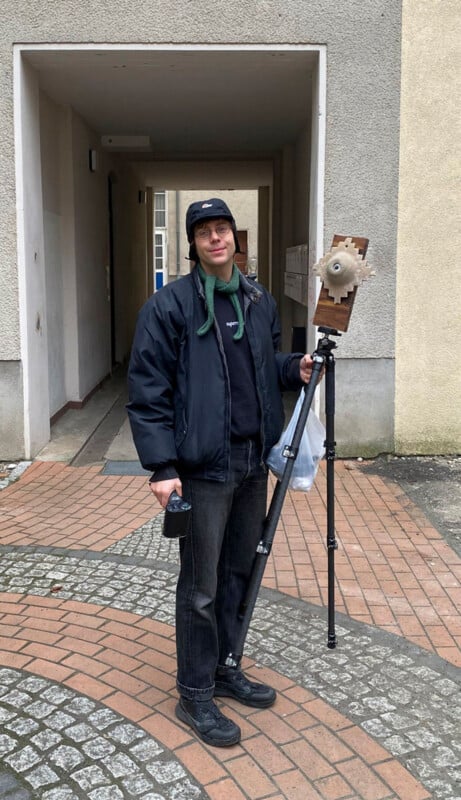 Paride Ambrogi with his brilliant Ravihole Camera
Ambrogi admits his initial idea for the exhibition was to take black-and-white photos of a friend during the Christmas holidays while making pizzoccheri, a traditional pasta from Valtellina in northern Italy. However, Ambrogi and his friend “drank too many glasses of wine,” and it never happened.
So after returning to Berlin after the holidays, Ambrogi had to come up with another idea.
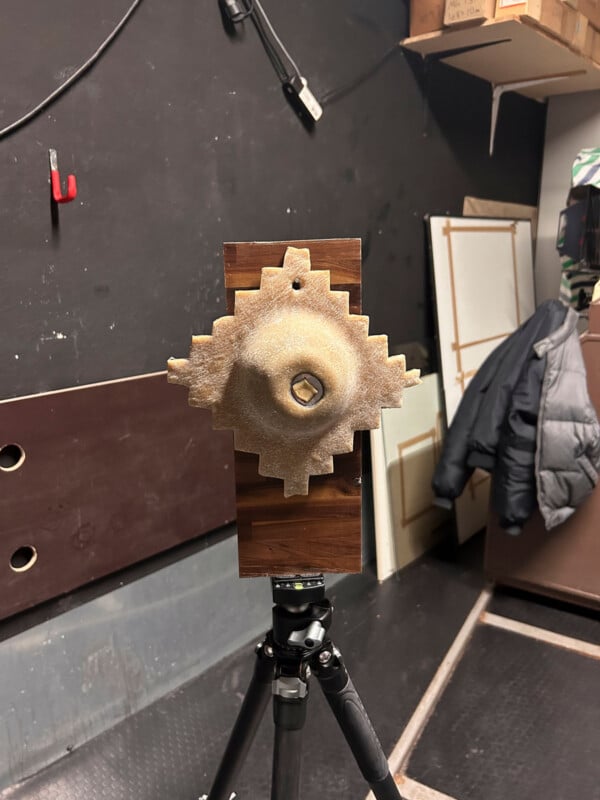 The Ravihole Camera
“My friend Giacomo Baldelli, who was also part of the exhibition, told me he was planning to create sculptures made of fresh pasta. That’s when something clicked,” Ambrogi explains. “I started thinking about a pinhole camera made entirely out of fresh pasta dough. I knew it might be possible, so I began experimenting with the material.”
“The funny name came later, while I was describing the project to another friend.”
Making pinhole cameras can be challenging even with purpose-built materials, let alone when crafting one from fresh pasta dough. Ambrogi says the biggest challenge was making the camera light-tight.
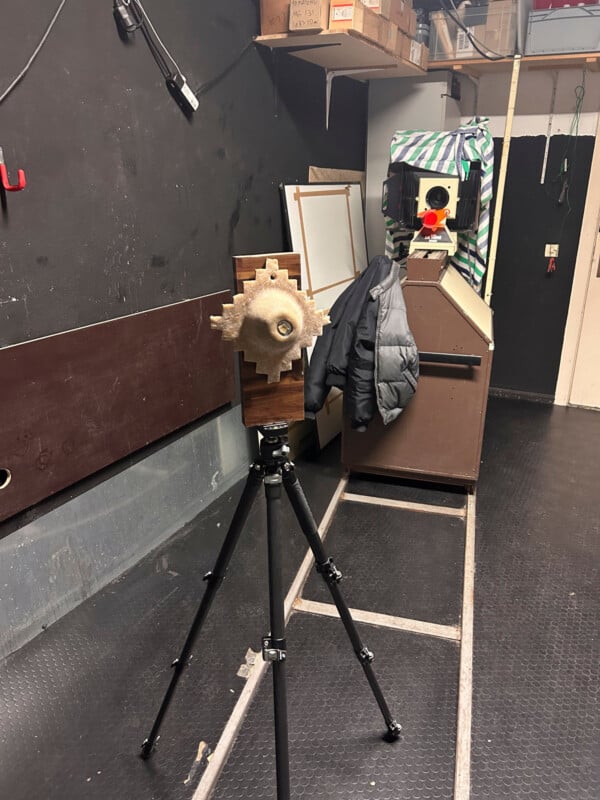
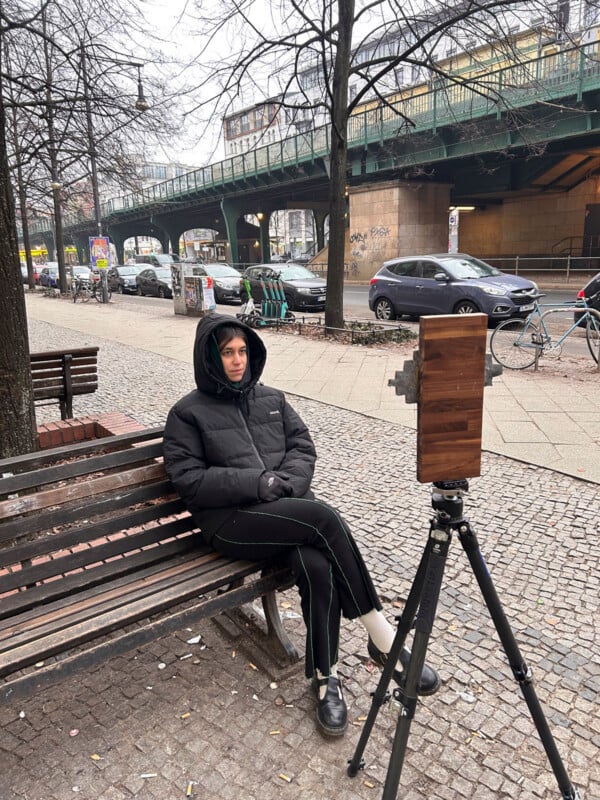
“After a few prototypes to test the material, I discovered that carbon based black pasta worked quite well,” the pasta-making photographer says. “Even so, I had several issues with light leaks. Some of the first photographs came out very gray and lacking contrast. With the final prototype, the one shown in the pictures, I finally achieved some solid results.”
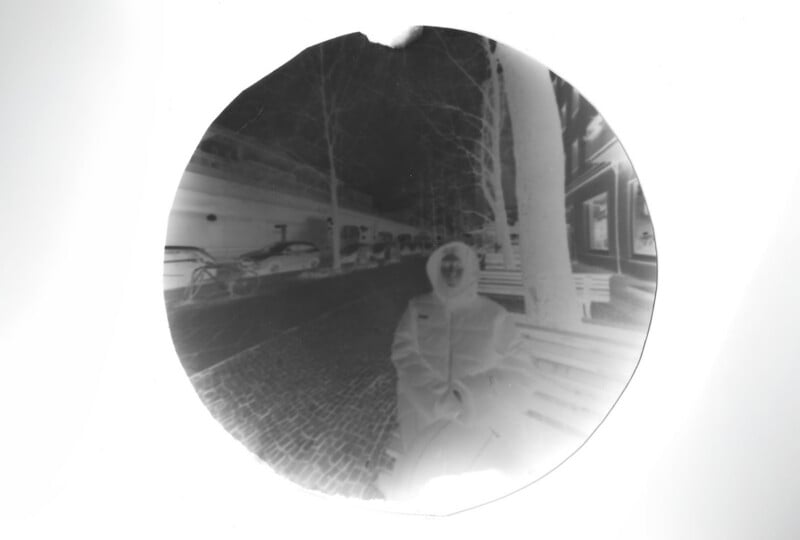
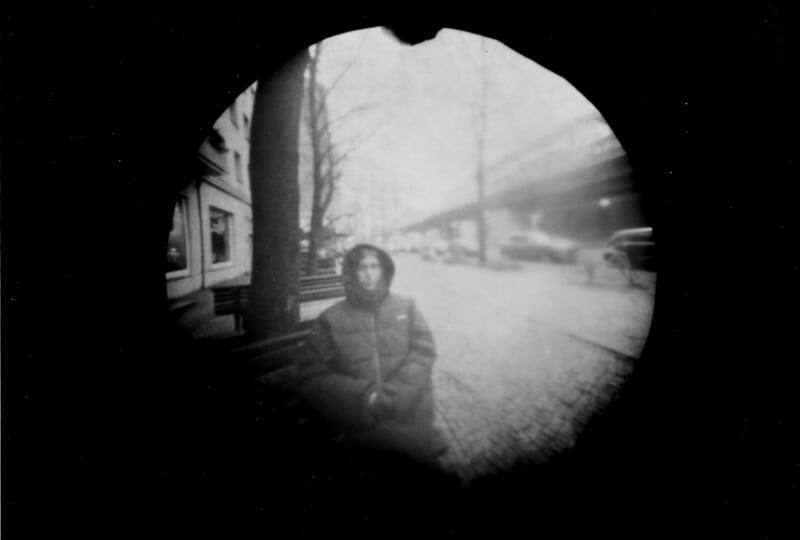
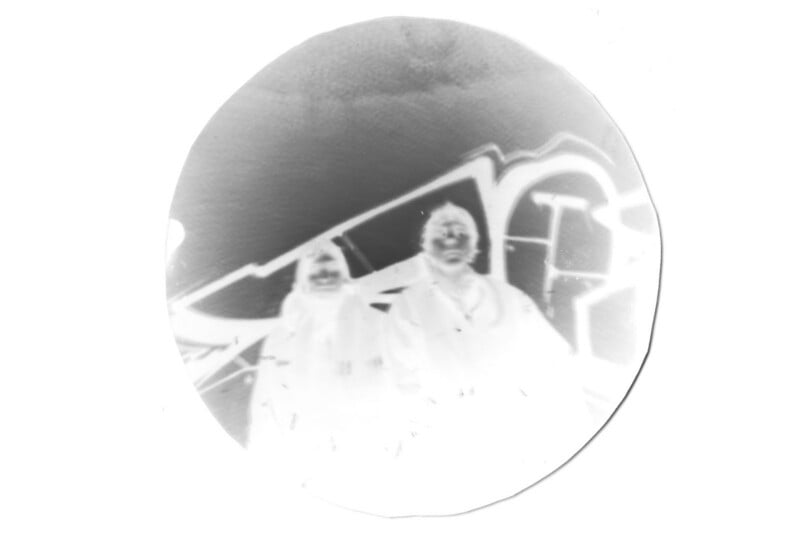
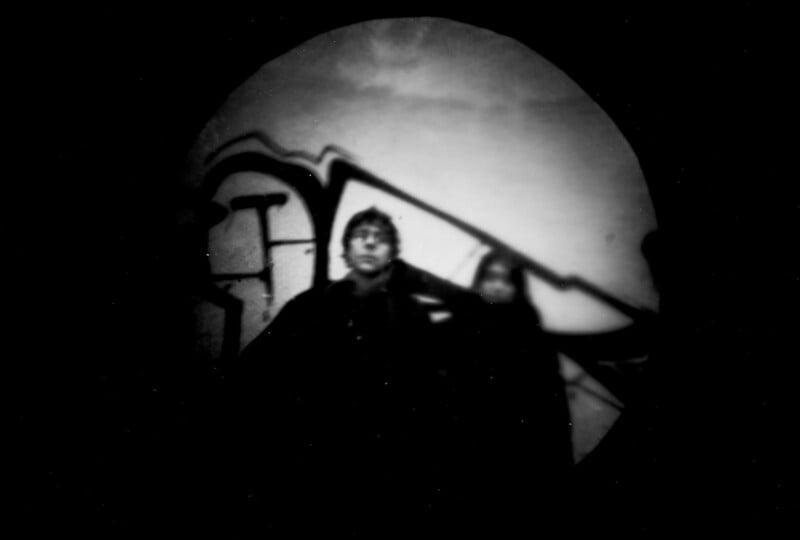
The photos Ambrogi is talking about are featured throughout this story, and the results, as he says, are good.
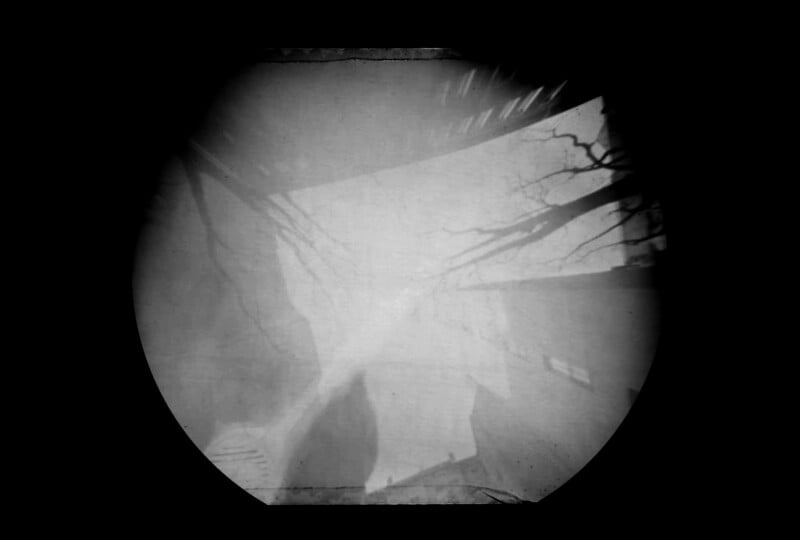
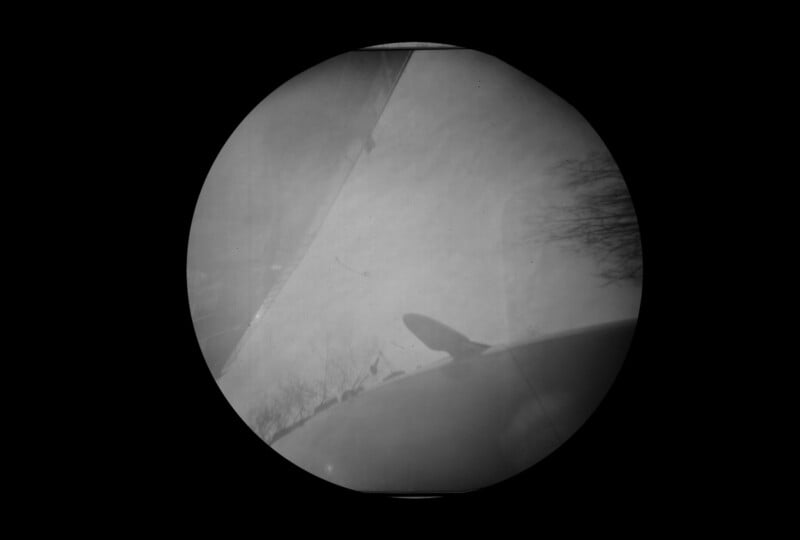
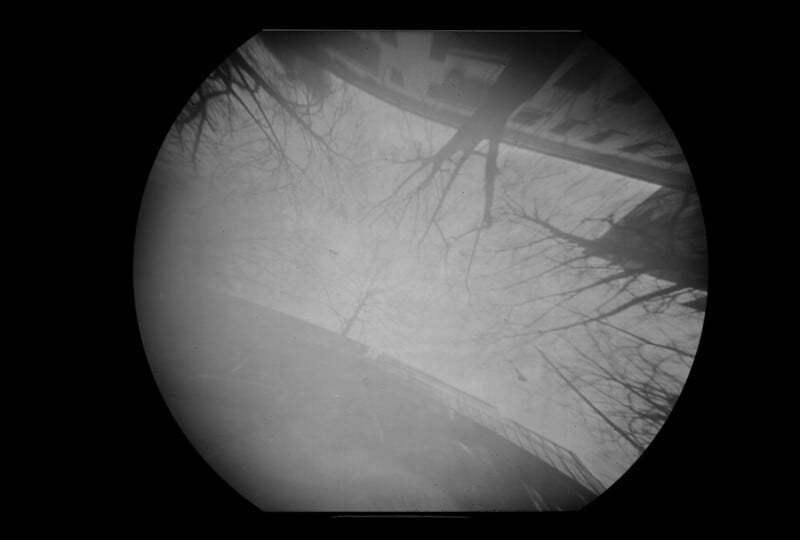
“I’ve always liked pinhole photography and have been fascinated by how people can make working cameras out of almost anything. Before this project, though, I had only used beer cans for solargraphy. In fact I usually do more street photography and I really enjoy shooting on film. I have a darkroom and I genuinely appreciate the often frustrating process of working in it. Like cooking, it requires patience and care,” Ambrogi says.
“For me, a good print is sometimes just as satisfying as making a good plate of pasta. It feels rewarding,” the photographer concludes.
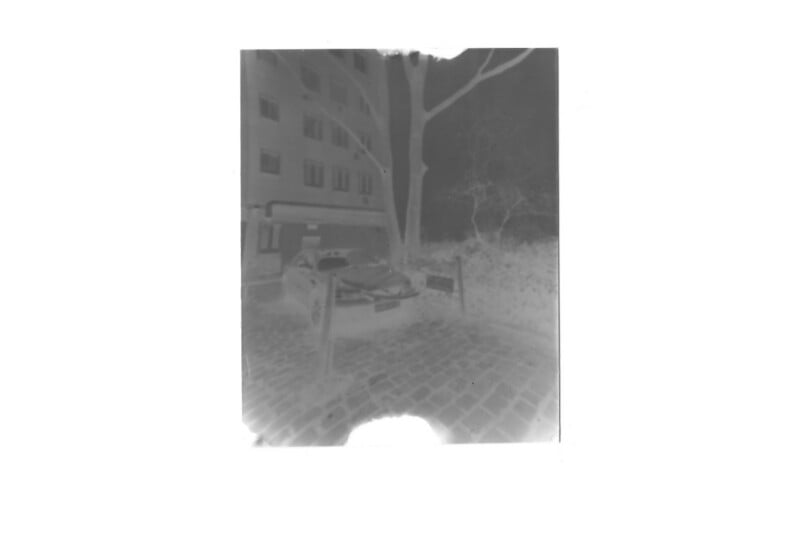 Negative scan
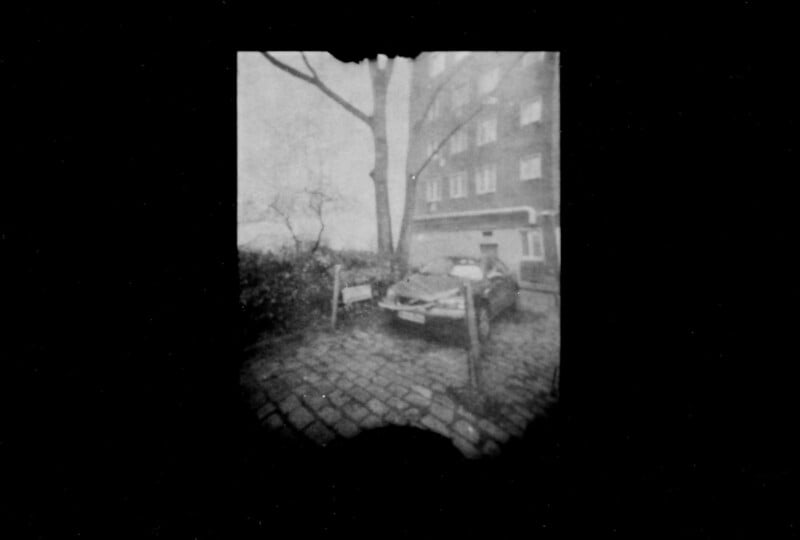
 Negative scan
 Negative scan
Ambrogi says he will likely try to build an even larger pasta pinhole camera down the road and maybe even experiment with different shapes.
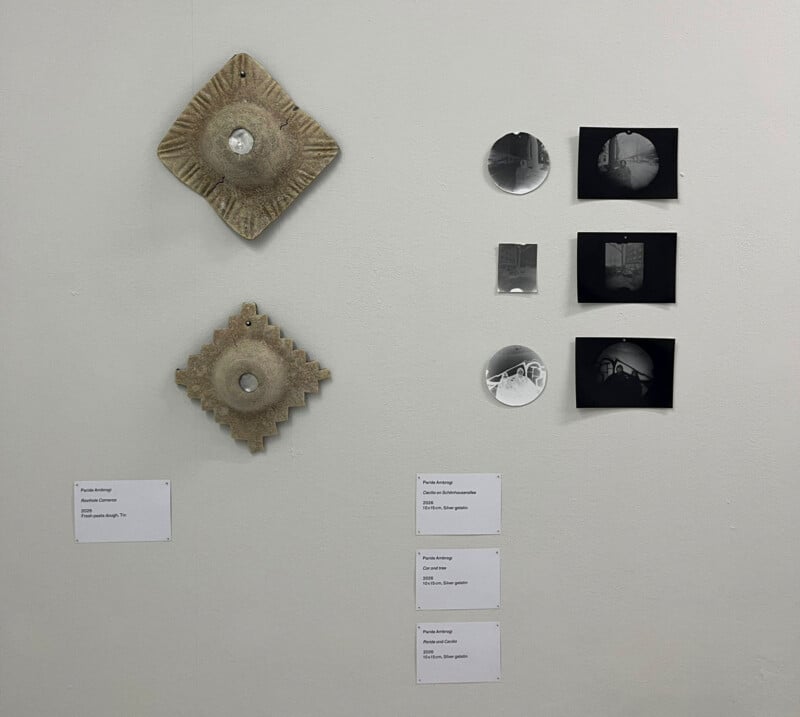
Paride Ambrogi was kind enough to share his list of materials and step-by-step instructions so that other photographers can make a Ravihole Camera, too. He admits he didn’t take many photos during the building process because he didn’t initially plan to make a guide. Nonetheless, the instructions are very detailed. They are included in full below:
Building a Ravihole Camera of Your Own Raw Materials Wheat flour (1 kg total) Eggs (approx. 10 medium eggs) Vegetable carbon tablets (about 20 total) Water (small amount, for sealing) Tools and Objects Mixing bowls Rolling pin or pasta machine Plastic wrap Sharp cutter/razor blade/scalpel/sharp knife Bowl (used as mold and cutting guide) Beer-can pinhole (metal pinhole) Small brush or fingers for applying water Darkroom (or portable darkroom) Photographic paper Optional: flour for dusting Wooden board Tripod mount Needle or pin Step-by-Step Instructions Make the pinhole lens Cut a circular piece from a beer can, 3–4 cm in diameter. Using a pin, carefully pierce a small hole in the center. Set it aside for later. Prepare the pasta dough. Make two batches of fresh pasta dough: 500g of traditional dough, 500g of black dough. The traditional ratio is 100g wheat flour : 1 medium egg. To obtain the black dough, add vegetable carbon tablets (about 10 tablets per 500g of flour, this worked well for me). Mix until smooth, then wrap and let rest in the fridge for at least 30 minutes. Flatten the dough. Roll out each dough separately. The surface should be large enough to cover an upside-down bowl, with extra space for decoration. Thickness should be approximately 5mm. Layer the doughs. Stack the two sheets together, making sure they are similar in size. If they don’t stick, lightly brush a small amount of water between the layers. Shape over the bowl. Place the bowl upside down on the table and gently lay the dough on top, light side facing up. Cut the pinhole opening. Using a cutter, razor blade, scalpel, or sharp knife, cut a small hole in the center. It should be large enough to fit the previously made pinhole lens. Then cut a square around the bowl, leaving 4–5 cm of extra dough as a safety margin. Reinforce the pinhole. Remove the pasta from the bowl and flip it — always with kindness. Using leftover dough, cut a ring shape. Place the metal pinhole into the opening, then attach the dough ring around it, fixing it with gentle pressure and a little water if needed. Create the negative holder Using the bowl as a guide, cut a circular piece from leftover dough. This will serve as the negative holder. Let it dry on the side. Re-mount on the bowl. From the remaining dough, cut strips 2–3 cm thick and about 30cm long. Wrap them in plastic and store them in the fridge. Initial drying and decoration. Let the dough rest for 1–2 days, then decorate the edges of the Ravihole. Make a small hole on one of the corners — this will be used later to hang the camera on the stand. Cover loosely with plastic wrap to help the drying happen more evenly. Final drying. Once firm enough, carefully remove the bowl from underneath and let the shell dry for a few more days. After 5–7 days, the pinhole should be rigid enough to clearly let light through. Prepare the photographic paper. In a darkroom (a portable one is fine), cut the paper into a circular shape using the same bowl as a guide. Attach the paper. Still in the darkroom, fix the paper onto the black side of the shell using the fresh pasta strips saved in the fridge. Add a little water if necessary to help it stick. Seal the pinhole. Fix the lid into the pinhole using the same dough strips, then close the pinhole lens with a small piece of fresh pasta. Prepare the stand and mount the Ravihole. Attach a tripod mount to a wooden board. Fix a needle or pin on the board in the appropriate position. Hang the Ravihole camera from the needle using the pre-made hole in the corner. This keeps it steady and properly aligned for shooting. Ready to shoot. The Ravihole camera is now finished. Use it quickly, as it will eventually dry out and become brittle.
Image credits: Photos and Ravihole Camera instructions by Paride Ambrogi