
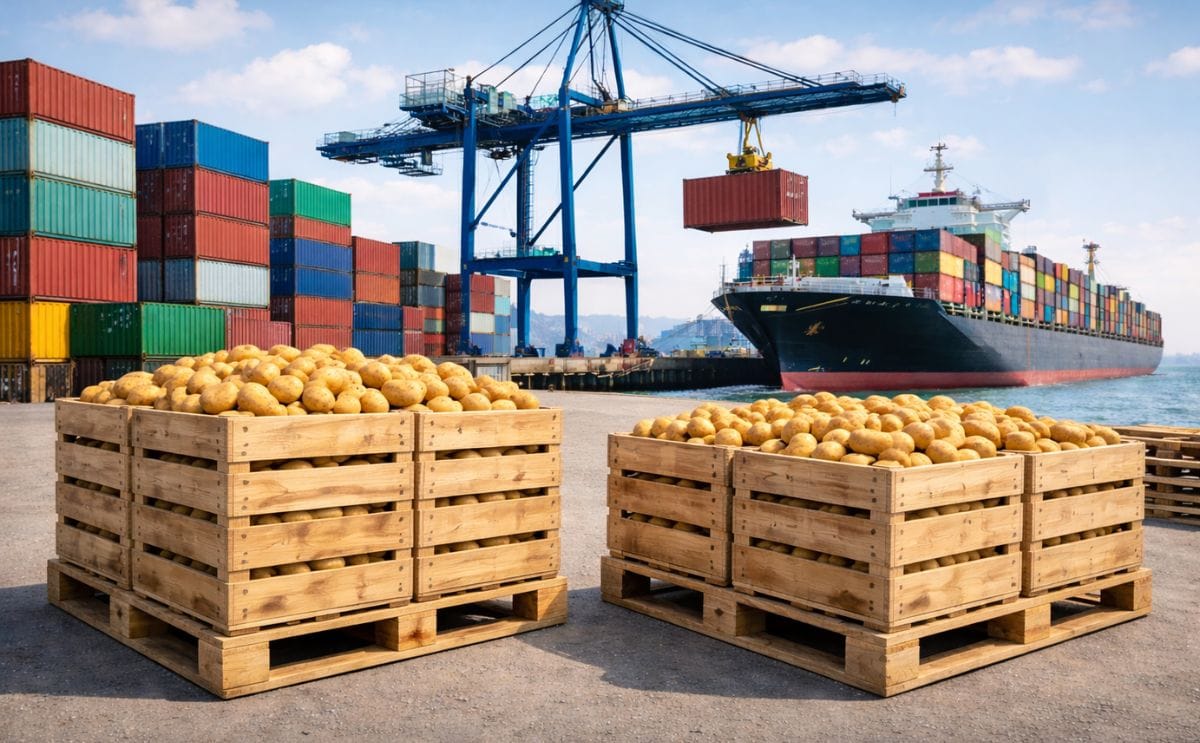
Eleven additional states can export fresh table-stock and chipping potatoes to South Korea, according to a Jan. 23 agreement announced by the United States Department of Agriculture Animal and Plant Health Inspection Service. Previously, only Idaho, Oregon and Washington growers of fresh and chipping potatoes were allowed to access the Korean market. The new agreement allows exports from Arizona, California, Colorado, Maine, Michigan, Minnesota, Montana, Nebraska, New Mexico, North Dakota and Wisconsin.
Brett Jensen, Vice President of Trade Affairs at National Potato Council:
“We thank the administration for this landmark trade achievement. The announcement marks the culmination of 19 years of persistence by USDA APHIS Plant Protection and Quarantine, NPC, our state and national partner organizations, our market access advisers at Bryant Christie Inc. and the entire administration.”
Economic impact for growers
The South Korean market for United States fresh potatoes is valued between USD 12 million and USD 20 million annually, a figure historically constrained by quotas and limited state eligibility. While total United States potato exports to Korea exceed USD 150 million, the fresh segment represents significant untapped potential.
By granting access to major chipping-potato states including Michigan, North Dakota and Wisconsin, the industry is better positioned to supply the Korean market during the newly established year-long duty-free access for chipping potatoes agreed under the United States-Korea Free Trade Agreement and fully implemented this year.
A 2024 economic impact study by Michigan State University modeled a 10% increase in exports resulting from the market expansion. Industry representatives note that new export opportunities help offset financial pressures from high input costs and market instability currently faced by growers.
Export requirements and protocols
National industry marketing group Potatoes USA said potatoes from approved states may be shipped only from registered and approved packing facilities. Requirements include:
Use of certified seed from approved seed states — Idaho, Oregon, Washington, Colorado and MontanaPsyllid trapping and testing for zebra chip diseaseDocumented grower integrated pest management practicesFry testing for table-stock potatoesUse of sprout suppressant Chloropropham (CIPC) per defined specificationsRegistration of packing shedsIndustry reaction
Jamey Higham, CEO of Idaho Potato Commission:
“The protocols you have to follow to be able to ship fresh potatoes to South Korea are a little burdensome. South Korea is not a major growth market for IPC because of the protocols. We would welcome more business.”
Chris Voigt, Executive Director at Washington State Potato Commission:
“It’s good competition. It’s great to have more states getting into the export game. More states involved in exporting potatoes brings more voices to the table as we continue to try to open up more markets.”
Washington growers are accustomed to South Korea’s protocols, and some producers plan to certify additional fields to accommodate potential new sales. While entering the market can be challenging, industry leaders say experience and coordination make compliance manageable and help maintain high quality standards for Korean buyers.