
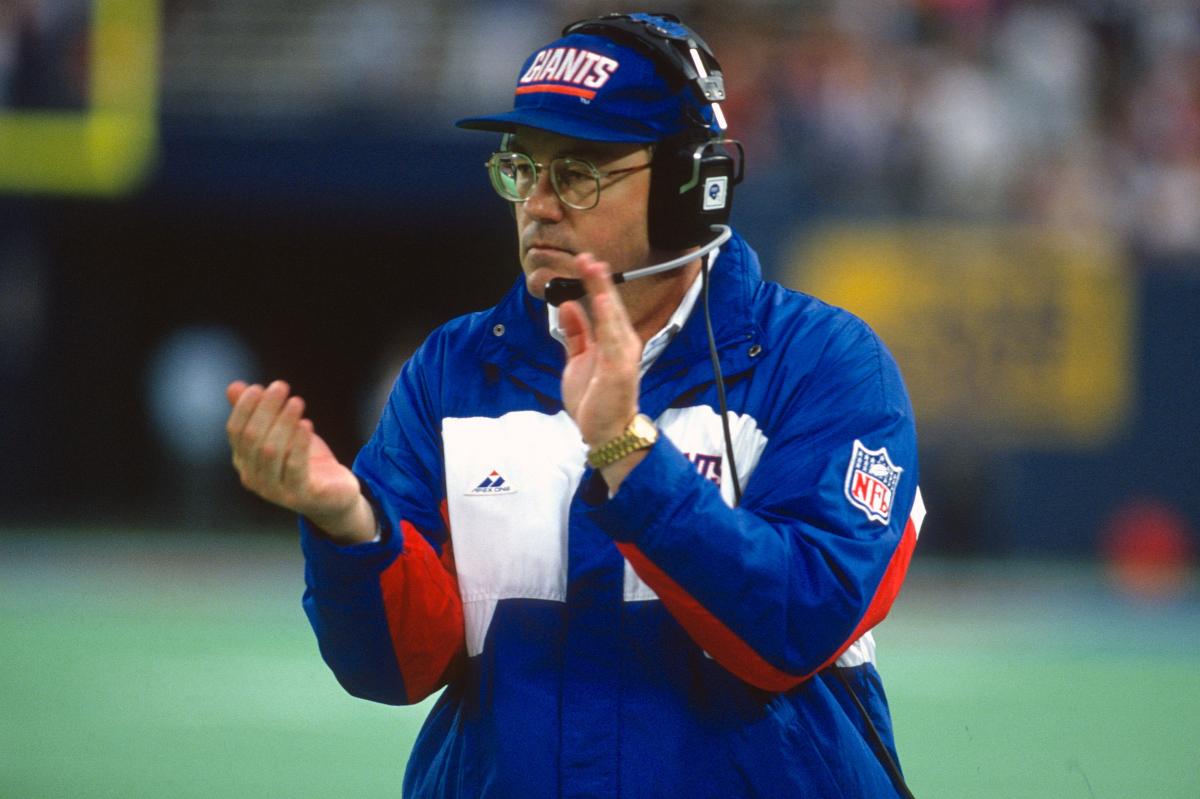
Ray Handley, former Giants head coach and two-time Super Bowl-winning assistant, died last week, the team announced and his nephew confirmed. Handley was 81.
Handley almost never spoke publicly about his time with the Giants after his firing in 1992, living off the grid in Lake Tahoe, never returning to coaching and losing touch with the organization.
At the peak of his NFL career, Handley was the offensive backfield coach for Bill Parcells’ powerhouse Giants from 1984-90. The two coaches had first built a mutual respect working together as assistants at Army in 1968-69.
“He was a very astute mathematician,” Parcells told The Post on Monday. “He always assisted me in my clock management, particularly late in the games. He was on top of figuring out how many potential plays an opponent had left, or how many we had left. He always factored in the timeouts and was a good reference on the field under pressure in that regard.”
In his final game as an assistant coach before succeeding Parcells, Handley was the position coach for Super Bowl 25 MVP O.J. Anderson when the game plan was to control the clock and keep the explosive Bills offense on the sideline.
“He made a difference in my career,” Anderson — already a Pro Bowler when he joined the Giants in 1986 — told The Post. “If it meant doing extra work to continue to try to be the best you can be or more work in the weight room, everything that you wanted to do on the football field to give you a higher status, he was there to make sure you achieved it.”
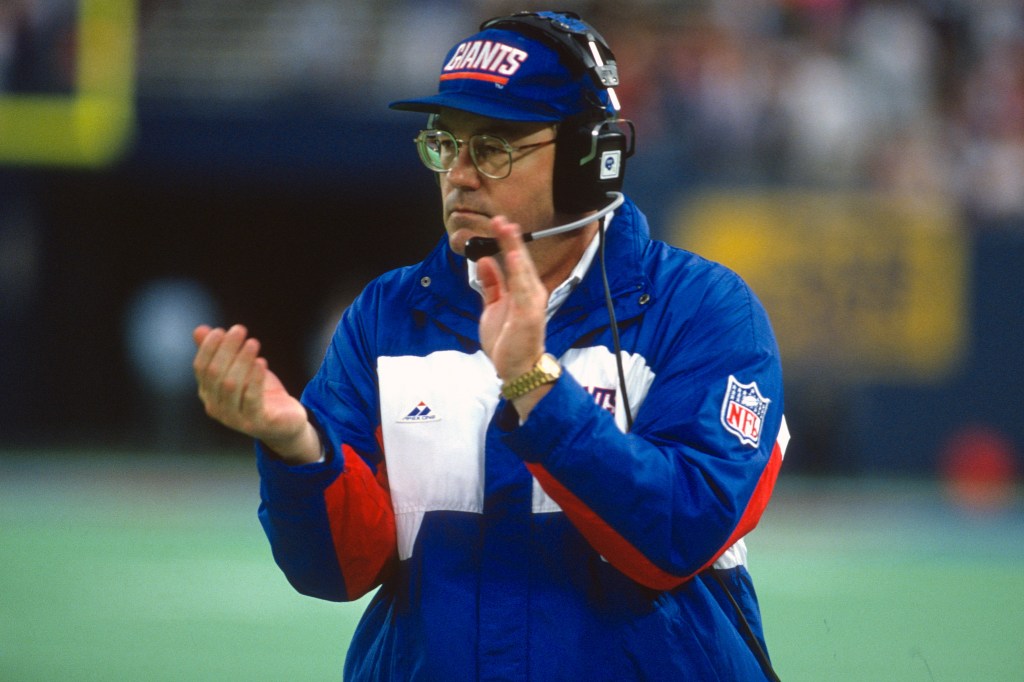 Ray Handley is pictured during a game as the Giants’ head coach. Focus on Sport/Getty Images
Handley’s two-year stint as head coach was rocky on and off the field. He emerged as the choice to replace the retired Parcells after defensive coordinator Bill Belichick left to become Browns head coach and receivers coach Tom Coughlin left to become Boston College head coach.
Handley fought with media members, faced backlash from fans who expected Parcells-ian results and lost authority over veteran players by not ruling with the same iron fist. His two biggest calls — selecting Jeff Hostetler over Phil Simms in a quarterback training-camp battle in 1991 and changing the defensive scheme to read-and-react in 1992 — both backfired.
“It’s not easy to be a head coach and he’s following one of the greatest coaches ever,” Anderson said. “That made it hard to live up to any expectations that he had for himself — let alone what everyone outside of the locker room was putting on him. It made life tough for him.
“His philosophy was totally different from Bill’s, and I think we took advantage of it. Bill was very stern and aggressive. Ray believed, ‘You guys are men. You make good money. I don’t need to punish you like you are kids.’ I think that’s mainly where he went wrong. We need to be treated like kids.”
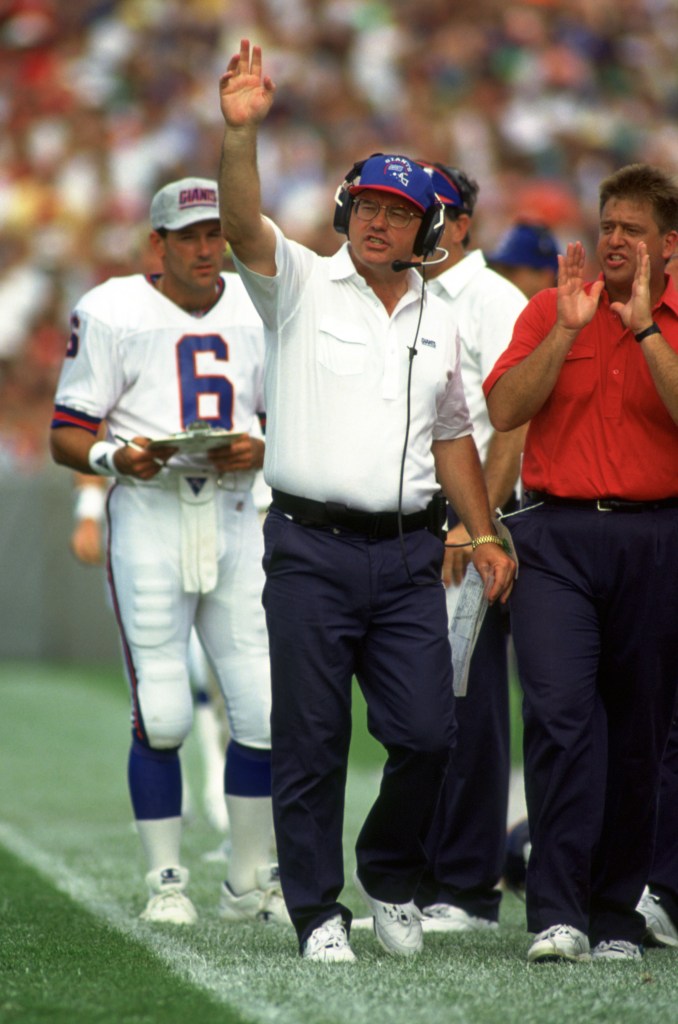 Ray Handley is pictured during a Giants game in 1991. AP
Handley was fired after going 14-18 (.438), which doesn’t sound like a bad winning percentage compared to recent Giants head coaches Brian Daboll (.336), Joe Judge (.303) and Pat Shurmur (.281) but was considered bottoming out at the time.
“I had a lot of respect for him,” said Parcells, who lost contact with Handley over the years. “Being a first-time head coach, it’s not the easiest to follow up on (winning). But the opportunity only comes a certain amount of places and times, and you have to do your best.”
Go behind the scenes with Big Blue
Sign up for Inside the Giants by Paul Schwartz, a weekly Sports+ exclusive.
Thank you
The Giants hired three-time AFC champion Dan Reeves in 1993.
“Your team has to feel certain that it has a chance to win,” then-general manager George Young said after firing Handley. “If your players feel that the coach is going to take them to nirvana, that’s a big thing. When you feel your players are having trouble, whether they’re right or wrong, it’s tough. It gets to be a point of credibility, whether it’s a real or unreal credibility.”
No funeral arrangements have been announced.
Handley “was an honorable man” who was “known for intensity, competitiveness, and demanding accountability; leaving a lasting mark on his family, the programs, and the players he helped shape,” his nephew Rob wrote on social media.