
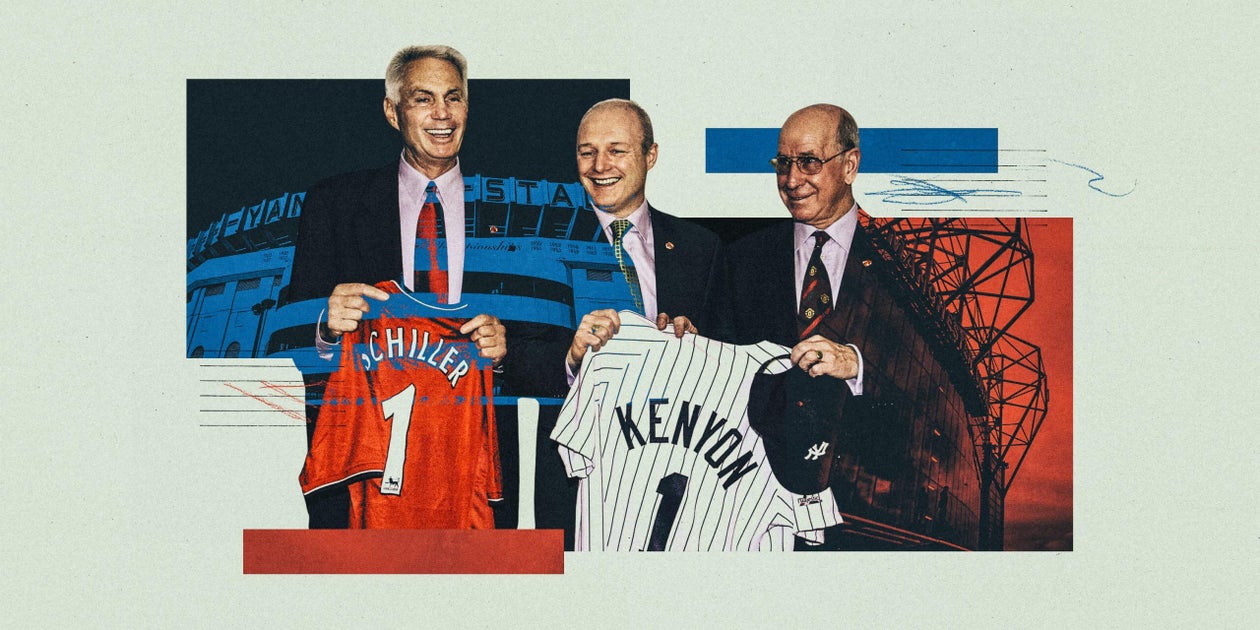
It was the deal that was going to turn the industry upside-down, sports’ answer to one of those Marvel/DC crossovers. One business analyst quoted widely at the time said it was like “bringing together Coca-Cola and Pepsi — it’s that big.”
On February 7, 2001, sports fans on both sides of the Atlantic woke to news of an alliance between two of the biggest names in the business: Manchester United and the New York Yankees, the Red Devils and the Bronx Bombers, the team of Sir Bobby Charlton, George Best, Eric Cantona and David Beckham and the team of Babe Ruth, Lou Gehrig, Joe DiMaggio and Derek Jeter.
The partnership was launched at a news conference in a hotel just off Times Square.
“It is an alliance,” United’s chief executive Peter Kenyon told the assembled media, “that links the greatest franchises in the world.”
For a time, the sports pages were full of stories about how much this deal might ultimately be worth for both — billions of dollars, CNN reckoned — and how it might evolve.
Initially, the two teams planned to sell each other’s merchandise. Beyond that, they hoped to open doors. The dot-com bubble of the late 1990s had burst, but there was a whole new world out there to conquer.
With Beckham and Jeter as their respective poster boys, the marketing opportunities were huge. Both United and the Yankees were already serial champions. Together, it was felt, they would rule the world.
But the partnership, launched amid great fanfare, never got past first base. It was barely heard of again. As Peter Draper, United’s marketing director at the time, tells The Athletic, “it withered on the vine”.
In the strange early years of the internet age, when watching Premier League football was still largely an underground activity in the United States, the simple truth is that nobody, whether in Manchester or New York, really knew what to do with the partnership.
“On the surface, nothing really happened,” says Charlie Stillitano, the Italian-American sports executive who helped to broker the deal. “But looking at it more clearly now, it opened people’s eyes in America to the business potential of soccer — and laid the foundations for everything that has happened over the 25 years since.”
It was late 1999, people were panicking about the millennium bug, and the Yankees were on top of the world. They had just won their third World Series title in four seasons and, with Mariano Rivera pitching and Jeter at shortstop, were already planning to make it four out of five. They were the most valuable franchise in world sport and were looking for ways to stay ahead of the game. Even the idea of creating a Yankees soccer team had been floated.
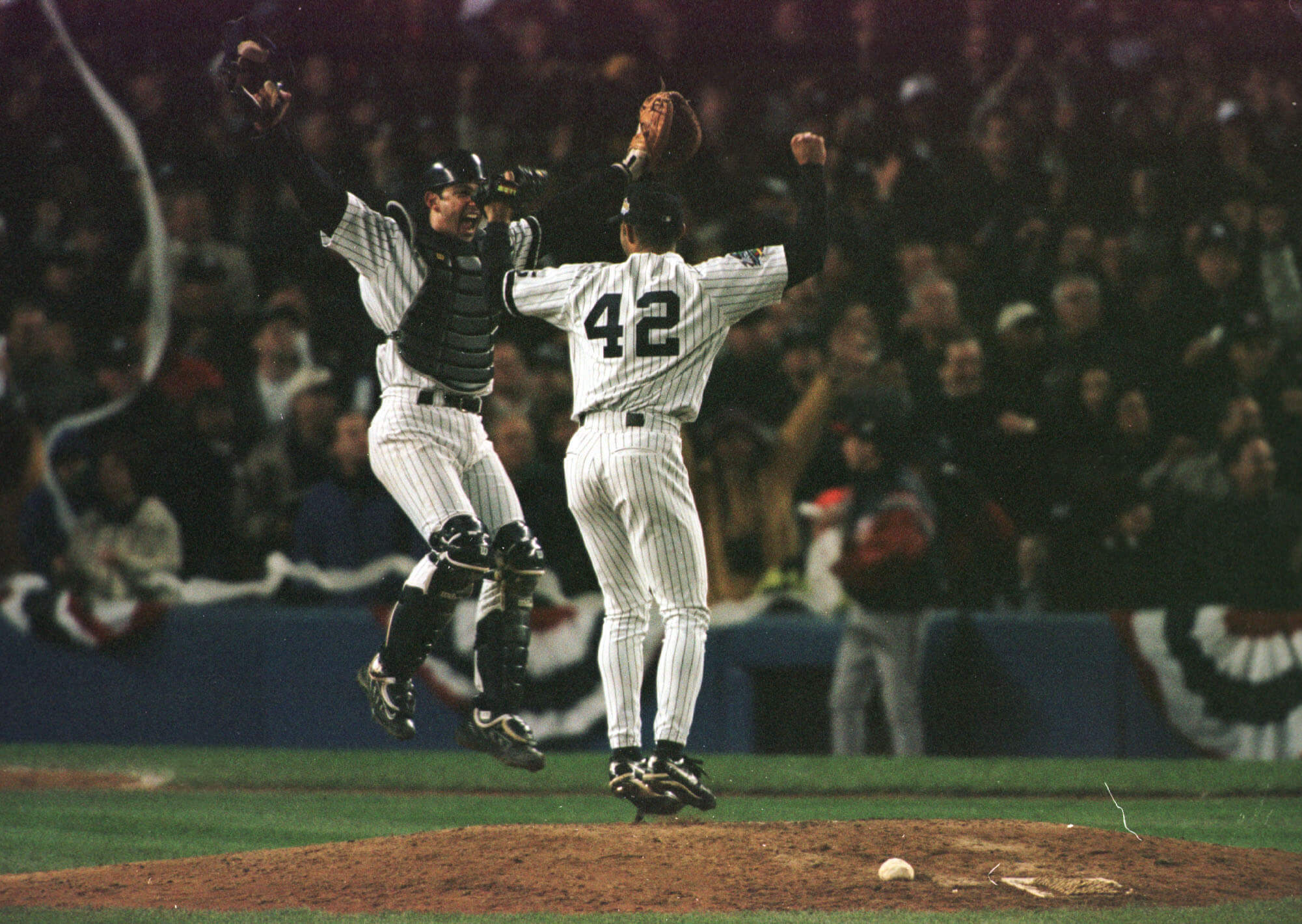
The New York Yankees had just won the 1999 World Series (Matthew Stockman/ALLSPORT via Getty Images)
“We were looking to do whatever we could do to expand the Yankees brand, particularly into Britain,” says Harvey Schiller, who had recently been hired by George Steinbrenner, the principal owner, to become chief executive of YankeeNets, which also owned the New Jersey Nets and the New Jersey Devils.
Manchester United were at the glorious peak of their powers. They had just won the treble — the Premier League, the FA Cup and, for the first time in 31 years, the European Cup, which had been rebranded as the Champions League. They were intent on world domination off the pitch and on it. With the digital age dawning and with superstars such as Beckham in their ranks, there were commercial opportunities of a type that had not existed before.
At a time when the majority of shirt sponsorship deals in the Premier League were for beer, crisps, cars, vans, electronics and desktop computers, United, whose long-running partnership with Japanese electronics company Sharp was nearing an end, wanted something different.
“We started searching the market for a major partner, a modern tech company, that could help us expand the brand globally,” Draper says. “We were going back and forth to the States a lot. We spoke to Jerry Yang at Yahoo!, which was one of the really big fish at that time.”
They found that partner closer to home, securing a deal with telecommunications giant Vodafone, which at £7.5million a year (then $10.8m) was by far the biggest in the Premier League.
But their various Stateside conversations had opened doors. “Charlie Stillitano had introduced us to a variety of people, mainly in the tech space and the media space,” Draper says. “MUTV (United’s television station) was still in its relative infancy and the YES (Yankees Entertainment and Sports) Network was really coming on the radar. That’s how Charlie introduced us to the Yankees and to Harvey Schiller.”
Stillitano’s eyes light up when he describes the potential he saw. “Manchester United was one of the few teams in the world at that time that actually thought about marketing,” he says. “They had a full merchandising crew and were doing things that were cutting edge to try to develop their brand. And the Yankees were collecting clubs — the Nets, the Devils — and they had formed the YES Network. That brought about the idea that the Yankees and Manchester United could do something really cool together.”
The talks were kept under wraps, with an announcement planned in New York on the afternoon of February 7, but the news seeped out the night before and was plastered over the back pages of the morning papers: “Yankee Doodle United”, “United hit Yankee jackpot”.
Shares in Manchester United opened on the London Stock Exchange at 211p and briefly soared as high as 240p before the news conference began in New York.
Charlton, the most venerable of English footballers, was surprised by a curveball when a reporter asked him if he could name the Yankees’ shortstop. The answer was Jeter, MVP of their recent World Series win, who was about to sign a $189million, 10-year deal that would dwarf even Beckham’s earnings at the time.
“I’m not proud to say I don’t know,” Charlton told the assembled media. “But our club is an institution and (…) because of that, we are very careful of who we join forces with. This alliance with the New York Yankees is an alliance with the organisation that is probably as similar to Manchester United as it’s possible to be.”
“It was presented in the media as a merchandising deal: ‘We’ll sell their caps and they’ll sell our shirts’,” Draper says. “But it wasn’t really that.
“The intent was an intellectual exchange around the understanding of sports from different places and the different relationship those sports had with their fanbase and the media — because the media landscape in America was and still is very different from the UK. There was learning to be done intellectually and then we would see where we might take it commercially.”
“It was a marketing relationship,” Schiller says. “After we did the deal, we started questioning some people on the street in Britain, asking them, ‘What do you know about the New York Yankees?’, and they didn’t even know it was a baseball team. They thought ‘Yankee’ just meant an American person. ‘You’re in New York, you’re a Yankee’.
“I said, ‘When I put on this NY baseball cap, what does that mean?’. This guy said, ‘It means you’re a New Yorker’. So that was what we wanted to change through this relationship.”
Stillitano recalls a shipment of Yankees caps to Manchester that sold out within days. “But because of how marketing revenue was distributed in the MLB, the Yankees only ever received a tiny, tiny portion of whatever was sold internationally,” he says.
Schiller concurs. “It was a nice announcement for everyone,” he says. “But on our side, because merchandise revenue is controlled by the league and distributed equally among every team, it didn’t matter if the Yankees sold 60 per cent more than everyone else; we would still only get one share. There wasn’t really any advantage from doing that and sharing the revenue.
“But it was a fun thing to do. And it was good publicity. For both parties, I think.”
There was excited media chatter about cross-promotion: the possibility of getting Beckham and Jeter together on the same billboard.
But that threw up another problem. The Yankees were Adidas’ commercial partners, but United, who had a deal with Umbro, had recently agreed a new 10-year sportswear and marketing partnership with Nike, which was to start in 2002. “And it was hard for them to do anything on that side of things when one was Nike and the other was Adidas,” Stillitano says.
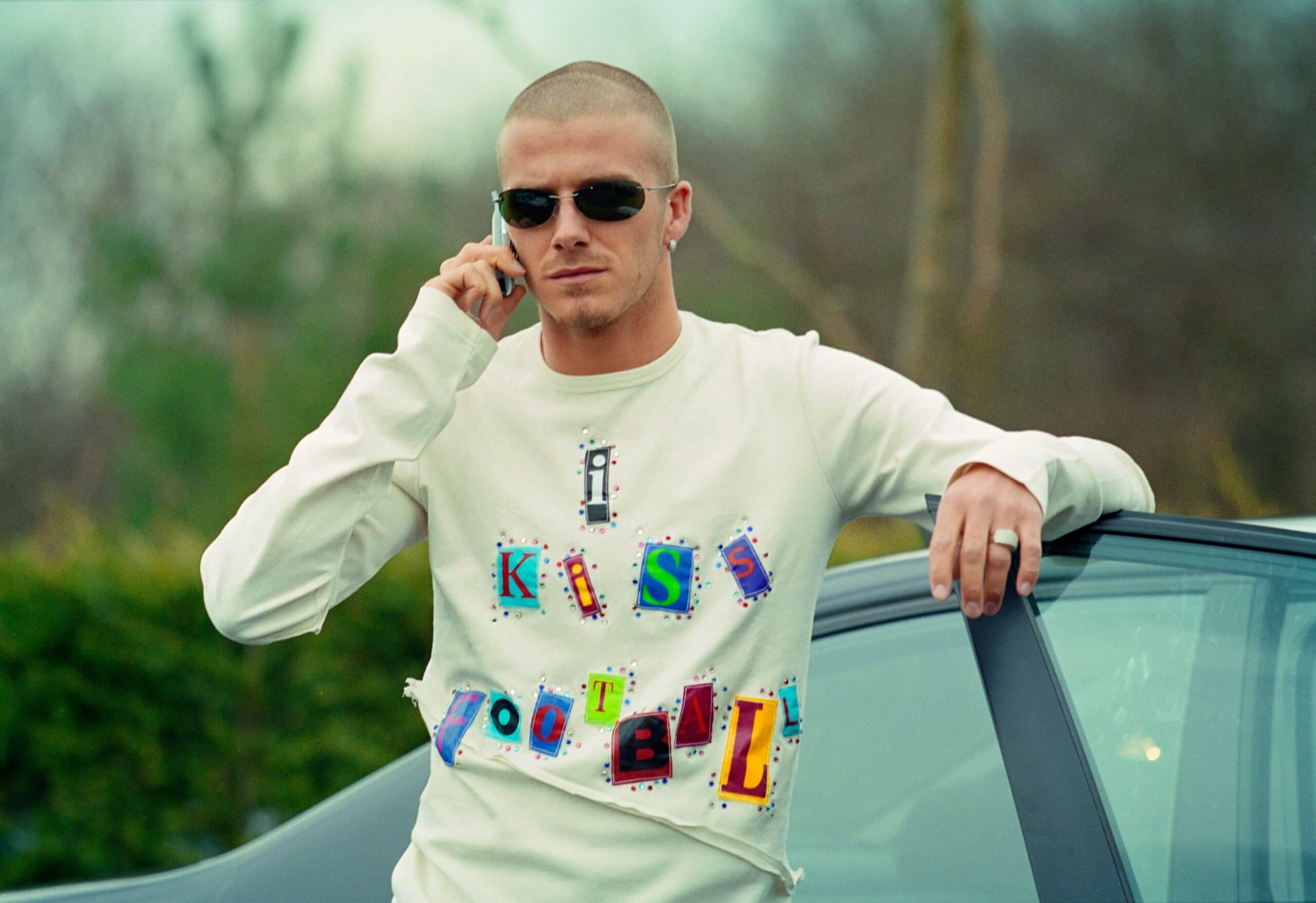
David Beckham was hugely marketable at the time (Gary M Prior/Allsport/Getty Images)
There were benefits for United, though. For a time, highlights of their matches — and indeed classic games from years gone by — were screened on the YES Network, which earned them weekly television exposure in the Greater New York area when Premier League coverage was scarce.
“Don’t forget, this is the early 2000s, and there was so little international soccer on TV in the U.S. at that time,” Stillitano says. “It’s very early days of the internet. You had to look very hard even to find the box scores.
“They weren’t allowed to show the games live. I don’t know whether the rule was 12 hours later or 24 hours later, but we had what was called ‘Manchester Mondays’, where Manchester United’s games were shown on the YES Network on a Monday night. Suddenly, you had a bunch of soccer fans who could see these games, which was great for awareness of Manchester United in the States.”
Exposure and brand recognition were a big part of it for United, gearing up for a pioneering pre-season tour of America in the summer of 2003. Just as Ferguson had set out to conquer Europe, the United hierarchy had made it their mission to “crack America” in the 2000s. The association with the Yankees could only help in that regard.
But the partnership never developed. “Commercially, we never really got to a level of, ‘Wouldn’t it be good to do this?’,” Draper says. “If I was to be critical of us, on both sides of the water, I don’t think we put our shoulder to the wheel on it and really explored what it could be. Today, you look at it and think, ‘Why didn’t we?’. In retrospect, I’m not sure why, other than the day-to-day getting in the way. We didn’t have the vast commercial team that United had a few years later.
“It was a new thing. People were a bit tentative about it. We didn’t want to tread on their toes and they didn’t want to tread on ours. There wasn’t really a business plan behind it. The intention was for it to evolve, the way some of our other projects did, but that didn’t really happen. Sometimes you get out of things what you put in. I don’t think we put enough in. It became a bit of a hollow arrangement.”
When was it disbanded? “It wasn’t, really,” he says. “It wasn’t like there was a contract over hundreds of pages saying, ‘We’ll do this and you’ll do that’. At most, it was a memorandum of understanding. And it just sort of… gently disappeared.
“It was nice in a ‘hands across the sea’ way, but it never really came to anything. If we had been a bit more aggressive, on both sides, we could have got a bit more out of it.”
Schiller makes a surprising revelation: that United could feasibly have got a lot more out of it.
“I tried to talk Mr Steinbrenner into buying Manchester United,” he says. “We had an opportunity to purchase it — not for the Yankees, but for the Steinbrenner family. George’s son Hank, who was a big soccer person, was very keen. He’s one of the ones who pushed his father to get the Yankees involved with Manchester United in the first place.
“There was an opportunity to buy it, and I don’t remember how much it would have cost, but it certainly wasn’t anything near what it would be today. If I remember correctly, it was some way below $1billion.”
That suggests it was in the early 2000s, when BSkyB, owned by Australian media tycoon Rupert Murdoch, was United’s largest shareholder. In 2003, BSkyB sold its 9.9 per cent stake to the Cubic Expression company, owned by Irish horseracing tycoons John Magnier and J.P. McManus, who were in dispute with Sir Alex Ferguson over the breeding rights to racehorse Rock of Gibraltar. That triggered the sequence of events that ended with another American family, the Glazers, buying the club in 2005 for £790million ($1.4billion at the time) and loading it with debt.
“I was pushing and hoping we would do it,” Schiller says. “But a lot of other things were happening at the same time, and there were several complications. I’m not sure the reasons (that Steinbrenner didn’t proceed), but probably because people didn’t understand the value of the Premier League and what a great investment it would have been. The door was open, but we didn’t follow through.”
Stillitano recalls that the Steinbrenner family felt buying United would have brought too many risks, given that financial performance was so closely tied to securing Champions League qualification every season. “And I said, ‘Look, this is Manchester United with Sir Alex Ferguson. It’s always going to be in the Champions League’,” Stillitano says — and that was the case until Ferguson retired in 2013 and the club began to feel the effects of mismanagement under the Glazer family’s ownership.
What kind of owner would Steinbrenner have been for United? “If the family had been involved, I believe it would have been very popular,” Schiller says. “It certainly would have had very strong management, which was the nature of the Yankees. If that had happened, then the marketing relationship between the Yankees and Manchester United would have become very significant.”
Twenty-five years on, the sports industry is a very different place: far more commercialised, far more open to overseas influence and expansion.
Stillitano suggests the Americanisation of European sport — of the Premier League in particular — can be traced back to United’s expansionist plans in the early 2000s: not just the alliance with the Yankees, which brought a flurry of media exposure, but their pre-season tour of 2003, which he recalls turning heads in American sports investment circles.
In 2026, more than half the clubs in the Premier League are American-owned — in many cases by investors who also own or have stakes in American sports franchises, such as the Glazers (Manchester United and the Tampa Bay Buccaneers), Kroenke Sports & Entertainment (Arsenal, the Los Angeles Rams, the Denver Nuggets, the Colorado Avalanche, the Colorado Rapids), Shahid Khan (Fulham and the Jacksonville Jaguars) and Fenway Sports Group (Liverpool, the Boston Red Sox, the Pittsburgh Penguins and RFK Racing).
But even now, there is very little sense of crossover. FSG oversees Liverpool and the Red Sox at an executive level, and the two franchises share a commercial partner (Boston-based cloud storage service provider Wasabi Technologies), but the type of all-conquering sporting empire briefly envisioned in the early 2000s has not come to pass.
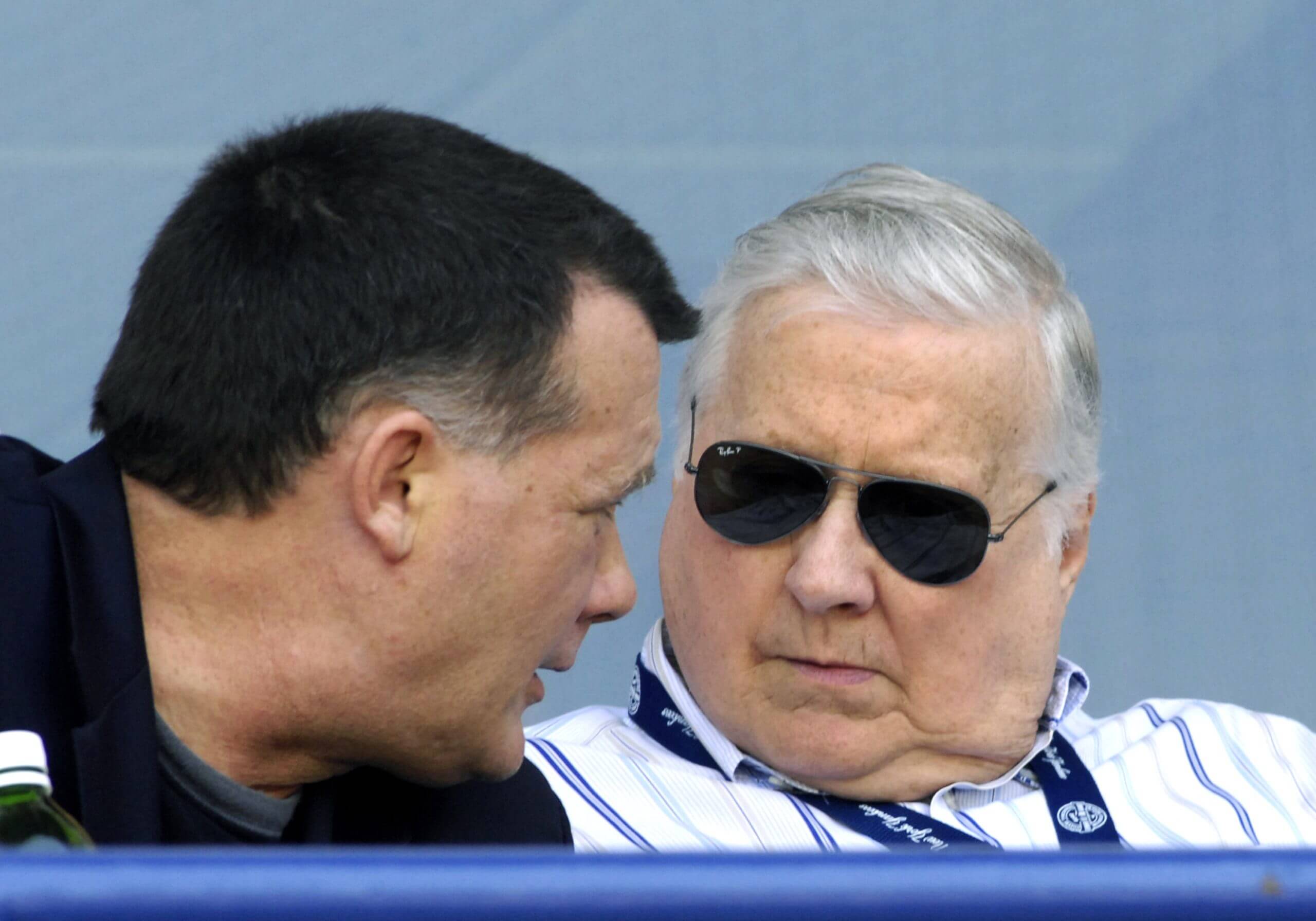
Hank Steinbrenner (left) was keen for the family to buy Manchester United (Al Messerschmidt/Getty Images)
The closest thing to it is the Red Bull Sports empire, whose interests include football (most notably RB Leipzig, Red Bull Salzburg, New York Red Bulls and a minority stake in Leeds United), ice hockey, motor sport, rugby union and sailing. It is an offshoot of the Austria-based Red Bull drinks company.
But it is still some way off what Stillitano had in mind when as he puts it, in the rush of excitement over the United-Yankees partnership, he “naively thought, ‘What if we could get the biggest brands in world sport — Ferrari (the Formula 1 team), the All Blacks (the New Zealand rugby union team) and so on — and do something really big?’. How cool would that be?”
“It sounds terrifying. But the idea of building an all-conquering sports empire — building on a unified strategic vision both on and away from the field — seems far more realistic 25 years on. “There’s so much more potential for cross-promotion now,” Schiller says. “What happened back then was that both sides didn’t really know what to do with it.”
Schiller, Draper and Stillitano agree that the idea was years ahead of its time. And while both United and the Yankees are still among the biggest and most powerful brands in world sport, it is possible to look at their dominant positions at the startof the century and wonder whether, in the digital age, an opportunity was missed.
As recently as 2010, the first year of the Forbes list of most valuable sports franchises, United were first, and the Yankees were third behind the NFL’s Dallas Cowboys. In the 2024 rankings, led by the Cowboys for the ninth consecutive year, the Yankees were fifth (still the leading baseball team by far) and United were down in 14th. Both have remained commercially robust despite a downturn in fortunes on the fields, but baseball faces its own challenges and United, after years of mismanagement, face theirs.
There is a postscript. Since May 2013, the same month that Ferguson stepped down at United, the Yankees have been in partnership with Manchester City, as a 20 per cent investor in the newly formed Major League Soccer franchise New York City FC. For now, NYCFC still play the majority of their home games at Yankee Stadium, which has also hosted Manchester City on various pre-season tours.
When the Yankees agreed a deal to repurchase the YES Network in 2019, MLB.com reported that one of their fellow investors was the Mubadala Development Company, the Abu Dhabi sovereign wealth fund led by City’s owner Sheikh Mansour and chairman Khaldoon Al Mubarak.
“I don’t know the ins and outs of it,” Draper says. “I remember at the time we were asked, ‘Do you ever see New York having a Manchester United team?’, and my response was, ‘There’s only one United’. But City have gone and grasped that concept and done it brilliantly with their multi-club around the world. That is the kind of thing you could have done.
“But that wasn’t the intention in 2001. It was about an exchange of intellect. The intention was that it would evolve from there, but it never did.”
It didn’t get beyond first base, but it was still a turning point. As Stillitano puts it, there was barely a ripple on the surface beyond the initial headlines. “But if you look at it clearly 25 years on, a lot of stuff happened,” he says. “And this deal was a big part of what really opened people’s eyes, in America, to what soccer was and how you could market it.”