
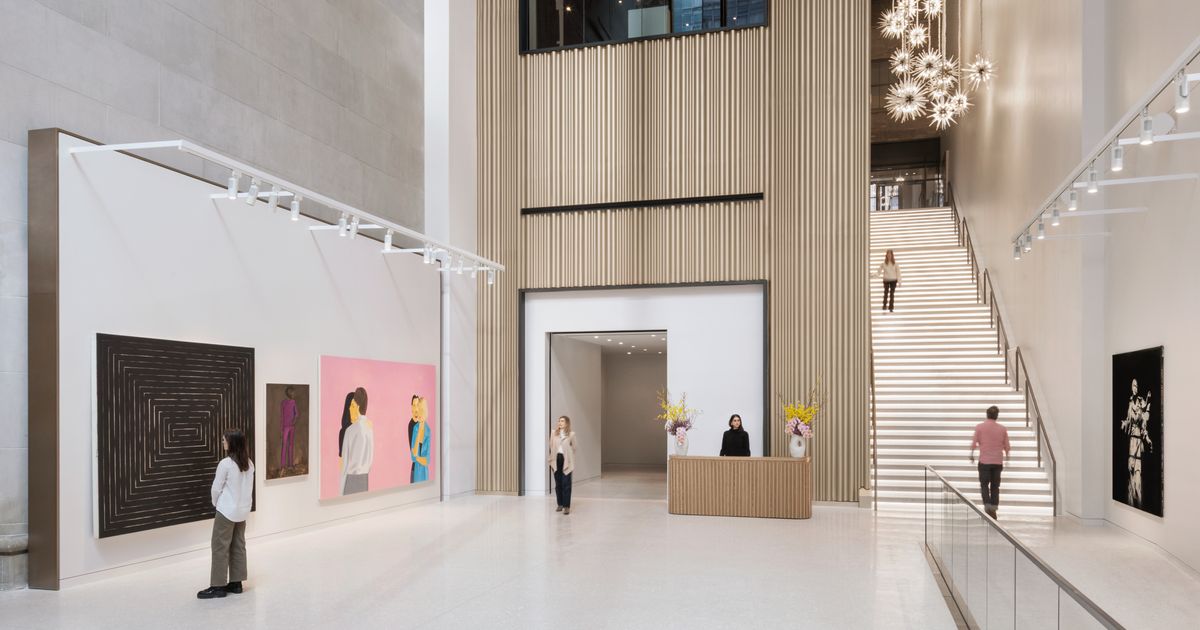
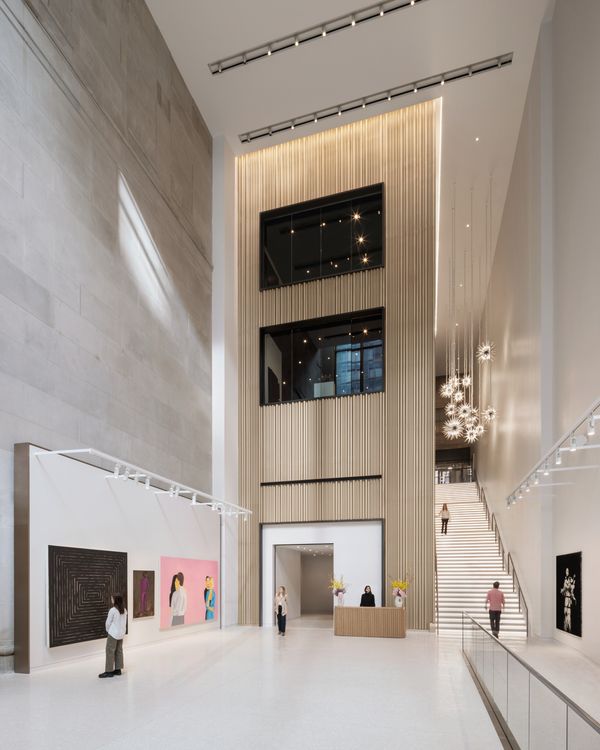
If you want to sell Basquiats and Birkins to the very rich, it might help to have a location on Billionaires’ Row. It might also help if that location had a certain cultural cachet. Bonhams, the international auction house, managed to find such a spread in a 42,000-square-foot space that is knitted from the lower floors of an odd collection of prewar buildings and razed lots, with pops of old brick walls and limestone interrupting expanses of sheer, contemporary glass. The showroom at the new, main entrance on 57th Street, feels like any contemporary art museum with money to burn: The floors are pale, the ceilings soar, and a full wall of windows makes it easy to spot a bubblegum-pink Alex Katz from the crosstown bus. But pass through a set of brassy doors cut into a stone wall, and visitors enter a gallery so dark and hushed that it can take a moment to adjust.
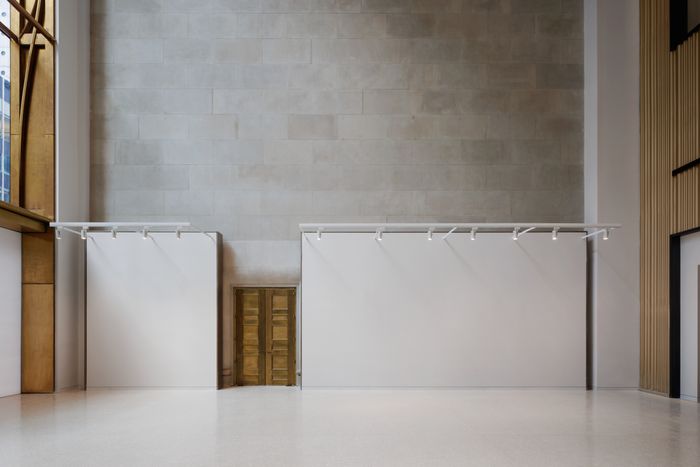
The limestone wall in the high-ceilinged entry gallery once belonged to Steinway & Sons. The door leads into the rotunda.
Photo: Colin Miller/Courtesy Bonhams
This is the reception rotunda for Steinway Hall, a landmarked interior, where generations of pianists came to worship their instrument, talk craft, perform, and play. The marbled, frescoed, octagonal room was domed to amplify the sound of a tinkling keys at the center, and hosted regular recitals. Rachmaninoff opened the building with a concert. A lost Chopin waltz debuted here. Billy Joel came by. Leonard Bernstein hosted a cocktail party, before hopping across the street to play Carnegie Hall, whose opening in 1891 shifted the center of the city’s culture uptown. Piano showrooms followed, opening up and down 57th and 58th, between stores that sold sheet music, drums, and harps. Steinway & Sons followed in 1925, assembling a clutch of old townhomes to build a showy headquarters. The façade was pure marketing, with Schubert and Mozart gazing down on an arched display window that gave views into the rotunda. On the third floor, a wood-paneled concert hall could seat 240 people or a whole lot of pianos. Delivery bays on 58th Street allowed it to ship to concert halls around the world (or just across the street). Musicians made regular pilgrimages until Steinway sold for $46 million in 2013, a week before it sold to a private-equity firm — a move the then-CEO said created “an exceptional valuation for shareholders.” One year later, the company left for a new showroom at 1133 Avenue of the Americas.
On Monday, the reception rotunda reopened to the public for the first time since — showing off a restoration of every inch of the space, from the gold and green marble floors long hidden by a sad green carpet to the frescoes on the dome, whose peeling paint has been patched up. In the center of the room, display cases now sell a different product: vintage purses and watches, including Hermès bags in alligator skin and red leather, and a Rolex with a “rare cloisonné enamel dial.” The antique walls matched with the antiques that Bonhams is known to sell, and the blend of vibes — from 1925 to 2025 — matched its reputation, says Lilly Chan, the auction house’s managing director in the United States. “We pay respect to the past and the present, and so do these spaces,” says Chan, as she tours me through — pointing out a 1910 Steinway that Elton John used to record Caribou in 1974 (estimate $250,000–$300,000), and is being offered up at its first auction here: a symbolic gesture to what Bonhams is replacing.
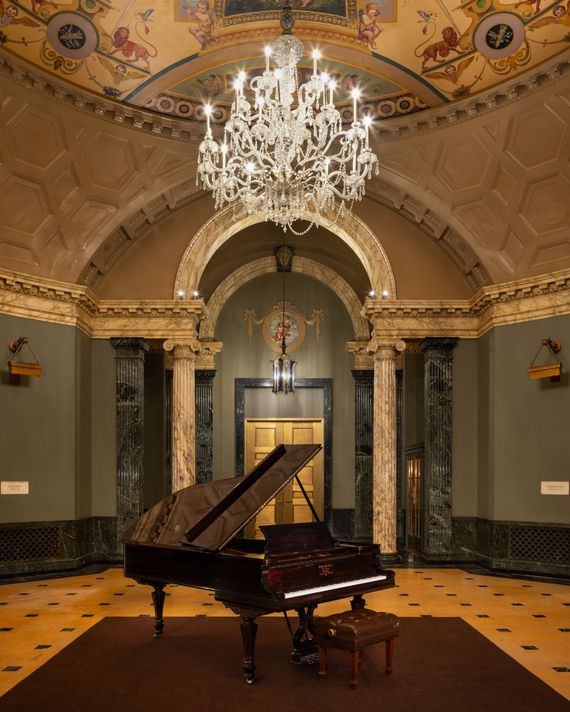
Photo: Colin Miller
Interiors by Gensler were intended to nod to Steinway, but not in a cheesy way, says design director Jason Carney: “Nothing is on the nose, but there is this echo of performance.” In the back of the large glassy gallery space on 57th, Carney wrapped a wall in shimmery, wavy, gold-colored gypsum panels that invoke “the idea of curtains.” A showstopper staircase leads around three stories up to what will be the auction house’s main space to gavel sales. There’s a Sunset Boulevard sense of glamour when descending them, amplified by thin brass treads and pendant chandeliers overhead that recall the sputnik starburst chandeliers at the Metropolitan Opera. Upstairs, there’s even more shine in a metallic silver wall around an elevator bank. A hall that connects the main gallery and a smaller exhibition space is walled in velvet curtains in a sage that calls back to the color of walls in the landmarked rotunda below. That smaller gallery features the industrial trusses which hold up the dome, a feature that — along with a glimpse of pale brick wall outside the main gallery — knits together these very different spaces. Leaving either of those bare was a topic of discussion, Carney says; a trade-off between the goal of paying homage to Steinway’s legacy and getting enough hanging space. But there’s a lot of it. And for the first time, all the staff can work out of a single address. (Offices are behind seemingly every wall, and overhead — where Bonhams occupies the entire fifth floor of the grouped buildings.)
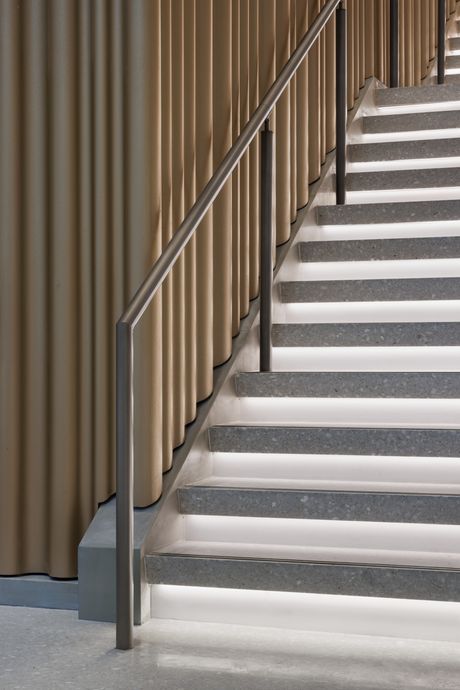
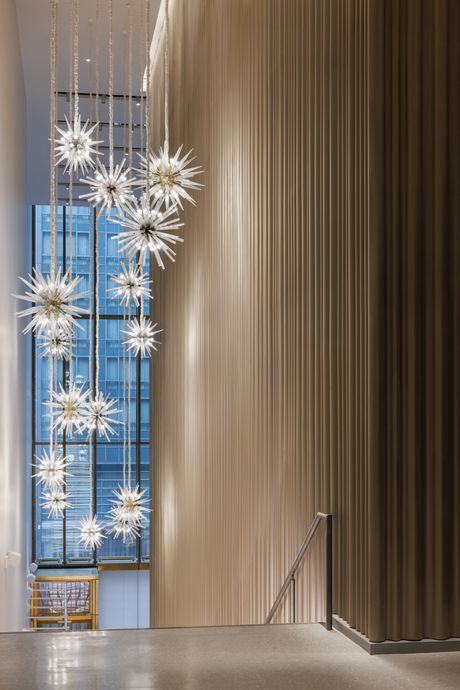
The corrugated gypsum rising up a staircase, lit by a Murano-glass chandelier. From left: Photo: Colin Miller/Courtesy BonhamsPhoto: Colin Miller/Courtesy Bonhams
The corrugated gypsum rising up a staircase, lit by a Murano-glass chandelier. From top: Photo: Colin Miller/Courtesy BonhamsPhoto: Colin Miller/Court… more
The corrugated gypsum rising up a staircase, lit by a Murano-glass chandelier. From top: Photo: Colin Miller/Courtesy BonhamsPhoto: Colin Miller/Courtesy Bonhams
But one of the main draws, for Bonhams, was frontage on 57th Street — a wall of glass that lets people know they’re here for everyone. “We always want to make you feel welcome,” says Chan. “We’re the approachable auction house, and we want to engage the public.” But the back of the building also makes the auction house slightly more approachable to a different slice of the public. Residents of 111 West 57th Street, the supertall upstairs, will have a private view, through tinted windows, into the original landmarked rotunda. They’ll also have VIP access to Bonhams events. And their port cochere, on 58th Street, will sometimes give them an early glimpse of the classic cars Bonhams is known for selling. When I ask if the idea is for a billionaire buyer upstairs to wander down and buy the Hermès in the rotunda’s case, Chan laughs at the image. It’s maybe too cartoonish. “We want everything to be beautiful and tasteful,” she says.
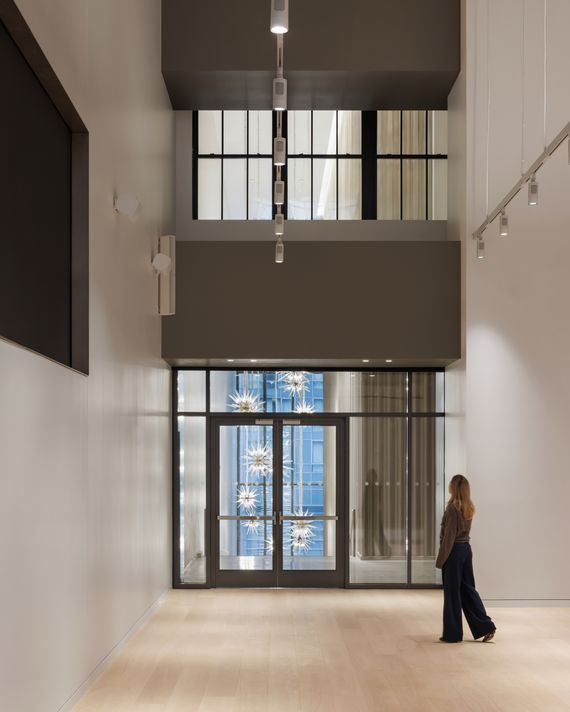
The grand staircase and central elevators drop guests at a rotunda that leads to the largest gallery.
Photo: Colin Miller/Courtesy Bonhams
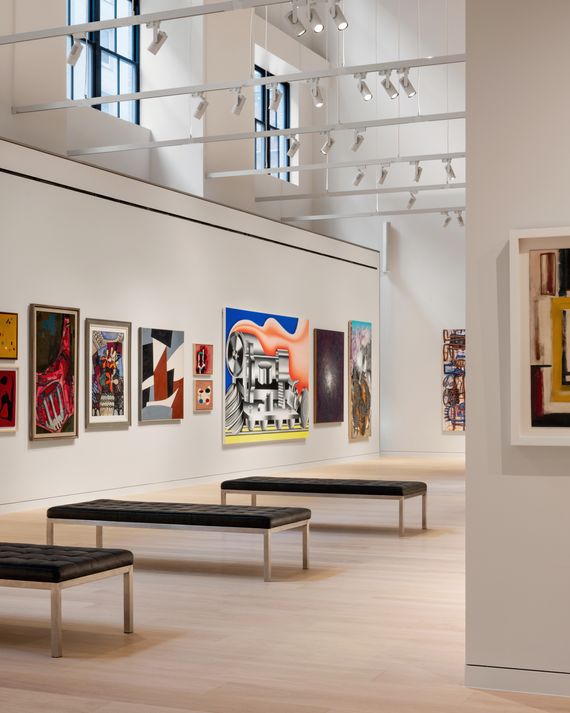
The main gallery, set up for an auction this week.
Photo: Colin Miller
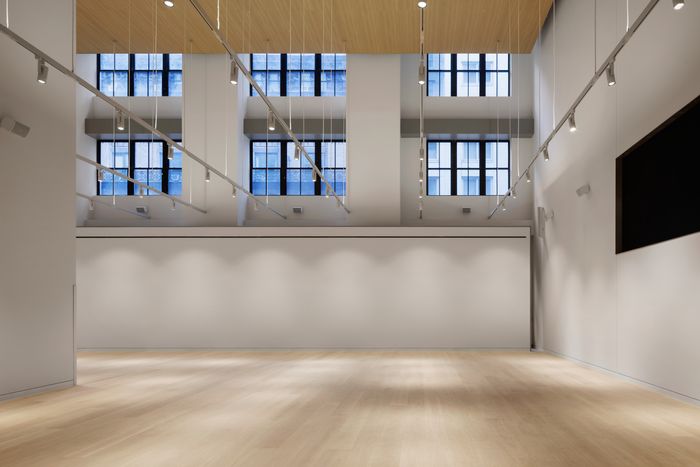
Carney, the designer, blocked some natural light with a wall in front of the 58th Street windows. Lights are quick to adjust, a requirement when work is cycling in and out quickly.
Photo: Colin Miller/Courtesy Bonhams
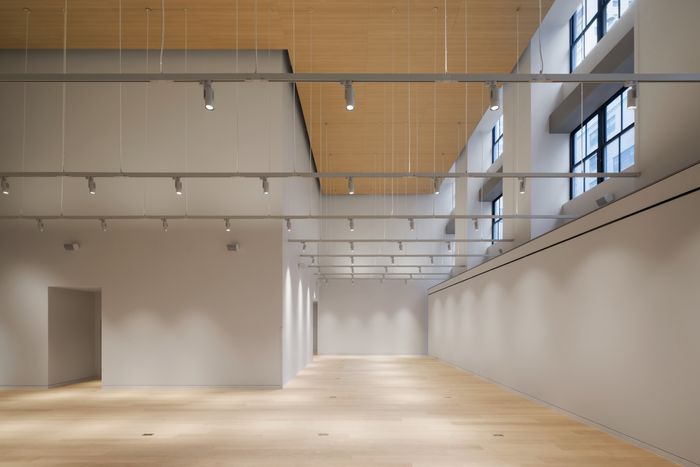
A hall in the back leads to rooms for meetings with specialists and art advisers that’s lined with velvet curtains.
Photo: Colin Miller/Courtesy Bonhams
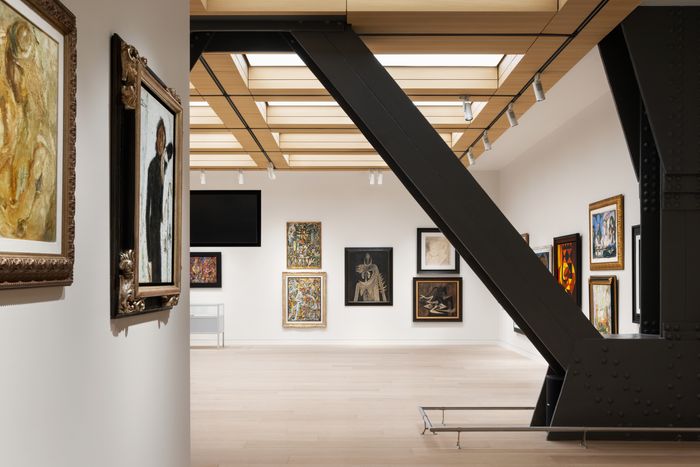
A smaller gallery space exposes the trestles above the Steinway reception rotunda.
Photo: Colin Miller
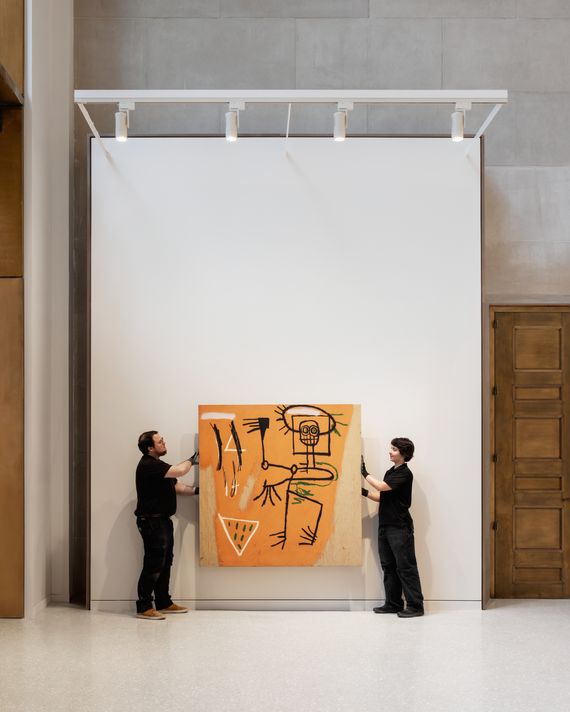
A Basquiat by the front window might catch the eyes of passerby.
Photo: Colin Miller
Sign Up for the Curbed Newsletter
A daily mix of stories about cities, city life, and our always evolving neighborhoods and skylines.
Vox Media, LLC Terms and Privacy Notice
Related