
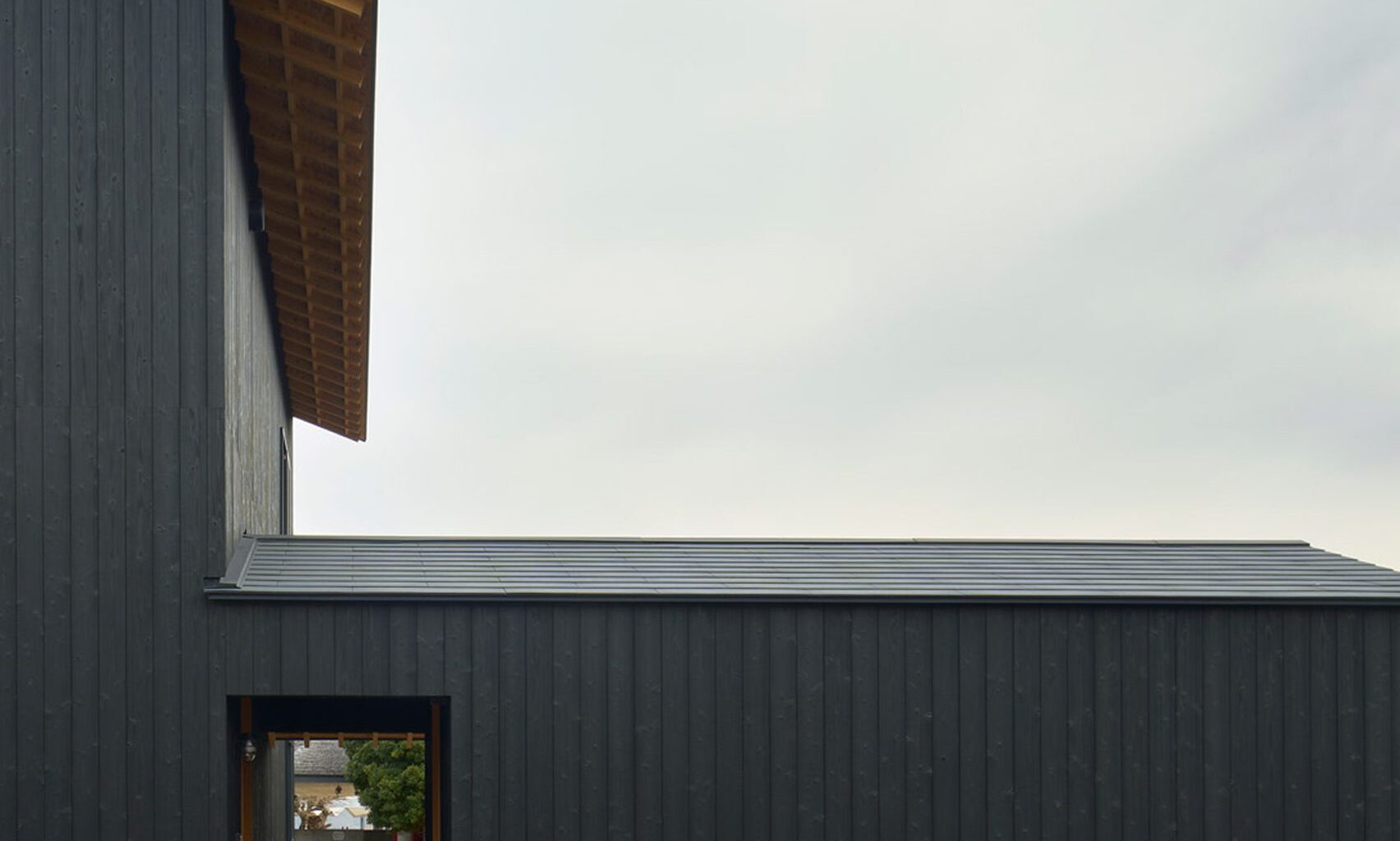
UK studio Denizen Works has exclusively revealed its first house in Japan, which features an almost entirely blank street-facing facade.
Named House in Onimichi, the charred-timber-clad house was designed to take advantage of its coastal site in southwest Japan, which overlooks the sea and nearby islands.
“The core concept for the project was to use the building to create a private sanctuary overlooking the sea and the Setonai islands beyond,” Denizen Works founder Murray Kerr told Dezeen.
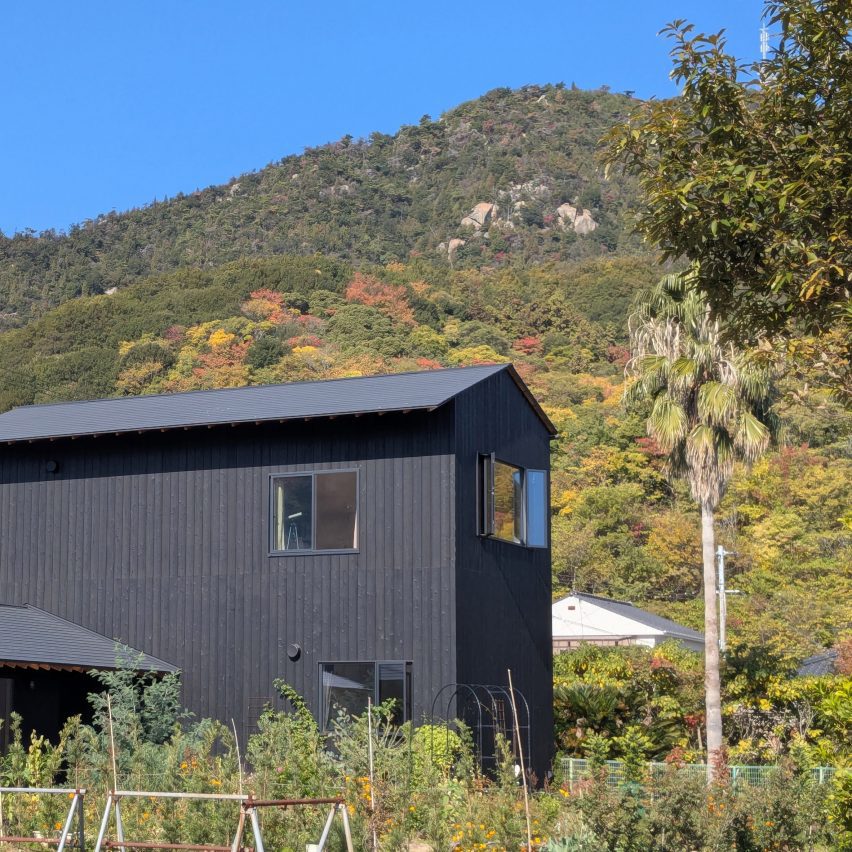 Denizen Works has completed House in Onimichi
House in Onimichi was designed to create a sense of privacy for the clients, who moved back to Japan from London for a calmer life, and references the arrangement of traditional Japanese homes.
A two-storey block contains the one-bedroom home, while a single-storey studio that extends from it was placed to partially enclose a small garden.
The connected structures are both accessed from a covered entrance walkway and unified by vertical, burnt-timber Yakisugi cladding.
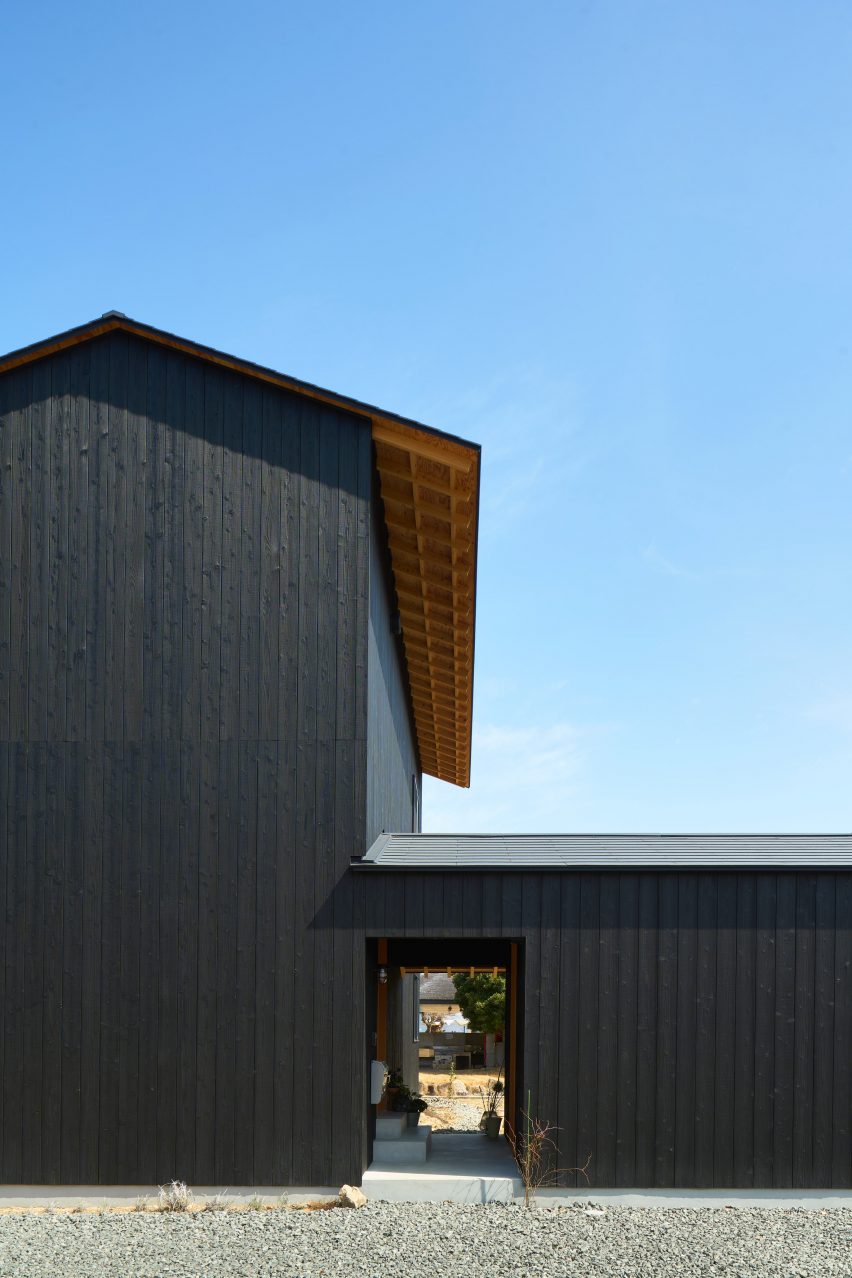 The house has an almost entirely blank street-facing facade
“The house is split between two traditional forms, that of the Omoya – main house – and the Hanare – annexe – which in this case represents the split between work and home,” Kerr explained.
“It was designed to create privacy and enhance the sense of enclosure.”
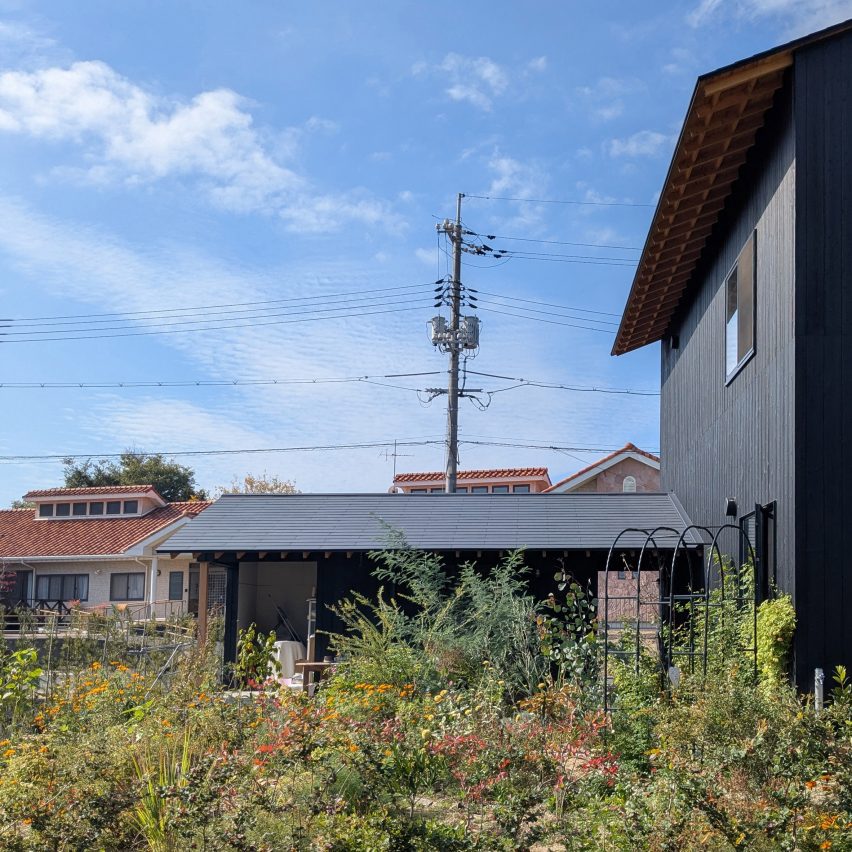 The house and studio partially enclose a small garden
To add to this sense of privacy and create an air of mystery, the home’s street-facing facade has no windows, broken only by the covered entrance.
“Placing the entrance in an entirely blank facade gives the house an enigmatic quality, ensuring the private setting remains private to the owners of the house and those lucky enough to be invited over the threshold,” explained Kerr.
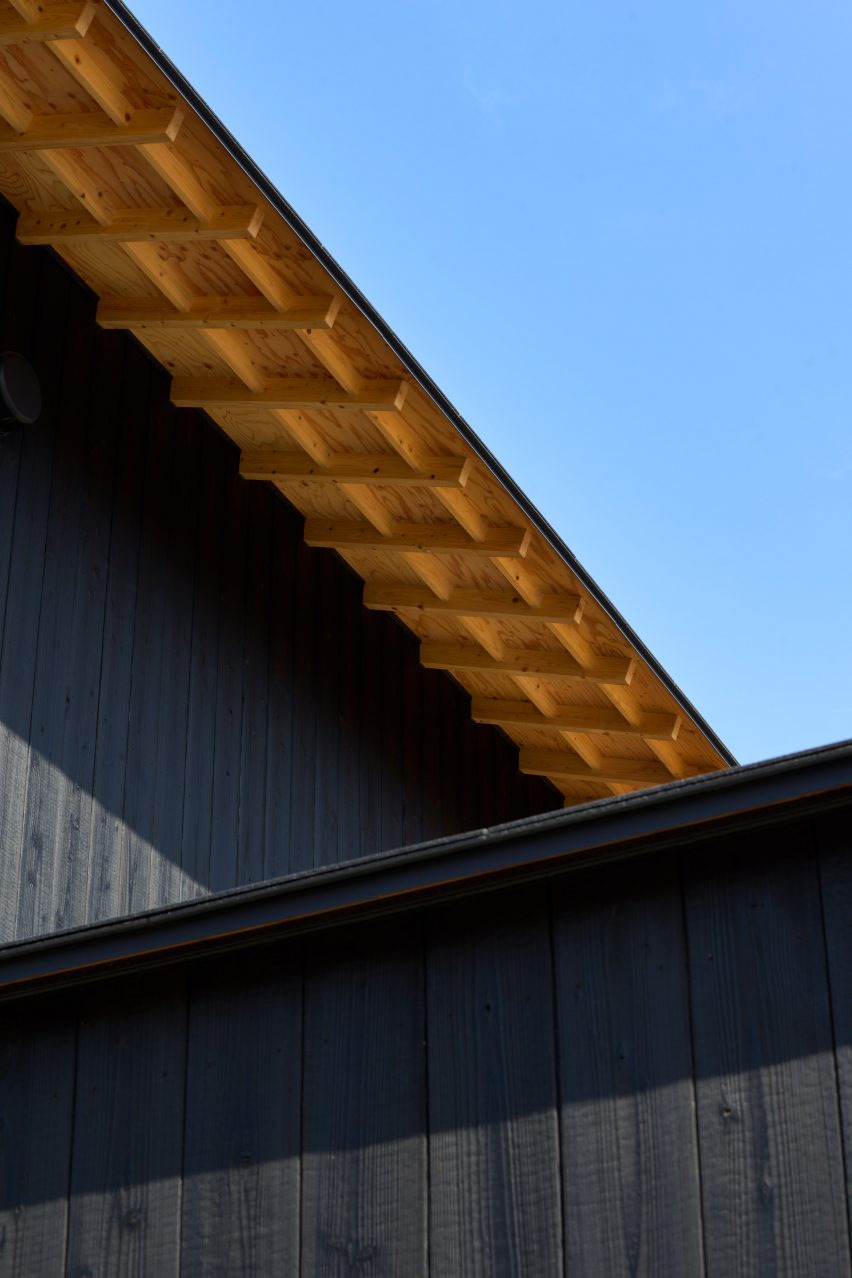 Many of the construction details were developed by Take Architects
Within the house, the bedroom and bathroom are on the ground floor, while the entire upper level contains an open-plan kitchen and dining room.
This space was designed to take advantage of the sea views, with windows arranged at different heights to ensure sightlines when sitting on the floor or using western seating.
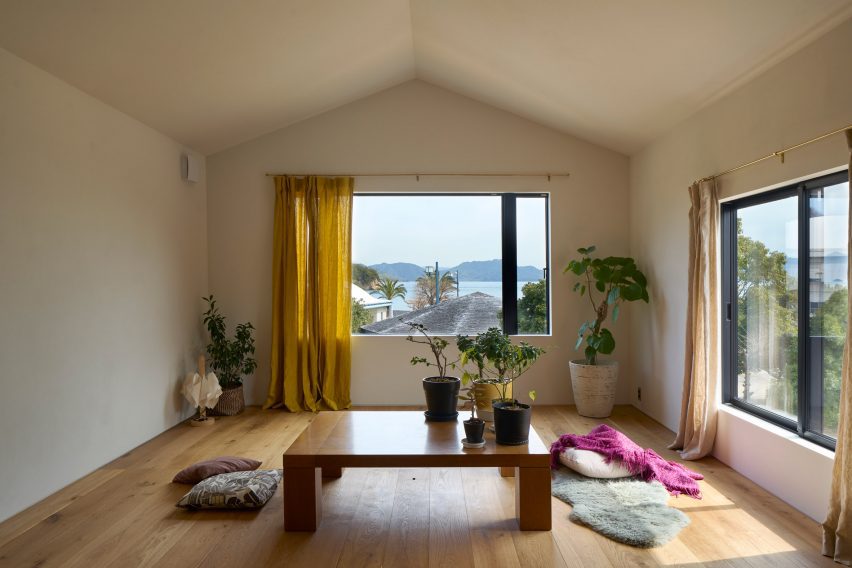 The windows in the living space have different heights
The building is Denizen Works’s first house in Japan and it was created in collaboration with Hiroshima-based Take Architects, which took the lead on many of the construction details.
It combines the studio’s own broad knowledge with traditional Japanese forms and craft.
“One needs to be careful trying to reinterpret traditional forms, but the development of the idea stemmed from a desire to create a functional studio on the ground floor that forms an interpretation of the traditional doma,” said Kerr.
“Beyond that, we played with the cross-pollination of our clients, fusing east and west habits with windows that respond to whether you might be sitting on the floor, on a sofa or at a table.”

Denizen Works creates house with “a sense of drama” overlooking Scottish loch
According to Kerr, the studios utilised the proportions seen in typical British dwellings while employing Japanese construction methods.
“We approached the spatial arrangement using dimensions and proportions typically seen in our dwelling designs in the UK, whilst embracing the Japanese traditional timber frame construction where the structural grid is based on the tatami size modules,” Kerr explained.
“This has created an atmosphere of both difference and familiarity in what seems at first to be very simple architecture.”
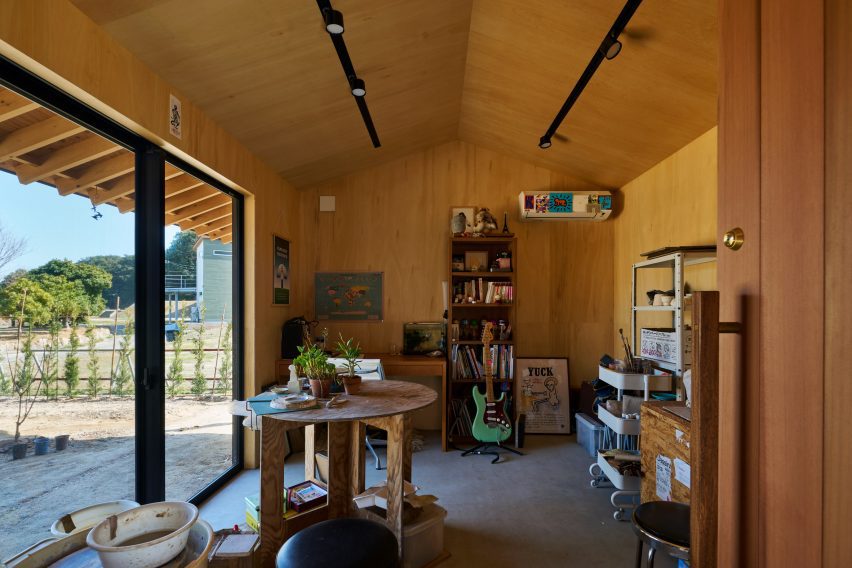 The studio overlooks the garden
According to Kerr, the house has already become accepted by the local community as “a popular neighbour” and continues the studio’s own thread of intriguing houses, which includes a contemporary castle-like dwelling in Scotland.
“The house reflects our ongoing development of projects that try and push a sense of experience beyond that of the realms of a typical house,” he said.
“The sculptural form of the house, its elemental nature and the lack of openings on the street help create a feeling of personal privacy reflecting our clients’ aspirations,” he continued.
“This simple approach, combined with our embrace of local construction techniques, has resulted in a house that, like all community-minded denizens, has become naturalised in its habitat.”
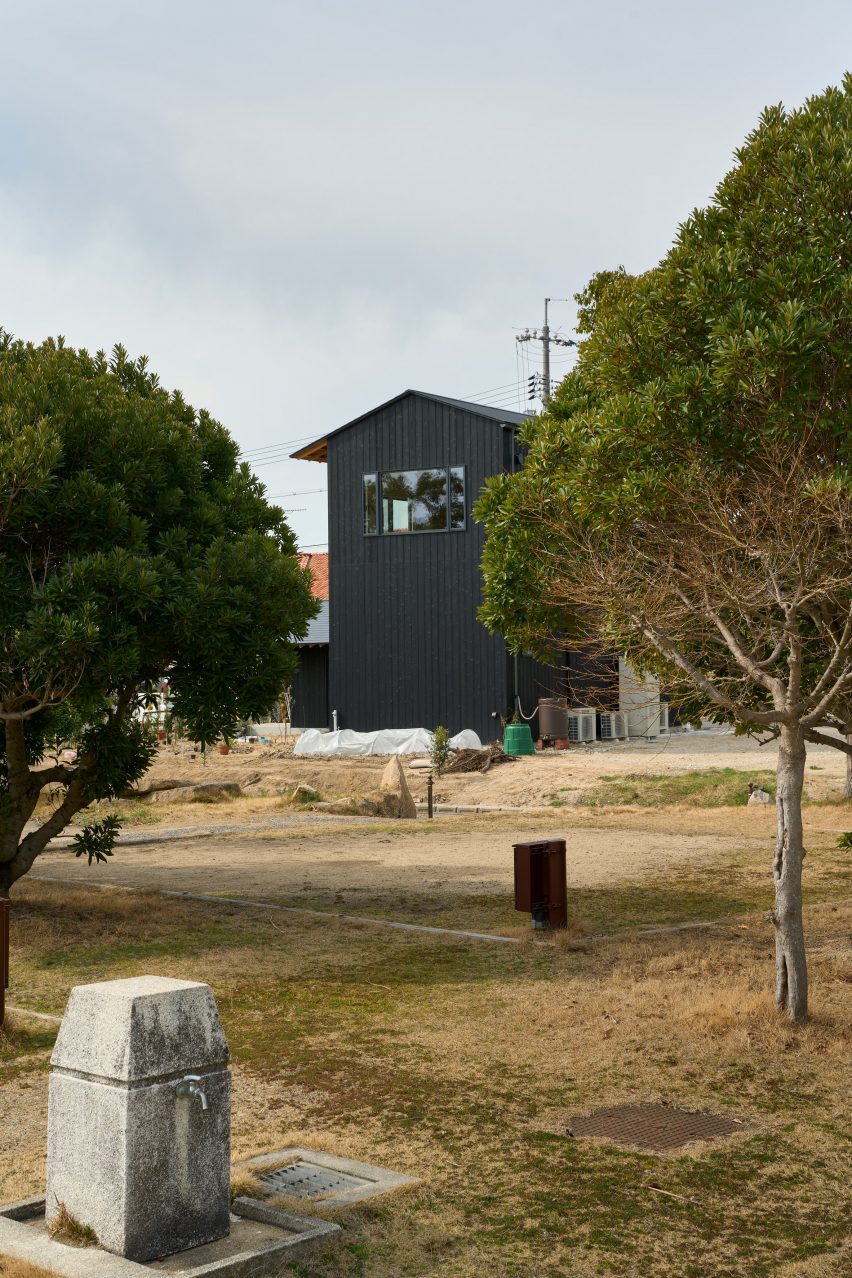 It is Denizen Works’s first project in Japan
Founded in 2011 by Kerr, Denizen Works is an architecture studio with offices in London and Glasgow.
Other recently completed projects by the studio include the Floating Genesis church, which is crowned by a pop-up roof, and a house on the Scottish island of Tiree with a gable-shaped glass wall.
The photography is by Yano Toshiyuki.
Project credits:
Architect: Denizen Works
Local architect: Take Architects
Structural engineer: Satoshi Horie
Contractor: Daiwa Kensetsu