
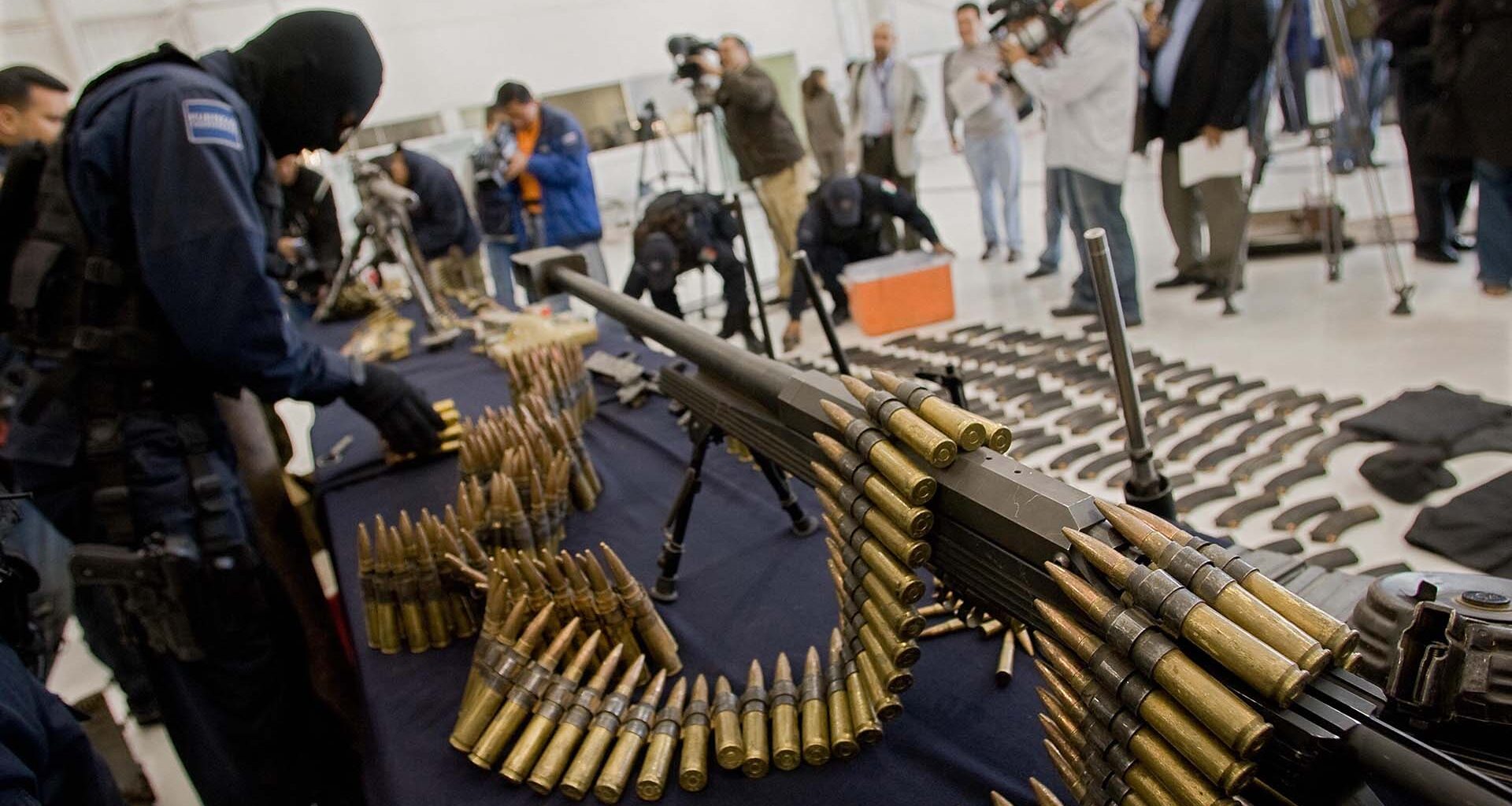
A United States Army ammunition plant was the source of almost half of all the .50-caliber rifle rounds seized by Mexican authorities over more than a decade, the country’s defense minister told reporters Tuesday, after an investigation by the ICIJ and media partners revealed how the powerful ammunition has been used by Mexican drug cartels in attacks on the government and civilians.
“According to the records we have,” Defense Minister Gen. Ricardo Trevilla Trejo said during a presidential news conference, “137,000 cartridges have been seized since 2012. Of those, 47% come from that company and have been sold in gun shops in the southern United States,” referring to the Lake City plant.
The sprawling, government-owned facility, which is located outside of Kansas City, Missouri, is the largest manufacturer of rifle rounds for the U.S. military and has been a major supplier of ammunition to American consumers for over two decades.
Agreements between the U.S. Army and the private contractors that run Lake City have allowed .50-caliber ammunition and components made at the plant to enter retail markets and fall into the hands of Mexican cartels, according to millions of pages of court documents, seizure records and government data obtained by ICIJ and its partners.
That has included armor-piercing incendiary rounds, which the public has been able to purchase despite efforts by the U.S. Congress to stop the Pentagon from transferring them to civilians.
Investigative records obtained by ICIJ and partners showed that Mexican authorities found cartridges inscribed with Lake City’s initials, “L.C.”, following at least four attacks carried out by criminal organizations in Mexico. The incidents included the massacre of 13 policemen in the state of Michoacán and an attack on the town hall in the small village of Villa Unión, where four police officers, two civilians and 19 cartel members were killed.
Mexican authorities have long lamented that the illegal flow of firearms from the U.S. to Mexico has been a major contributor to violence in the country, empowering cartels to wage military-style attacks on authorities.
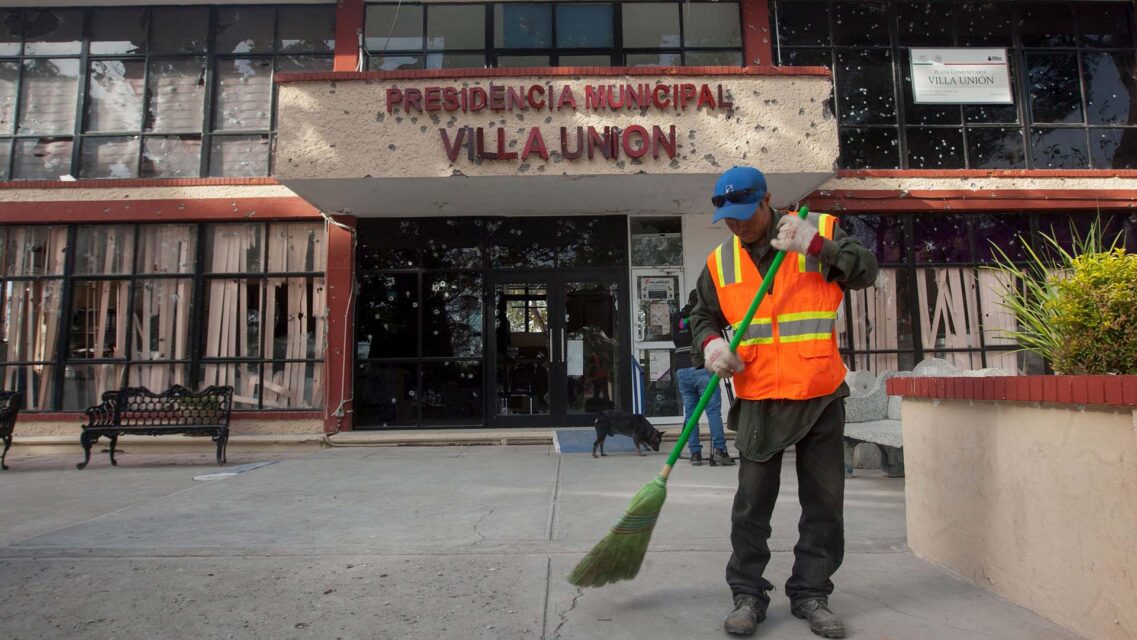
A man sweeps outside the Municipal Presidency in Villa Unión, Coahuila state, Mexico, on December 2, 2019, after an armed attack on the town which left multiple people dead. Image: Julio Cesar Aguilar/AFP via Getty Images
As of spring 2022, .50-caliber guns had been used in at least seven attacks on Mexican military and police helicopters, according to an ATF briefing at that time.
The Mexican government has seized 18,000 firearms under President Claudia Sheinbaum, who took office in late 2024, Trevilla Trejo said. Of those, 78% originated in the U.S.
They included 215 .50-caliber rifles. The guns, which are nearly five-feet long and weigh around 30 pounds and have limited civilian application, can be bought in gun shops around the U.S.
They have become popular among Mexican cartels, who have used them to down helicopters, assassinate government officials, shoot at police and military forces and massacre civilians, killing at least 121 people in 87 attacks since 2003, according to an ICIJ count based on news stories, academic studies and government records.
While the trafficking of guns into Mexico from the U.S has been widely reported, less is known about the millions of rounds of ammunition experts say are flowing across the southern border each year. In the U.S., there are virtually no federal restrictions on the purchase of ammunition by American citizens and legal residents.
GIVE TO HELP US INVESTIGATE!
Help us fight corruption, injustice and inequality with just $25/month.
The Army has long required Lake City’s operators to ensure the plant can produce up to 1.6 billion rounds of ammunition a year. In exchange, the contractors running the facility have been allowed to use its excess production capacity to make ammunition for sale to foreign governments, law enforcement agencies and the general public. The Army says that the arrangement saves taxpayers around $50 million a year.
Successive U.S. administrations have pledged to crack down on the flow of firearms to Mexico. In September, Secretary of State Marco Rubio announced a new initiative with the Mexican government to stop the trafficking of guns and ammunition to the country.
In June, the U.S. Supreme Court blocked a lawsuit by the Mexican government against gunmakers which accused the companies of not doing enough to keep their guns away from cartels. A second lawsuit against gun dealers in Arizona is ongoing.
In comments on Monday, Sheinbaum said that she was reviewing the investigation by ICIJ and its partners and planned to ask the U.S. government, “how it is possible that these weapons, which are for the exclusive use of the United States military, are entering Mexico.”