
Image credit: CreateAR Images
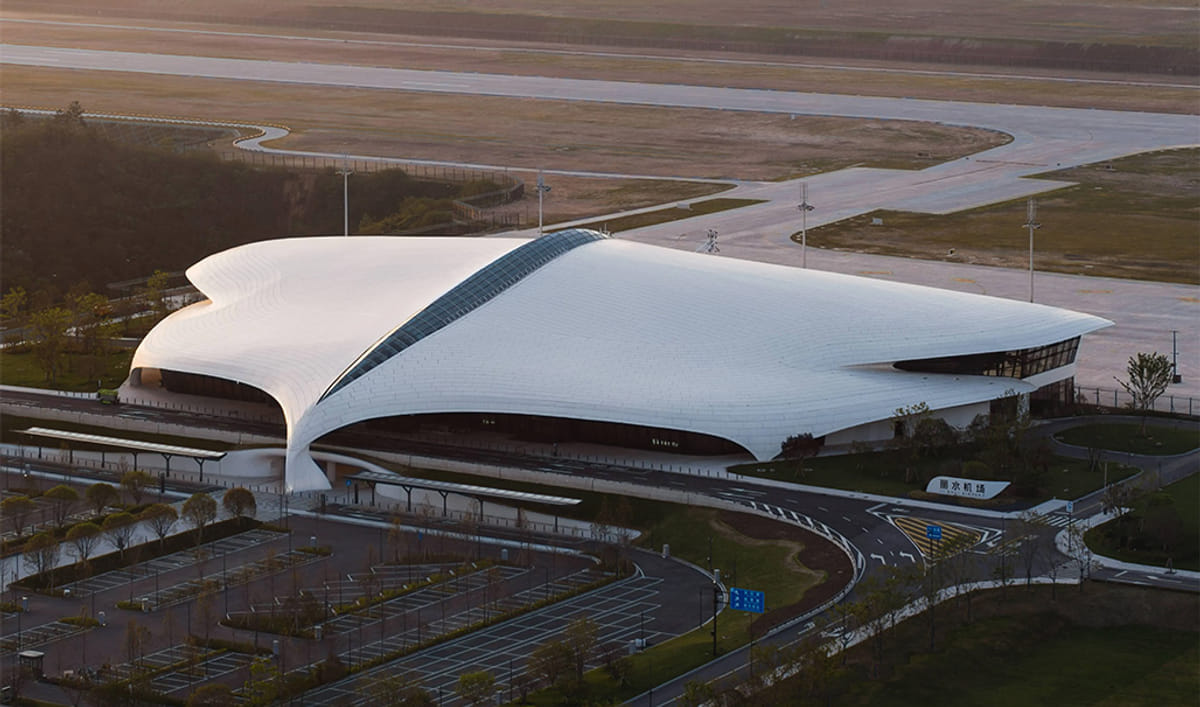
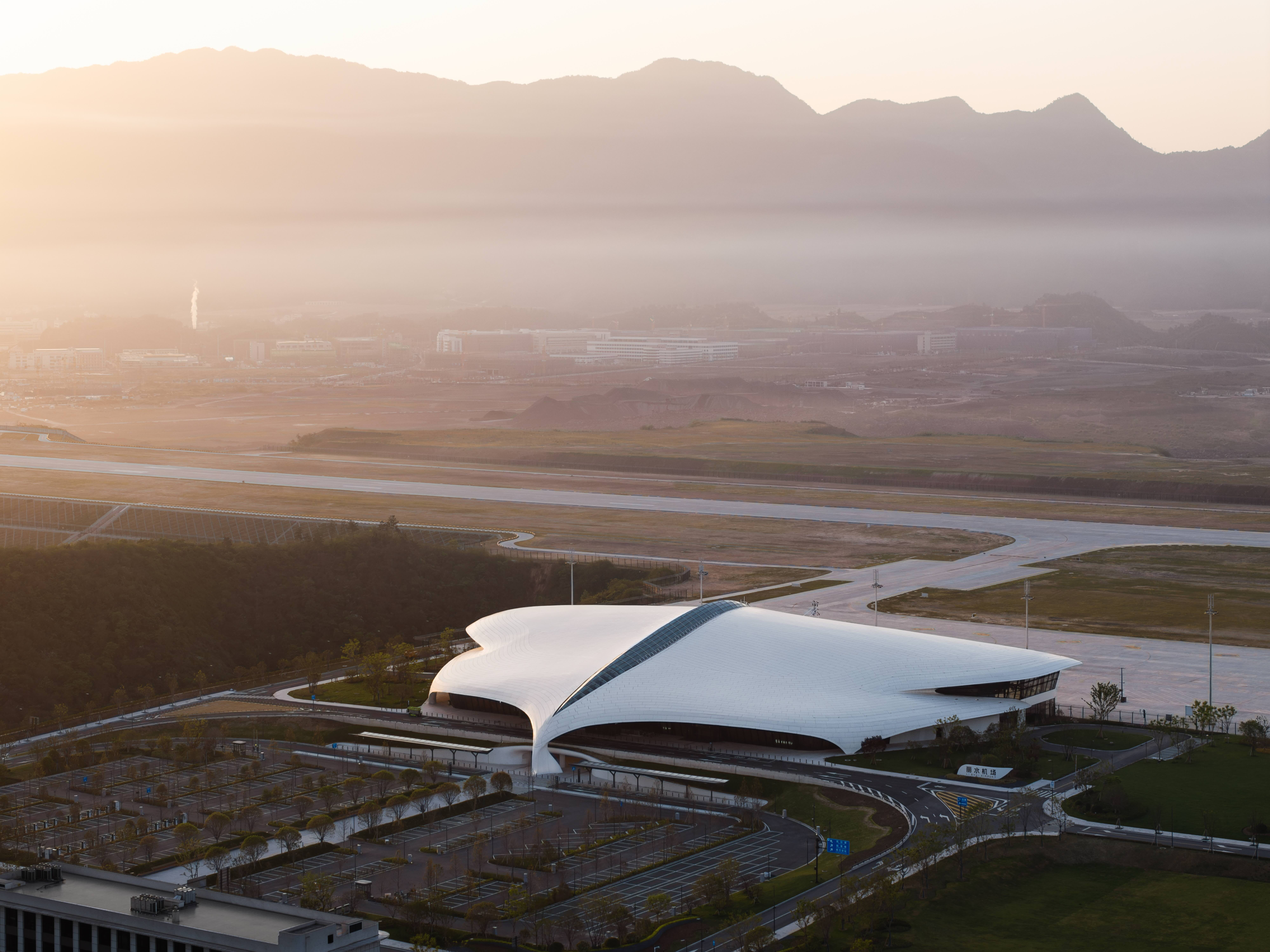
MAD Architects has completed the Lishui Airport in eastern China. Initiated in 2008 and completed after 17 years of planning and construction, the scheme is located southwest of Lishui city, within a low mountain and foothill valley formed through extensive land reclamation. As a result, construction required major earthworks, with cut-and-fill differences of up to 300 feet in certain areas.
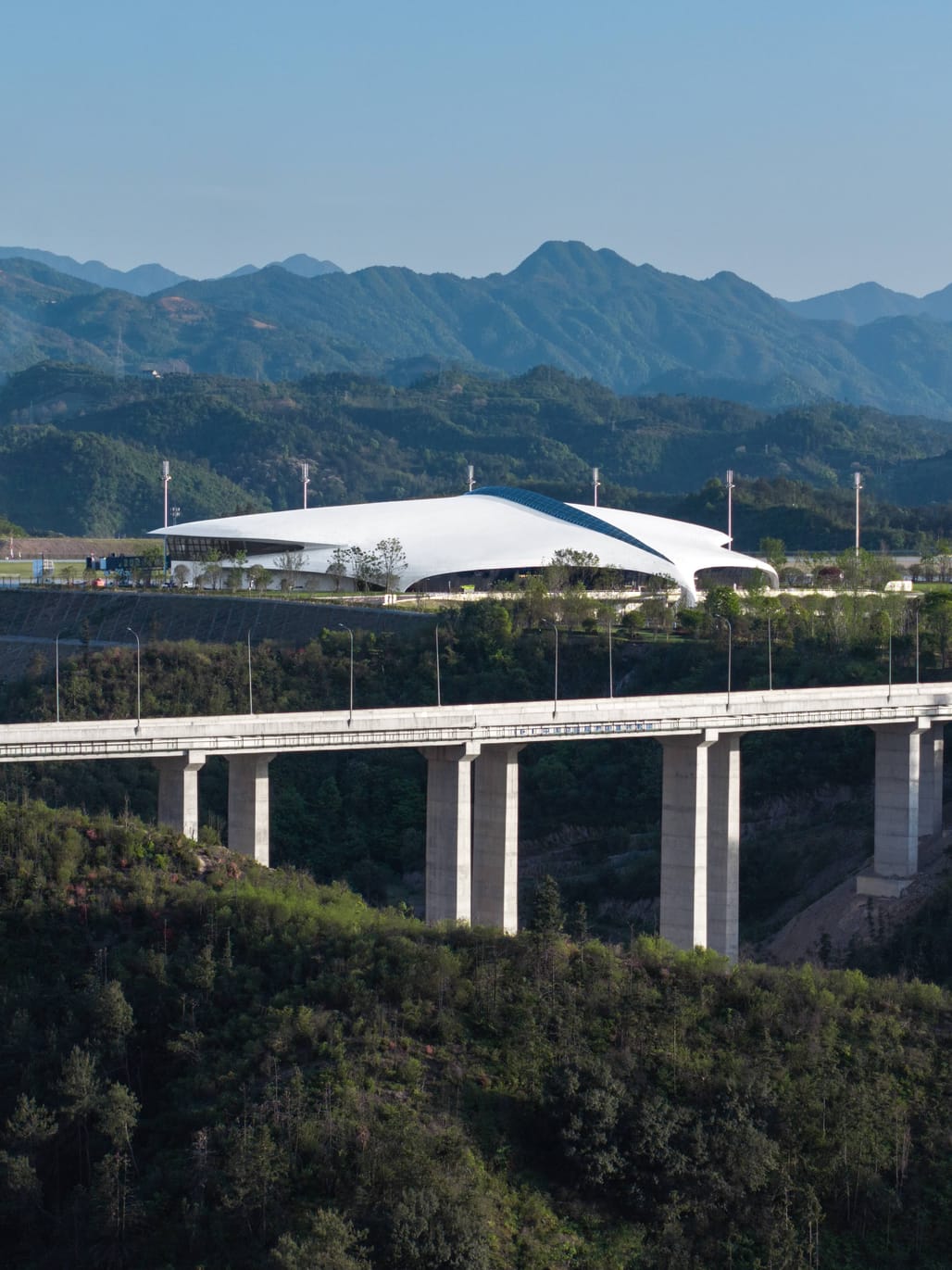
Image credit: Din Junhao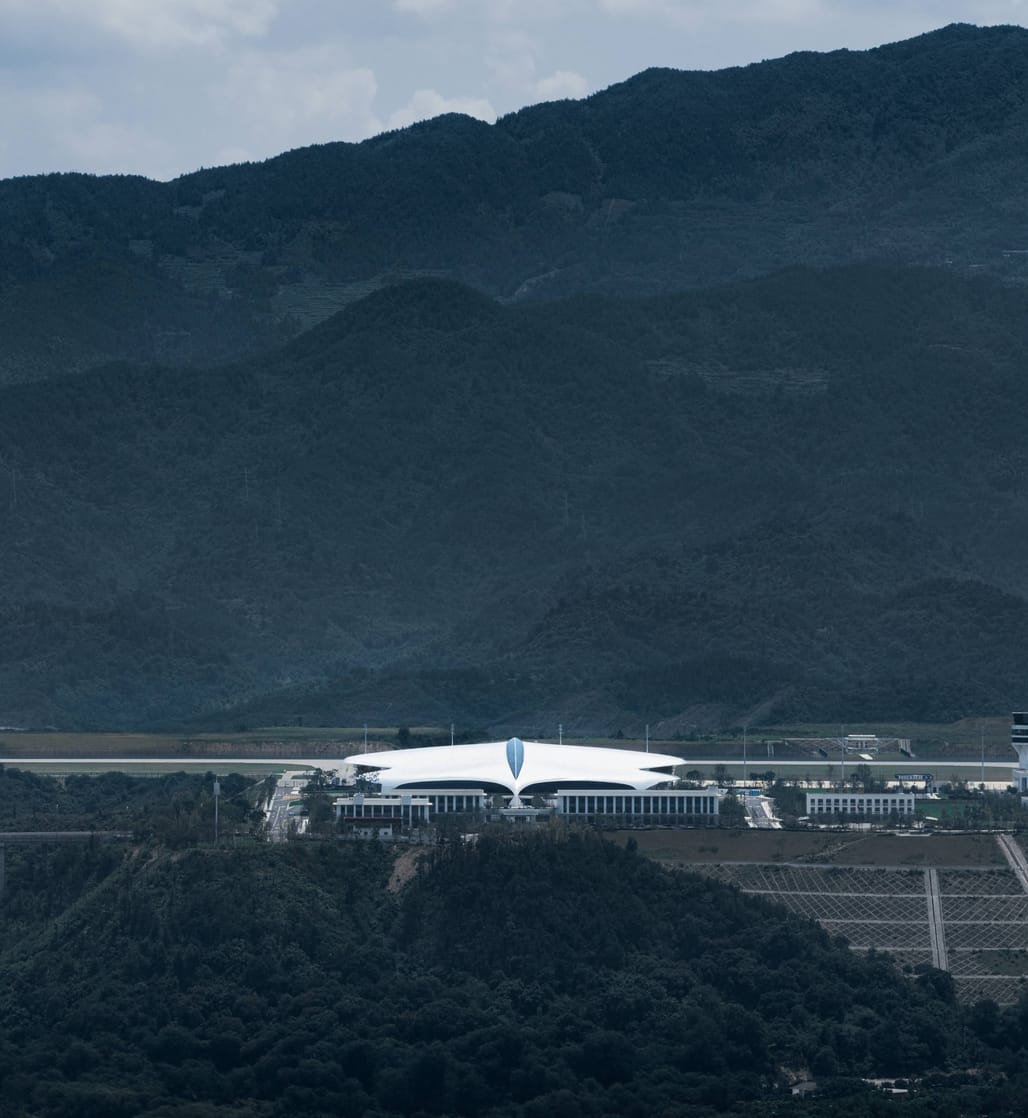 Image credit: CreateAR Images
The terminal building spans a floor area of approximately 120,000 square feet and includes eight aircraft parking bays. In its initial phase, the airport is designed to accommodate up to one million passengers annually, with a projected cargo throughput capacity of 4,000 tons.
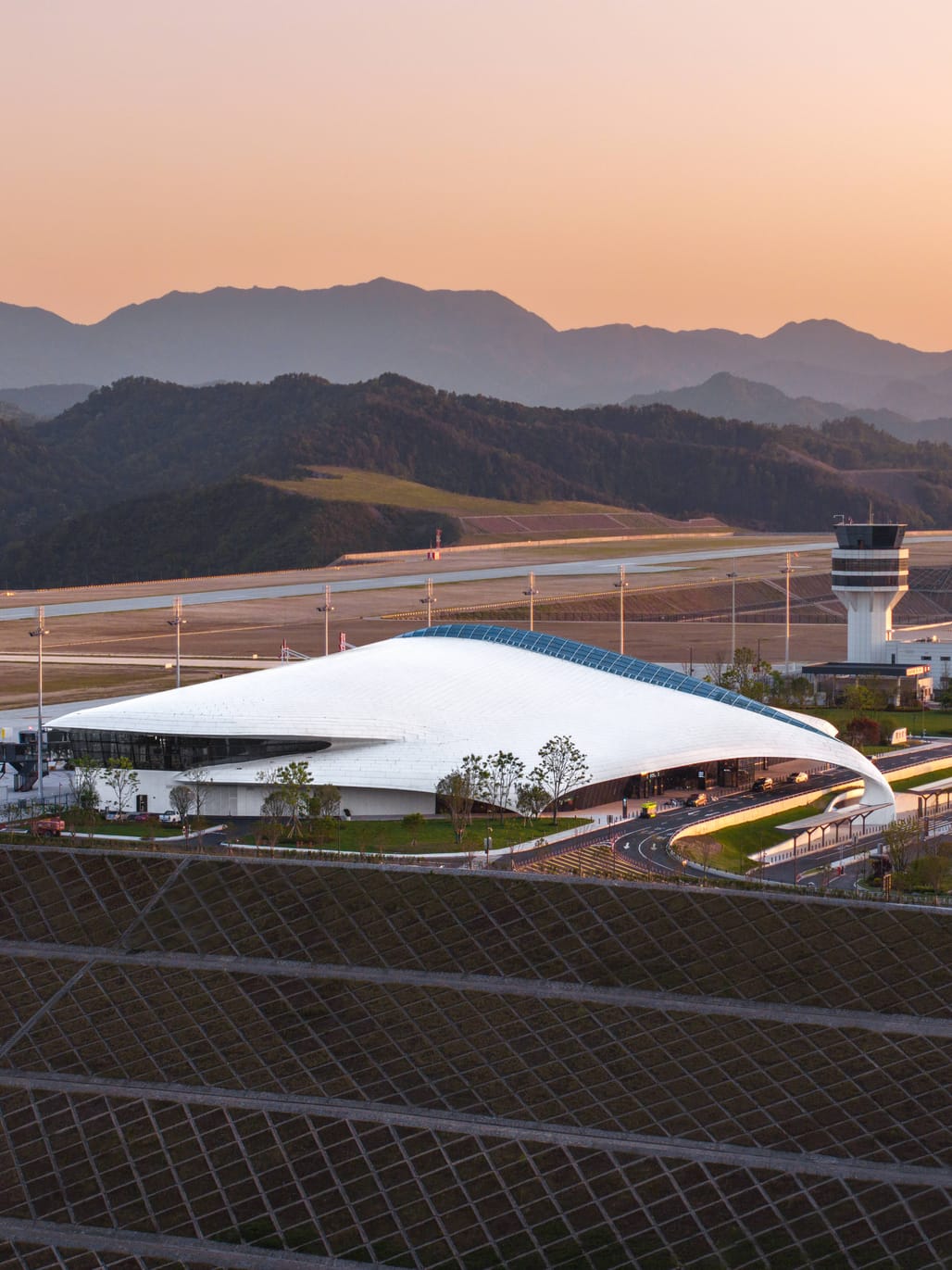
Image credit: Din Junhao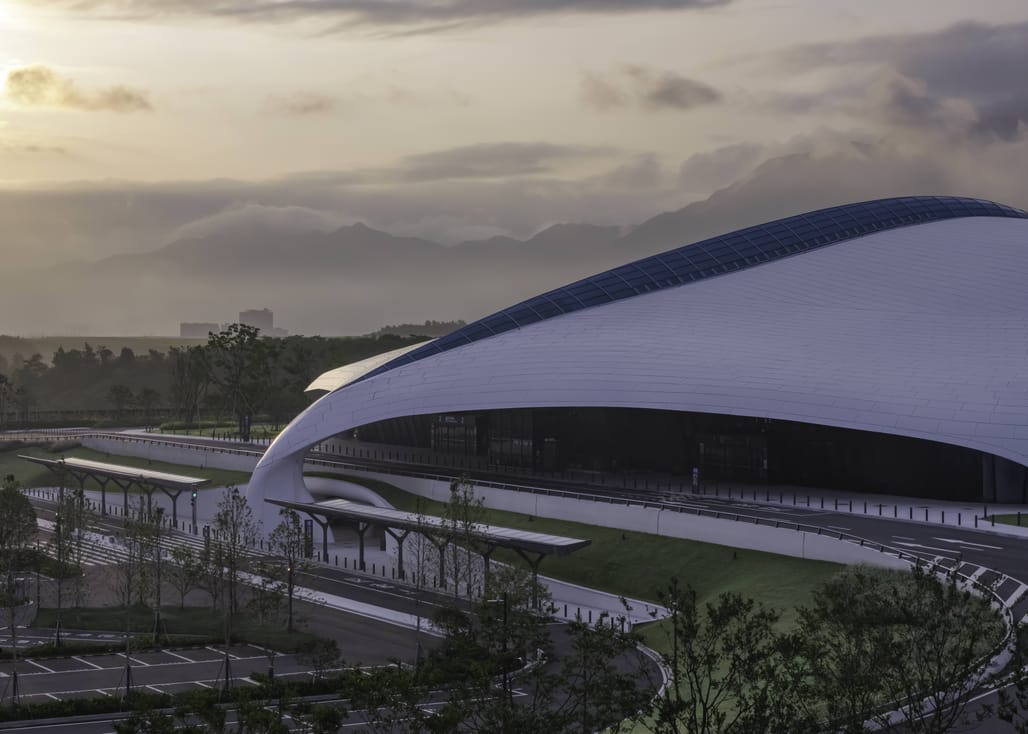 Image credit: blackstation
The design of the scheme responds closely to the surrounding landscape. The terminal follows the site’s natural contours, with a gently sloping form intended to integrate with the terrain. A double-layered roof clad in silver-white aluminum panels defines the building’s silhouette, supported by 14 umbrella-shaped structural columns. At the roof’s apex, a spindle-shaped skylight introduces daylight into the interior spaces.
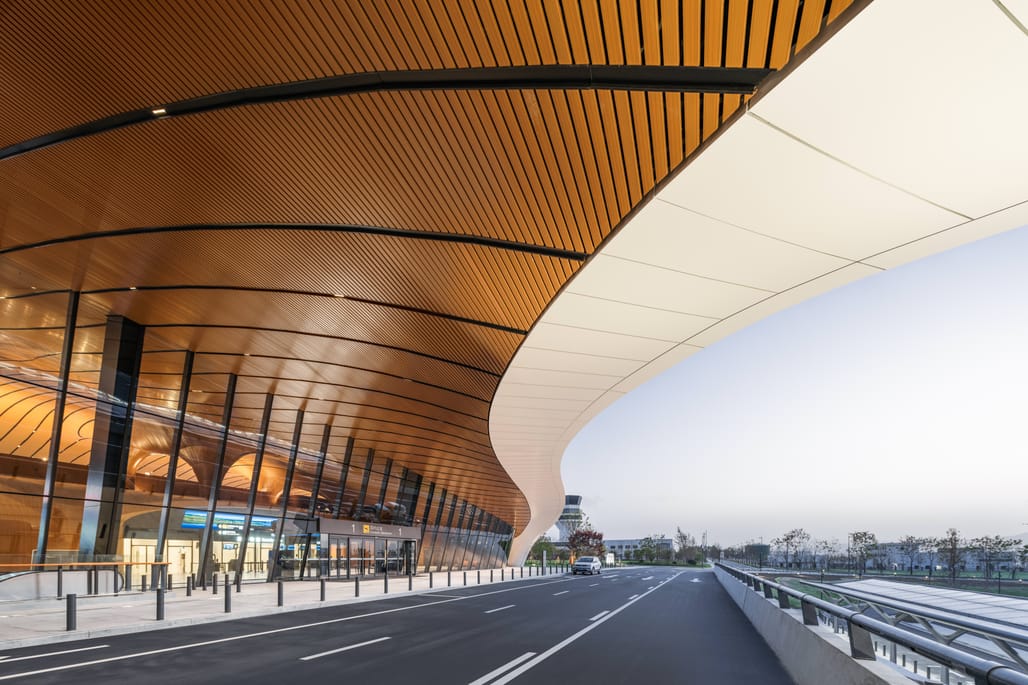
Image credit: CreateAR Images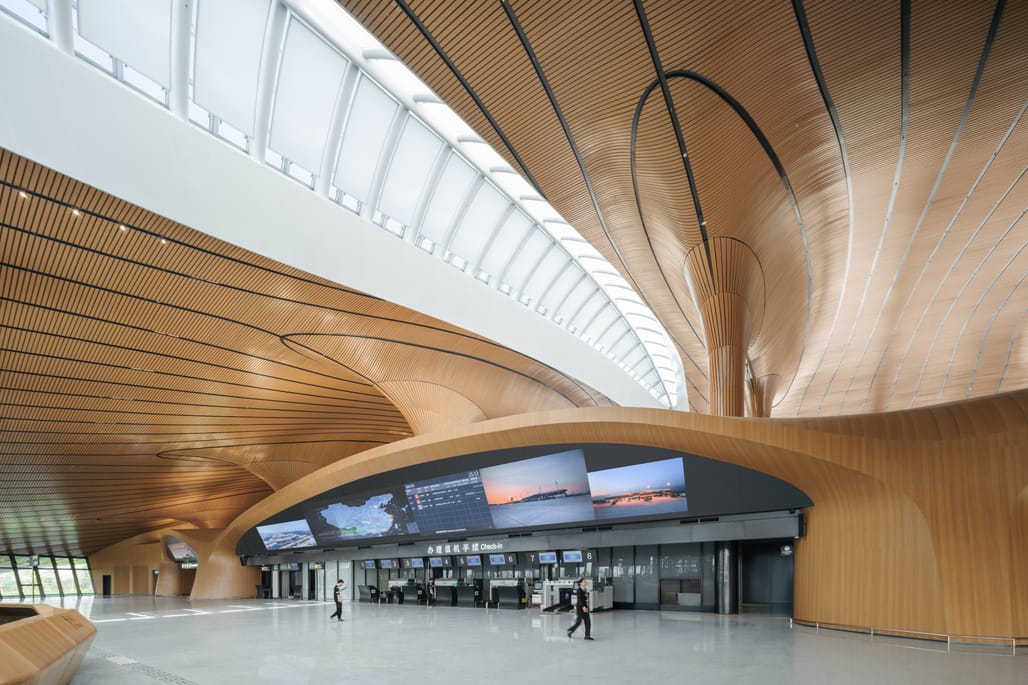 Image credit: CreateAR Images
Internally, the terminal is organized using a compact one-and-a-half-story sectional strategy. A double-height entrance hall connects ground-floor arrivals with the upper-level departure lounge, supporting efficient passenger circulation and visual continuity. Floor-to-ceiling curtain walls frame views of the surrounding mountains, while varying ceiling heights and integrated acoustic treatments contribute to a more controlled interior environment.
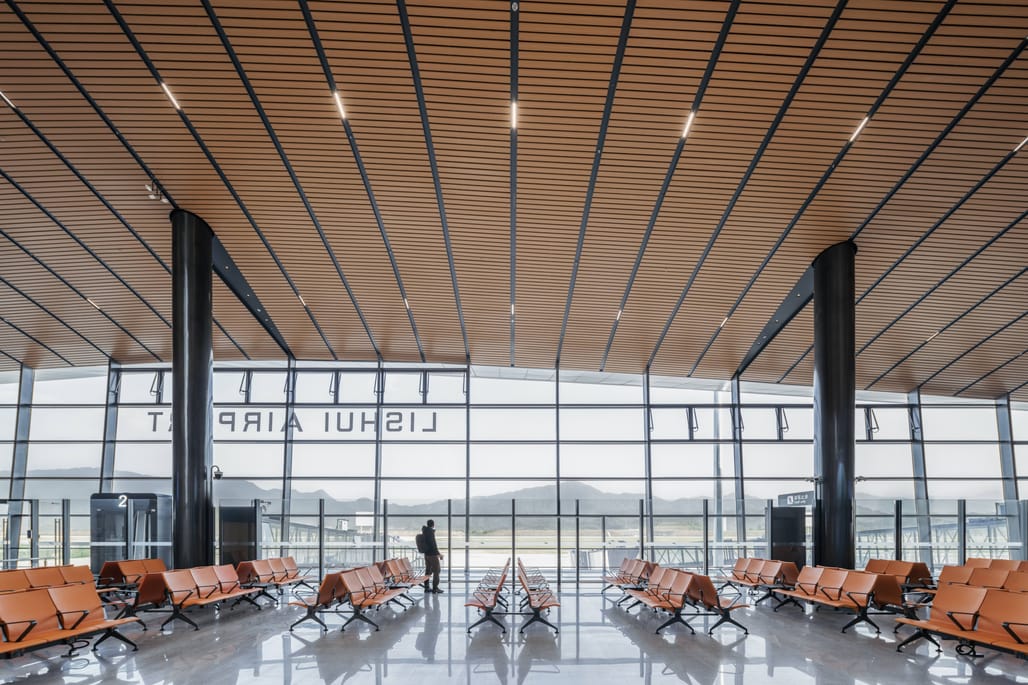
Image credit: CreateAR Images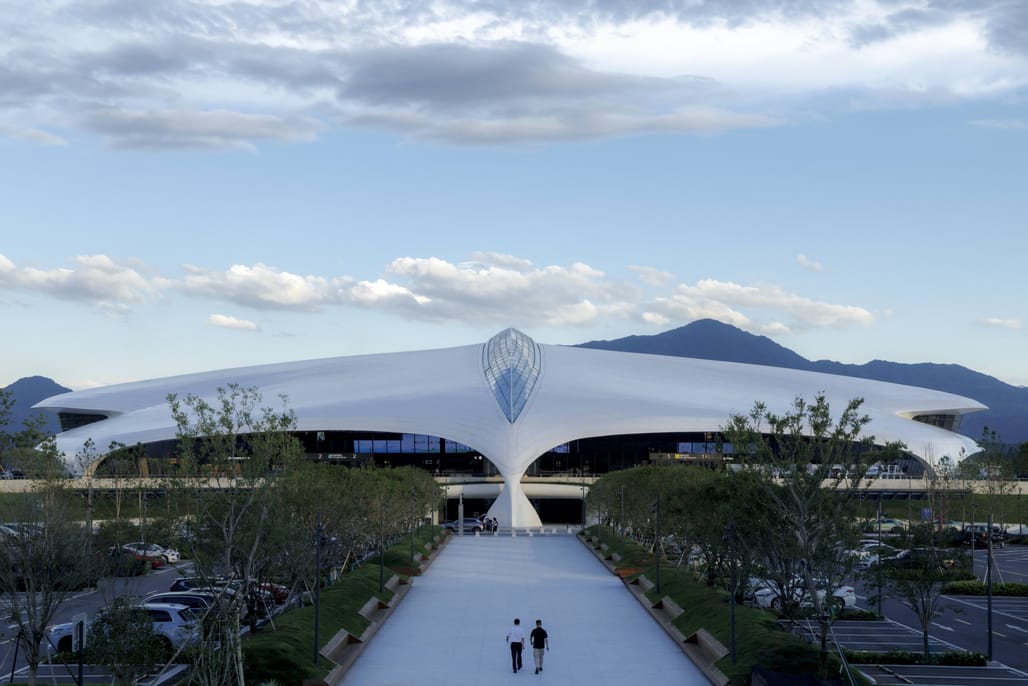 Image credit: Arch Exist
Below the terminal, a sunken parking structure follows the natural terrain. A landscaped central promenade runs beneath the building, guiding passengers toward the departure hall. The design allows for future expansion, with long-term plans projecting passenger capacity to reach 1.8 million by 2030 and up to 5 million by 2050, including provisions for an international terminal.
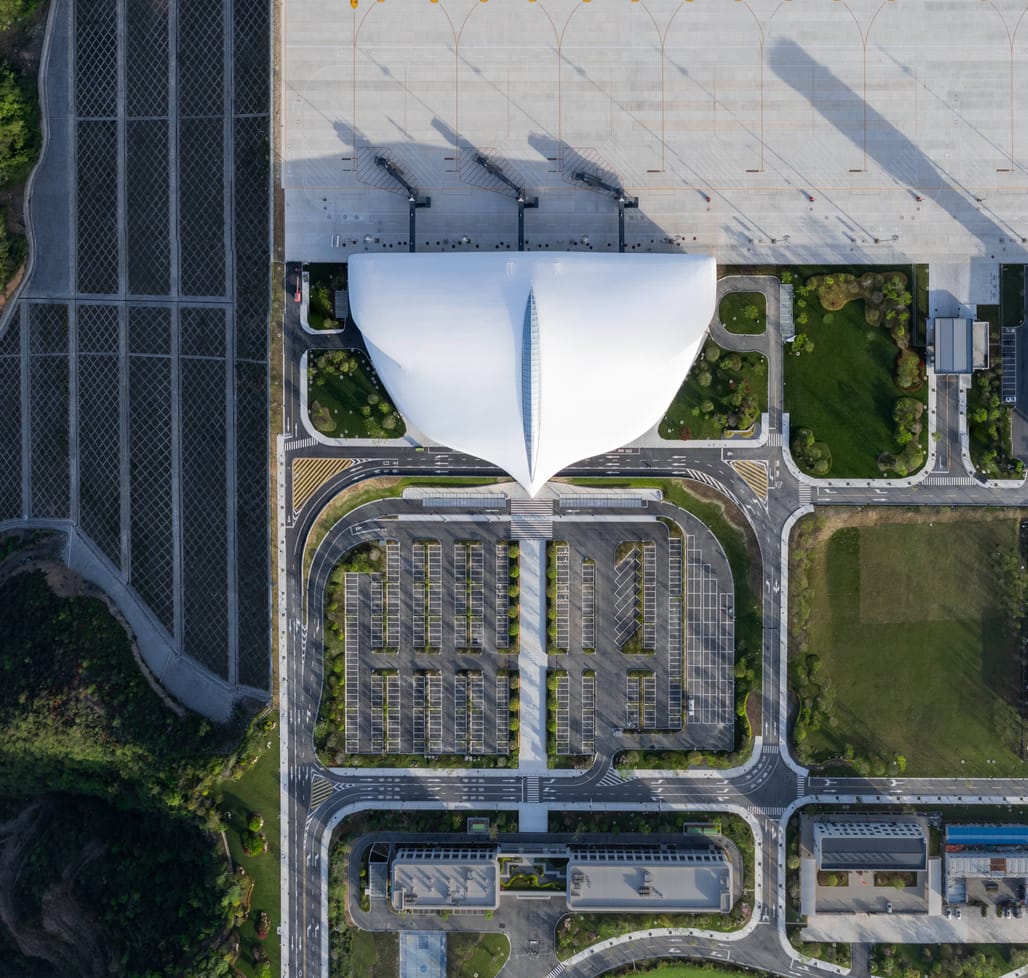 Image credit: CreateAR Images
“We used materials with warm tones and natural textures to create a bright and airy interior,” MAD founder Ma Yansong said about the scheme. “By adopting a one and a half story layout, the airport remains compact, while supporting daily comfort and engaging in a dialogue with nature.”
Similar articles on Archinect that may interest you…