
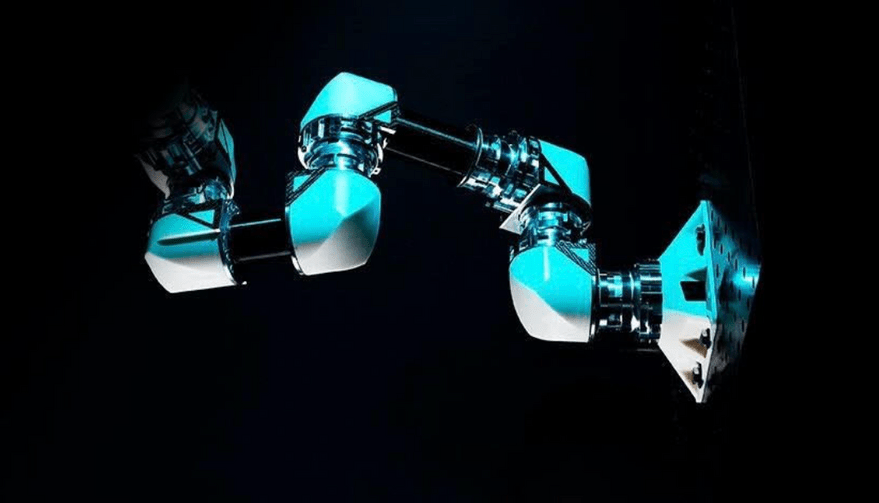
SAN FRANCISCO – Spaceium, a startup planning to establish a network of in-space refueling and repair stations, demonstrated the actuator for its robotic arm in space.
Extensive testing of Spaceium’s actuator, which flew on Transporter-15, the SpaceX Falcon 9 rideshare launched in November, confirmed its accuracy.“We tested the actuator first, because our technology revolves around how precisely we can transfer fuel,” Ashi Dissanayake, Spaceium co-founder and CEO, told SpaceNews.
“Our refueling actuator achieved a verified 0.003 degree rotation accuracy in orbit,” Dissanayake said. “When paired with a [five-meter] robotic arm, that level of precision would translate to less than a millimeter of movement at the far end. That degree of control has never been demonstrated in space before.”
Spaceium, founded in 2023, is a U.S. company with a Canadian subsidiary. After completing the Y Combinator startup accelerator in 2024, the startup raised $6.3 million in a 2025 seed round.
“In just five months, two founders built and flew the most precise robotic actuator ever tested in orbit – over 70x more accurate than the robotic arms currently operating in space,” Spaceium said in a Feb. 10 blog post.
A second Spaceium mission is scheduled to fly later this year. And within two to three years, Spaceium will be operating the first of a network of refueling stations in multiple orbits,” Dissanayake said.
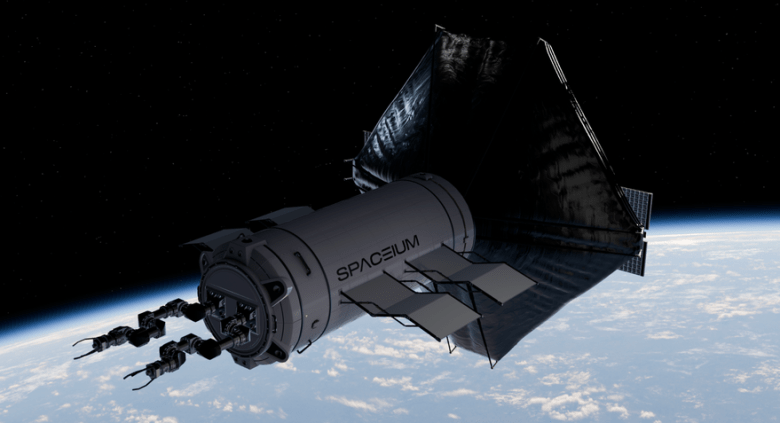 Render of Spaceium’s vehicle for in-orbit refueling and repair of spacecraft. Credit: Spaceium
Competitive Pricing
Spaceium seeks to offer an inexpensive option for orbital transfer vehicles and spacecraft destined for the moon or Mars. Spacecraft will travel to Spaceium stations in low-Earth orbit to obtain cryogenic or noncryogenic fuel to extend their range.
“We can store from 10 metric tons to 30 metric tons for up to 10 years in orbit,” Dissanayake said. “Because of that our prices are really competitive in the industry.”
Longer-term Spaceium stations will offer spacecraft inspection and repair.
“But that’s obviously not something we are focusing on right now, because refueling is a huge market and we want to tackle that first,” Dissanayake said.
Related