
CLEVELAND, Ohio – This week marks a golden era on the airwaves in Cleveland, a time that would be fleeting but also pivotal for radio.
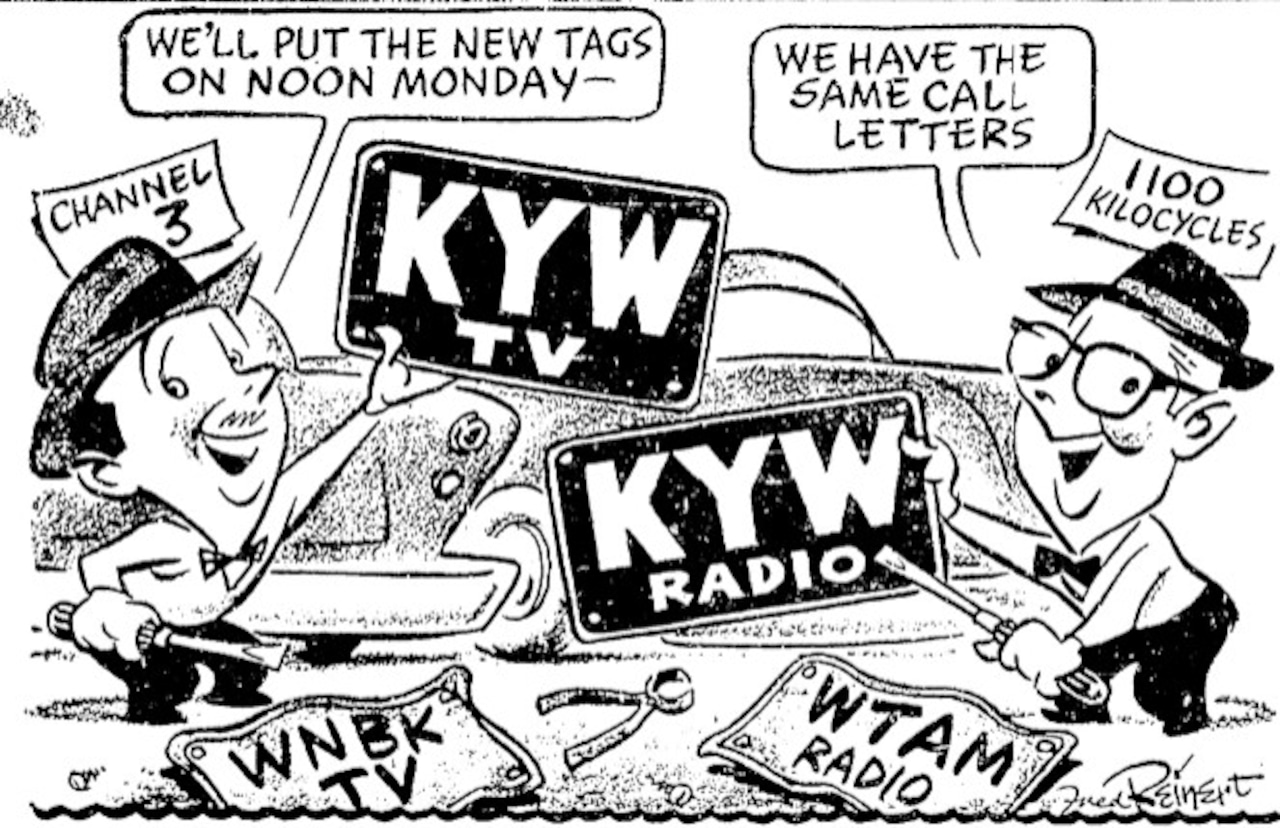
It was 70 years ago, on Feb. 13, 1956, that KYW began broadcasting. It was born from a unique business deal, broke ground on radio for almost a decade and ended in court.
The 1950s were a turning point in American history. The nation emerged from World War II with a pop culture and economic boom. When the decade started, an overwhelming number of Americans owned radios compared to television sets. Into the 1960s, AM radio dominated.
In Cleveland, prior to 1956, listeners heard WTAM AM and FM and viewers watched WNBK, an NBC affiliate, channel 3, said Dr. Richard Klein, a retired Cleveland State University professor who wrote “KYW Radio, the Cleveland Years,” published in 2022.
“NBC got the idea into its head that it wanted to blanket the East Coast in terms of TV broadcasting. In those days, TV and radio came as packages,” Klein said.
NBC sought to be the primary carrier of coverage from Boston to Washington.
To do that the network needed outlets in major cities, but they didn’t own anything in Philadelphia. So NBC wanted to see if a station in Philadelphia would swap for one of theirs. They found a Westinghouse station, Klein said.
“They approached and said, ‘Could you move KYW radio and TV to Cleveland? In exchange we will move our station to Philadelphia.’ This had not been done before in any major way. They took the proposal to the Federal Communications Commission.
“The FCC said, ‘OK, you can do it. What are you doing, basically switching stations?’”
The deal was approved Dec. 28, 1955.
“It was the first time the FCC allowed this type of swap, and it went along beautifully,” he said.
The stations switched call letters, personnel – everything. If you’re wondering why NBC didn’t just try to buy the Philadelphia station outright, it’s because a five-station ownership limit was in place.
Westinghouse was OK with the swap, especially when NBC sweetened the deal by throwing in $3 million.
So: KYW moved from Philadelphia to Cleveland and became 1100 AM and 105.7 FM and channel 3. WTAM AM and FM and WNBK channel 3 moved to Philadelphia, changed their call letters and became WRCV.
Behind the scenes, though, the Justice Department had a bad taste in its mouth, suspecting possible anti-trust violations. Federal anti-trust laws promote free trade and remain vigilant against unlawful mergers.
As Klein writes in his book: “What should have been a simple transfer rapidly became a complicated mess.”
But at first, it was a honeymoon.
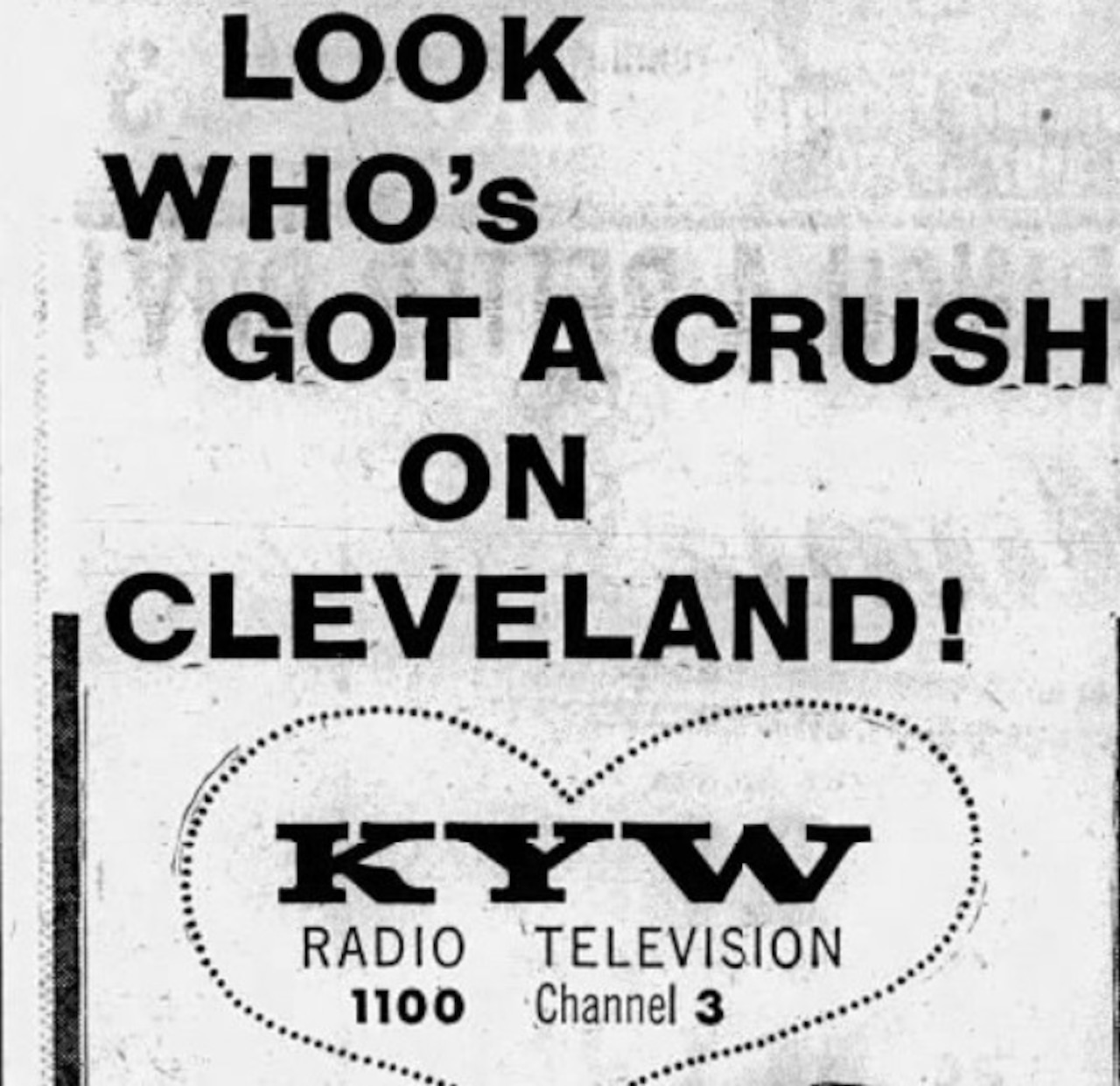 KYW started in Cleveland on Feb. 13, 1956 – the day before Valentine’s Day. The station was introduced in Cleveland newspaper ads playing off that theme.Plain Dealer archivesWelcome to Cleveland, KYW
KYW, which started in Chicago in 1921, holds the eighth oldest call letters in the country. It was the first station to air a live broadcast of an opera along with several firsts in football and baseball. It moved to Philadelphia in 1934. Three years later, a KYW reporter broadcast a live account of the Hindenburg zeppelin explosion from a phone booth.
A welcoming gala drew hundreds of dignitaries to the Statler Hotel in downtown Cleveland in 1956.
“Cleveland welcomed KYW,” Klein said.
An industry publication summed the station’s mission perfectly, Klein said. Clevelanders would enjoy top-notch entertainment, news coverage and technical perfection typical of the Westinghouse broadcasting company. It cited public-oriented programming and community trust.
“That was the philosophy of KYW,” he said. “The public loved it.”
KYW started as a traditional middle-of-the-road station. Gradually, programming changed, Klein said. It embraced innovative programming, news, entertainment, community service and education.
They filled the station on Superior Avenue with big names of the day: Specs Howard, Joe Finan, Dick Goddard, Harry Martin, Wes Hopkins and others.
“They put a stamp on KYW second to none,” he said. “They made people feel happy about the station.”
No idea was too crazy. They promoted Bermuda Shorts Day, where they urged everyone to wear Bermuda shorts to work. One Hopkins promotion offered a chance for people to guess a dog’s weight by its bark. The winner would receive a Beagle puppy. They even had a traffic-court show, where they would go to court “and try to convince people to be better drivers.”
And they had a couple of catchy slogans, like “When it’s news elsewhere, it’s history at KYW” and “Have a KYWonderful weekend.”
In 1961, KYW went to all rock and roll, not long before the Beatles hit the scene. KYW brought in Ken Draper to guide the programming.
“He was a real dynamo,” Klein said. “He later went on to get his fame in Hollywood. He was the kind of guy who could sell iceboxes to Eskimos, as we used to say.”
In 1962, they brought in Martin and teamed him with Howard. The first week he was in town, Klein said, he attended a baseball game and danced in Indians gear. He took people on cruises on Lake Erie. But he made his mark with his comedy partner in crime on the Martin and Howard Show, where they created zany characters.
“The public loved it,” Klein said. “They ate it up.”
When you spitball ideas, some stick, some fall flat. And the station had its share of flops.
When KYW pulled “The Eternal Light,” a popular religious themed show, callers protested.
Hopkins and Finan got hit with payola charges. Some promotions didn’t fly.
But for the most part, the spitballing worked.
In 1964, the station, wanting to do something for charity, cut a 45 RPM record: “Cleveland Love Song,” a 90-second crooning rock song to Cleveland. (It sounds very similar to the Ray Charles Singers’ 1964 song, “Love Me With All Your Heart.”) On the B side? An ad touting the station’s disc jockeys.
“Who would think of it? Today it would be corny. Then, it sold like hotcakes,” Klein said.
KYW reached 38 states and four southern Canadian provinces. In 1960, it recorded a listening audience of 8 million people.
John Gorman, a retired radio executive who worked at WMMS and is a radio historian, grew up in Boston but could pick up KYW from Cleveland, 640 miles away.
Gorman said two things contributed to KYW’s success – a very clear signal and strong on-air personalities.
“AM signals at night would bounce off the ionosphere into distant areas,” he said. That reach boosted its popularity.
“When KYW first came on the scene in Cleveland and turned into a top 40 station, it completely annihilated WHK, which was the leading top 40 station,” Gorman said.
“They had strong personalities on the air. All of their DJs were good, solid, New York-quality DJs.”
Gorman added, “It seemed that the program director gave their personalities a lot of freedom. Not only would they play their hits, but they would play album tracks. Sometimes they would play a song, saying, ‘It’s been up for a few weeks, we’re not playing it, but I’m going to give it a spin.’ The disk jockeys had the freedom to be a little freeform and do what they wanted.”
Music changes constantly, he said, but DJs remain. So a strong lineup of on-air personalities was key to radio survival then.
“In those days radio had a lot of influence,” Gorman said.
Also, when other stations were airing simulcast broadcasts on FM and AM, they were experimenting with independent broadcasting, offering 12 hours a day of classical music on FM, Klein said.
“This station was so innovative, it was unbelievable,” Klein said.
But as the cliché goes, all good things must come to an end.
When KYW started in Cleveland, newspaper ads blared: “You can be sure it’s a merger for keeps.”
Not quite.
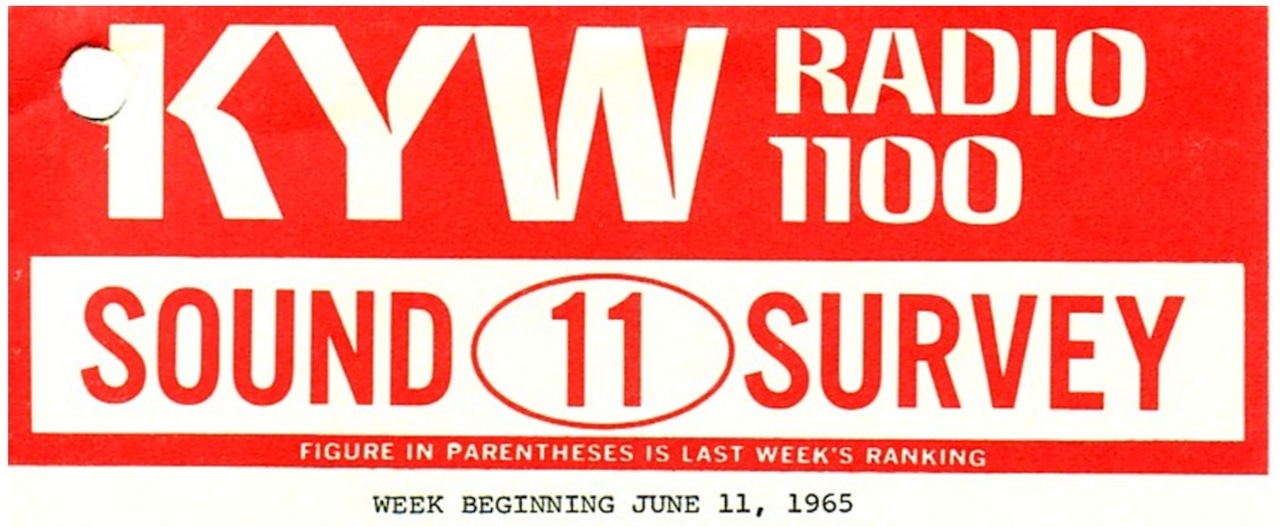 KYW’s “sound survey” of hits for June 11, 1965, had The Four Tops’ “I Can’t Help Myself” as its No. 1 song.Courtesy of John GormanKYW’s time in Cleveland ends
Around 1957, the FCC began to smell a rat, as Klein puts it. There was something off in the deal.
The agency discovered NBC had strongarmed Westinghouse. The network had threatened to take away the NBC affiliation from Westinghouse’s TV stations if Westinghouse did not agree to the original deal fast enough.
The Justice Department pursued it in court. In 1964, a federal district court ruling in Philadelphia determined Westinghouse was forced into the swap. The decision: Reverse the FCC ruling immediately. Return the stations to their previous home cities.
(If you’re wondering how NBC had clout to muscle the deal, the pecking order of the day was NBC, CBS, ABC and then WBC – Westinghouse, Klein said.)
It became known as “the big swap.”
In summer 1965, KYW went back to Philadelphia. WRCV – the station in Philadelphia – returned to Cleveland, rebranded as WKYC radio and TV.
Why choose WKYC? Look at the two middle letters.
KYW became the second all news station in the country in 1965 in Philadelphia.
About the time the swap was reversed, in mid-1965, WKYC was making plans for an all-color format.
WKYC-AM became rock, but NBC didn’t have experience with rock stations. FM was exploding, and by 1968 Cleveland airwaves had WMMS 100.7, WNCR 99.5 and others.
Nick Mileti bought WKYC’s radio stations and renamed them as 3WE for WWWE-AM and M105 for WWWM-FM. He wanted an outlet for sports, since he owned multiple teams in Cleveland in the 1970s.
KYW remains on air in Philadelphia, on the dial at 1060 AM and 103.9 FM.
When Covid hit, Klein took on the KYW book project, scouring Plain Dealer and other archives. He retired from teaching at Cleveland State and has written a dozen books.
Gorman and Klein said KYW’s tenure in Cleveland had a lasting impact.
“I had a lot of respect for that radio station,” Gorman said. “That station was actually an influence on me – I was 15, 16 back then. It definitely stayed with me.”
Klein agreed.
“They did what they said they would do – provide entertainment, education, news, sports. You wanted to get up in the morning and couldn’t wait to hear what they were doing,” said Klein, who came to Northeast Ohio from Boston in 1967 for college.
“They were able to make a difference,” Klein said.