
Coco Gauff could feel it brewing. As she collected her bags and made her way off court after being thoroughly beaten by her Australian Open quarter-final opponent, Elina Svitolina, in just 59 minutes, her insides fizzed with frustration.
The 21-year-old made it through the tunnel that leads the players onto court and veered left, onto a concrete ramp positioned behind a low wall. Once there, she launched an all-out assault on her racket, slamming it into the ground seven times in quick succession, completely unaware that her every move had been filmed and would swiftly be watched — and judged — by millions across television and social media.
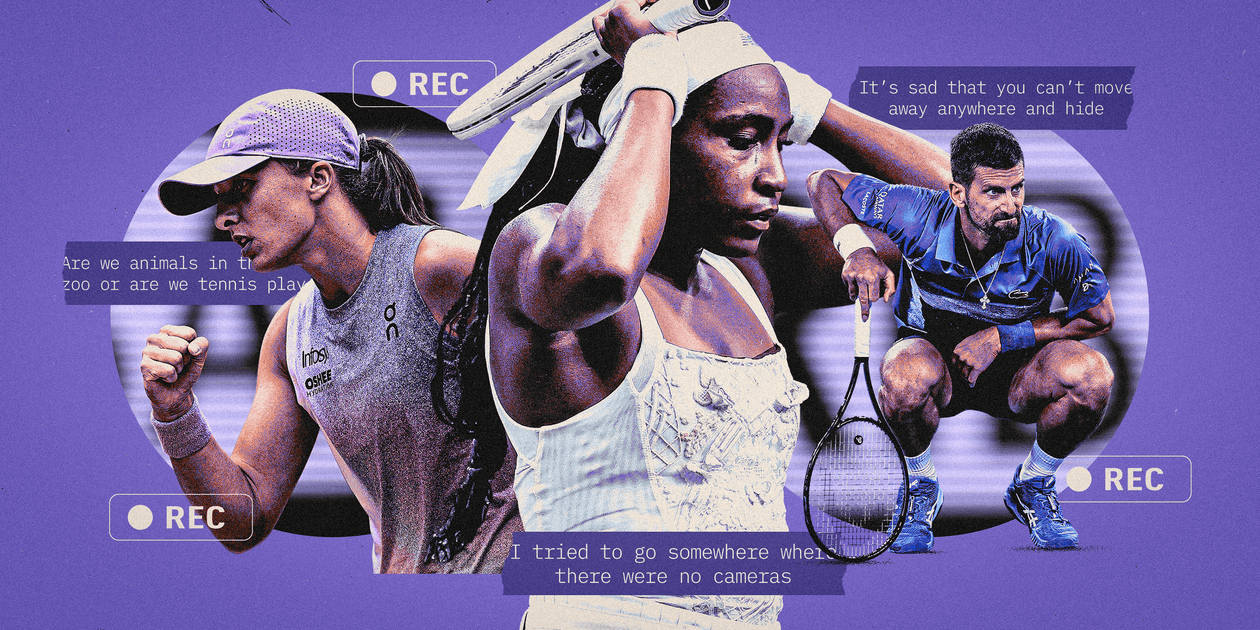
“I tried to go somewhere where there were no cameras,” Gauff told reporters shortly afterwards. “I kind of have a thing with the broadcast. I feel like certain moments — the same thing happened to Aryna (Sabalenka) after I played her in the final of the U.S. Open — I feel like they don’t need to broadcast.”
Gauff’s stance was echoed by fellow WTA Tour players Amanda Anisimova, Jessica Pegula and Iga Swiatek, who only half-jokingly asked: “Are we tennis players or are we animals in the zoo where they are observed even when they poop?”
Male players joined the chorus of dissent. Novak Djokovic, the 24-time Grand Slam winner and finalist in Melbourne, said it was “sad that you can’t move away anywhere and hide and fume out your frustration. But we live… in times where content is everything”.
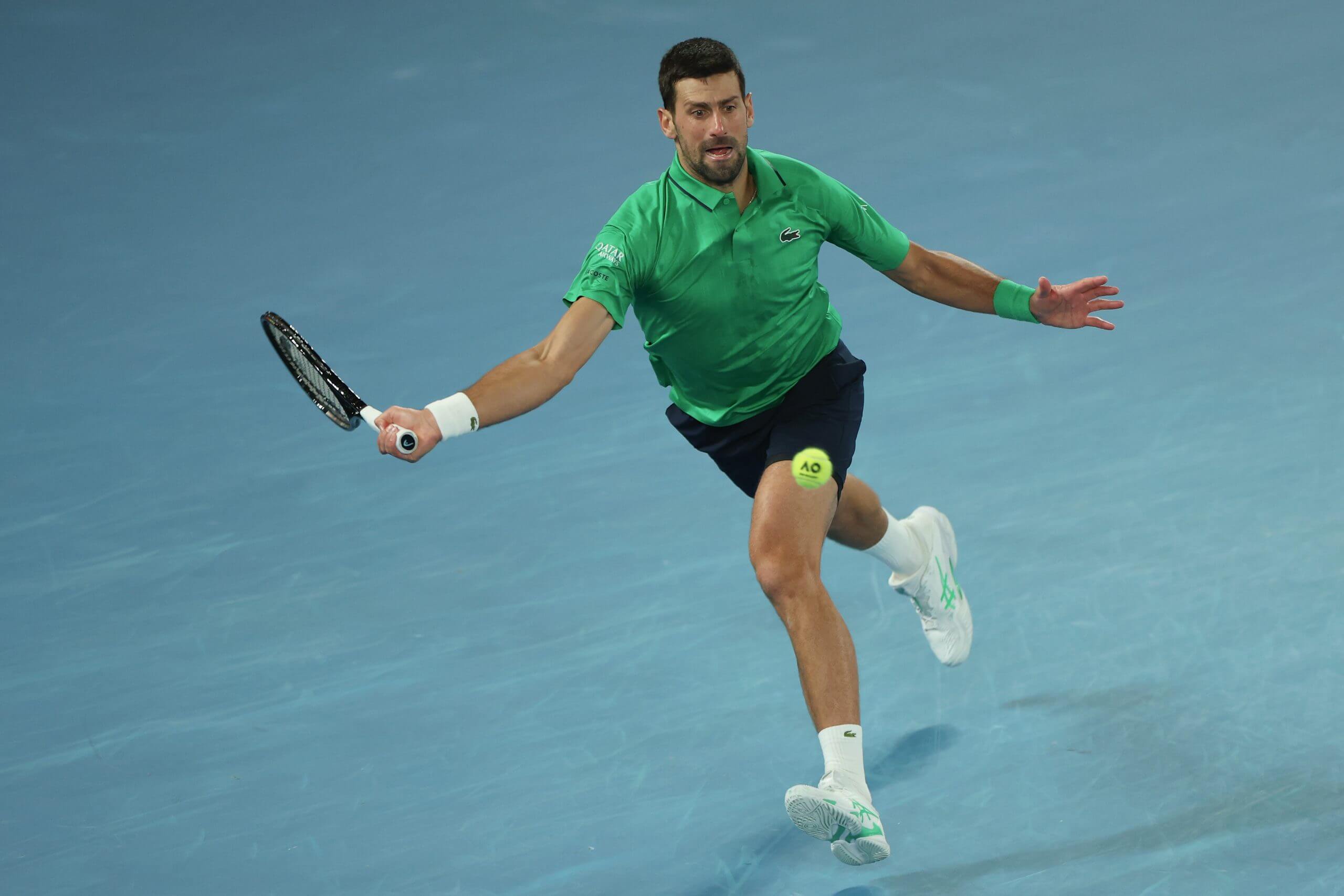
Novak Djokovic shares Coco Gauff’s concerns about privacy (Lintao Zhang/Getty Images)
At the Australian Open, footage from the players’ zone at Rod Laver Arena has been shown since 2019. That includes the player gym, warm-up area, and the corridor leading out from the locker room.
Australian Open organisers argue that broadcast cameras are in the areas where players are preparing for their job; where they are warming up and cooling down, arriving to and from court, moving to and from the media centre. They are not in what they consider to be more private areas where competitors relax, such as player restaurants, the nutrition hub, or any of the medical or treatment areas. The locker room areas are also off limits to cameras.
Tennis Australia CEO and Australian Open tournament director Craig Tiley did issue a statement in the aftermath of Gauff’s comments, however, confirming that he will listen to suggestions from players participating in the tournament. “We want to really understand what their needs and what their wants are,” he said, adding that they would continue to review the setup and make sure that players are comfortable with it.
“But at the same time,” he added, “we also want to bring the fan and the player closer. We believe, as tennis players, we can really lift up their value and the love the fans have for them. But it’s a fine line that we have to keep walking.”
That last point is key. In an age when an audience’s demand for access is insatiable, should any athlete expect privacy? And, if so, where should that “fine line” be drawn?
The notion of ‘warts-and-all’ footage of athletes being packaged and presented for worldwide consumption is hardly a new one.
Behind-the-scenes sports documentaries are an industry in themselves: HBO’s 24/7 brought a new insight into the build up to boxing’s biggest fights, NFL series Hard Knocks (also aired on HBO) was sold as television’s “first sports-based reality series”, Drive to Survive has been a catalyst for growth in Formula 1’s viewership, and Amazon’s All or Nothing franchise has attempted to take fans of NFL, football, rugby union and NHL into areas they’ve never been before.
Latterly, there have been documentaries on sports teams as diverse as Wrexham, the Welsh football club whose rise under the Hollywood duo of Ryan Reynolds and Rob Mac has been chronicled in the Welcome to Wrexham series, and the Australian cricket team.
Many of these programmes are subject to the kind of corporate sign-off that ensures they are free of any genuine controversy; the trick, for producers at least, comes in giving the audience the sense that they are genuinely peeking behind the curtain and seeing things the participants would rather they did not.
“There’s a relentless drive by rights holders to open up everything, post-Drive to Survive,” says Steve Martin, sports and entertainment marketing executive and founder of MSQ Sport and Entertainment. “But that’s always been the case. Behind-the-scenes has had more value than almost the live moments themselves, and people have realised that. Fans want the insight, they want the anecdotes, they want the gossip.”
Rights holders and event organisers know the power that lies in these intimate moments. They know they can drive viewership, attendance figures and brand awareness. But Martin says that the “warts and all” trend at the moment is potentially going too far. “There are certain things that are sacrosanct and should be left sacrosanct because that creates a mystique,” he adds. “But at the minute all cards are on the table. And sometimes I think it’s too much.”
Tennis attempted to capitalise on the power of those intimate moments with its equivalent to Drive to Survive, Break Point, but it was cancelled after two seasons — largely because top stars balked at the levels of access required of them.
The question about who gets to decide on the limits to this access is vexed. English football dressing rooms used to be considered sacrosanct spaces, accessible only to the players and their coaches. Exceptions — such as a now infamous moment in the 1994 independent documentary Orient: Club For a Fiver, when John Sitton, the manager of third-tier Leyton Orient was filmed and ended up challenging one of his players to a fight after a particularly poor defeat — were memorable precisely because they happened so rarely.
Now, ‘access all areas’ films tend to be anything, although that does not mean they do not spark internal tensions.
When Tottenham Hotspur agreed to their 2019-20 season being chronicled for one of Amazon’s All or Nothing series, former goalkeeper Hugo Lloris said the decision was made without the involvement of the people it impacted the most — the players.
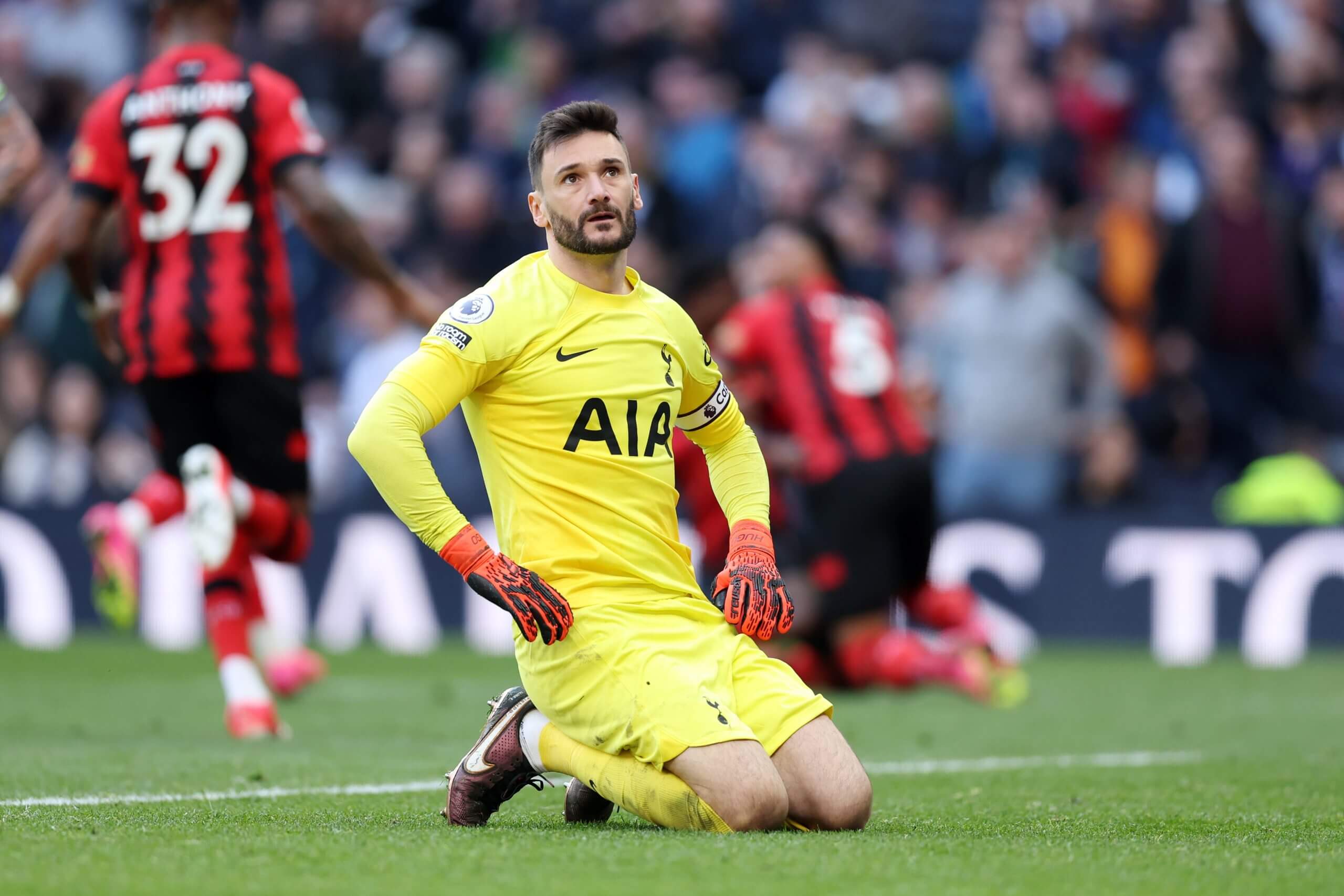
Hugo Lloris was unhappy at cameras being given access all areas at Tottenham Hotspur (Julian Finney/Getty Images)
In his book, Hugo Lloris: Earning my Spurs, the French goalkeeper and Tottenham captain says the squad’s struggle to recover from defeat to Liverpool in the Champions League final the previous season was augmented by the decision to install cameras “everywhere” for the Amazon series.
He explains that in light of the finances mentioned (around £10million), the players wondered whether those who would be most affected — those being asked to mic up each day — would get a cut. “The answer wasn’t slow in coming,” he wrote. “No.”
According to Lloris, players did whatever they could to wrest back some control. When the film crew placed their tiny microphones on some of the tables in the canteen, they sat elsewhere. The only place they could speak freely was the training ground dressing room after getting producers to agree that it would remain out of bounds.
Mauricio Pochettino, Tottenham’s manager at the start of that season, was sacked on November 19, with the team 14th in the league — although the fateful conversation with then-chairman Daniel Levy was conducted off-camera. The Argentine was replaced by Jose Mourinho, who was, according to Lloris, “the perfect plot twist for Amazon. Jose would allow them to poke their cameras and mics into every corner”.
Decisions about what is considered on and off limits are rarely made by the athletes themselves, especially in team sports. When Manchester United turned down the opportunity for their Amazon documentary last summer, the veto was applied by Ruben Amorim, then the club’s head coach. Cynics would suggest it was one of the best decisions he made during his ill-fated reign in charge.
There is often a financial incentive for opening yourself up to no-holds-barred scrutiny, but what about the costs, particularly when the content being broadcast shows the athlete in a more challenging moment?
In 2018, Red Bull’s Formula 1 driver Max Verstappen was left incensed with Force India’s Esteban Ocon after the pair came together on lap 44 of the Brazilian Grand Prix. Verstappen had taken the race lead from Lewis Hamilton on lap 40 and was looking to take his second victory in a row when Ocon attempted to unlap himself going into Turn 1.
The pair engaged in battle and made contact, sending both drivers spinning into the run-off area and allowing Hamilton back past — a move that led to the world champion securing a 10th win of the season. Verstappen crossed the line in second place, enraged with Ocon.
“I hope I can’t find him now in the paddock,” he said over the radio on his cooldown lap, “because that guy has a f*****g problem.”
Verstappen did find Ocon, in the FIA weighbridge garage (the drivers’ weighing area) and physically confronted the Frenchman, shoving him three or four times. French TV cameras caught the action and released the footage, which spread like wildfire. F1’s own account on X also shared the footage.
High drama after the chequered flag in Brazil on Sunday…#BrazilGP 🇧🇷 #F1 pic.twitter.com/FLR86HC3Ou
— Formula 1 (@F1) November 12, 2018
It’s not unheard of for cameras to be in that area post-race, but it is considered a more private place than many at an F1 track, given it’s where drivers have to weigh themselves to check compliance with car weight rules.
Both drivers were subsequently summoned to appear before the stewards to explain their respective parts in the post-race scuffle, with the four-person panel finding that Verstappen’s actions had been in breach of the FIA’s International Sporting Code and he had “failed” in the obligation of a sportsman of such a level to act as a role model to other drivers. He was ordered to perform two days of public service at the direction of the FIA within six months of the incident.
If either driver was uncomfortable at their argument being televised to the watching world, they did not mention it at the time, but the knock-on effect on athletes of these moments being broadcast to the public cannot be ignored.
Denise Lewis, the British Olympic heptathlon champion, describes the use of supposedly “safe spaces” to “further entertain or give insight” to people who have likely never experienced elite sport as “an invasion of privacy”.
“It’s like reality TV has infiltrated all sacred spaces,” she adds. “And it’s the athletes who come off worse because people are then judging this athlete on a moment of frustration, which probably didn’t last longer than seconds. But now the ramifications of that billow over into news stories and that doesn’t seem fair to me.”
Lewis is a keen observer of both tennis and F1 and understands the attraction for viewers of having access to those moments that make it feel like they’re getting “that extra nugget of intimacy and connection to the sport you’re watching”.
“But we have to be careful we don’t take it too far, where you put the athlete at risk emotionally and mentally, but also could jeopardise ongoing sponsorship,” she said. If people then start to paint a picture of an individual, it could cost them financially.”
It’s not only the more heated exchanges that are deemed ‘good content’. In the case of U.S. middleweight boxer Austin (Ammo) Williams, it was the moment he received the news that no fighter ever wants to hear during fight week: “It’s off”.
Williams was due to fight world champion Carlos Adames for the WBC middleweight title, but ahead of the weigh-in the day before the fight, he was told by his promoter, Eddie Hearn, that Adames had been taken to hospital unwell and would not be able to fight.
Hearn was wearing a microphone for the conversation during which Williams was clearly dismayed, having completed an entire training camp (the cost of which is covered by the fighter) and made weight for the bout, which gave him a shot at his first world title. Hearn is routinely mic’d up by Matchroom’s content team upon arrival at events, but Williams was unaware this particular moment was being filmed. Footage of it was posted across Matchroom’s social media platforms shortly afterwards.
Sports psychologist Jamil Qureshi agrees that the “intensity of sport is not necessarily realised by the paying public. When people take a penalty, foot fault at an important point in the tournament, or stand over a five-foot putt, which is worth $10million, that requires an intensity of concentration and pressure. And it’s important to be able to do something that resets and recalibrates the stress that people are under. An opportunity for a private space to reset and recalibrate is important.”
Qureshi adds that while much of an athlete’s preparation is done with their team, there are also “moments where people need to be self-aware or have introspection or go through a routine. It’s pretty hard to do that when you know that someone is watching you.”
There is an added layer of tension around athletes who demand privacy when so many are actively giving their fans more behind-the-scenes access than ever on their own social media platforms — trying to narrow that gap between themselves and their fans on their own terms.
Fans can now access content shedding light on everything from the kind of steak that fuels Erling Haaland, the Manchester City footballer, to the plastic surgery procedures undergone by Simone Biles — all filmed and sanctioned by the athletes themselves.
A Tennis Australia spokesperson said that this year’s Australian Open saw a record number of requests from players to bring their own crews and teams to capture their own content, pointing out that the tournament has to protect media rights as well as players’ profiles. But there is an obvious difference between an athlete controlling what they allow their audience to see and having zero control over what gets put out there for the world to judge.
“I think this is a wake-up call, not just for the Australian Open, but a lot of rights holders and event managers,” says Martin, who points to the example of The Masters golf tournament at Augusta National, where mobile phones and cameras are strictly banned for patrons on tournament days. “They control the broadcast and they do it for the fans that are there and the players, who are treated like kings.”
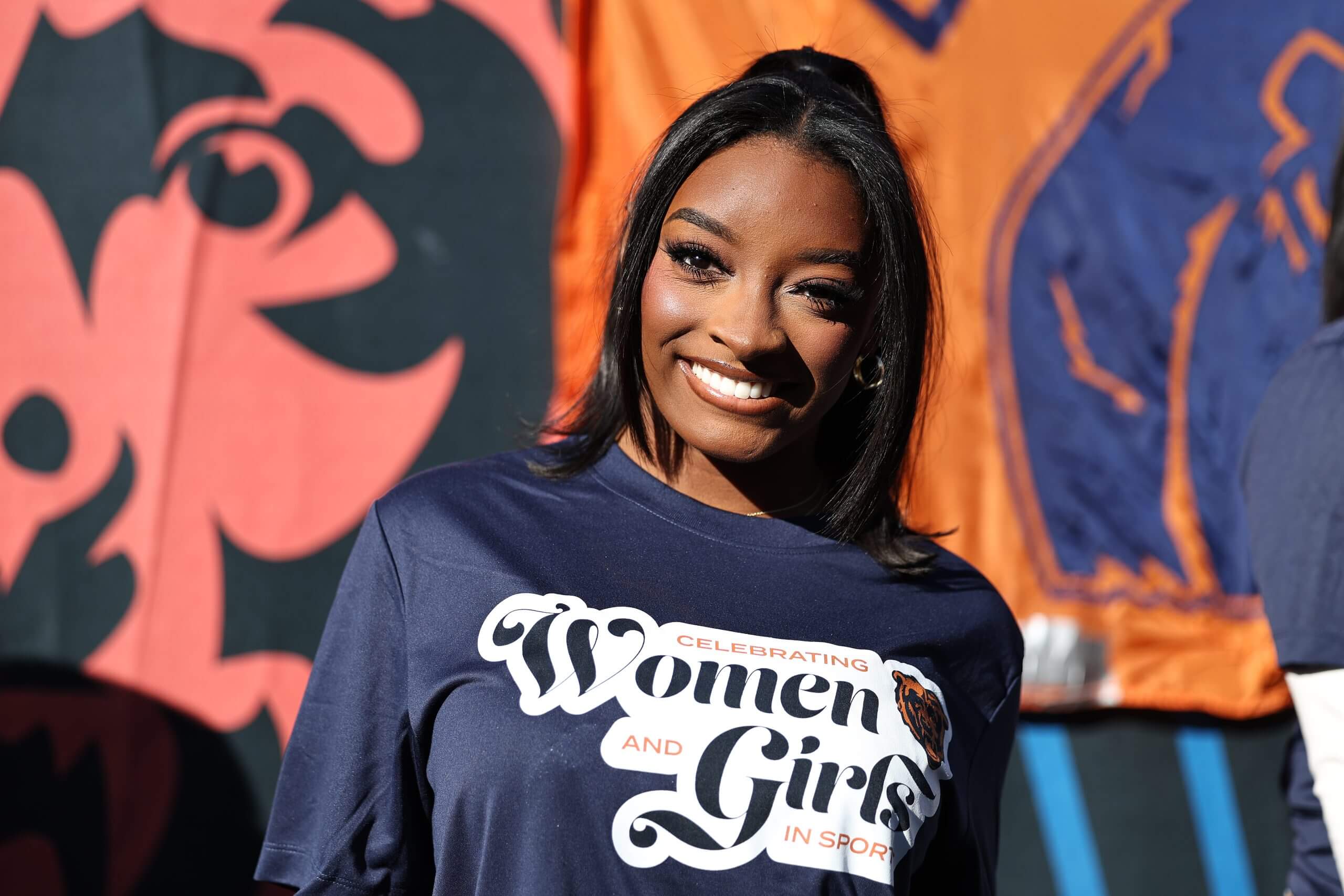
Simone Biles chose to reveal details of her medical procedures (Geoff Stellfox/Getty Images)
Martin believes that the Gauff incident will prompt rights holders to reassess their approach and appreciate that some things should not be shown.
“It’s about protecting the heartbeat and purity of the event, which is about your athletes. Look after them, number one. The fans are obviously a part of that, but it doesn’t mean you have to show everything. I would say from a fan perspective that’s good as well because mystique and not knowing everything is important.”
Athletes are not so sure that anything will change. After her comments about being observed like animals in a zoo, Swiatek was asked whether she would speak with the tournament about it. Her response was blunt: “What’s the point?” And Djokovic also admitted that he “finds it hard to see that’s going backwards” in regards to the amount of behind-the-scenes coverage. “It’s just something that I guess we have to accept,” he said.
In such a world, Qureshi says his advice to any sports person is always “to be themselves and express themselves fully. However, in a world which is as intrusive as it is now, with mobile phone cameras and CCTV and everything else, they have to be mindful that the context in which they’re expressing themselves may not be explained fully to the audiences watching.”